
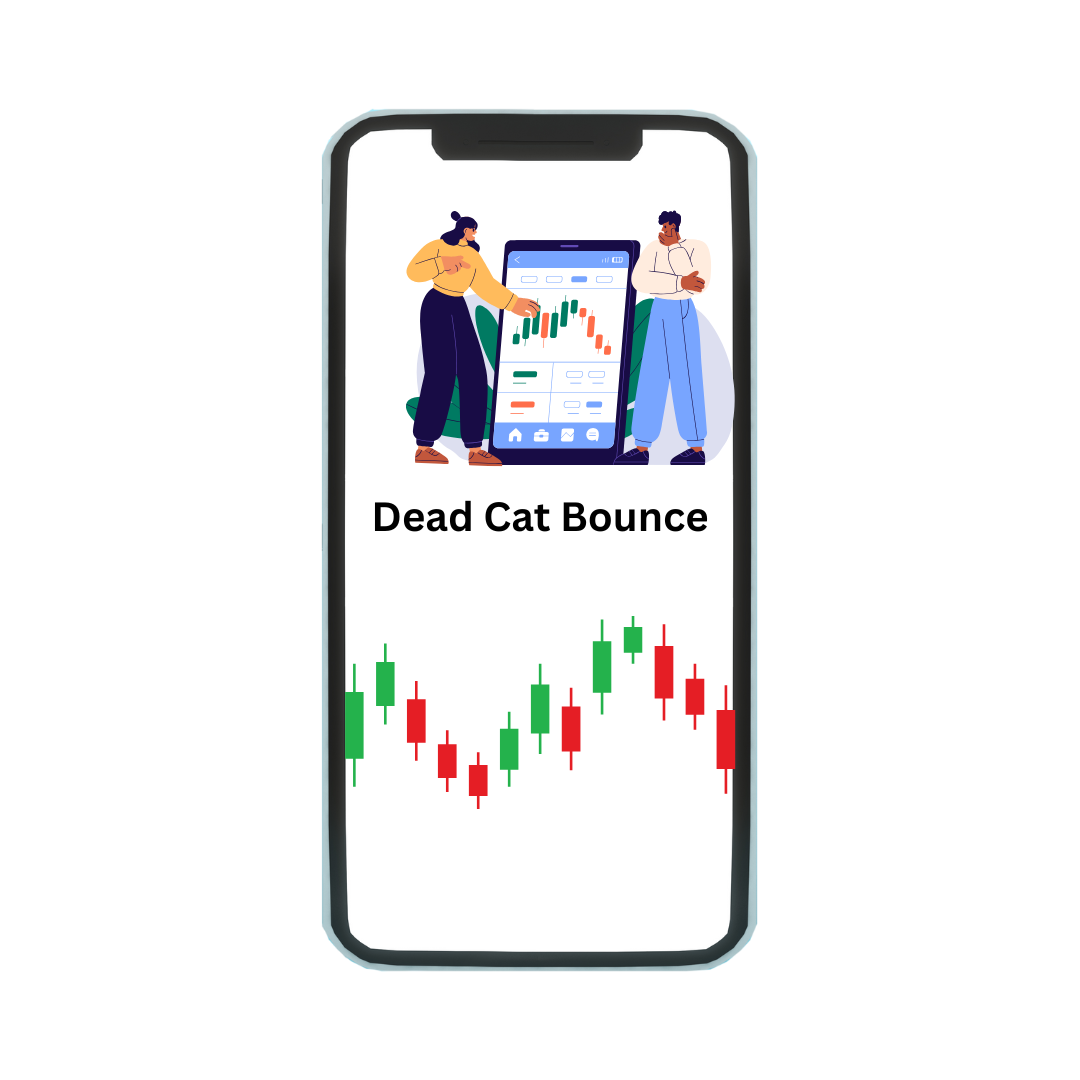
Dead cat bounce is a term used in financial markets to describe a brief and deceptive recovery in the price of a declining asset. After a sharp fall, prices may rise slightly, giving the illusion of a turnaround, only to resume their downward trajectory shortly after. This phenomenon often traps traders and investors who interpret the bounce as a sign of reversal, leading to premature entries and potential losses.
Understanding the mechanics behind a dead cat bounce is essential for anyone navigating volatile markets. It highlights the importance of distinguishing between short-term price movements and genuine trend reversals. In this blog, we’ll explore why dead cat bounces occur, how to identify them, and what strategies traders can use to avoid being misled by these temporary rallies.
This blog breaks down the concept of a dead cat bounce, explains why it occurs, how to identify it, and what traders should watch out for when navigating such scenarios.
What Is a Dead Cat Bounce?
A dead cat bounce refers to a temporary recovery in the price of a declining stock or index, followed by a continuation of the downward trend. The term is derived from the idea that “even a dead cat will bounce if it falls from a great height.” In financial terms, it suggests that a brief rally in a falling market doesn’t necessarily indicate a true reversal.
Key Characteristics
- Occurs after a sharp decline: The bounce typically follows a steep drop in price.
- Short-lived recovery: The upward movement is temporary and often misleading.
- Followed by further decline: Prices resume their downward trajectory after the bounce.
This pattern is common during bear markets or after negative news events, where traders mistake a short-term rally for a bottoming out.
Why Does a Dead Cat Bounce Happen?
Understanding the psychology and mechanics behind a dead cat bounce helps traders avoid costly mistakes. Several factors contribute to this deceptive rebound:
- Short Covering: After a sharp decline, traders who were short-selling may close their positions to lock in profits. This buying activity can temporarily push prices higher, creating the illusion of recovery.
- Bargain Hunting: Some investors view the drop as an opportunity to buy undervalued stocks. Their entry can cause a brief uptick in price, even if the fundamentals haven’t improved.
- Technical Support Levels: Prices may bounce off perceived support levels, such as previous lows or moving averages. These technical cues attract buyers, but the bounce may lack strength or volume.
- News-Driven Optimism: A minor positive development, such as a government statement, earnings surprise, or policy change, can spark hope among investors. However, if the broader issues remain unresolved, the rally fades quickly.
Real-World Example of a Dead Cat Bounce
Let’s consider a hypothetical example to illustrate how a dead cat bounce plays out:
A company releases disappointing quarterly earnings, causing its stock to drop from ₹800 to ₹600 in two days. On the third day, the stock rises to ₹650 as bargain hunters enter and shorts cover their positions. However, no fundamental improvements are announced. Within a week, the stock falls further to ₹500. This temporary rise to ₹650 is the dead cat bounce, short-lived, deceptive, and ultimately followed by continued decline.
How to Identify a Dead Cat Bounce
Spotting a dead cat bounce in real time is challenging, but certain indicators can help traders distinguish between a genuine recovery and a false rally.
- Volume Analysis: A true reversal is usually accompanied by strong buying volume. If the bounce occurs on low volume, it may lack conviction and be driven by short-term traders.
- News Context: Evaluate whether the bounce is supported by meaningful news. A vague statement or minor update may not justify a sustained rally.
- Technical Indicators: Use tools like RSI (Relative Strength Index), MACD (Moving Average Convergence Divergence), and moving averages to assess momentum. A bounce without bullish confirmation from these indicators is suspect.
- Price Action: Watch for lower highs and lower lows. If the bounce fails to break previous resistance levels or quickly reverses, it may be a dead cat bounce.
Risks of Trading During a Dead Cat Bounce
Trading during a dead cat bounce can be risky, especially for those who misinterpret the rally as a trend reversal. Here are some common pitfalls:
- Premature Buying: Traders may enter long positions expecting a recovery, only to see prices fall again. This can lead to losses and emotional frustration.
- Ignoring Fundamentals: A bounce may occur despite poor earnings, weak guidance, or negative macroeconomic trends. Ignoring these signals can result in misguided trades.
- Overconfidence: Seeing a bounce may lead traders to believe they’ve timed the bottom perfectly. This overconfidence can cloud judgment and lead to aggressive positions.
- Lack of Exit Strategy: Without a clear plan, traders may hold onto losing positions, hoping for another bounce. This can compound losses and erode capital.
Dead Cat Bounce vs. True Reversal
Distinguishing between a dead cat bounce and a genuine trend reversal is crucial for strategic decision-making.
Feature | Dead Cat Bounce | True Reversal |
Duration | Short-term (days or weeks) | Sustained (weeks to months) |
Volume | Low or moderate | High and consistent |
Fundamentals | Unchanged or negative | Improving or positive |
Technical Indicators | Weak or mixed signals | Strong bullish confirmation |
Market Sentiment | Cautious or skeptical | Optimistic and confident |
Traders should wait for confirmation before acting on a bounce. Patience and analysis are key to avoiding false signals.
Strategies to Navigate a Dead Cat Bounce
While risky, dead cat bounces can present opportunities for informed traders. Here are some strategies to consider:
- Use Stop-Loss Orders: Protect capital by setting stop-loss levels. If the bounce fails, the stop-loss limits downside exposure.
- Trade with Smaller Positions: Reduce risk by trading smaller lots during uncertain bounces. This allows flexibility and minimizes impact if the trade goes wrong.
- Wait for Confirmation: Avoid jumping in at the first sign of a bounce. Look for confirmation through volume, technical indicators, and news flow.
- Focus on Short-Term Gains: If trading the bounce, aim for quick profits rather than long-term holds. Treat it as a tactical move, not a strategic investment.
- Monitor Sentiment: Use sentiment analysis tools or observe market behavior. If optimism fades quickly, the bounce may not be sustainable.
Dead Cat Bounce in Broader Markets
Dead cat bounces aren’t limited to individual stocks, they can occur in broader indices, sectors, or even global markets.
Index-Level Bounces
During bear markets, indices like Nifty 50 or Sensex may experience temporary rallies. These bounces often attract retail investors but lack institutional support.
Sector-Specific Bounces
A sector hit by regulatory changes or poor earnings may bounce briefly after a policy announcement. Traders should assess whether the sector’s fundamentals have truly improved.
Global Market Bounces
International markets may rally after central bank statements or geopolitical developments. However, if underlying risks persist, the bounce may be short-lived.
Psychological Impact on Traders
Dead cat bounces can affect trader psychology in subtle ways:
- False Hope: Traders may believe the worst is over, leading to premature optimism.
- Frustration: Repeated bounces followed by declines can erode confidence.
- Impatience: The desire to recover losses quickly may lead to impulsive trades.
Managing emotions is as important as analyzing charts. A disciplined mindset helps traders stay objective and avoid reactive decisions.
Conclusion: Stay Vigilant, Stay Informed
The dead cat bounce is a classic example of how market movements can mislead even experienced traders. While it may appear as a sign of recovery, it often masks deeper issues and precedes further decline. By understanding its causes, recognizing its patterns, and applying disciplined strategies, traders can navigate these bounces with greater confidence and caution.