
6.1 What Is Meant By Secondary Market?
Vedant: After a company goes public its shares are traded on the market. This is where people buy and sell shares every day.
Nirav: Is that still part of the companys public offering?
Vedant: No it is not. The initial public offering is when the company first sells its shares. The secondary market is like a store where people who already own shares can sell them to others. The company does not get any money from this.
Nirav: I understand. So companies like 5paisa work in the market?
Vedant: That is correct. In the market people analyze prices come up with trading strategies and build their portfolios.
Nirav: So if I want to buy and sell shares often I should focus on the market?
Vedant: Yes that is right. We will learn more about how it works, who is involved and why it is important to have buyers and sellers.
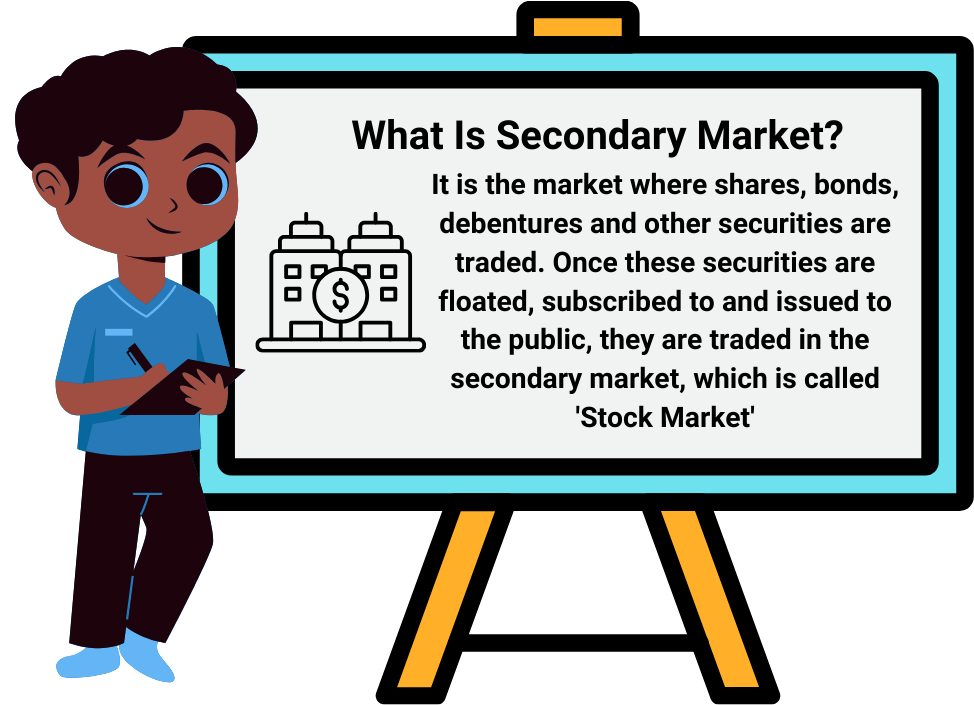
What is the Secondary Market?
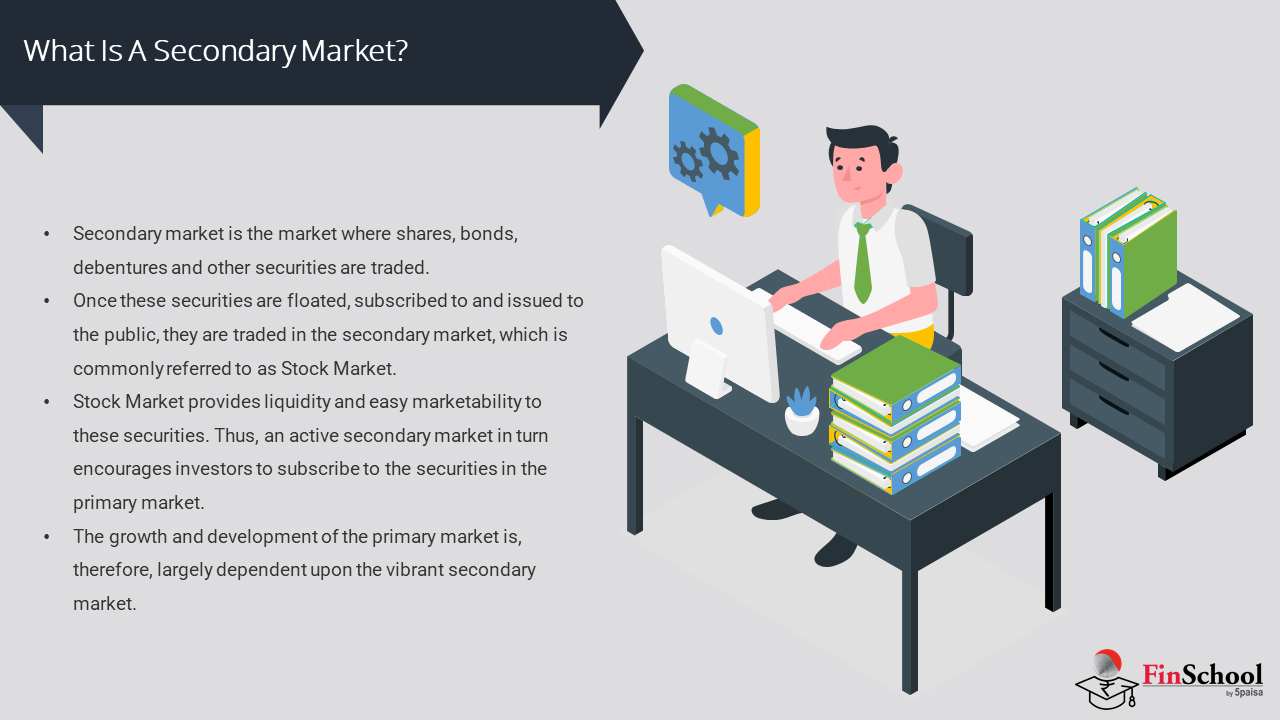
The secondary market is where people buy and sell shares, bonds and other financial instruments after they were first sold. This is different from the market, where companies raise money by selling shares for the first time. In the market people trade with each other and the company does not get any new money. It helps figure out prices makes sure there are buyers and sellers and makes everything transparent. It is like buying a used car. The car maker sells it first. After that it is sold by the people who own it. The price of the car depends on what people are willing to pay how they feel about it and what is happening in the market.
Vedant: Have you ever been to a farmers market Nirav?
Nirav: Yes I have. Why do you ask?
Vedant: Imagine there are two stalls. One has fixed prices like the prices at a store. The other stall is more informal. You can negotiate the price. That is of like how the secondary market works.
Nirav: So some markets have rules. Are transparent while others are more flexible but riskier?
Vedant: That is right. Both types of markets allow people to trade. They have different rules and ways of doing things.
Nirav: Having buyers and sellers and figuring out prices are important parts of the secondary market?
Vedant: Yes they are. They make it easy to buy and sell. They show how people feel about the market. The secondary market also helps decide how money is invested and shows how healthy the economy is. The secondary market is very important, for shares. It helps people trade them easily.
6.2 Types of Secondary Market – Exchanges & OTC
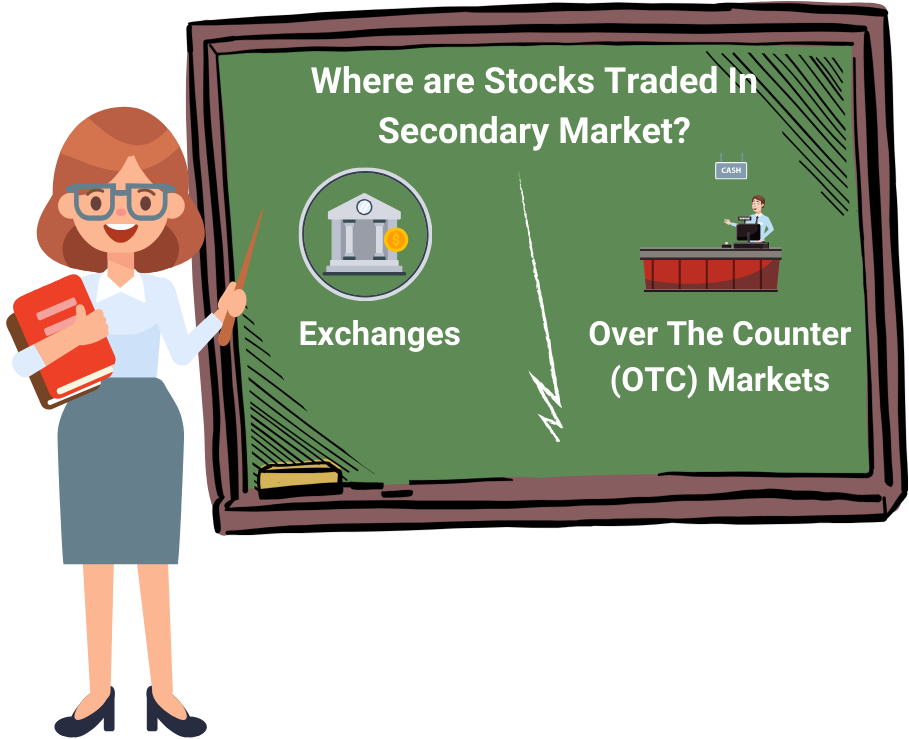
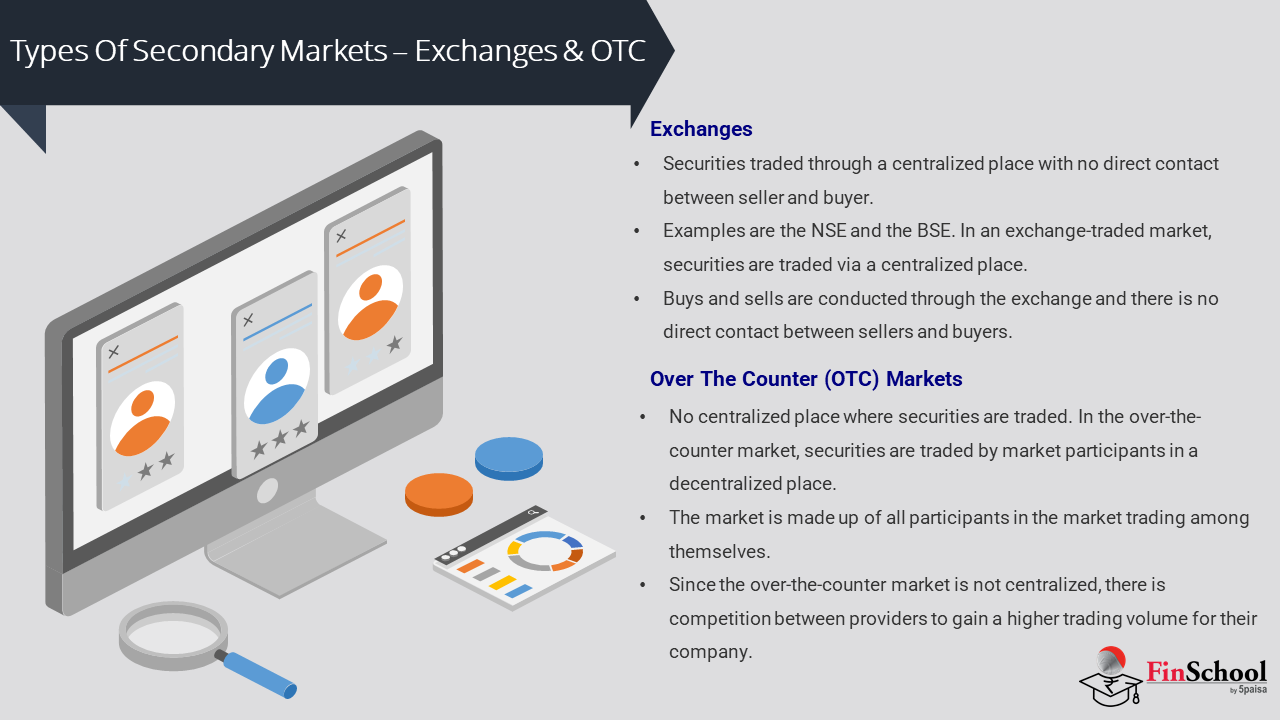
Secondary markets are divided into two types: exchange-traded and over-the-counter. Exchange-traded markets are like NSE and BSE. They are. Transparent. This helps protect investors. Over-the-counter markets let people trade directly. This is common in bonds and derivatives. They are more flexible but riskier. A key thing about markets is that people can easily buy or sell securities. This helps them change their portfolios. Trading happens all the time. This helps set prices based on what people think and what is happening in the economy. Companies do not get money here.. If they do well people may trust them more. This can help them get money later. Good Secondary Markets help people use money well. They show that a country’s money system is strong.
Nirav: Vedant what are the types of trading in markets?
Vedant: There are stock exchanges like NSE and BSE. They are controlled. Then there are trades that are more flexible but riskier.
Nirav: What about dealer markets?
Vedant: Dealers set their prices. This is common in bonds and foreign exchange.
Nirav:. Auction markets?
Vedant: People bid openly. Trades happen when someone wants to buy at a price and someone wants to sell at that price. This helps set prices.
Nirav: So each plays a role?
Vedant: Yes they all work together. They make trading work well.
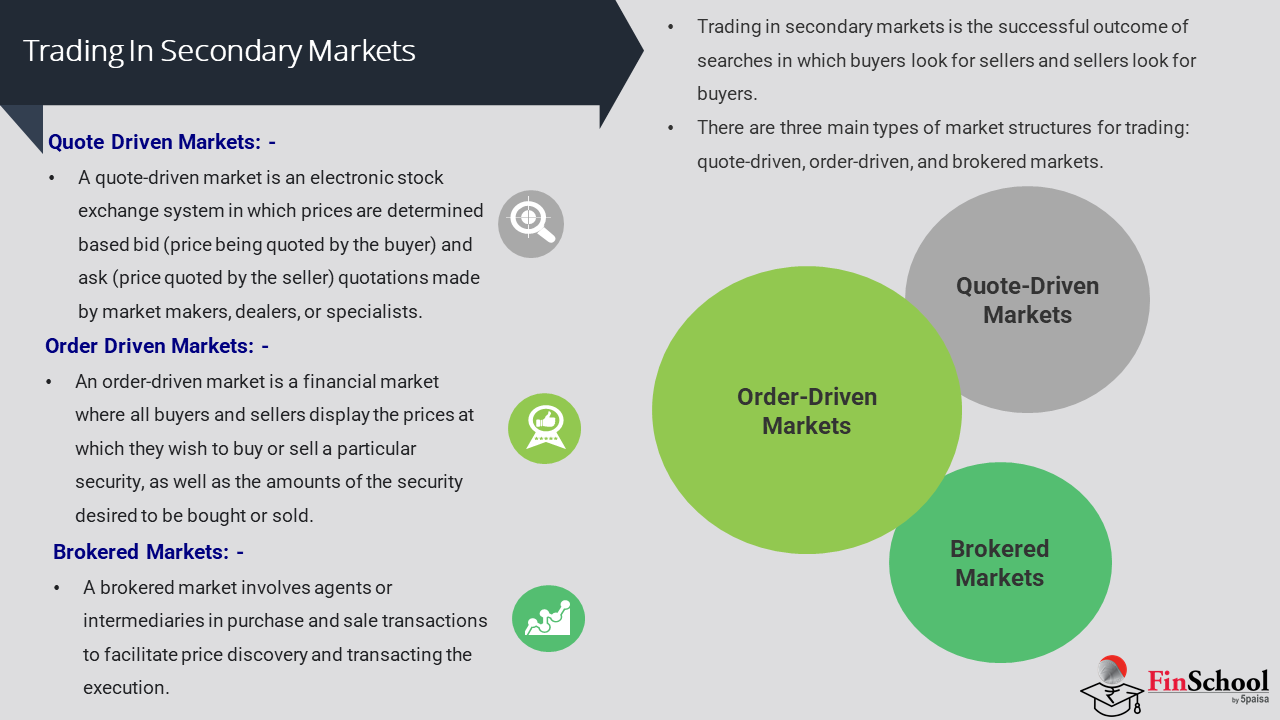
6.3 Trading In Secondary Markets
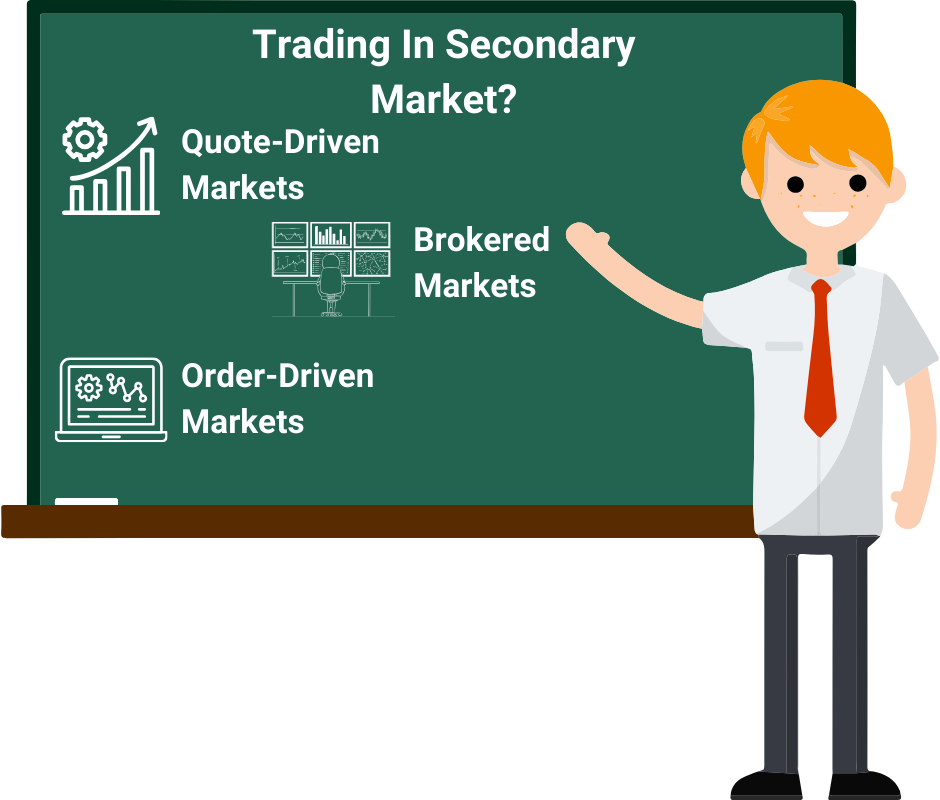
- Stock Exchanges (Organized Exchanges)
Stock exchanges are like shops where people trade securities. They are controlled. Trades happen through brokers. Every trade is recorded. The exchange helps make sure trades happen smoothly. It reduces risk. This is good for people who invest an people who invest a lot. It helps them trade easily and safely.
2.Over-the-Counter (OTC) Markets
OTC markets are like talks between people. Trades happen directly. There is no place. This helps people make deals. This is good for things like corporate bonds and derivatives. OTC markets can be riskier. People have to trust each other. These markets are good for investors. They can handle the risks.
3.Dealer Markets
Dealer markets are like OTC markets. People trade directly. Dealers help. This helps people make deals. This is good for things. Dealer markets can be riskier. People have to trust each other.
4.Auction Markets
Auction markets are like auctions. People bid openly. Trades happen when someone wants to buy at a price and someone wants to sell at that price.
This helps set prices based on what people want.
Nirav: What does a stock exchange actually do after an IPO?
Vedant: It’s like a marketplace. People. Sell there.
Nirav: So it’s more, than a website?
Vedant: Yes it helps people trade easily. It sets prices. Makes sure trades are safe.
Nirav:. Investor protection?
Vedant: Yes stock exchanges follow rules. They help prevent cheating. They make sure companies tell the truth.
Nirav: So they’re essential?
Vedant: Yes they are very important. They help make trading work.
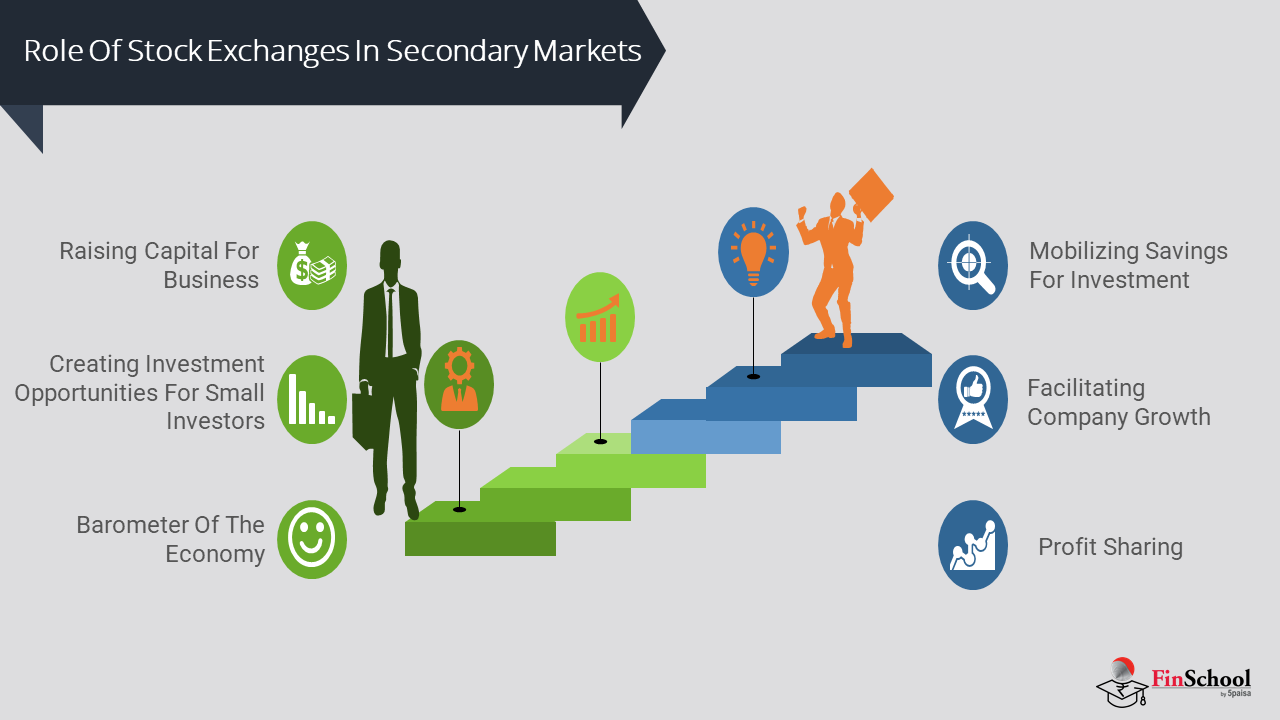
6.4 What Is The Role Of A Stock Exchange In Secondary Market?
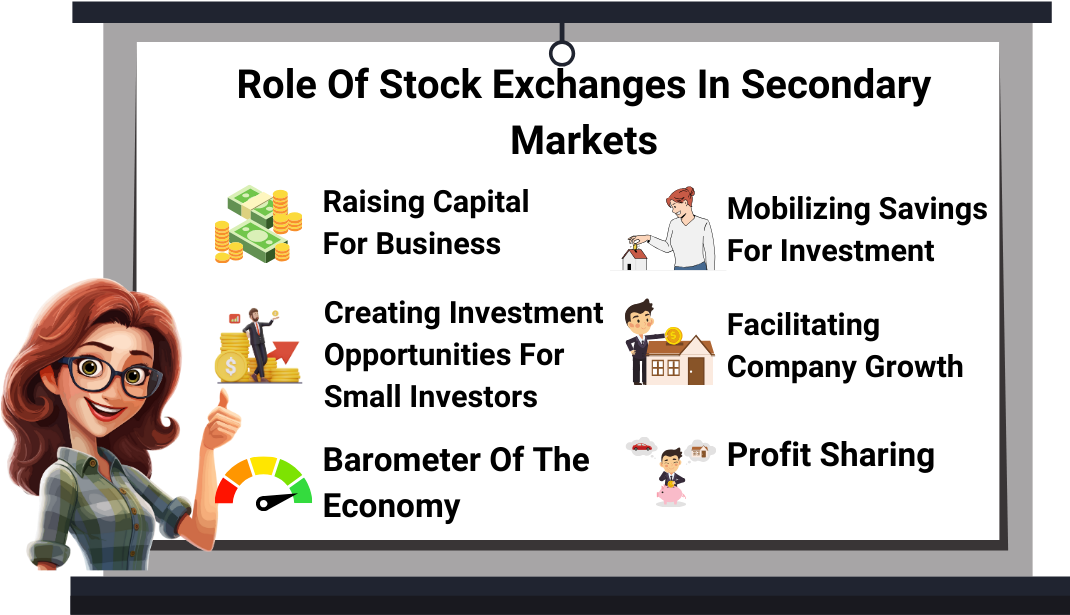
- A Centralized Place To Trade
A stock exchange is like a marketplace where people can buy and sell securities like shares, bonds and exchange-traded funds. This makes it easy for investors to find people to trade with. The exchange makes sure that trades happen quickly safely and fairly. It also makes the trading process simple so anyone can do it.
- Providing Liquidity
One of the jobs of a stock exchange is to make sure there are enough buyers and sellers. This is called liquidity. It means you can easily turn your assets into cash without changing their price much. The exchange does this by having a lot of people trading at the time. This helps investors get in or out of trades quickly which is important for both term and long-term investors.
- Figuring Out Prices
Stock exchanges help figure out the prices of securities. The prices are determined by how many people want to buy or sell something. When investors hear news or see data they react and the exchange shows what they think in the prices. This helps determine the price of securities and guides investment decisions.
- Following The Rules And Protecting Investors
Stock exchanges are watched by authorities like the Securities and Exchange Board of India. They make sure the exchanges follow the rules to prevent things like insider trading, price manipulation and fraud. The exchanges also require companies to tell investors what is going on so investors have the information they need. This builds trust. Protects investors.
- Completing Trades
When a trade is made the stock exchange makes sure it is completed. This is called clearing and settlement. Clearing is when the trade details are checked and settlement is when the securities and money are actually moved. This is usually done by a company that works with the exchange, which guarantees the trade and reduces the risk of something going wrong.
- Helping The Economy Grow
When companies do well in the market it helps them raise money in the future. A strong secondary market also helps people save and invest, which is good for the economy.
- Being Transparent
Stock exchanges make sure everyone has the information. They provide real-time data on prices, volumes and company announcements. This makes it fair for all investors. Reduces the risk of people having different information.
Nirav: Vedant I saw someone selling shares outside the platforms. Is it safe to buy or sell shares like that?
Vedant: No it is not safe. That is why it is so important to trade on a recognized stock exchange like the National Stock Exchange or the Bombay Stock Exchange. These exchanges are regulated by the Securities and Exchange Board of India. Ensure transparency, fairness and investor protection.
Nirav: So what is the risk if I trade outside?
Vedant: You will not have any protection. Unrecognized platforms do not guarantee that trades will be completed properly that prices will be accurate or that you will be protected from fraud. There is no one watching to make sure everything is fair so if something goes wrong you are on your own.
Nirav: But are the prices not better sometimes?
Vedant: Maybe,. Without proper checks you could be dealing with fake prices or fake securities. Recognized exchanges have companies that ensure trades are completed securely and brokers who are registered and accountable.
Nirav: That makes sense. So it is not about convenience it is, about trust and following the law.
Vedant: Exactly. Trading on recognized exchanges means your transactions are recorded, monitored and backed by law. It is the way to ensure your investments are safe and legitimate. As you read further you will understand why you should only trade on a recognized stock exchange.
6.5 Why Should One Trade On A Recognized Stock Exchange Only For Buying/ Selling Shares?
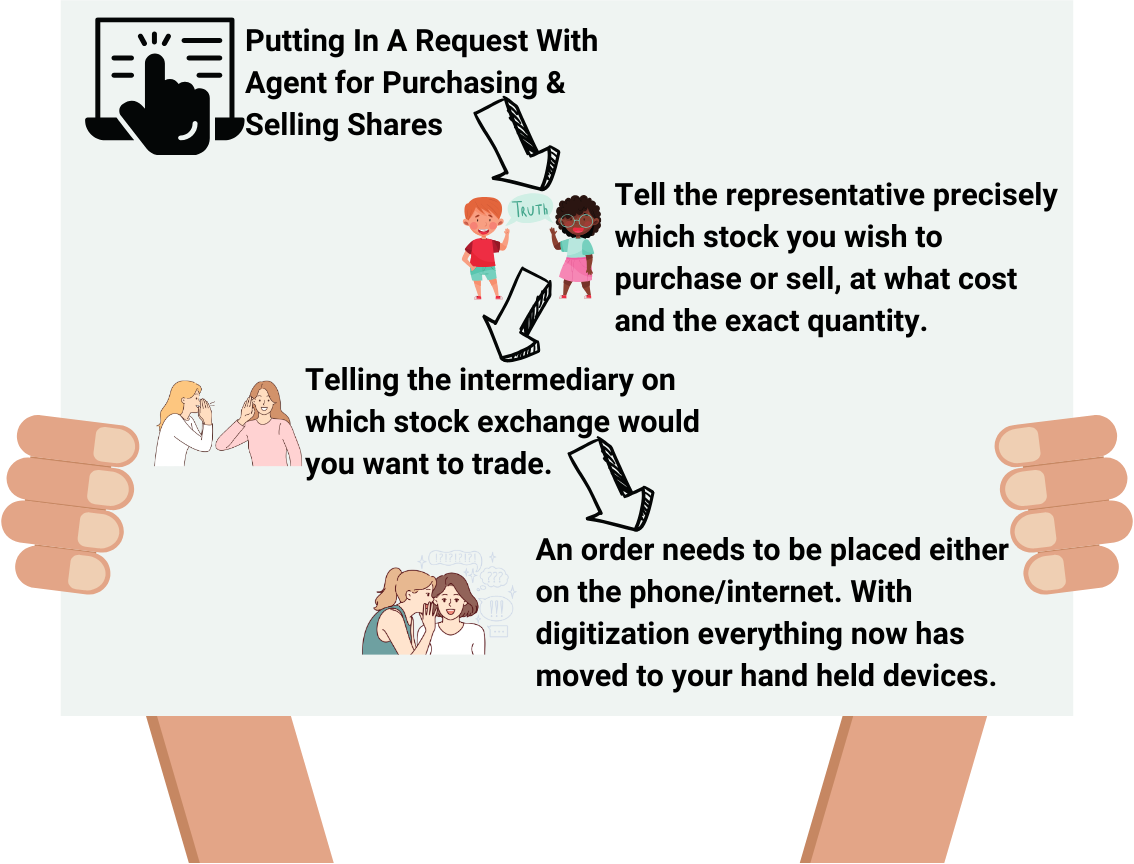
Trading on a recognized stock exchange is really important for making sure that buying and selling shares is safe, transparent and fair. Here is why this matters much:
- Legal and Regulatory Protection
Recognized stock exchanges are watched over by authorities like the Securities and Exchange Board of India. These exchanges have to follow the Securities Contracts Regulation Act, which makes sure that all trading is legal and follows the rules. This protects people who invest from fraud and other bad things that can happen when you trade outside of a recognized exchange.
- Transparency and Fair Price Discovery
Stock exchanges make sure that everything is transparent and that prices are fair. When you buy or sell shares the price is decided by how many people want to buy or sell. This helps people make decisions because they can see what is happening in the market.
- Guaranteed Settlement and Reduced Counterparty Risk
When you trade on a recognized exchange the exchange makes sure that the buyer gets the shares and the seller gets the money. This means that you do not have to worry about the person not paying or not sending the shares.
- Investor Grievance Redressal Mechanism
Recognized exchanges have a system for solving problems between investors and brokers. If you have a problem you can complain to the exchange. They will help you.
- Access to Verified and Listed Securities
Only companies that meet rules can trade on recognized exchanges. This means that you can trust the companies you are investing in.
- Audit Trails and Record-Keeping
Every time you trade on a recognized exchange it is recorded. This is important for taxes and for making sure that everything is fair.
- Market Integrity and Economic Confidence
Recognized exchanges help make the financial system stronger. They help people feel confident in the market and attract investors from countries.
Nirav: Vedant I have been looking into trading. Everyone talks about platforms like 5paisa. What is a trading platform?
Vedant: A trading platform is a system that helps you buy and sell things like stocks and bonds. It is like a door to the market.
Nirav: So with 5paisa I can trade using my phone or computer?
Vedant: Yes 5paisa has a website and a mobile app. You can use it to buy and sell things and to look at how your investmentsre doing.
Nirav: What should I look for when I choose a platform?
Vedant: Lets look at 5paisa. A good platform should be easy to use have tools for looking at the market and keep your information safe.
Nirav: It sounds like it does a lot more, than buying and selling stocks.
Vedant: That’s right. A good platform helps you make decisions and keeps your information safe.
Nirav: Thank you for explaining it to me. I will look into what 5paisa has to offer.
Vedant: A good platform does not just help you trade it helps you with your investment plan.
6.6 Understanding Trading Platforms
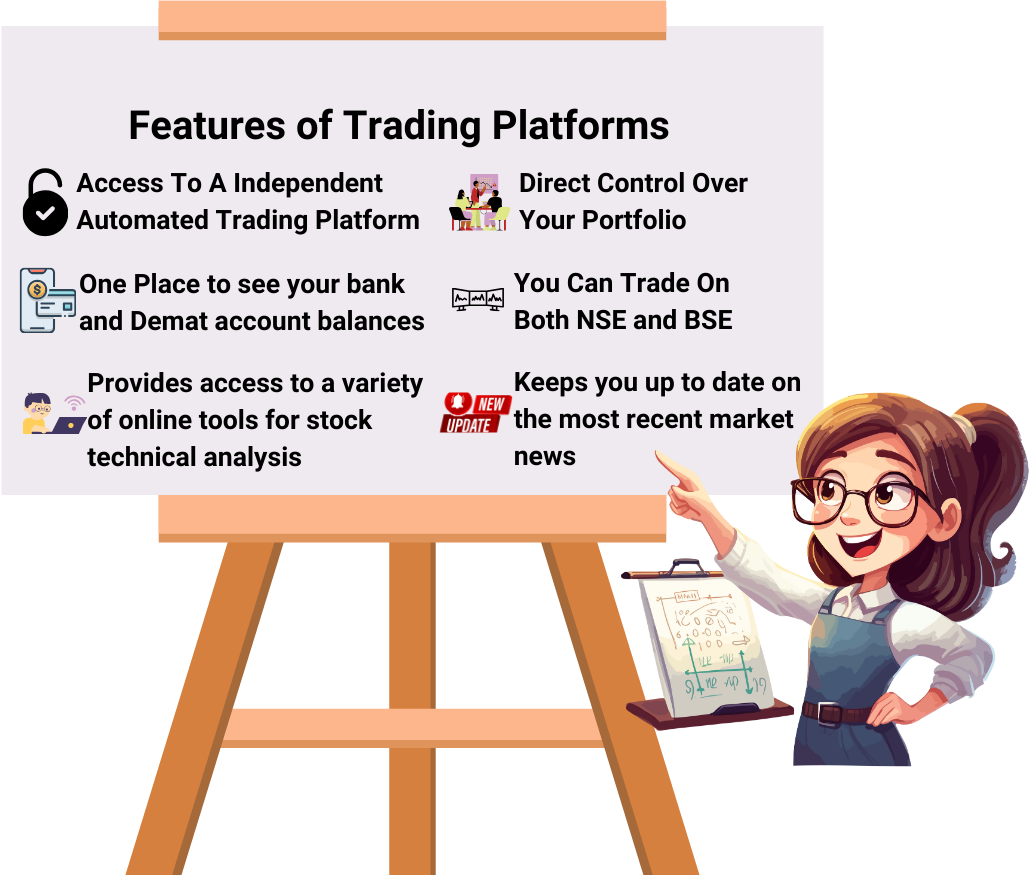
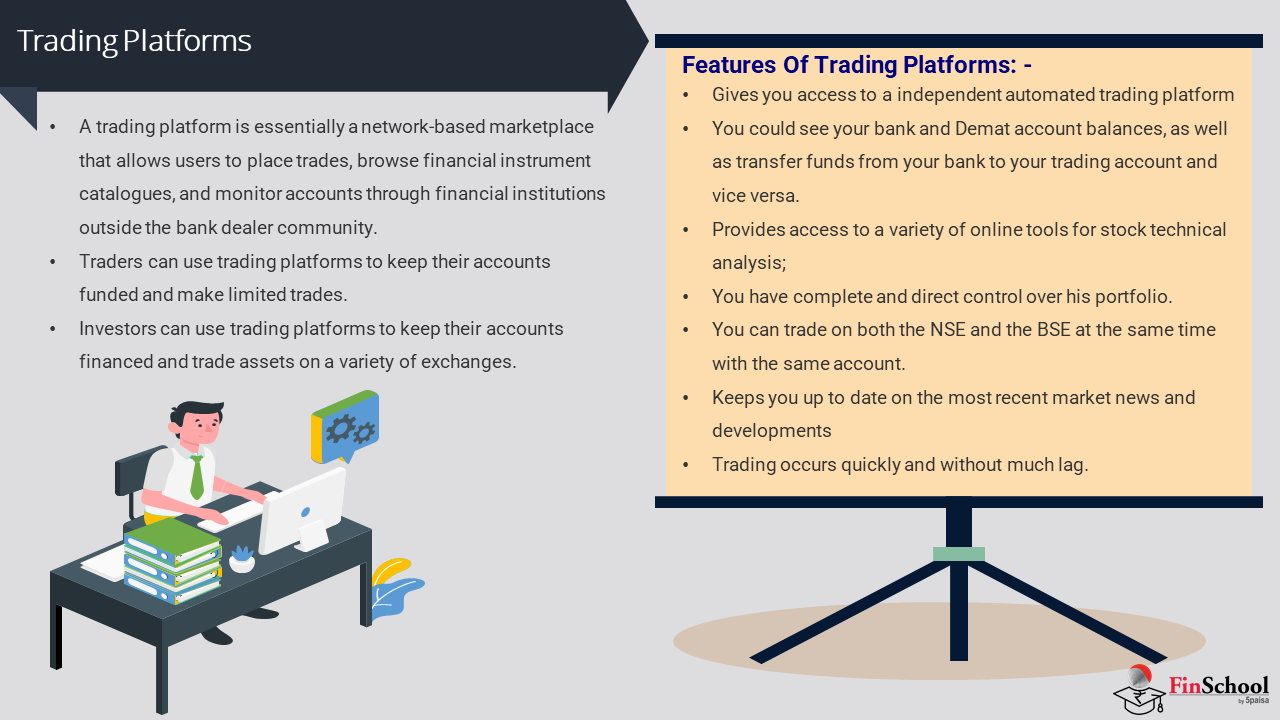
A trading platform is a software system that brokers or financial institutions provide to users. This system lets users buy, sell and manage things like stocks, bonds and mutual funds. It helps investors connect with the markets.
Think of a trading platform like a control room for people who invest in the market. It is similar to an app you use to book travel. That app lets you compare flights and book tickets. A trading platform does something. It connects you to the markets. You can place orders check your investments and look at trends. You can do all of this from one place. This makes it easier to handle your investments whether you are at home or somewhere else.
Core Functions
A trading platform does an important things:
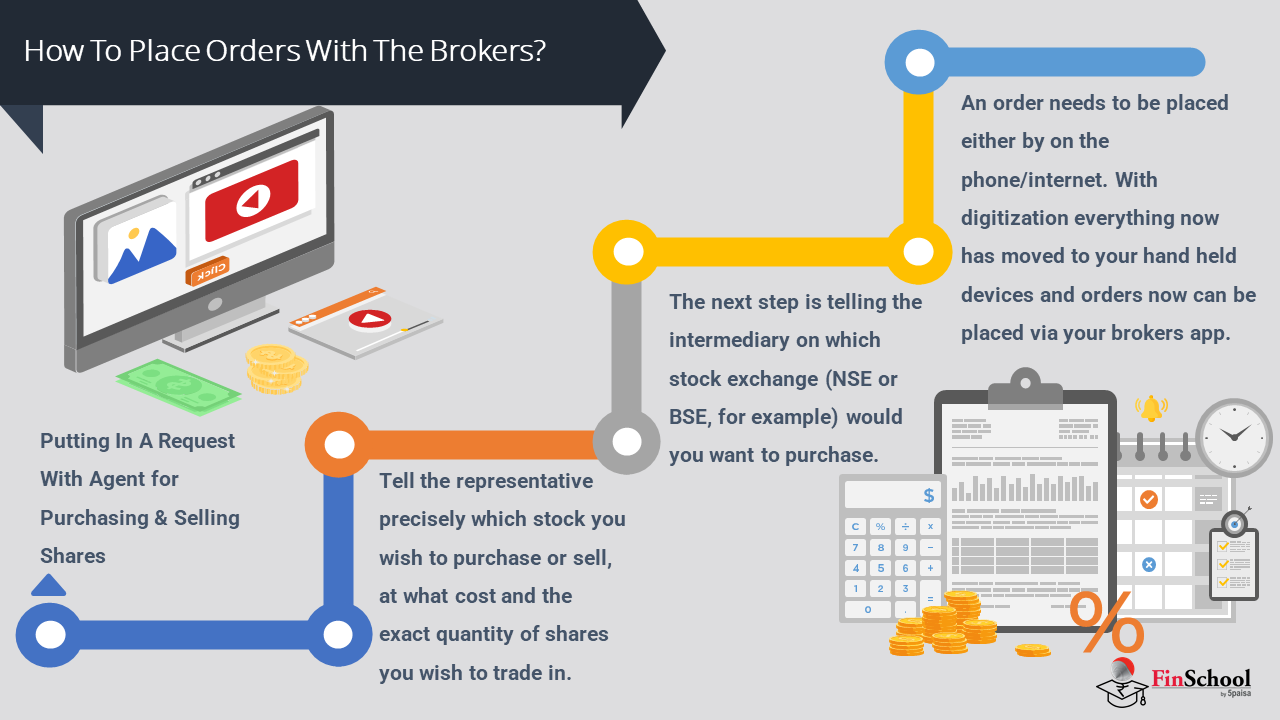
- It lets you place orders to buy or sell things away.
- It helps you keep track of what you own how money you are making or losing and how your investments are spread out.
- It connects you to places where you can buy and sell things, like the NSE, BSE or NYSE.
- It gives you tools to study the market and make decisions.
Nirav : So What are the Different Types of Trading Platforms?
Vedant : Lets discuss that in detail
Nirav : So What are the Different Types of Trading Platforms? Vedant : Lets discuss that in detail
6.7 Types of Trading Platforms
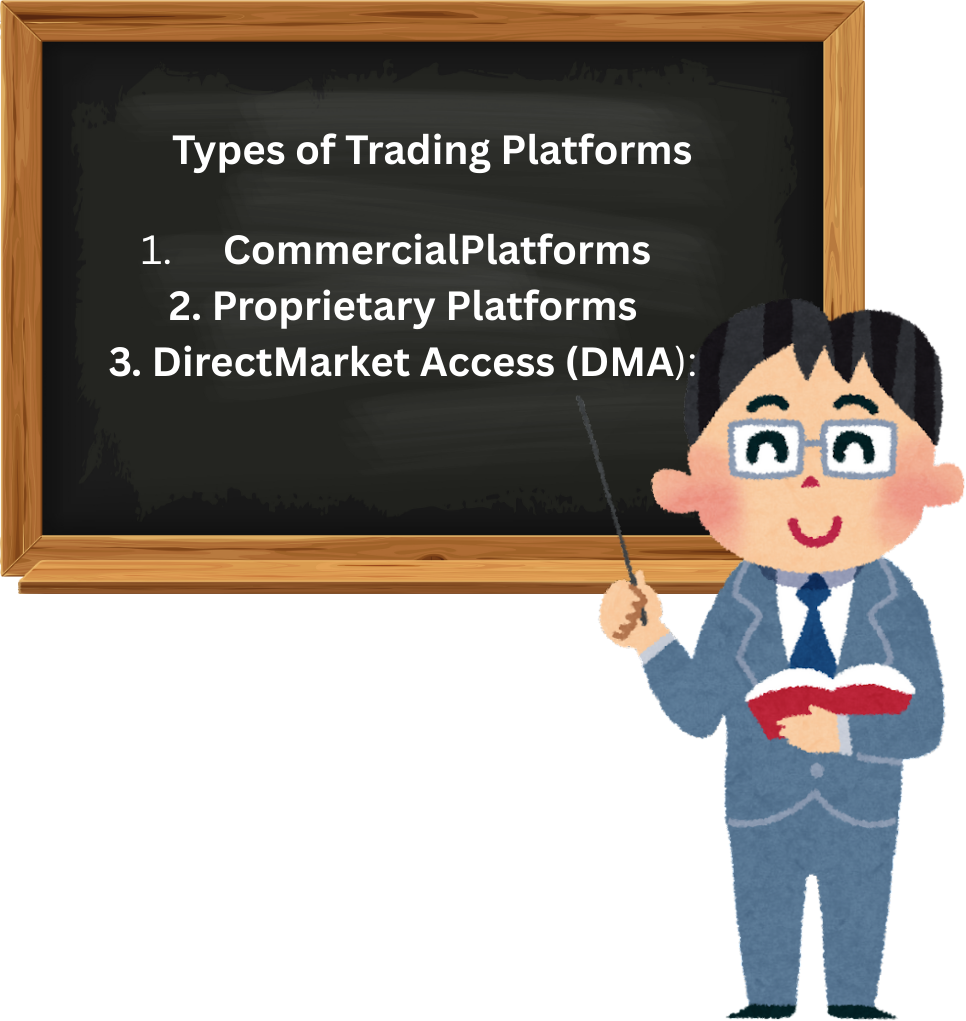
Types of Trading Platforms
1.Commercial Platforms: Designed for retail investors, Like 5paisa. 2.Proprietary Platforms: Built by large institutions for internal or high-frequency
trading. These are often inaccessible to the public and tailored for speed and scale.
3.Direct Market Access (DMA): Used by institutional traders for ultra-fast execution and access to market depth.
Costs and Considerations
While many platforms are free, some charge for premium features like advanced charting, real-time data, or research tools.
Key considerations include:
1.Brokerage fees
- Platformsubscription charges
- Latencyand execution speed
- Customersupport
Why It Matters
The right platform is really important because it can help you make decisions avoid mistakes and support your trading strategy. If you are someone who likes to look at numbers and tell stories with them then platforms that let you customize what you see export data and do research all in one place can be very helpful.
Nirav : How do I get started with trading, on platforms
Vedant : To start trading on platforms there are a things you need to do.
6.8 Using Trading Platforms
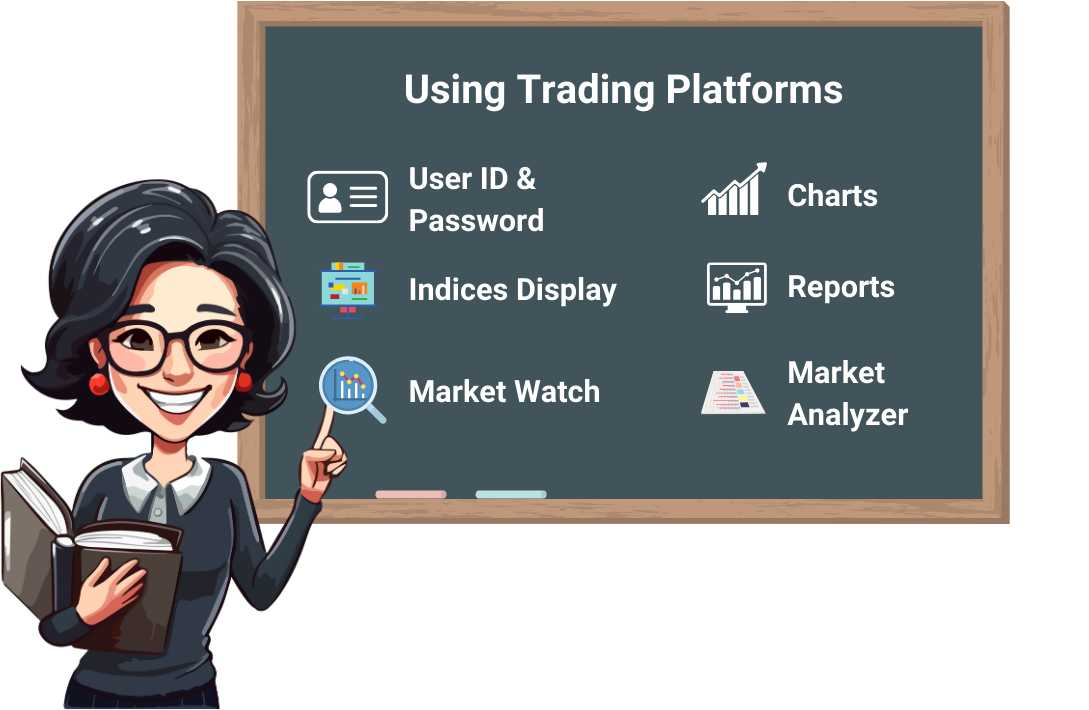
Getting Started With Trading Platforms
You need a user id and a password to keep your trading account safe. The brokerage company will give you a user id. You have to create a password. You should change your password often to keep your account secure. Also if there are ways to keep your account safe you should use them to protect your account.
Indices Display
The market indices will be shown in an appropriate area on your screen by the online trading platform. This allows you to keep track of the movements of all the indices, particularly the Sensex and Nifty. Most systems allow you to customize the interface to show all of the indices you want to track. This aids investors in gaining a broad understanding of market sentiments and executing their trades accordingly.
Market Watch
It’s an important screen to have in your trading account. It provides you with a tabular representation of the current market position of the selected equities. Each row contains information on a single share, such as the script name, the most recent traded price, the most recent traded quantity, the best bid and offer rate, total transacted volume, and so on. You can customize the market monitor window by selecting which columns you want to see and which ones you don’t. You can also alter the appearance of the table by changing the colours, size, and whether or not to employ a divider between the rows and columns.
Charts
Nowadays, all trading systems have a charting feature. The investor can use these charts to:
- Createintraday charts using only data from the current trading
- Make historical charts using data from previous
- Open many charts at the same
- Allows you to construct several types of charts, such as line, bar, and
- You may use technical analysis tools and other indicators to analyse
- Someplatforms also allow you to store charts to your computer for offline
Reports
You will have access to various reports linked to your market activities at any moment. The order book, trade book, margin, net positions, exercise book, and portfolio are all included in these reports. These reports are also dynamically updated as soon as a transaction is completed, eliminating the need to refresh them. In the reports themselves, you can do a variety of trading actions. These reports can also be saved in text or CSV file for offline use.
- Market Analyzer
This feature shows you the top traded stocks, top gainers, and top losers, as well as the % change in total volume and value. It gives you the names of the stocks that have hit their highest and lowest prices in the previous 52 weeks. It aids in the identification of significant trades and provides insight about scrip activity in the market.
- Transaction Cost
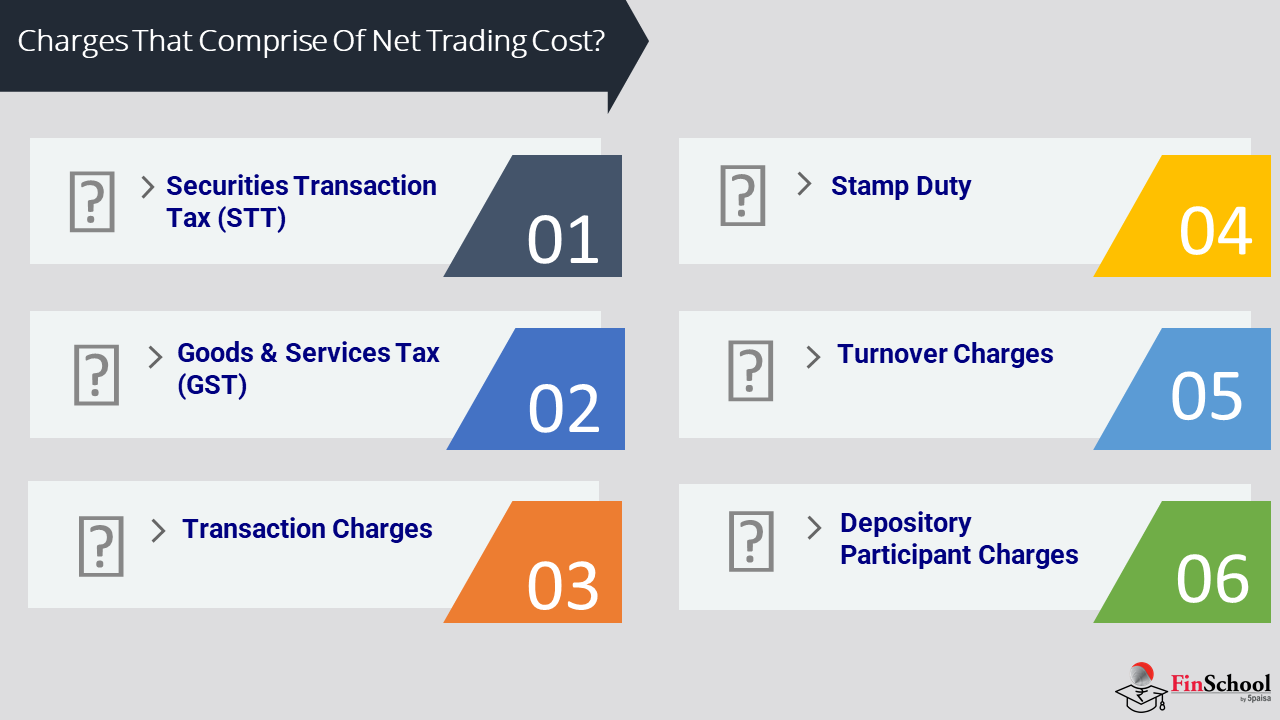
Trading is expensive. The costs associated with trading are called transaction costs and include two components: explicit costs and implicit costs.
- Explicit Trading Costs
This cost represents the direct costs associated with trading. Brokerage commissions are the largest explicit trading cost.
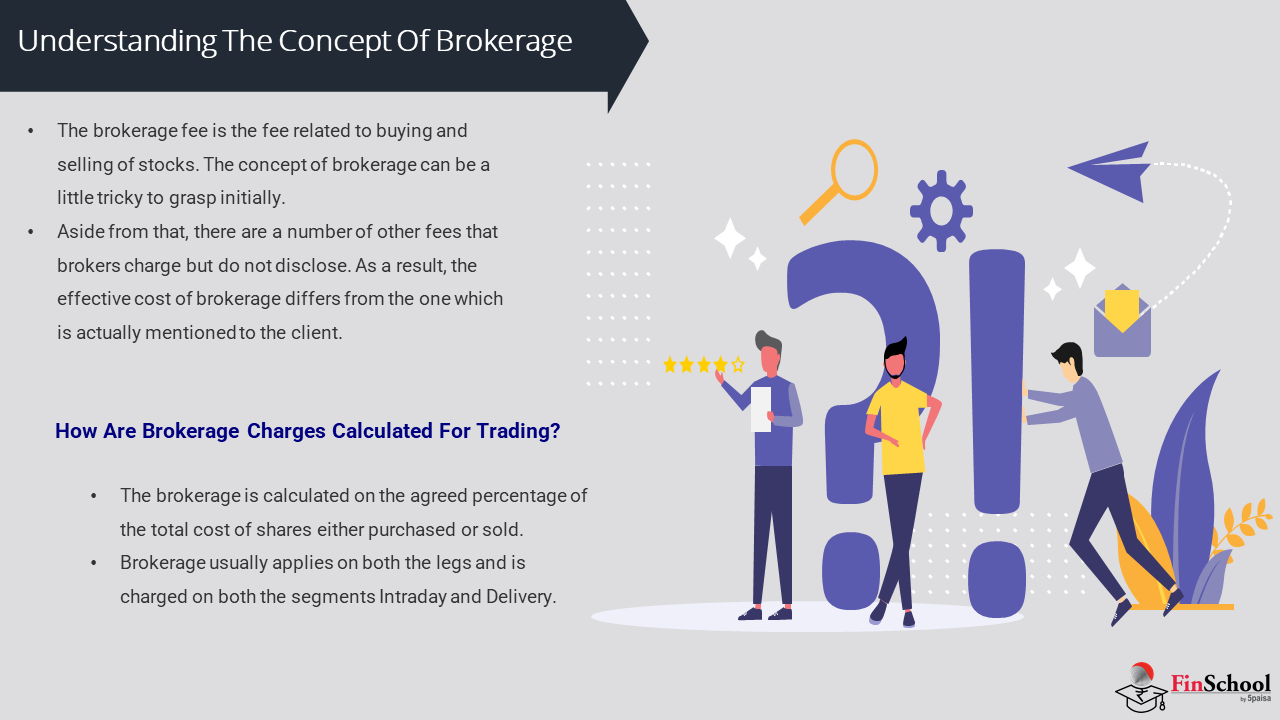
The brokerage fee is the fee related to buying and selling of stocks. The concept of brokerage can be a little tricky to grasp initially. Aside from that, there are a number of other fees that brokers charge but do not disclose. As a result, the effective cost of brokerage differs from the one which is actually mentioned to the client.
Brokerage
It is evaluated as a percentage of the total cost of all the shares purchased and sold. It is a fee that brokers charge for providing their services. This is not uniform and often varies from one broker to another. It also depends on the type of transactions you make. Often, the brokerage slabs provided by stockbrokers are dynamic, and regular clients get benefits of lower brokerage rates. The brokerage plans depend on the type of broker.
How Are Brokerage Charges Calculated For Trading?
The brokerage is calculated on the agreed percentage of on the total cost of shares either purchased or sold. Here, you are charged for intraday trading, and for delivery. Let’s understand both concepts: –
Intraday Trading:
Intraday trading involves buying and selling of stocks on the same day and earning a profit or loss based on the price difference. You don’t carry forward any shares because you purchase and sell on the same day, and no shares enter or leave your Demat account. As a result, the cost of intraday trading brokerage is usually relatively minimal. Depending upon the stockbroker, intraday trading charges can range from 0.01% to 0.05% of the volume/amount transacted. The formula for calculating this charge is to multiply the market price of shares into a number of shares, again multiplied by the agreed percentage of intraday charges.
Delivery: In delivery trading, on the other hand, the position is not closed on the same day, and the shares are purchased and held in a Demat account. You can hold the shares for a few days, months, or even years until you achieve your goal price.
These are the charges when you decide to hold your stocks.
- You can hold your stocks in sync with the market movements for as long as you want. Delivery charges can vary between 0.2% and 0.75% of the trading volume.
- The formula for this charge again, is to multiply the delivery charges into the number of shares and their market price
Nirav: Vedant, I’ve been thinking, most of my trades go wrong not because of flawed analysis but due to how I react emotionally. Have you experienced that?
Vedant: Absolutely. I’ve realized it’s not just about reading charts but reading ourselves. Trading psychology can be the thin line between consistency and chaos.
Nirav: True. I often get caught in the fear-of-missing-out trap. Like, when I see a stock rallying, I dive in late and end up with losses.
Vedant: That’s classic herd sentiment. Market euphoria pushes people into irrational decision-making. Sentiment indicators like the volatility index or put- call ratio can help gauge that mood swing.
Nirav: Interesting. But I’ve always wondered, how do you stay disciplined when sentiment is against your position? Like, when everyone’s bearish but your analysis is bullish?
Vedant: I try to anchor my conviction in the setup and ensure I’m not trading based on validation. One tool I use is journaling. After each trade, I reflect, was this impulsive or methodical?
Nirav: That’s powerful. Do you factor in news-driven sentiment? Like economic data releases or RBI announcements?
Vedant: Yes, but I treat them as context, not confirmation. They can spike emotions. That’s where risk management guards against overreaction. Setups are fragile if emotion hijacks strategy.
Nirav: Makes sense. I’m working on mindfulness techniques like deep breathing before entering a trade. Helps me stay grounded.
Vedant: That’s a great practice. After all, trading is less about predicting and more about responding. Mastering psychology means accepting uncertainty, not resisting it.
6.9 Psychology & Market Sentiment

Trading psychology is about the things that go on inside your mind and how you feel when you are trading. These are the thoughts that decide if you stick to your plan or change it when things get tough. Technical analysis and fundamental analysis help you figure out what to trade. Trading psychology is what helps you decide how to trade. It is like a conversation you have, with yourself that determines what you do when you are trading. Trading psychology is very important because it affects how you make decisions when you are buying and selling things.
Key Psychological Biases and Emotions in Trading
Emotion / Bias Description
Fear Leads to premature exits or hesitation to enter trades Greed Encourages over-trading or holding positions too long
FOMO (Fear of Missing Out) Causes impulsive entries during rallies without proper analysis
Emotion / Bias Description
Overconfidenc results in ignoring risk or over leveraging
Loss Aversion Makes traders hold losing positions too long to avoid realizing a loss Revenge Trading Taking irrational trades to recover from previous losses
Why It Matters
Even with a sound strategy, poor emotional control can sabotage performance. For example, exiting a trade too early due to fear might limit profits, while holding on too long due to greed can turn gains into losses.
Example: The FOMO Trap
Let’s say a trader named Arjun has a rule: only buy a stock after a breakout confirmed by volume. One day, he sees a stock rallying 8% on news. It hasn’t met his criteria, but he fears missing out. He buys impulsively.
The stock reverses sharply the next day, and Arjun exits with a 5% loss.
The loss was not because of a strategy it was because of emotional override. So how can we make our trading psychology better?
To make our trading psychology stronger we need to do a things.
- We need to have a written trading plan that says when we get in when we get out how big our positions are and how we manage risk.
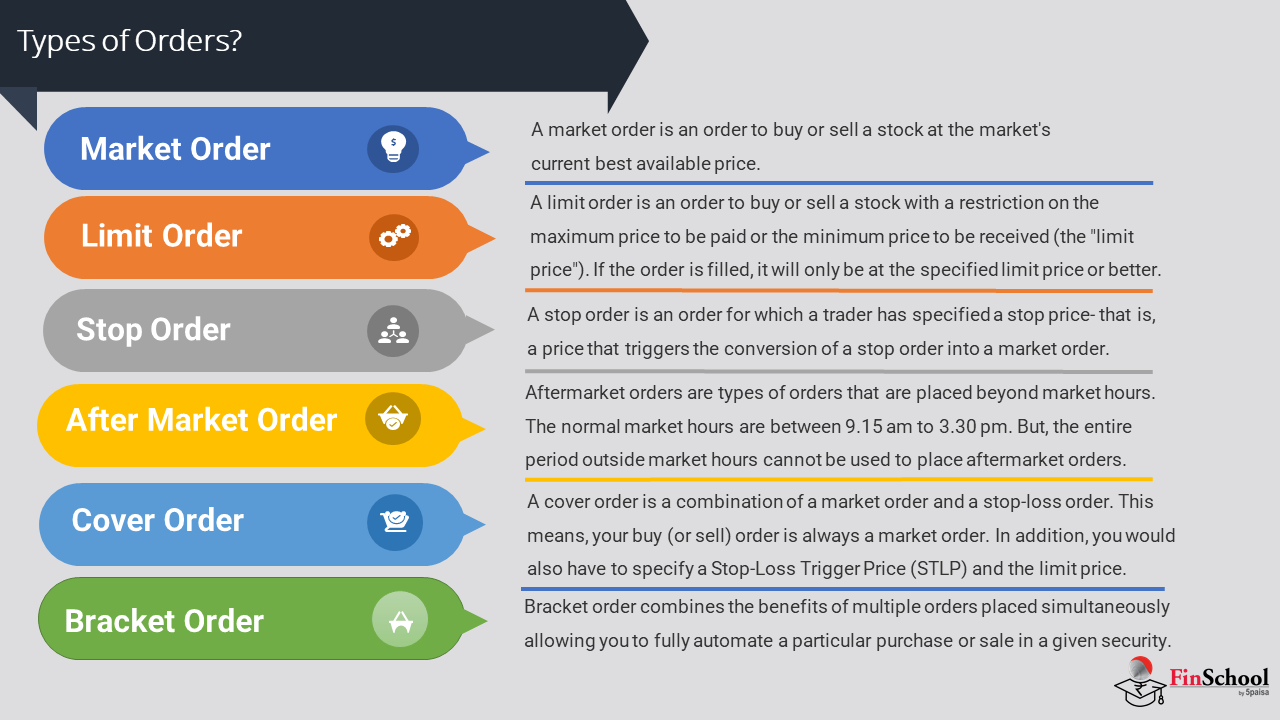
- We should use stop-loss orders to help us be more disciplined and not make decisions based on our emotions.
- It is an idea to keep a trading journal where we write down not just our trades but also how we are feeling when we make those trades.
- Practicing mindfulness can really help us manage stress. There are a lot of ways to do that like meditation or deep breathing.
- We should. Reflect on our trading every week to see if we can find any patterns, in our behavior and to become more disciplined traders.
Market Sentiment
Market sentiment is the feeling that investors have about a particular security or the market as a whole. It is what investors think and feel, not just what the facts are.
Types of Market Sentiment
- Bullish Sentiment: Investors are feeling good. They think prices will go up so they buy more.
- Bearish Sentiment: Investors are feeling bad. They think prices will go down so they sell more.
- Neutral Sentiment: Investors are not sure what to do. The market does not move much.
Why Market Sentiment Matters
Market sentiment can change prices in the term even if nothing else has changed. Some traders like analysts use market sentiment to figure out what will happen next.
For example lets say it is Budget Day. The finance minister says they will cut taxes and spend more on infrastructure. The market goes up 3% that day.
Why does this happen?
The market sentiment turns positive. Investors feel good about the economy even if it will take time to see the effects.
What happens next?
Stocks go up in areas like cement and steel and banking. This is not just because of the facts. Because investors are feeling positive, about Market Sentiment.
How to know what Market Sentiment is
Indicator What It Reveals
VIX (Volatility Index) High = fear; Low = complacency Put-Call Ratio High = bearish bias; Low = bullish bias
Advance-Decline Ratio Market breadth how many stocks are rising Social Media Trends Real-time investor mood
COVID-19 Market Crash & V-Shaped Recovery Backdrop
In early 2020, global markets were rattled by the rapid spread of COVID-19. India announced a nationwide lockdown on March 24, 2020, halting economic activity almost overnight.
Market Reaction
Date Event Nifty 50 Level
Jan 2020 Pre-COVID high ~12,300
Mar 23, 2020 Lockdown announced ~7,610 (down ~38%) Nov 2020 Vaccine optimism, global liquidity ~12,900
Feb 2021 Budget 2021 (Capex-led, no tax hikes) ~14,600
- Sectorshit hardest: Banks, travel, hospitality, real estate
- Sectorsthat recovered fastest: Pharma, IT, FMCG, digital platforms
Key Drivers of the Crash
- Globaluncertainty and fear
- Lockdown-inducedhalt in consumption and production
- FII outflows and liquidity crunch Policy Response
- RBIslashed repo rates and infused liquidity
- Governmentannounced the ₹20 lakh crore Atmanirbhar Bharat stimulus
- SEBIrelaxed margin norms and volatility controls Investor Behavior
- Panicselling in March 2020
- Massiveretail participation from April 2020 onward (rise of DIY investors)
- SIPflows remained resilient, showing maturing investor psychology
This chart from the Research Gate study shows the performance of the 50 index alongside COVID-19 case counts in India between January 2020 and March 2021.
Here is a breakdown of what it conveys and why the 50 index is significant:
The Nifty 50 index had a steep decline in March 2020.
As India recorded its wave of COVID-19 cases and imposed a nationwide lockdown on March 24 2020 the Nifty 50 index plummeted by nearly 38 percent from its January high. This sharp dip reflects investor panic, liquidity fears and uncertainty about earnings and economic survival of the 50 index.
The Nifty 50 index had a V-Shaped Recovery.
- Despite rising COVID-19 cases in April, May and June 2020 the Nifty 50 index began recovering, driven by the RBI’s support the Government’s ₹20 lakh crore stimulus, global central bank liquidity and strong retail investor participation in the Nifty 50 index.
- By November 2020 the Nifty 50 index had crossed its -COVID high of around 12,300 even as COVID-19 cases were still mounting.
- This divergence shows how markets are looking, often pricing in future expectations rather than current conditions of the Nifty 50 index.
- The Nifty 50 index had a Post-Budget Rally in February 2021.
- The Union Budget of 2021 with increased capital expenditure and no new taxes, ignited optimism in the 50 index.
- The Nifty 50 index surged further reaching 14,600 and more.
- Notably this occurred while the country was still dealing with challenges an example of how sentiment and policy clarity can drive rallies in the Nifty 50 index.
- The Nifty 50 index has an insight.
The chart visually demonstrates how market sentiment decoupled from realities of the Nifty 50 index.
While COVID-19 cases were still rising the Nifty 50 index rallied due to policy responses, liquidity and investor confidence in long-term recovery of the 50 index.
Lessons Learned from the 50 index are:
- Liquidity drives markets: Central bank action can override fundamentals in the short term for the Nifty 50 index.
- Sentiment is cyclical: Extreme fear often precedes rallies in the Nifty 50 index.
- Retail investors matter: Their resilience and digital adoption reshaped market dynamics of the 50 index.
Vedant said: So to sum it up the secondary market is where existing shares are traded among investors in the Nifty 50 index.
Unlike the market there is no new issuance, just exchanges between buyers and sellers of the Nifty 50 index.
Nirav said: Exactly and platforms like the NSE and BSE make that by offering a centralized system to match orders for the Nifty 50 index. Liquidity, price discovery and transparency all emerge from this dynamic of the 50 index.
Vedant said: It is fascinating how the value of a stock in the market reflects not just company performance, but also investor perception and broader market sentiment of the Nifty 50 index.
Nirav said: Right and speaking of that the range of products traded in the market goes well beyond equity shares of the Nifty 50 index.
Vedant said: Perfect timing next we will break down the instruments available like bonds, derivatives, ETF and explore how they function in real market scenarios for the Nifty 50 index.
Nirav said: It is where trading meets strategy whether you are hedging risk speculating on price movements or seeking income understanding these products is key for the Nifty 50 index.
Vedant said: Then let’s dive in up: Secondary Market Products, for the Nifty 50 index.