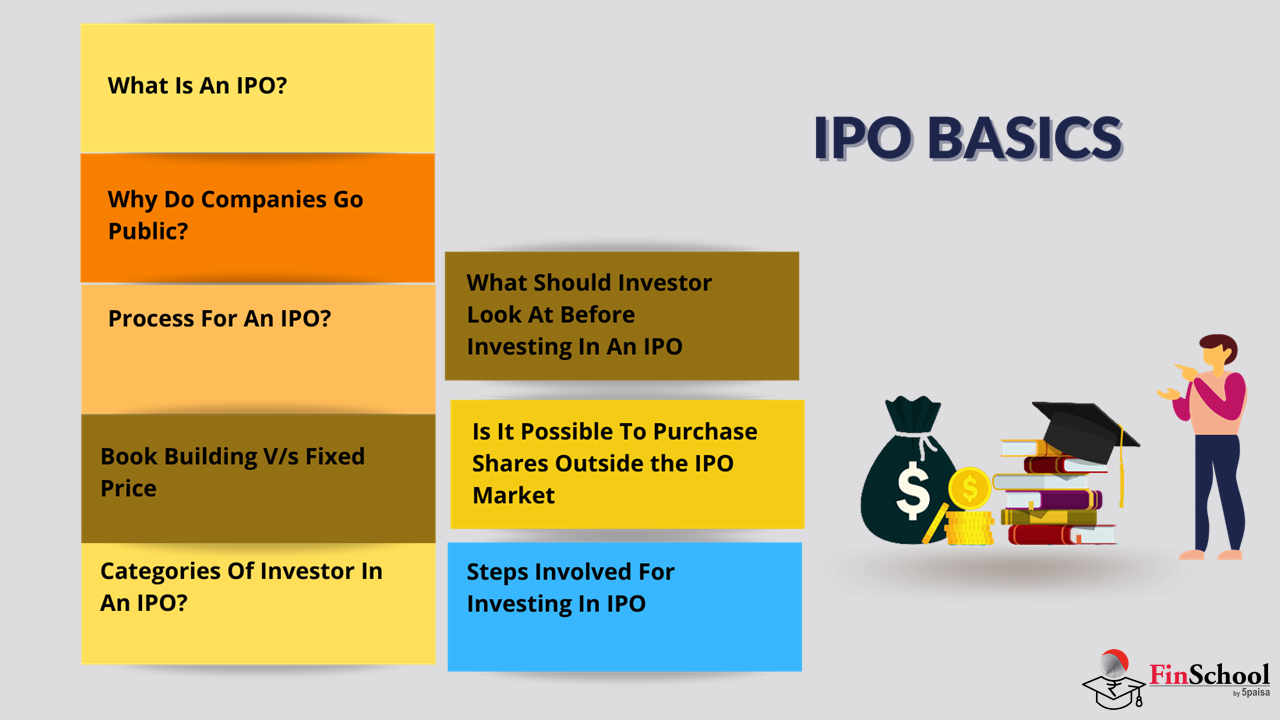

5.1 What Is An IPO & Why Do Companies Go Public?
Nirav: I keep hearing that IPOs are a deal. What makes them so special?
Vedant: When a private company sells shares to the public for the time that is called an IPO. It is like the company is opening its doors to people who want to invest.
Nirav: So the company is moving from a group to a public marketplace?
Vedant: Exactly. This helps the company get money become more well known and give the people who invested early a chance to get their money back.. It also means the company has to follow more rules and be more transparent.
Nirav: It sounds like a decision that can change the companys future.
Vedant: It is. Let us look at why companies decide to go public how the IPO process works and what investors should think about. For example imagine if Meeras chocolate business decided to go public
So Meera has been funding her chocolate business by herself but to make it bigger. Like opening a store or selling online. She needs money. Of borrowing money she can sell small parts of her business to her friends and neighbors in exchange for money. This is similar to going public: getting money by selling shares and being able to grow. This is the idea of an IPO. Turning a private business into a public one to get bigger and more credible.
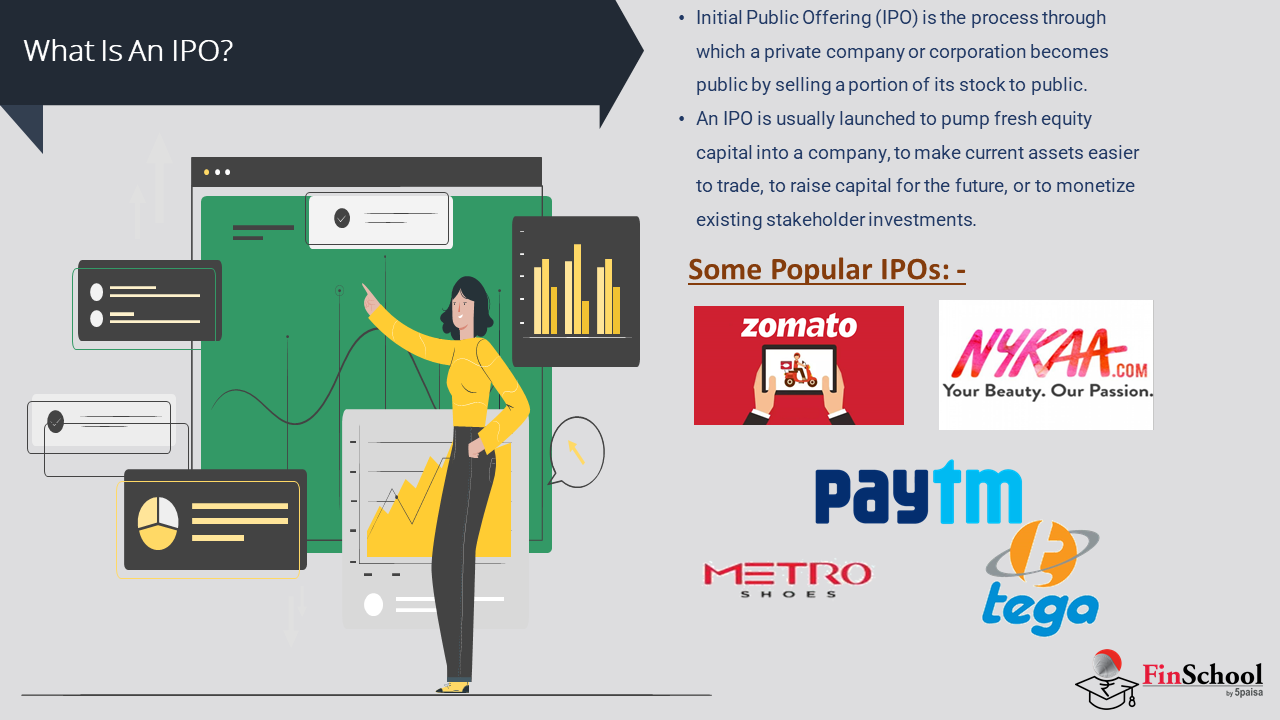
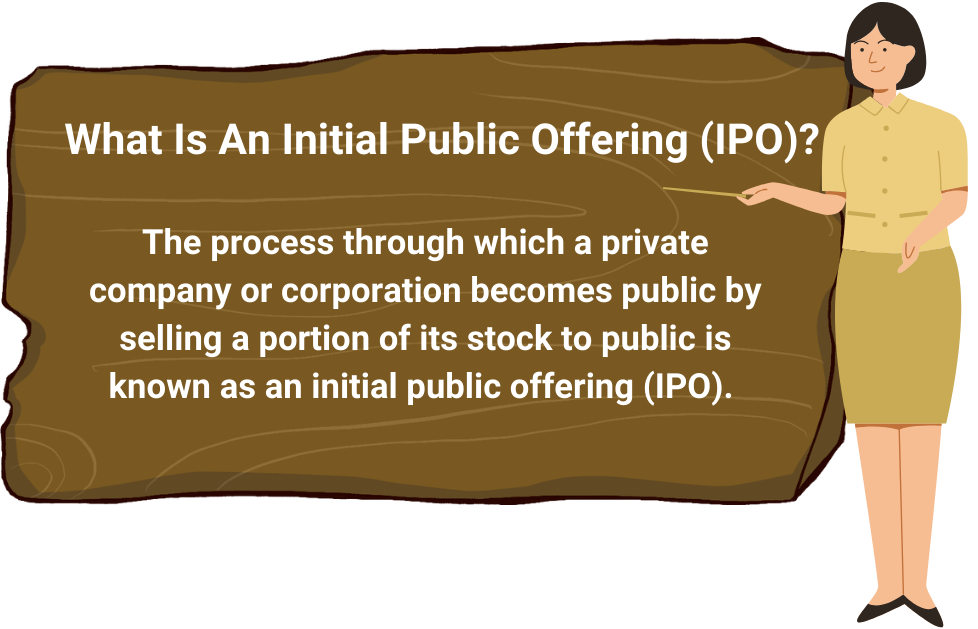
An Initial Public Offering or IPO is when a private company sells its shares to the public for the time by listing on a stock exchange.
What is an IPO?
An IPO is when a private company sells its shares to the public for the time on a stock exchange. This changes the company from being owned by a few people. Like the founders and early investors. To being owned by the public, where anyone can buy a part of the company.
Nirav: You explained what an IPO is very well.. Now I want to know why a company decides to go public.
Vedant: Going public helps companies get a lot of money without having to borrow. This money can be used to make the company bigger improve technology or even pay off debt.
Why Do Companies Go Public?
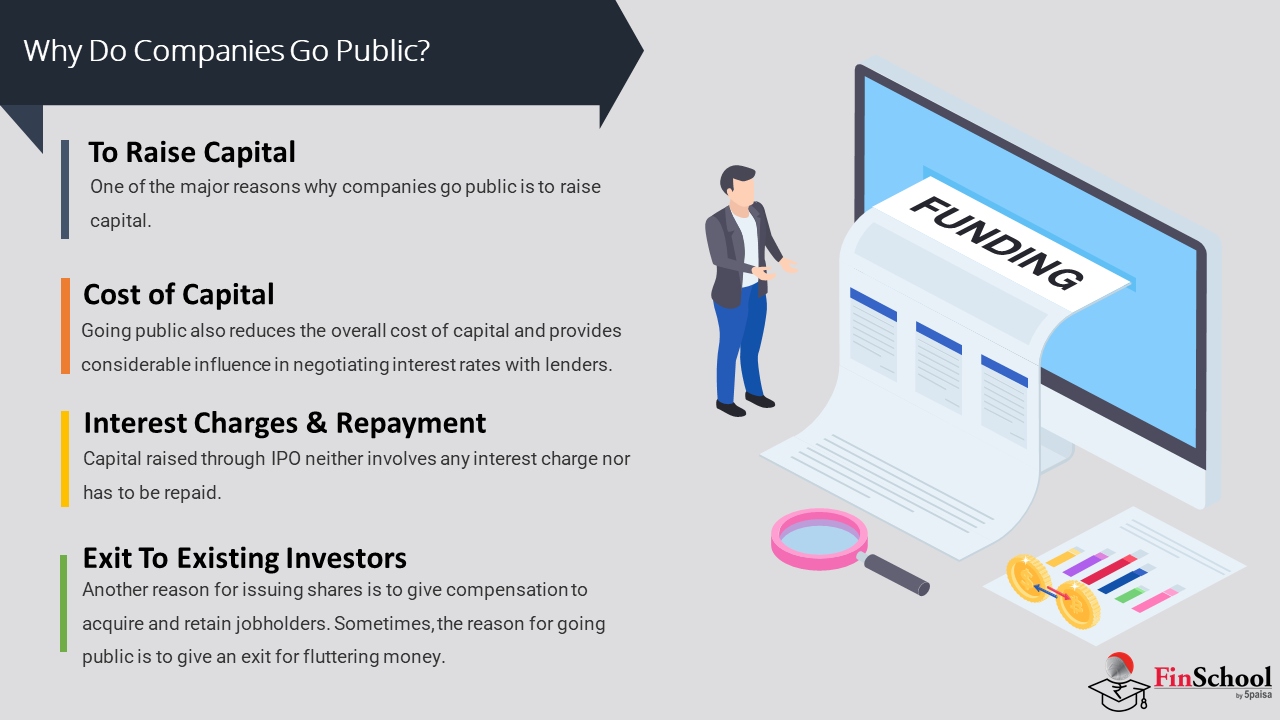
Companies go public for strategic reasons. Even though it brings challenges it can help the company grow very quickly.
So let us say Meera’s homemade chocolate business has been doing well over the years. She has loyal customers has hired a small team and has even started selling online.. Now she wants to do even more. Open stores all, over India buy new machines and make new products.
To get 50 crore rupees she decides to go public and sell shares to investors of borrowing money. This gives her the money she needs without having to pay it back.
Her brother, who invested in her business early uses the IPO to sell some of his shares and buy a house. This shows how IPOs can help people who already own shares get their money back. Being a company also makes Meeras brand more credible. More people know about her business and suppliers trust her more which helps her sell her chocolates as a high-quality product.
As a company analysts start tracking how well her business is doing, which helps her understand how much her business is worth. This is useful when she wants to work with companies or hire new people. A year later she decides to sell shares to fund her expansion into Southeast Asia using the fact that her company is already public to get the money more quickly.
Going public also helps the company be more responsible. Meera now has to share her companys reports every quarter and follow the rules set by SEBI, which helps her team be more disciplined and plan better.
In short companies go public to:
- Get money to grow without borrowing
- Help early investors get their money back
- Become well known and credible
- Understand how much their business is worth
- Be able to raise more money in the future
- Be more responsible and transparent
Meera’s story shows how an IPO can help a private business become a bigger more disciplined and more successful company.
Nirav: Please explain the advantages of going public and the process.
Vedant: Okay let us understand
5.2 Advantages Of Going Public & The Process For An IPO
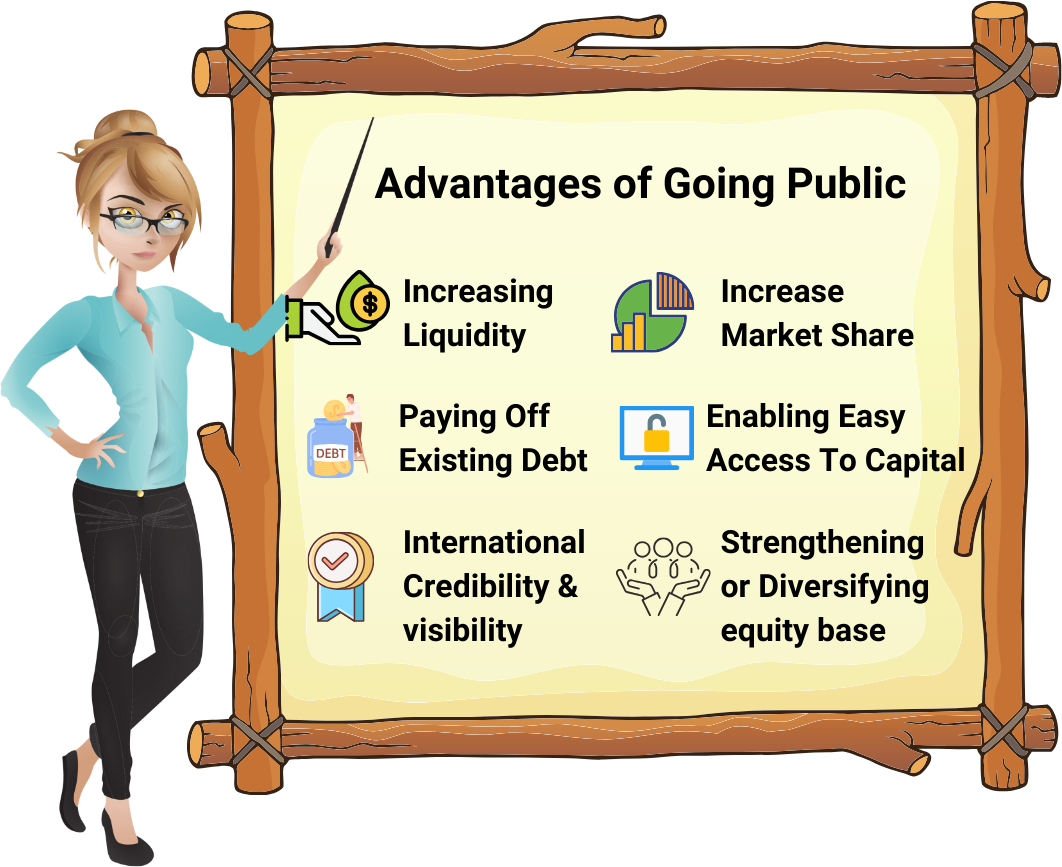
1. Access to Substantial Capital
The biggest advantage of going public is that a company can raise a lot of money from the public. This money can be used to expand the business do research and development buy companies or pay off debt. The good thing about this money is that it does not have to be paid which makes it very useful for growing the business in the long term.
- Liquidity for Existing Shareholders
An Initial Public Offering gives a market where people can buy and sell shares. The people who started the company the early employees and the investors can sell their shares. Get real money. This also makes it more attractive for new employees to work for the company because they can get shares as part of their pay.
- Enhanced Public Profile and Brand Visibility
When a company goes public it gets a lot of attention from the media and analysts. This helps people know more about the company, which can bring in customers and improve relationships with suppliers and partners. It also shows that the company is mature and trustworthy.
- Valuation Transparency
When a companys shares are traded publicly the market decides how much the company is worth. This is useful for making decisions like buying or selling other companies or when talking to lenders and partners.
- Improved Corporate Governance
Public companies have to follow rules and regulations like being transparent about their finances and having a system of oversight. This leads to control, transparency and accountability which are important to big investors.
- Future Fundraising Opportunities
Once a company is listed it can raise money easily through other public offerings or by giving existing shareholders the right to buy more shares. This helps the company keep growing without relying much on private funding or debt.
Nirav: What is the actual process of an Initial Public Offering in India?
Vedant: It starts with the company making sure it is ready both in terms of operations. Then they hire experts like merchant bankers and legal advisors.
Nirav: So they cannot just start selling shares?
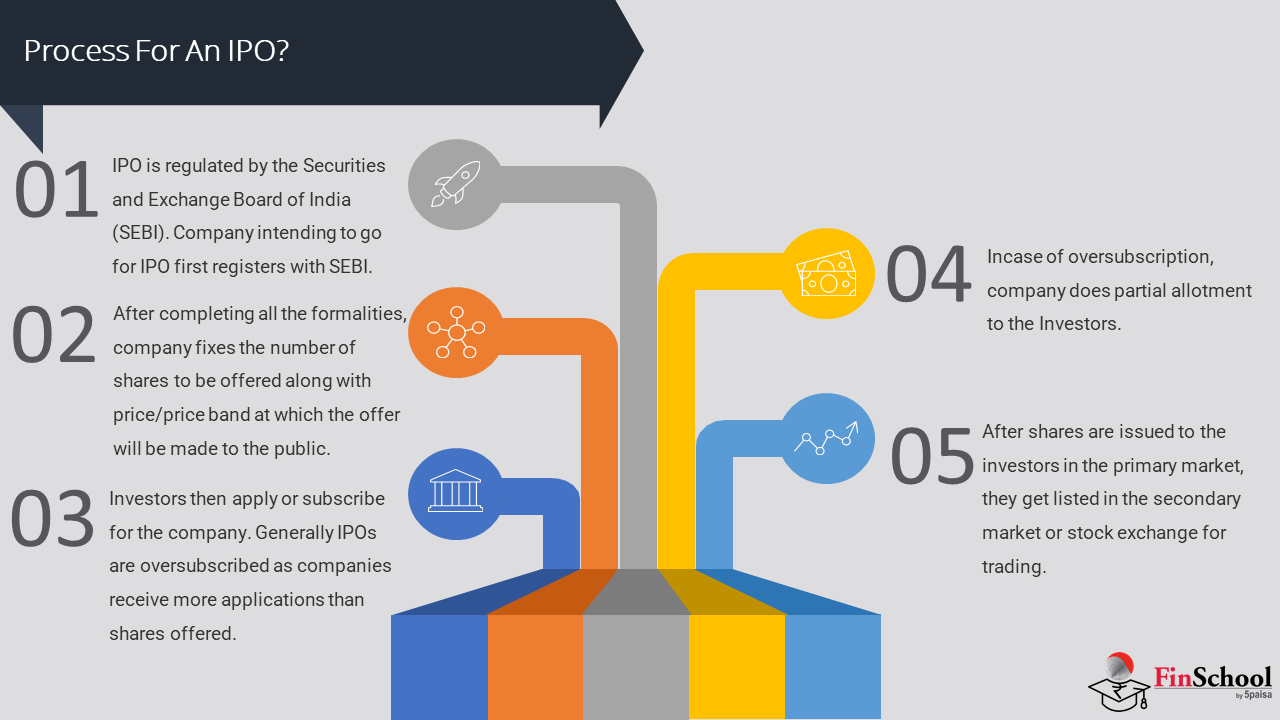
Vedant: No they cannot. They have to file a Draft Red Herring Prospectus with the Securities and Exchange Board of India which includes details about the business and the risks involved. The Securities and Exchange Board of India reviews it. Gives the go-ahead.
Nirav: What happens next?
Vedant: The company talks to investors to attract them. Then there is a process where investors bid for shares within a certain price range. After that shares are given to the investors. The company gets listed.
Nirav: So it is part strategy, part following the rules?
Vedant: Exactly it is a process from being a private company, to a public one, based on being transparent and trustworthy.
So let us understand the Initial Public Offering process.
5.3 What Is An IPO Procedure In India?
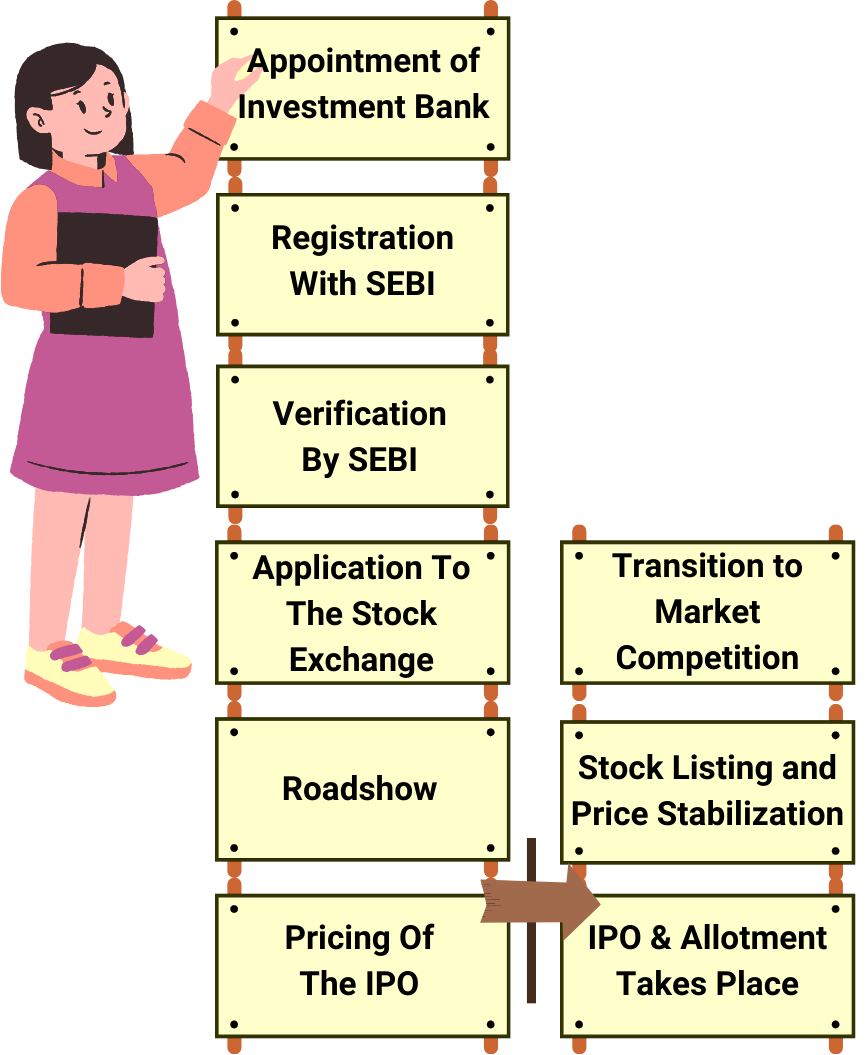
Before a company goes public it needs to think if it is ready. The company checks how well it is doing financially if it can grow and if it follows rules. The leaders and owners must agree on what they want in the run. Going public means responsibility like following rules and being answerable to shareholders.
Steps in the IPO Process
- Getting Help:The company chooses experts to help with the IPO. These include bankers, lawyers, auditors and others. Bankers help with the IPO and pricing. Lawyers and financial experts make sure everything is correct. Follows SEBI rules.
- Checking Everything: A detailed document called a Draft Red Herring Prospectus (DRHP) is made. It has information about the companys business, money, risks and goals. This document is given to SEBI to check. At the time everything about the company is checked to make sure it is okay.
- SEBI’s Role: SEBI checks the DRHP. Might ask for more information. If SEBI is happy it gives a light for the IPO. This step makes sure the IPO is fair to investors.
- Telling People About the IPO: The company and bankers go to meetings to tell people about the IPO. They want to get interest from investors. This helps see how demand there is. It is important for making people confident and setting up bidding.
- Setting a Price: A price range is announced for investors to bid. The final price is decided based on how much investors want to buy. This way of setting a price helps find a value for the shares.
- Final Steps: After bidding shares are given to investors based on demand and rules. The company lists its shares on stock exchanges like NSE or BSE. Once listed shares can be traded freely. The company becomes public.
Vedant: Nirav getting money for a business happens step by step.
Nirav: Really? I thought they just ask and get money.
Vedant: It starts with using your money or help from family. Then comes money from angel investors to try the idea.
Nirav:. Then what happens?
Vedant: If it grows they get money in rounds like Series A, B, C and so on. Each round is, for growing. They might go public. Get bought.
Nirav: So the money grows with the business?
Vedant: Yes. Each stage shows how mature and risky the company is. This helps investors decide.
5.4 Stages of Business Funding
Let us understand the Stages of Business Funding. Stages of Business Funding are important to know.
- Bootstrapping or Pre-Seed: This is when founders use their money to fund their idea. They use their savings. The focus is on making a viable product and checking if the idea is good. It is a high-risk stage. The founders have full control.
- Seed Funding: This is the time the company gets money from outside investors like angel investors. The money is used to make the product better do market research and build a team. The investors invest based on the companys vision, not its revenue.
- Series A: This is when venture capital firms invest in the company to help it grow. The company should have a product that people want and be making progress. The money is used to hire people market the product and grow the business.
- Series C: This is the stage where the company grows fast. The money is used to expand into markets upgrade technology or buy other companies. The risk is lower. The company is expected to have a model that can be scaled up.
- Mezzanine: This is the stage where the company gets ready to go public or be acquired. The money is used to make the companys finances look better and to comply with regulations. It is often given as debt or preferred equity.
Nirav asked: What are the types of IPOs? You mentioned Book Building and Fixed Price.
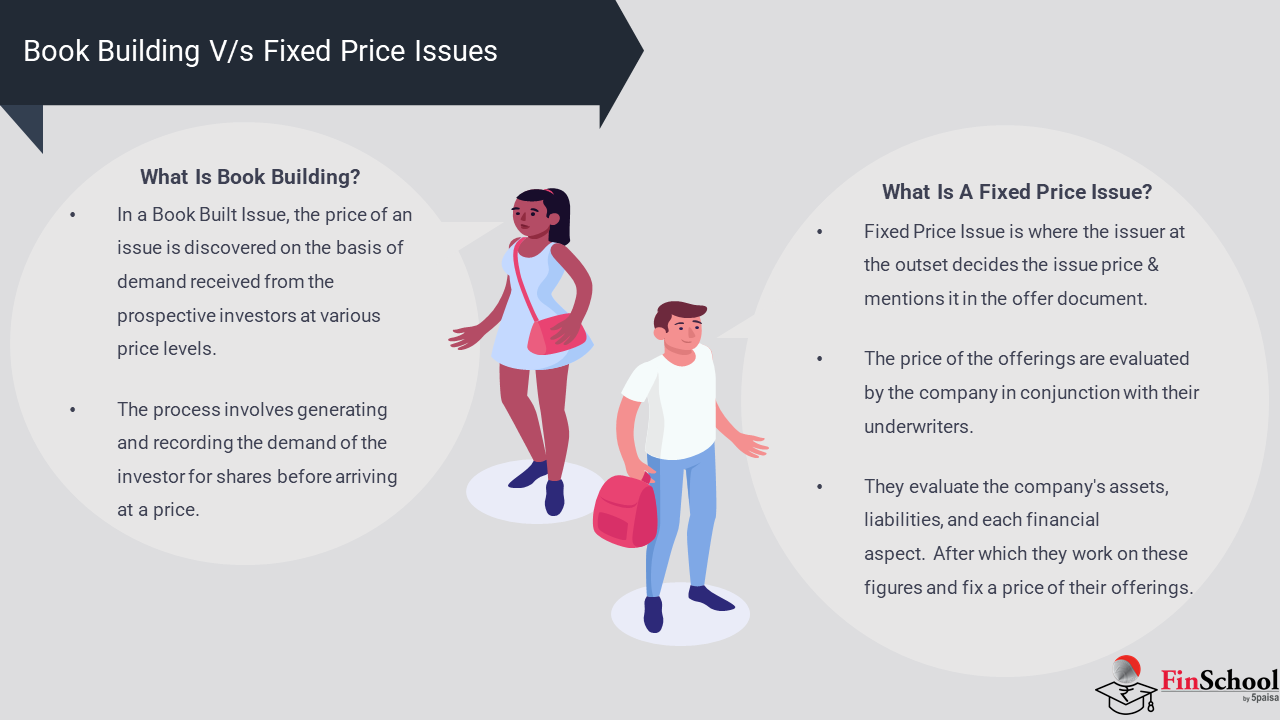
Vedant said: That is right. Book Building is a process where investors bid for shares within a price range and the final price is decided based on demand. Fixed Price is simpler where the company sets a price upfront.
Nirav said: So Book Building is like an auction?
Vedant said: Exactly. It is market-driven while Fixed Price stays the same no matter what the demand is.
Nirav said: Book Building seems flexible but Fixed Price seems easier for investors.
Vedant said: That is true. Each type of IPO suits goals and types of investors. Do you want to know more about how they work?
5.5 Book Building Process vs Fixed Price Mechanism
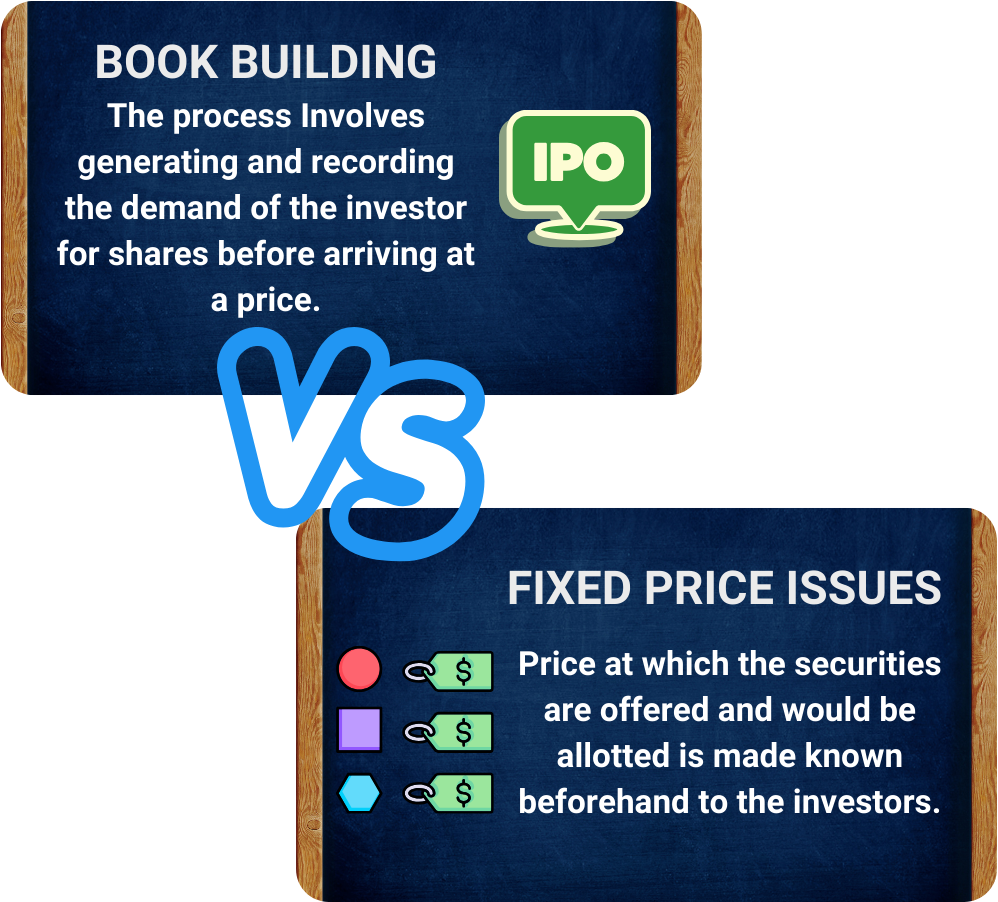
Now let us look at the Book Building Process versus the Fixed Price Mechanism.
- Book Building Process: This is a market-driven approach.
The Book Building Process is a way to decide the price for shares in an IPO. Of setting a fixed price the company gives a price range say ₹100 to ₹120 and asks investors to bid within that range during a certain period usually 3 to 7 working days. Investors say how shares they want and at what price, which helps to know the demand at different price points. This process is like a bookstore launching an edition and asking customers to bid within a price range. After collecting bids the final price is set where the demand is the strongest, which ensures pricing and efficient capital raising. Book building makes the process transparent shows the interest of the market and is commonly used for large IPOs.
How it works?
Investors submit bids saying how shares they want and at what price within the given range. These bids are collected in an order book by the stock exchange. At the end of the bidding period the company and its merchant bankers look at the demand at price points and decide the cut-off price, which is the price at which the shares will be allotted.
The advantages of Book Building are:
- It helps to find the price: The final price reflects the real demand of investors, which reduces the risk of under-pricing or overpricing.
- It is transparent: The demand is visible throughout the bidding period for big investors.
- It is flexible: Investors can. Cancel their bids during the bidding period.
- It attracts investors: It attracts Qualified Institutional Buyers, who often support the issue.
The limitations of Book Building are:
- It can be complex: Small investors may find the bidding process and price range confusing.
- It can be costly: It requires marketing, roadshows and regulatory compliance.
- It can be time-consuming: The process involves steps and coordination.
- Fixed Price Mechanism: This is a traditional model.
The Fixed Price Mechanism in IPOs is like a store launching a budget smartphone at a fixed price of ₹9,999, where customers pay the fixed amount without negotiation. Similarly in an IPO the company and its merchant bankers decide an offer price, in advance, which is disclosed in the prospectus. Investors apply at that fixed rate with no bidding or price range involved. The demand is known only after the IPO closes.
How It Works?
Investors apply for shares at the pre-decided price and pay the full amount upfront. The demand for the issue is only known after the subscription period ends. If the issue is oversubscribed, shares are allotted proportionally or via lottery.
Advantages
- Simplicity:Easy for retail investors to understand and
- Predictability:Investors know the exact price they’re
- Lowercost: Fewer marketing and administrative expenses compared to book
Limitations
- Noprice discovery: The price is based on internal estimates, which may not reflect true market demand.
- Demandopacity: Investors don’t know how well the issue is performing until it
- Limited institutional interest: QIBs often prefer the flexibility of book building.
Vedant: Hey Nirav, did you check out the NSDL IPO? I applied through 5paisa.
Nirav: Yeah, it was hugely oversubscribed! How was the process?
Vedant: Super smooth. I used the cut-off price, entered my UPI ID, and approved. Got 1 lot allotted.
Nirav: Nice! Shares credited to your Demat?
Vedant: Yup, on August 5. Listed on BSE the next day with a 15% premium. NSDL handled custody securely.
5.6 How Can Investors Invest In IPOs
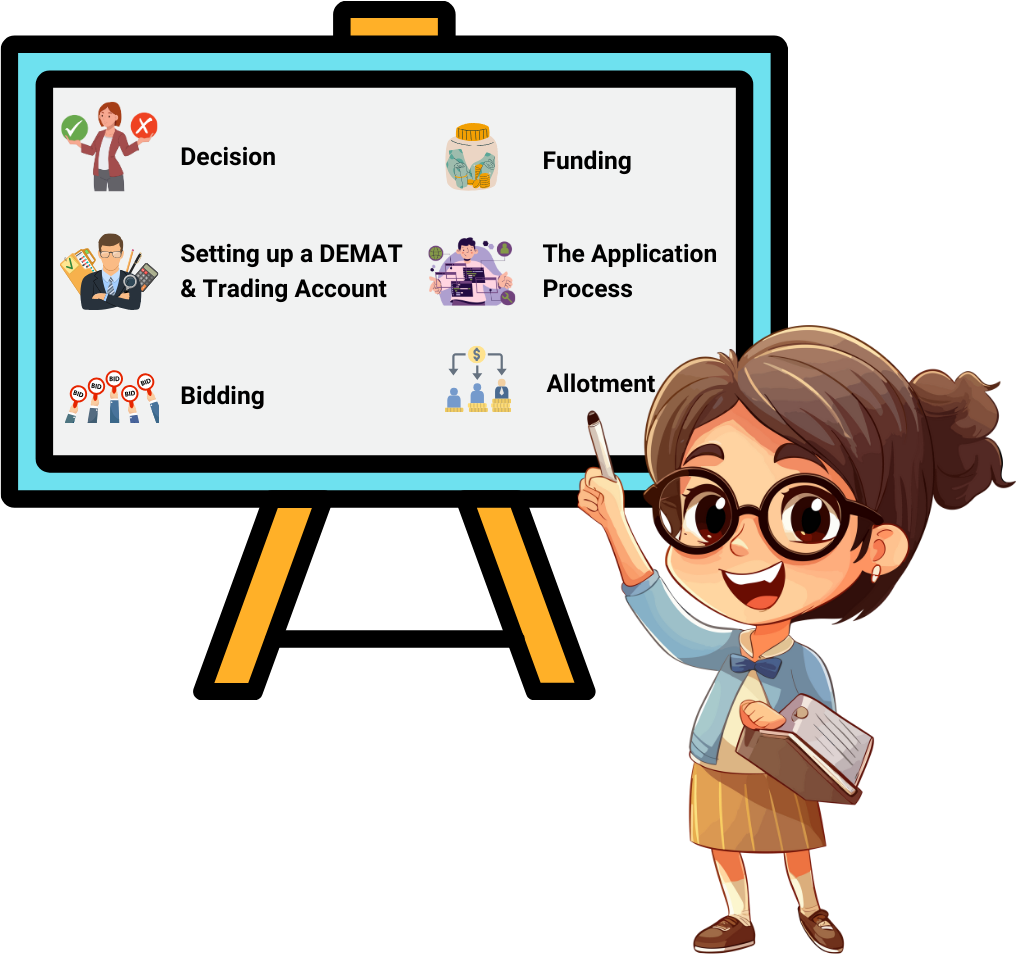
Vedant: Hey Nirav, did you check out the NSDL IPO? I applied through one of the trading platforms.
Nirav: Yeah, it was hugely oversubscribed! How was the process?
Vedant: Super smooth. I used the cut-off price, entered my UPI ID, and approved via PhonePe. Got 1 lot allotted.
Nirav: Nice! Shares credited to your Demat?
Vedant: Yup, on August 5. Listed on BSE the next day with a 15% premium. NSDL handled custody securely.
How Can Investors Invest In IPOs with Trading Platforms
- IPO Overview
- Company: National Securities Depository Ltd (NSDL)
- IPO Dates: July 30 to August 1, 2025
- Issue Size: ₹4,011.60 crore (Offer for Sale of 5.01 crore shares)
- Price Band: ₹760–₹800 per share
- Lot Size: 18 shares
- Listing Date: August 6, 2025 on BSE
- Over-subscription: 41.02 times overall; QIBs 103.97x, NIIs 34.98x, Retail 7.76×2
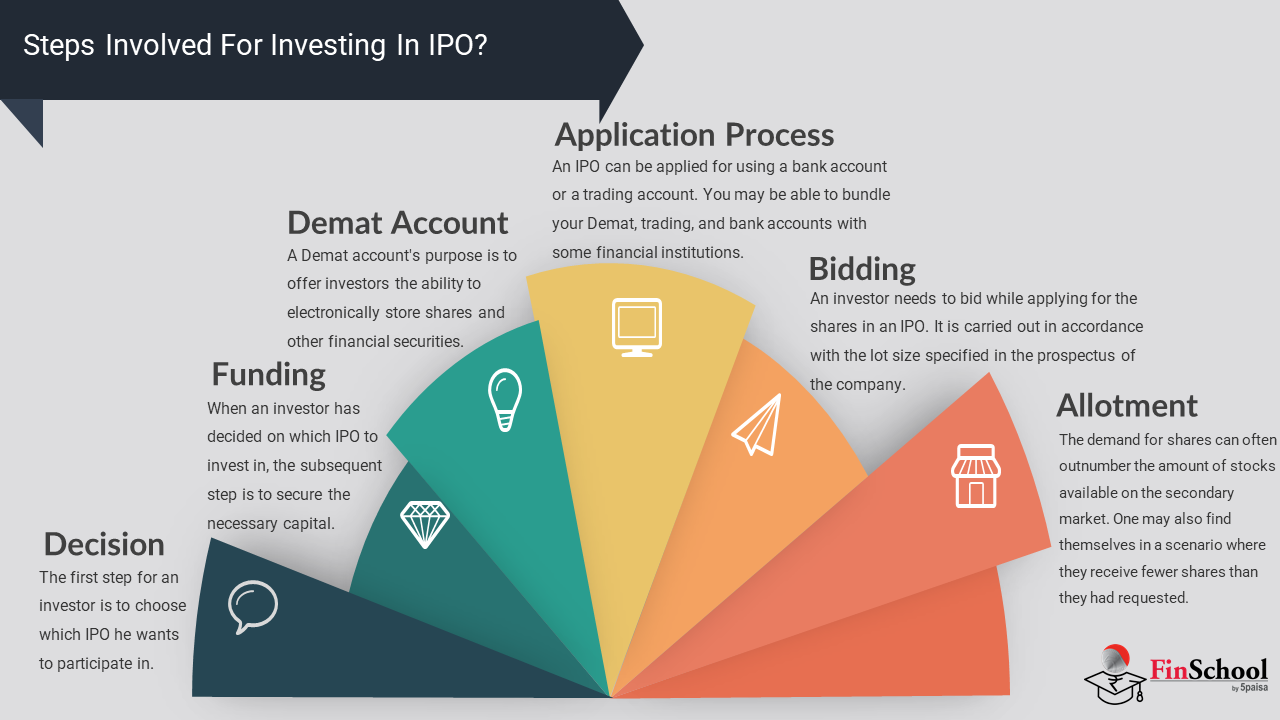
- Applying via Trading Platforms (Linked to NSDL)
- Demat Account: Investors opened a Demat account with Trading Platforms, which was linked to NSDL.
- Platform Access: Logged into the Trading app or website and navigated to the IPO section.
- IPO Selection: Selected “NSDL IPO” to view details like price band, lot size, and DRHP.
- Application:
- Chose number of lots (e.g., 1 lot = 18 shares)
- Selected “Cut-off price” for simplified bidding
- Entered UPI ID for payment authorization
- UPI Mandate: Approved the mandate via UPI app to block funds
- Allotment Status: Checked allotment on August 4 via Trading App or registrar’s site
- Post-Allotment via NSDL
- Credit to Demat: Allotted shares were credited to NSDL-linked Demat accounts by August 5
- Refunds: Non-allottees had their blocked funds released the same day
- Listing: Shares listed on BSE on August 6, with a projected premium of ~15% over issue price
NSDL’s Role in the Process
|
Stage |
NSDL’s Function |
|
Account Setup |
Safeguards investor holdings via Demat infrastructure |
|
Share Allotment |
Credits shares electronically to investor accounts |
|
Post-Listing |
Maintains secure custody of listed shares |
This IPO was a strong example of how NSDL not only facilitates secure shareholding but also showcases investor confidence in capital market infrastructure
Why Use Trading Platforms for IPOs?
- Seamless UPI integration for quick applications
- Real-time IPO alerts and allotment updates
- In-app research reports and IPO ratings
- No paperwork—entire process is digital and mobile-friendly
Nirav: Vedant, ,My friend applied for an IPO last week but he didn’t get any shares. Do you know how the allotment process actually works?
Vedant: Yeah, it’s a bit of a lottery sometimes—especially for retail investors. The allotment depends on how many people apply and how many shares are available. If the IPO is oversubscribed, not everyone gets a piece.
Nirav: So it’s not just about applying early?
Vedant: Nope. Timing doesn’t matter as much as demand. For retail investors, allotment is usually done through a computerized lottery system. But for institutional investors, it’s more proportional to the amount they bid.
Nirav: Interesting. What happens if the IPO isn’t fully subscribed?
Vedant: Then all valid applicants get full allotment. And if there are leftover shares, they might be reallocated to other investor categories or withdrawn. Want to walk through the full process step by step? It’s actually quite structured.
5.7 How Are Shares Alloted?
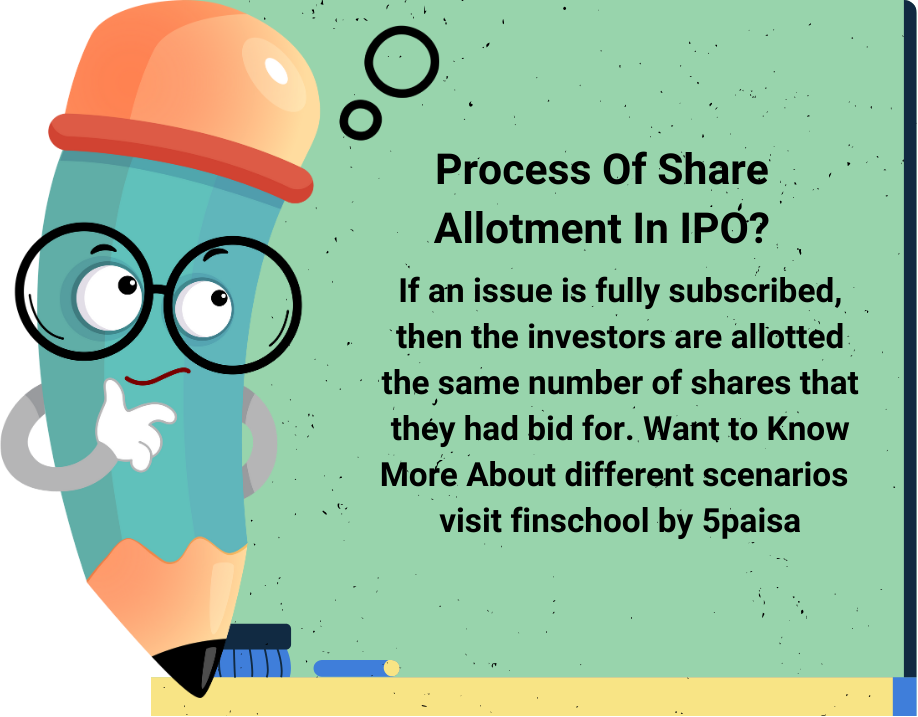
IPO share allotment is like applying for concert tickets with limited seats. If demand is low, everyone gets shares—just like an under-subscribed show. But if it’s oversubscribed, retail investors may get shares via lottery, while institutional ones receive proportional allotment.
Invalid or duplicate applications are rejected, and refunds are issued to those who don’t get shares. The process is regulated by SEBI and managed by the IPO registrar and stock exchange to ensure fairness and transparency.
- Categorization of Investors
- IPO shares are divided into categories:
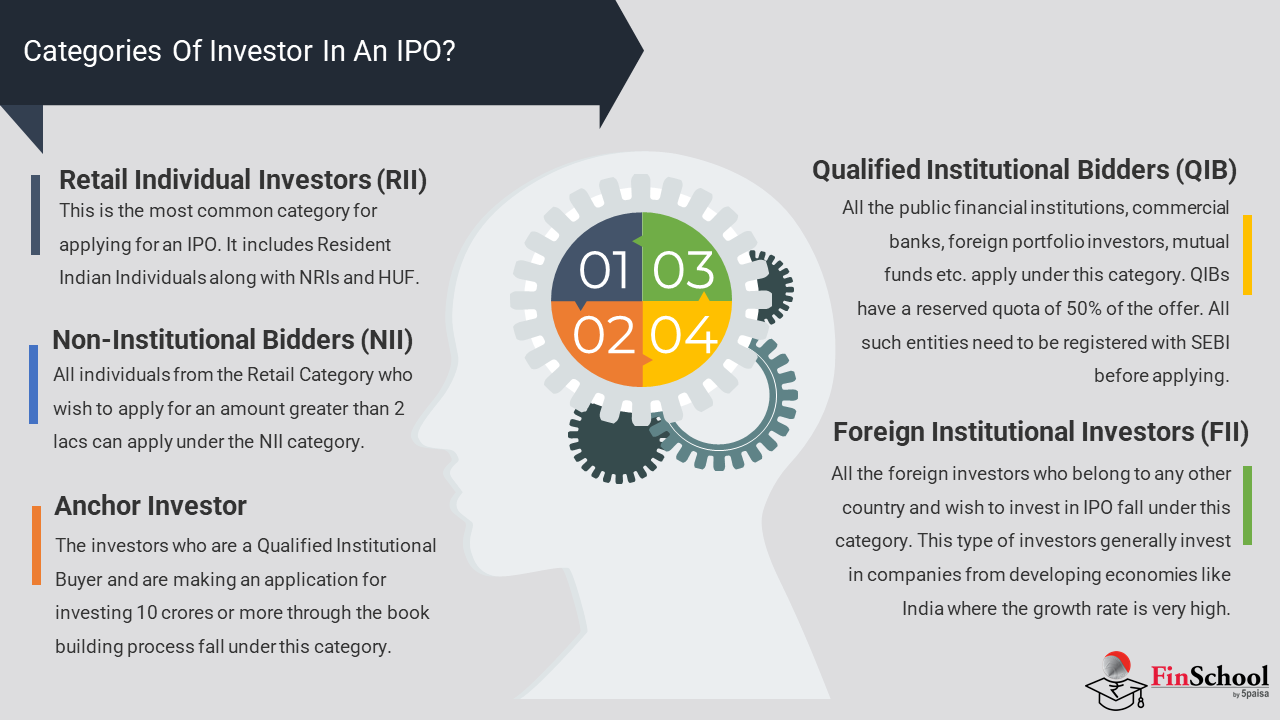
- Retail Individual Investors (RIIs) – typically allotted 35% of the issue
- Non-Institutional Investors (NIIs) – allotted 15%
- Qualified Institutional Buyers (QIBs) – allotted up to 50% Each category has its own allotment rules and reservation.
- Validity of Applications
Only valid applications are considered. Invalid ones—due to incorrect PAN, multiple applications from the same investor, or mismatched bank details—are rejected.
- Undersubscription Scenario
If the IPO is under-subscribed (i.e., fewer applications than available shares), all valid applicants receive full allotment. The remaining shares may be reallocated to other categories or withdrawn.
- Oversubscription Scenario
If the IPO is oversubscribed, allotment becomes selective:
- Forretail investors, allotment is done via a lottery Each valid applicant has an equal chance of receiving at least one lot.
- For NIIs and QIBs, shares are allotted proportionally based on the size of their
- Basis of Allotment Document
The registrar prepares a “Basis of Allotment” document, which outlines how shares were distributed across categories and how over subscription was handled. This is published on the registrar’s website.
- Credit and Refund
- Allotted shares are credited to investors’ Demat
- If no shares are allotted, the blocked funds are released (in case of UPI or ASBA applications).
Nirav: Vedant, is the Red Herring Prospectus really important for IPO investors?
Vedant: Definitely. It’s the company’s pitch to the public, covering business, financials, risks, and fund usage.
Nirav: What should I focus on?
Vedant: Start with the business overview, industry analysis, and objectives of the issue. Then check financials and risk factors.
Nirav: What about the team?
Vedant: Look at management experience, capital structure, and anchor investor interest. It all signals credibility.
Nirav: So it’s like a preview before investing?
Vedant: Exactly. It won’t show the final price, but it helps you decide if the IPO is worth applying for.
5.8 What Should Investors Look Into Red Herring Prospectus?
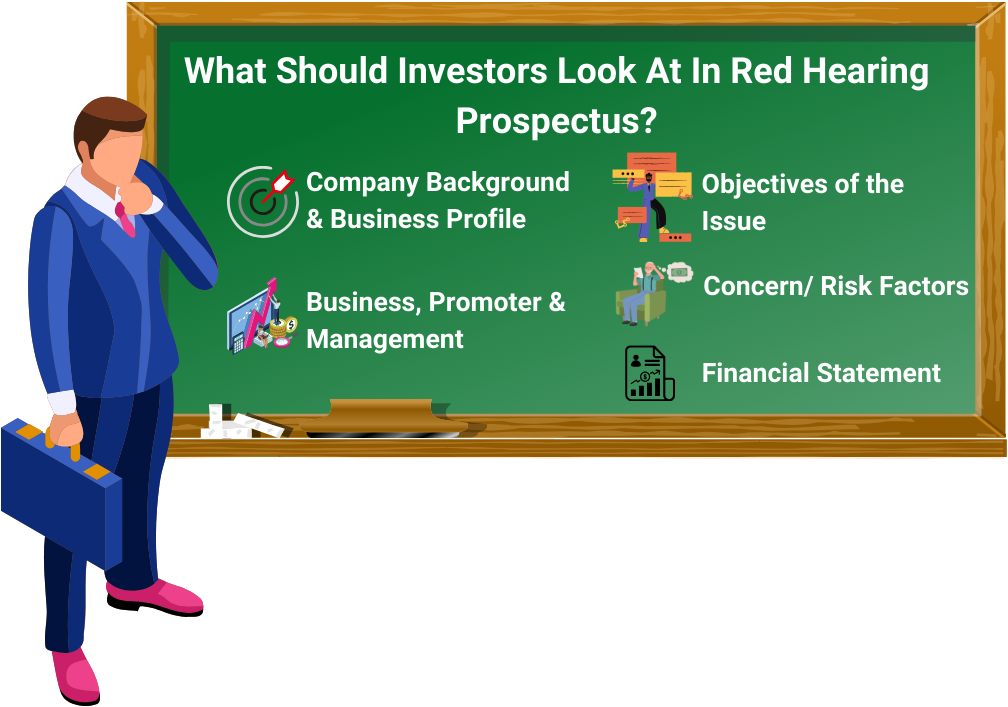
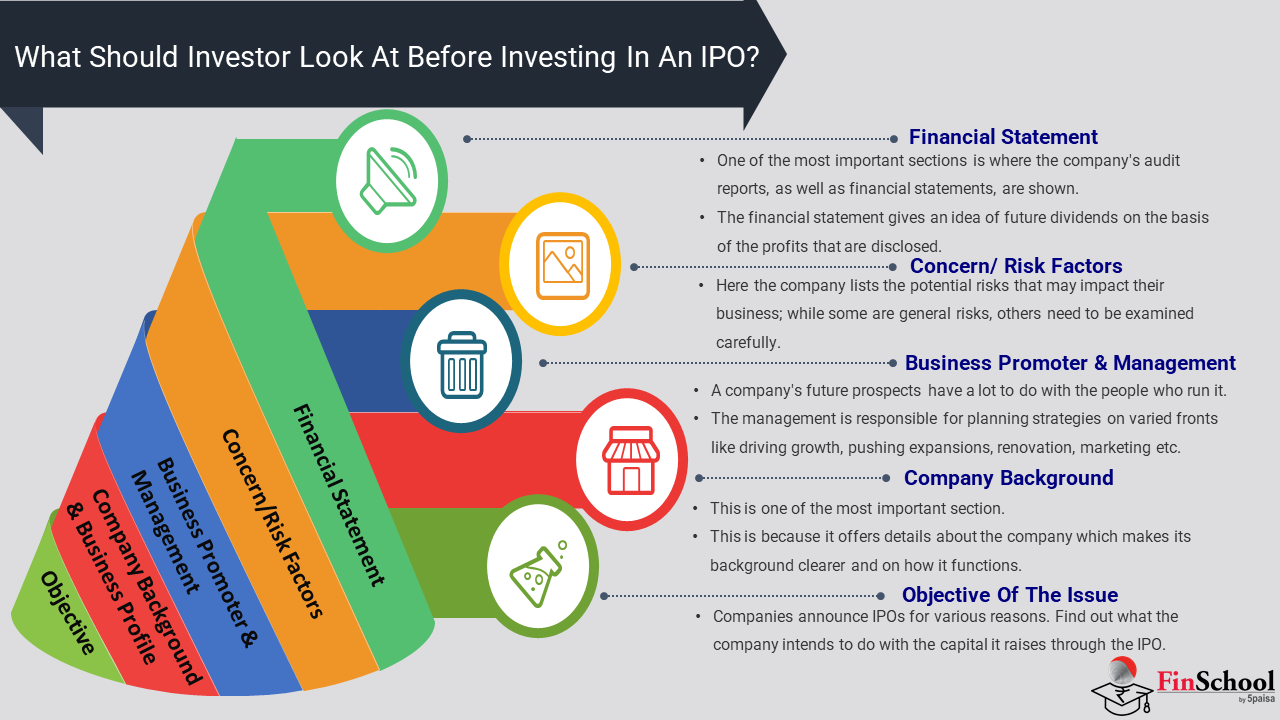
A Red Herring Prospectus is a document that a company files with SEBI when it wants to raise money through an Initial Public Offering. This document is like a brochure that tells you all about the companys business, money and what it plans to do with the funds it raises. It helps investors decide if they want to put their money into the company.. It does not have the final details like how much the shares will cost or how many shares will be sold.
The name “red herring” comes from a warning on the cover that says this document is not final. The company puts out the Red Herring Prospectus before the Initial Public Offering starts and some important details are decided later. This document is very important because it helps investors make decisions even when they do not have all the details.
- Business Overview and Industry Landscape
This part of the Red Herring Prospectus tells you about the companys business and where it stands in its industry. Investors should look at how the company explains what it does where it gets its money, who its customers are and if it is in a growing market or a market that is already full. The Red Herring Prospectus also looks at the industry as a whole, which helps investors figure out if the company will be able to grow in the term.
- Objectives of the Issue
This explains why the company is raising money. Is it to grow the business pay off debt or for the owners to get some money out. Investors should think about if the companys goals will help it do well in the term.
- Financial Performance and Key Ratios
This part of the Red Herring Prospectus looks at how the company has done in the past and some important numbers like how much money it has made. Investors can use this information to get an understanding of the Red Herring Prospectus and the company. The Red Herring Prospectus is about giving investors the information they need to make good decisions, about the company and its Red Herring Prospectus.
When you are looking at a company with your peers you should watch out for flags like declining margins or negative cash flows.
- Risk Factors
This is where you find out about the financial and regulatory risks that a company faces. You should identify the risks and see how the company plans to deal with them.
2.. Management Team
This section tells you about the people who are leading the company and how much of the company they own. You want to see if they have a track record, relevant experience and if they have had any problems with the law in the past.
- Capital. Offer Details
This breaks down who owns the company and how the initial public offering or IPO is split between shares and existing shares being sold. After the IPO you can see how committed the promoters are and if big investors are interested.
- Valuation and Pricing Considerations
This gives you the information you need to figure out if the IPO is priced fairly. You can look at things like earnings per share net asset value and valuation multiples. Compare them to other companies in the same industry.
Nirav asks Vedant, what is the IPO grey market?
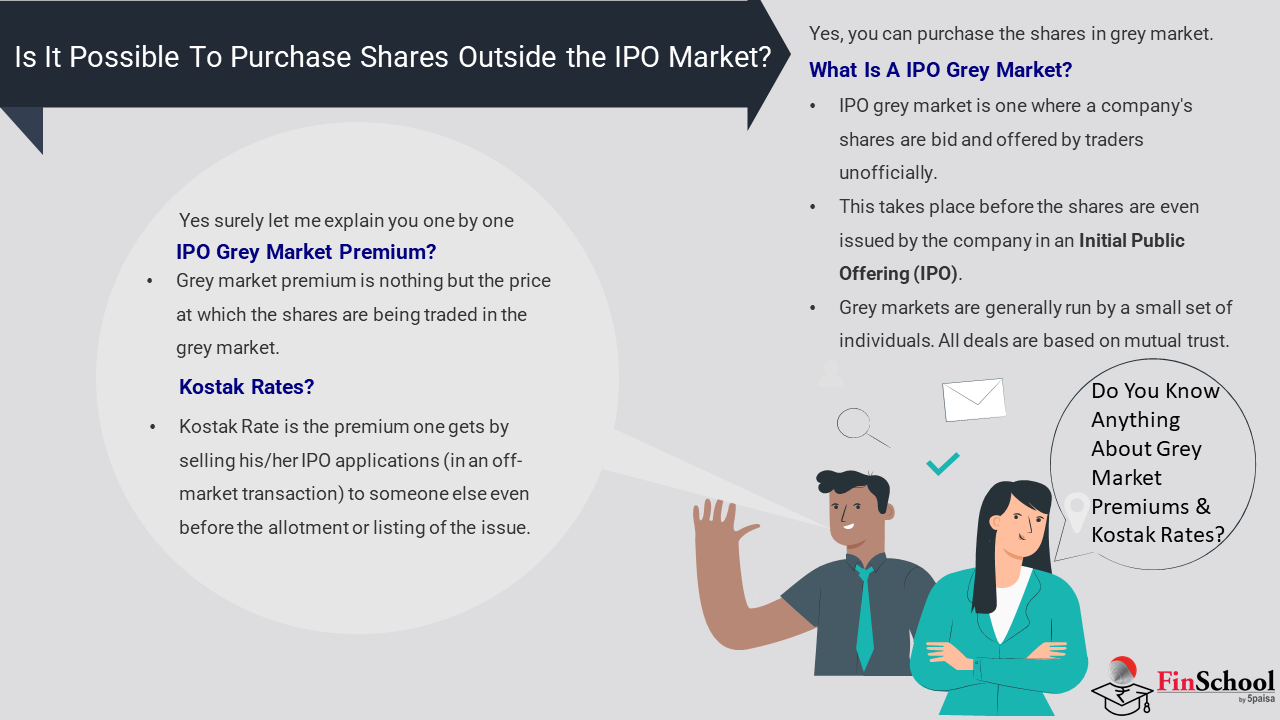
Vedant says, it is like a space where people trade IPO shares or applications before they are officially listed. It is not regulated by the Securities and Exchange Board of India or SEBI. It can give you an idea of how investors are feeling.
Nirav wants to know do people trade shares before they are even allotted?
Vedant says, yes they do. They. Sell shares they expect to get at a higher price or they trade applications for a fixed fee, which is called the Kostak rate.
Nirav asks, what is the Grey Market Premium?
Vedant explains it is the amount that people are willing to pay over the official price. For example if the official price is 300 rupees but people are willing to pay 360 rupees then the Grey Market Premium is 60 rupees. It can give you an idea of how people think the stock will do when it is listed. It is not always right.
Nirav says, so it is helpful but a bit risky?
Vedant agrees it is not officially regulated,. There is no legal protection but it can be useful for seeing how much demand there is for a stock. Do you want to look at what’s happening with the Grey Market Premium lately?
5.9 What Is An IPO Grey Market?
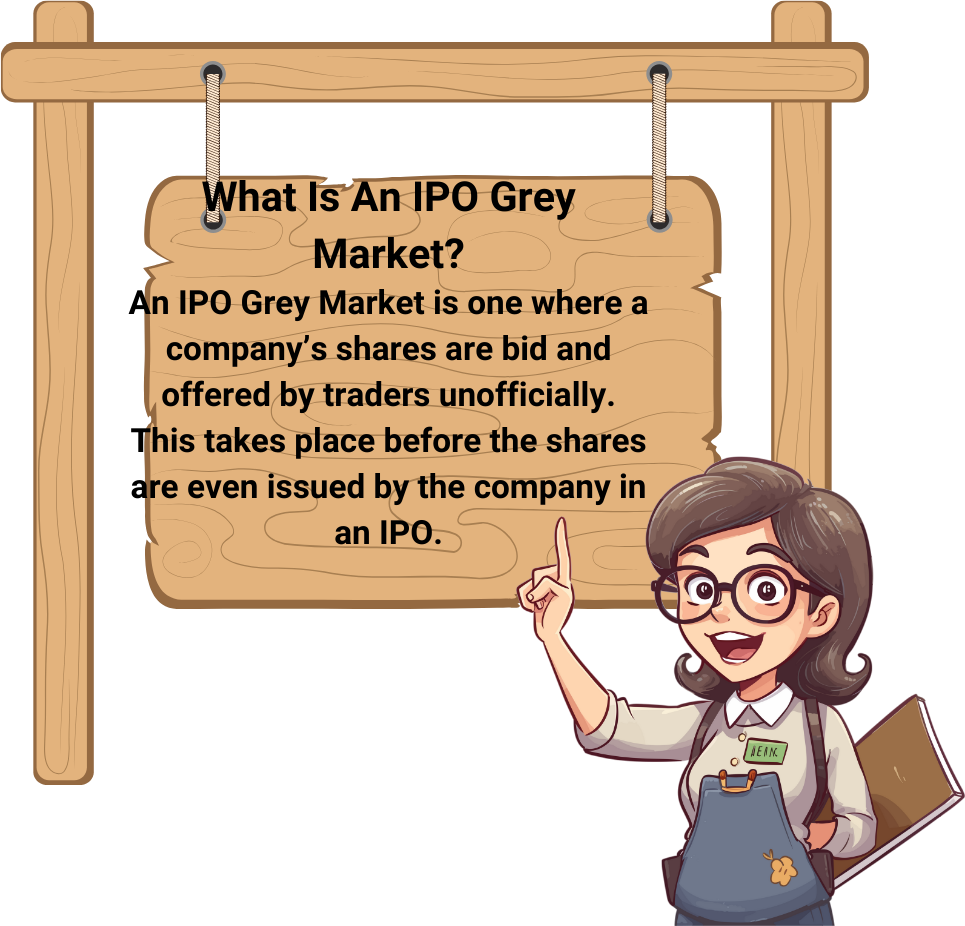
An IPO Grey Market is like a platform where people trade shares before they are officially listed. It is not regulated by SEBI. It shows how investors are feeling and what they think will happen. It can affect how interested individual investors are. For example if an IPO is priced at 200 rupees but people are trading it for 260 rupees in the grey market then the Grey Market Premium is 60 rupees, which means people are feeling positive about the stock.
There are terms like Kostak Rate, which’s the price for an IPO application and Subject to Sauda, which are deals that depend on whether you actually get the shares. These are cash deals that happen through networks. While the Grey Market Premium can give you an idea of how demand there is it is also driven by hype and it is not a guarantee that the stock will do well when it is listed.
Vedant asks Nirav have you ever wondered what really changes when a company goes public?
Nirav says, besides raising money not. Does it affect how the company operates?
Vedant says, yes it does. When a company goes public it gets the money it needs to grow. It becomes more credible. Being transparent attracts investors and partners who can help the company.
Nirav asks, what about for investors?
Vedant says, early investors can sell their shares. Get their money back and new investors can join in and be a part of the companys growth.. Ipos can be unpredictable. Sometimes the hype around a company does not match its actual performance.
Nirav says, so it is both an opportunity and a risk?
Vedant agrees IPOs can be a change, for a company and can reward investors but only if they really understand the company and what it does.
5.10 Impact of IPO on Company & Investors

An Initial Public Offering is a deal for the company that is going public and the people who are investing in it.
Impact on the Company
- The company gets the money it needs to grow: when a company has an IPO it gets the funds to expand do research buy companies or pay off debt. This helps the company grow without having to borrow a lot of money.
- More people know about the company: when a company is listed on the stock market more people know about it it gets attention from the media and people trust it more. This helps the company attract employees and partners.
- The company can figure out what it is worth: when the company is on the stock market it can see what it is worth. This helps when it needs to raise more money. It also gives the people who invested early and the employees a chance to sell their shares.
- The company has to be more transparent: when a company is public it has to be honest and transparent. This can also mean it has to worry about making money in the short term.
- The company has to deal with the ups and downs of the stock market: when the stock price goes up and down it can affect the decisions the company makes. Sometimes it can stop the company from thinking about the long term.
Impact on Investors
- Investors can get in on the ground floor: when a company has an IPO investors can buy shares on and this can mean they make a lot of money if the company does well.
- It is a risk but also a high reward: if the company does well the investors can make a lot of money but if it does not they can lose money so they have to be careful and do their research.
- Investors can make money in the term: if investors buy shares in a company that does well they can make money over time like what happened with Infosys, IRCTC and Zomato.
- It can be hard for regular investors to get in: when a company has an IPO it can be hard for regular people to buy shares because they do not have much information or access as big investors.
Nirav: Vedant how do Employee Stock Ownership Plans connect with IPOs?
Vedant: Employee Stock Ownership Plans let employees buy shares at a price. After the company has an IPO those shares are worth money and the employees can make money.
Nirav: So the employees do well if the stock does well?
Vedant: Yes that is right. If the company has an IPO the employees can make money from their Employee Stock Ownership Plans. The company has to tell people about the Employee Stock Ownership Plans and follow the rules.
Nirav: What about people who used to work for the company?
Vedant: If they still have options to buy shares they might be able to make money. There are rules they have to follow.
Nirav: So Employee Stock Ownership Plans help the company keep employees?
Vedant: Yes they do. They help the employees and the company want the things and when the company has an IPO it can be a big deal for the employees. It is like a milestone, for them.
5.11 What is Employee Stock Options (ESOPs)

Employee Stock Options and Initial Public Offerings are really connected, in startups and companies that are growing fast. These companies use equity as a way to motivate their employees.
- Employee Stock Options Before an Initial Public Offering
In companies Employee Stock Options are not easy to sell. Employees get options or shares. They cannot sell them easily. However they get these options because the company hopes to go public or be bought someday which will make the options worth something. Many startups use Employee Stock Options to pay their employees because they cannot pay them salaries. This way the employees are motivated to help the company grow in the term.
- Employee Stock Options During an Initial Public Offering
When a company decides to go public it must tell everyone about all the Employee Stock Options in its Red Herring Prospectus. The rules say that the company must be clear about how many options are given how many are used and how many are exercised. Some important things to consider are:
Dilution: Employee Stock Options increase the number of shares which can decrease the value of the shares that already exist.
Lock-in Periods: Sometimes the shares from Employee Stock Options cannot be sold for a while after the company goes public.
Promoter Classification: If the founders of the company have Employee Stock Options they might face some restrictions if they are considered promoters.
- Employee Stock Options After an Initial Public Offering
After the company goes public Employee Stock Options become worth something. Employees can use their options. Sell the shares on the market but they might have to wait for a while. This can make the employees very rich if the stock does well.
However employees also need to think about:
Taxation: Employee Stock Options are taxed in two stages. When the option is used and when the share is sold.
Market Volatility: The price of the share can go up and down after the company goes public which can affect the value of the options.
- Developments
The Securities and Exchange Board of India is thinking about changing the rules to let startup founders keep their Employee Stock Options after the company goes public. This is to fix the problems of dilution and motivation. They are also thinking about making a rule that says there must be a waiting period between giving Employee Stock Options and going public.
Nirav: Vedant some companies do well after they go public while others do not. What makes the difference?
Vedant: That is where looking at Initial Public Offering cases comes in. They show how things like valuation, timing and being clear about the business can make or break a debut.
Nirav: Can you give me an example?
Vedant: Yes.
5.12 Historical IPO Case Studies

The Coal India Initial Public Offering in 2010 was an event in Indias capital market history. It was not just big. It also showed how the government, investors and the sector can work together.
Background and Context
Coal India Limited is a company that produces coal. It is owned by the government. Produces most of India’s coal. Before the Initial Public Offering the government wanted to sell some of its shares to the public.
Initial Public Offering Details and Structure
The Initial Public Offering happened in October 2010. Aimed to raise about ₹15,200 crore by selling 631.6 million shares. The price of each share was between ₹225 and ₹245. The shares were sold from October 18 to October 21 2010. Were listed on the market on November 4 2010.
The Initial Public Offering was structured to attract investors:
- 45% of the shares were for big investors
- 5% were for individual investors
- 5% were for other investors
- 10% were for Coal India employees
Investor Response and Market Impact
The Initial Public Offering was very successful and was oversubscribed by 15.28 times. The highest demand came from investors, who subscribed 25.4 times their limit. On the day of trading the share price was ₹287.75 which is 17.5% higher than the Initial Public Offering price. It closed at ₹342.35 which showed that investors were confident in the company.
This Initial Public Offering was not just big. It also made individual investors interested in the stock market again after the 2008 financial crisis. It showed that with the price, transparency and sector strength even government-led Initial Public Offerings can attract many investors.
Strategic Significance
The Coal India Initial Public Offering was more than raising money. It:
- Set a benchmark for government-led Initial Public Offerings
- Made the sector more transparent and governed
- Made the company more accountable, to its shareholders
- Broadened retail participation in India’s equity markets
- Reinforced investor appetite for resource-based cash-rich businesses
Types of IPO Pricing Mechanisms:
- Book Building allows investors to bid within a price range and helps discover the issue price.
- Fixed Price offers a price upfront making it simpler but less responsive to market demand.
Stages of Business Funding: From starting small to seed funding, Series A/B/C and bridge rounds IPOs are the stage of raising money for big companies that want to grow and be liquid.
Share Allotment Process: How shares are given out varies by investor type and demand. If many people want shares retail applicants pick them through a lottery. If not enough people want shares everyone gets the shares they want.
Importance of the Red Herring Prospectus: Investors must read the Red Herring Prospectus to understand the companys business, money situation, risks, leaders and offer details before buying into an IPO.
IPO Examples: Coal Indias 2010 IPO shows how valuation, timing what investors think and sector strength affect IPO results.
Here are key Takeaways
What is an IPO: An Initial Public Offering is when a private company sells shares to the public for the time on a stock exchange.
Why Companies Go Public: Companies do IPOs to raise a lot of money give investors a way to sell their shares look more credible and grow.
IPO Journey: Meera’s chocolate business shows the move from using your money to raising public capital.
Getting Ready: Before an IPO companies must check their health rules compliance, growth potential and management ability.
Detailed IPO Procedure: The process includes choosing helpers filing a draft prospectus SEBI review, roadshows, finding the price and final listing.
Nirav: That IPO chapter was tough. What happens after listing—do we just keep the shares?
Vedant: Not really. That’s where the stock market comes in.
Nirav: So shares trade, on NSE or BSE?
Vedant: Yes. Investors buy and sell shares; no new money goes to the company.
Nirav: And all that charting and analysis?
Vedant: That’s stock market stuff—price changes, feelings, plans. It’s where a stock proves itself.
Nirav: Makes sense. Let’s see how it works and why liquidity matters.