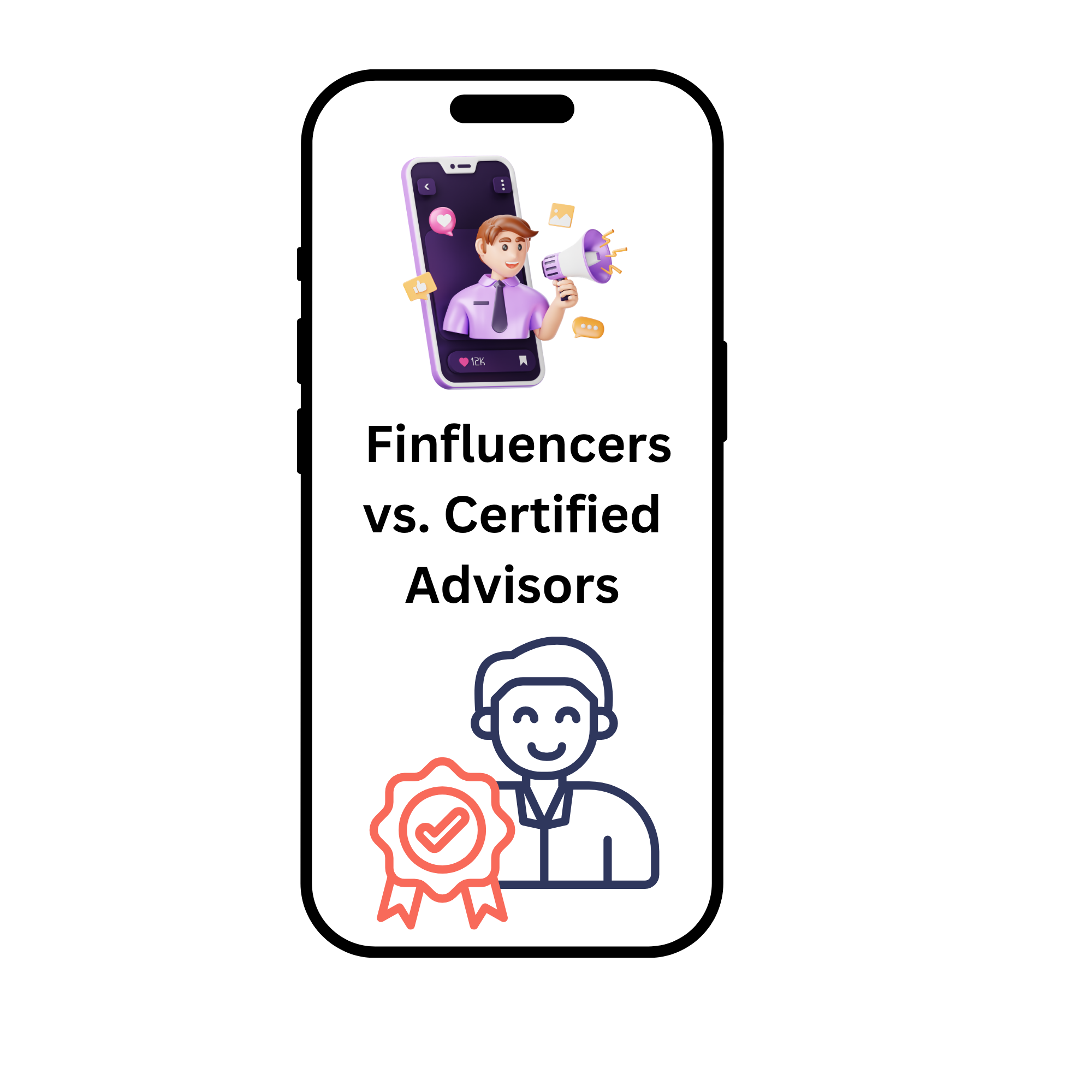
Use finfluencers for learning and motivation, and SEBI-registered advisers for personal financial decisions. Finfluencers explain money clearly and for free, but they speak to millions at once, may have undisclosed incentives and usually carry no legal accountability. A SEBI-registered investment adviser is qualified, regulated and required to assess whether advice suits you. Always verify registration on SEBI’s website before acting on any advice.
Key takeaways
- A finfluencer is a social media creator who talks about money, investing or trading. Quality ranges from excellent educators to hype-driven tipsters.
- In India, only SEBI-registered Investment Advisers (RIAs)can give personalised investment advice for a fee, and only SEBI-registered Research Analysts (RAs) can issue paid stock recommendations.
- Since August 2024, SEBI has barred regulated entities, such as brokers and fund houses, from associating with unregistered finfluencers who give advice or claim returns.
- SEBI’s study found that 91% of individual traders in equity F&O lost money in FY2024-25, with net losses of over ₹1 lakh crore. High-risk trading is a common finfluencer theme.
- The key distinction is education versus advice: general concepts apply to everyone; recommendations must fit you.
- Before trusting anyone, ask: “Who benefits if I follow this advice?”
You’re scrolling through your feed when a confident young creator appears. In sixty seconds, he reveals a “secret” strategy, flashes a screenshot of huge profits and tells you to join his Telegram channel through the link in his bio. The video has two million views, and the comments say it changed lives.
Meanwhile, a SEBI-registered investment adviser across town has a modest website, a few hundred followers and a waiting list of clients who value her careful, unglamorous approach.
Who should you listen to? The rise of finfluencers has transformed how Indians learn about money. Many have made finance accessible and even fun; others have led followers into costly mistakes. Registered advisers bring qualifications and accountability but struggle to compete for attention. This article compares the two, explains where each helps and harms, and offers a practical way to use both without getting burned.
Who Is a Finfluencer?

A finfluencer (financial influencer) is anyone who builds an online audience by discussing personal finance, investing, trading or wealth-building on platforms such as YouTube, Instagram, X, Telegram, WhatsApp channels and podcasts. They range from thoughtful educators to hype-driven traders.
Their popularity has grown for clear reasons:
- Accessibility: They explain concepts in plain, jargon-free language, often in Hindi and regional languages.
- Reach: Content is free, instant and available on the phone you already hold.
- Relatability: Many are young, from ordinary backgrounds, and share their own journeys.
- A trust gap: Many people distrust banks and traditional advisers after mis-selling experiences.
- Entertainment: Short, engaging formats beat dense reports and long meetings.
For millions of first-time investors, a finfluencer was the reason they started a SIP, made a budget or finally understood what an index fund is. That is a real public benefit.
Who Is a SEBI-Registered Investment Adviser?
A SEBI-registered Investment Adviser (RIA) is a professional or firm registered with the Securities and Exchange Board of India under the SEBI (Investment Advisers) Regulations, 2013, who is permitted to give personalised investment advice for a fee. RIAs must meet qualification and certification requirements, follow a code of conduct and act in the client’s interest.
India has several categories that are easy to confuse:
Role | Who regulates or registers them | What they can do | How they’re paid |
Registered Investment Adviser (RIA) | SEBI | Personalised investment advice and financial planning | Fee from the client; cannot earn commissions on products they advise on |
Research Analyst (RA) | SEBI | Research reports and buy/sell recommendations on securities | Subscription or fee |
Mutual Fund Distributor (MFD) | AMFI registration (ARN) | Sell mutual funds and give incidental guidance | Commission from fund houses |
Stockbroker | SEBI | Execute trades | Brokerage |
Certified Financial Planner (CFP) | FPSB India (a credential) | Financial planning; must also be an RIA to advise for a fee on securities | Depends on registration |
What typically distinguishes registered advisers:
- Qualifications: Recognised degrees and NISM certifications, with ongoing education.
- Regulation: Answerable to SEBI, which can investigate complaints and impose penalties.
- Personalisation: They assess your income, debts, goals, risk profile, taxes and family situation before recommending anything.
- Accountability: Formal complaint and redress channels exist.
- Holistic planning: They can coordinate investing with insurance, retirement, estate planning and taxes.
The trade-off is cost and accessibility. Advisers charge fees, some prefer larger portfolios, and their communication can feel formal compared with a viral reel.
What Is the Difference Between Financial Education and Financial Advice?
This is the most important distinction in the whole debate.
- Education explains how things work: what compound interest is, how SIPs work, what an expense ratio means. It applies to everyone and doesn’t need to know your situation.
- Advice tells you what to do: “buy this stock,” “move your savings into this fund,” “take this F&O trade.” Good advice depends entirely on your age, debts, emergency fund, goals, time horizon and how you would react to losing 30% of your money.
A finfluencer speaks to millions at once. They cannot know whether you are 22 with no dependents or 58 and three years from retirement. Something reasonable for one viewer can be reckless for another. Registered advisers, by contrast, are required to assess suitability before recommending products. That gap is where most of the danger lies.
Where Do Finfluencers Add Value?
- Lowering the barrier to entry. They make investing feel approachable for people who never learned about money at school or home.
- Building habits. Budgeting challenges, savings goals and debt-payoff journeys motivate people who find traditional advice dull.
- Following others on a similar path reduces the loneliness and shame many people feel about money.
- Diverse voices. Creators address topics traditional finance often ignores, such as irregular income, first-generation wealth and family money pressures.
- Free learning. For people who can’t afford an adviser, quality free content is a valuable start.
Where Can Finfluencers Do Harm?
Hidden conflicts of interest
Many finfluencers earn through affiliate links, broker referral payouts, sponsorships, paid courses and premium Telegram groups. Earning a living is fine, but undisclosed promotion means followers can’t tell genuine opinions from paid ones. A trading app that pays per sign-up has every reason to be praised, whether or not it suits you. The Advertising Standards Council of India (ASCI) requires influencers to clearly label paid content.
No qualifications or accountability
Anyone can post about investing. If a tip loses you money, there is typically no recourse. Some finfluencers are registered, many aren’t, and audiences often can’t tell the difference.
Survivorship bias and cherry-picked results
Profit screenshots are easy to post and losses are easy to hide. A creator with a few lucky wins can look like a genius simply because the failures were never shown.
Hype, urgency and emotion
Viral content often runs on fear of missing out: “This stock will 10x,” “Last chance to join.” Urgency pushes people to act before they think, which is exactly how costly mistakes happen.
Promotion of high-risk products
Options trading, leveraged products, crypto and unregulated schemes generate clicks and losses. SEBI’s analysis of the equity derivatives segment found that 91% of individual F&O traders made net losses in FY2024-25, with aggregate net losses exceeding ₹1 lakh crore.
Outright fraud
At the extreme end are pump-and-dump schemes, fake “guaranteed return” plans and WhatsApp or Telegram groups that lure people into fake trading apps. SEBI has taken action against unregistered individuals giving paid tips and has had thousands of misleading posts removed from social media platforms.
Where Do Registered Advisers Fall Short?
A fair comparison also needs honesty about professional advice.
- Conflicts can still exist. Commission-based intermediaries, such as some insurance agents and distributors, may steer you towards products that pay them more. Fee-only RIAs have fewer conflicts, though no model is perfect.
- Advice can feel expensive for small investors.
- Uneven quality. Registration is a baseline, not a guarantee of excellence.
- Limited access. Many advisers focus on wealthier clients, leaving young and lower-income investors underserved.
- Communication style. Jargon and formal processes can alienate people who want quick, clear answers.
- Conservative bias. Regulated professionals may lean cautious, which protects clients but can frustrate those seeking growth.
Finfluencers vs. Registered Advisers: Side-by-Side
Factor | Finfluencers | SEBI-registered advisers |
Qualifications | Vary widely; often none | Required qualifications and NISM certification |
Regulation | Usually unregistered unless giving formal advice | Registered with and supervised by SEBI |
Personalisation | General content for a mass audience | Tailored to your situation and risk profile |
Cost | Usually free (but may sell courses or groups) | Fees |
Accountability | Limited or none | Formal complaint channels, including SEBI SCORES |
Accessibility | Very high | Moderate; some have minimums |
Communication | Engaging, simple, fast | Formal, detailed, slower |
Main risk | Hype, hidden promotion, unsuitable tips | Cost, uneven quality, conservatism |
Best for | Learning basics and staying motivated | Planning and major decisions |
What Are SEBI’s Rules on Finfluencers?
SEBI has steadily tightened the space:
- August 2024: SEBI amended its regulations to prohibit SEBI-registered entities and their agents from associating, directly or indirectly, with unregistered persons who give investment advice or recommendations, or who make claims of returns. Brokers, fund houses and other regulated entities can no longer pay unregistered finfluencers to promote their services.
- Education carve-out: Pure investor education is allowed, but SEBI clarified that such content must not use live market prices and can refer only to prices with a time lag, to stop “education” becoming disguised tips.
- Enforcement: SEBI has acted against unregistered advisers and paid-tip channels and worked with platforms to remove misleading content.
- ASCI guidelines require influencers giving investment advice to disclose relevant qualifications and registrations and to label paid promotions.
These steps help, but content spreads faster than rules are enforced. Personal vigilance remains your best protection.
How to Evaluate Any Source of Financial Advice: 7 Questions
- Are they registered? Check SEBI’s list of registered Investment Advisers and Research Analysts, using the name or registration number. Don’t rely on a bio.
- How do they get paid? Look for disclosures about affiliate links, referral fees, sponsorships, courses or commissions.
- Do they discuss risk honestly? Trustworthy sources talk about what can go wrong. Anyone promising guaranteed returns is a red flag.
- Do they show losses too? Credible educators are open about mistakes and uncertainty.
- Does the advice fit my situation? If it ignores your goals, timeline and risk tolerance, it is a general idea, not a recommendation for you.
- Am I being rushed? Countdown timers and “limited seats” are classic pressure tactics.
- Can I verify the claims? Cross-check against SEBI, AMFI, exchange websites and independent sources.
Red Flags to Watch For
- Promises of guaranteed or unusually high returns
- Pressure to act immediatelyor join a private paid group
- Requests to send money to a personal bank account or UPI ID
- Links to unknown trading appsor “institutional accounts”
- Screenshots and testimonialsas the only proof
- Encouragement to borrow moneyto invest or trade
- No disclosureof paid promotions
- Claims that “banks and advisers don’t want you to know this”
If several appear together, walk away. Report suspected fraud to SEBI or through the national cybercrime helpline, 1930.
The Smarter Approach: Use Both Strategically
- Use finfluencers for learning and motivation.Treat every video as a starting point for research, never as an instruction.
- Use registered advisers for decisions.For retirement planning, investing a large sum, buying a home, taxes or protecting your family, personalised guidance is worth paying for.
- Verify before you act.Check facts, read the fine print and ask what could go wrong.
- Start small.Test ideas only with money you can afford to lose entirely, never with your emergency fund or rent.
- Keep the basics in place.An emergency fund, adequate insurance and no high-interest debt matter more than any clever tip.
How to Choose a SEBI-Registered Investment Adviser
- Verify registration on SEBI’s website and check that the registration is current.
- Ask how they’re paid:a fixed fee or a percentage of assets under advice. RIAs cannot take commissions on products they recommend to you.
- Ask about their process:how they assess risk, how often they review your plan and what you receive in writing.
- Request a written fee agreement, including any product-level costs.
- Look for fit.You should feel comfortable asking questions and get answers in plain language.
- Get a second opinion for major decisions.
If a full-service adviser is too expensive, consider one-time planning sessions, hourly advisers or reputable low-cost advisory platforms that are SEBI-registered.
Final Thoughts
The contest between finfluencers and registered advisers is a false choice. Finfluencers have opened the door to financial literacy for millions of people who were previously ignored, and making money interesting is a genuine strength. But their reach also amplifies conflicts of interest, hype and advice that ignores individual circumstances. Registered advisers offer accountability, personalisation and depth, at a cost and with their own limitations.
The safest path is to treat influencer content as education, professional advice as guidance for real decisions, and your own judgement as the final filter. Be curious, verify claims, understand incentives and never let urgency override caution. The most valuable question in personal finance isn’t “Who has the most followers?” but “Who benefits if I follow this advice?”
Source
- SEBI (Investment Advisers) Regulations, 2013: https://www.sebi.gov.in/legal/regulations/nov-2025/securities-and-exchange-board-of-india-investment-advisers-regulations-2013-and-securities-last-amended-on-november-25-2025-_98246.html
- SEBI (Research Analysts) Regulations, 2014: https://www.sebi.gov.in/legal/regulations/sep-2014/sebi-research-analysts-regulations-2014_27895.html
- Restrictions on association with unregistered persons (January 2025 clarification): https://www.sebi.gov.in/legal/circulars/jan-2025/details-clarifications-on-provisions-related-to-association-of-persons-regulated-by-the-board-miis-and-their-agents-with-persons-engaged-in-prohibited-activities_91356.html
- SEBI F&O profit and loss study, FY2024-25 (July 2025): https://www.sebi.gov.in/reports-and-statistics/research/jul-2025/comparative-study-of-growth-in-equity-derivatives-segment-vis-vis-cash-market-after-recent-measures_95105.html
- ASCI influencer advertising guidelines: https://www.ascionline.in/the-asci-code-guidelines/#guidelines12
- SEBI intermediary / MII search: https://www.sebi.gov.in/intermediaries.html
- National Cyber Crime Reporting Portal: https://cybercrime.gov.in