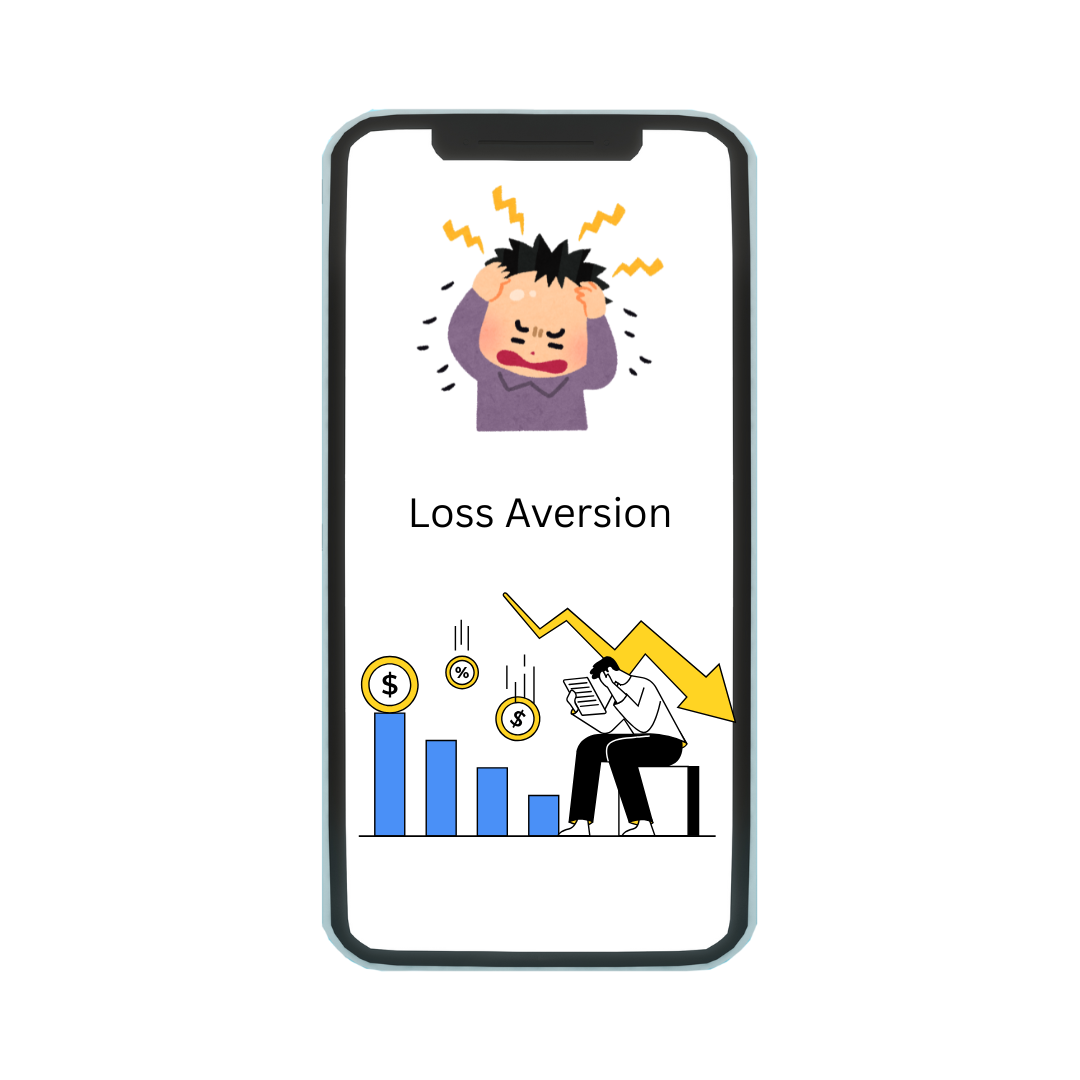
Loss aversion is a psychological bias that influences how people make decisions, especially in financial contexts. It refers to the tendency to prefer avoiding losses over acquiring equivalent gains. In other words, the pain of losing something is felt more strongly than the pleasure of gaining something of equal value. This concept is central to behavioural economics and helps explain many common financial behaviours, from cautious investing to reluctance in changing financial habits.
What Is Loss Aversion?
Loss aversion is the idea that losses have a greater emotional impact than gains. This means that individuals are more likely to make decisions that help them avoid losses, even if those decisions are not the most rational or beneficial in the long run.
Loss aversion also affects how individuals evaluate past decisions and anticipate future ones. When people experience a loss, they often dwell on it longer than they would celebrate a gain, which can lead to regret and hesitation in future choices. This tendency to overemphasize past losses can distort future decision-making, causing individuals to avoid similar situations even when the context has changed. As a result, loss aversion not only influences immediate financial behaviour but also shapes long-term attitudes toward risk, opportunity, and change. Recognizing this pattern is essential for developing a more balanced and resilient financial mindset.
Loss aversion also influences how people respond to uncertainty and change. When faced with unfamiliar financial decisions such as exploring new investment options or switching to a different savings plan individuals often hesitate, not because the alternatives are risky, but because the potential for loss feels more immediate than the possibility of gain. This resistance to change can lead to stagnation, where people stick to outdated habits or low-yield strategies simply to avoid discomfort. Recognizing this tendency allows for more open-minded financial exploration and encourages a shift from fear-based choices to informed, goal-oriented actions.
The Emotional Weight of Loss
Losses trigger stronger emotional reactions than gains. This emotional imbalance can lead to overly cautious behaviour, missed opportunities, and decisions driven more by fear than logic.
Origins in Behavioural Economics
Loss aversion was introduced through the work of psychologists Daniel Kahneman and Amos Tversky. Their research showed that people evaluate outcomes not just based on final results, but on perceived gains and losses relative to a reference point.
How Loss Aversion Affects Financial Behaviour
Loss aversion influences a wide range of financial decisions. It can shape how people invest, save, spend, and respond to market changes.
Investment Decisions
Investors may hold onto losing assets longer than necessary, hoping to avoid realizing a loss. This behavior can lead to poor portfolio performance and increased risk.
Spending and Saving Habits
Individuals may avoid spending money even when it could lead to long-term benefits, such as education or health. The fear of losing current financial stability can outweigh the potential future gains.
Financial Planning
Loss aversion can result in overly conservative financial plans. While caution is important, excessive fear of loss may prevent individuals from pursuing growth opportunities.
Psychological Foundations of Loss Aversion
Understanding the psychological basis of loss aversion helps explain why it is so common and difficult to overcome.
Prospect Theory
Prospect theory explains how people make decisions under uncertainty. It shows that losses are felt more intensely than gains, and that people are more likely to take risks to avoid losses than to achieve gains.
Risk Perception
Loss aversion affects how individuals perceive risk. A situation involving potential loss is often seen as more threatening than one involving potential gain, even if the probabilities are the same.
Decision Framing
The way a choice is presented, whether in terms of potential loss or gain, can significantly influence the decision. Messages framed around avoiding loss tend to be more persuasive than those focused on gaining benefits.
Common Behaviours Influenced by Loss Aversion
Loss aversion can lead to several predictable behaviours in financial and everyday contexts.
Resistance to Change: People may avoid switching to better financial products or services due to fear of losing familiarity or perceived safety.
Preference for Certainty: Individuals often choose guaranteed outcomes over uncertain ones, even when the uncertain option has a higher expected value.
Overreaction to Short-Term Losses: Temporary losses can cause strong emotional reactions, leading to impulsive decisions such as panic selling or abandoning long-term strategies.
Challenges Created by Loss Aversion
While loss aversion is a natural part of human psychology, it can create obstacles in financial decision-making.
Missed Opportunities
Fear of loss can prevent indivduals from taking advantage of beneficial opportunities, such as investing in growth assets or pursuing career advancements.
Poor Investment Choices: Holding onto losing investments and selling winning ones too early can reduce overall returns and increase exposure to risk.
Emotional Stress :Constant worry about potential losses can lead to stress and anxiety, which further impairs decision-making and financial well-being.
Strategies to Manage Loss Aversion
Loss aversion cannot be eliminated, but it can be managed through awareness and structured decision-making.
Increase Awareness:Understanding the concept of loss aversion is the first step. Recognizing this bias allows individuals to question their instincts and make more rational choices.
Set Clear Financial Goals: Having defined goals helps reduce emotional reactions to short-term losses. Goals provide a framework for evaluating decisions based on long-term outcomes.
Use Decision Rules: Implementing rules such as stop-loss orders or automatic savings plans can help remove emotion from financial decisions and maintain discipline.
Review Decisions Regularly: Periodic reviews of financial decisions allow individuals to assess their behavior and make adjustments. This helps identify patterns influenced by loss aversion and correct them over time.
Role of Financial Education in Addressing Loss Aversion
Financial education plays a key role in helping individuals understand and manage loss aversion.
Simplify Complex Concepts: Presenting loss aversion in simple, relatable language helps learners grasp the concept more effectively. Avoiding jargon and focusing on clarity is essential.
Encourage Self-Reflection : Learners should be guided to reflect on their own financial behaviour and identify instances where loss aversion may have influenced their choices.
Promote Balanced Thinking: Education should help individuals evaluate both risks and rewards objectively. This builds confidence and reduces the emotional impact of potential losses.
Conclusion
Loss aversion is a deeply ingrained bias that affects how people think about money and risk. By understanding its impact and applying thoughtful strategies, individuals can make more balanced and informed financial choices. Awareness, education, and structured decision-making are key to managing this bias and improving long-term financial outcomes.
Frequently Asked Questions
Loss aversion is a psychological bias where the pain of losing something feels stronger than the joy of gaining something of equal value. For example, losing ₹1,000 hurts more than the happiness of gaining ₹1,000
Investors influenced by loss aversion may:
Hold onto losing stocks too long, hoping to “recover” instead of cutting losses.
Sell winning stocks too early to “lock in gains,” missing out on further growth.
Avoid high-return investments due to perceived risk, even when the odds are favorable.
You can manage loss aversion by:
Setting clear financial goals to stay focused on long-term outcomes.
Using decision rules like stop-loss orders or automated savings to reduce emotional interference.
Reviewing past decisions to identify patterns of fear-based choices.
Educating yourself about behavioral biases to make more rational, informed decisions