
2.1 What Are Securities?
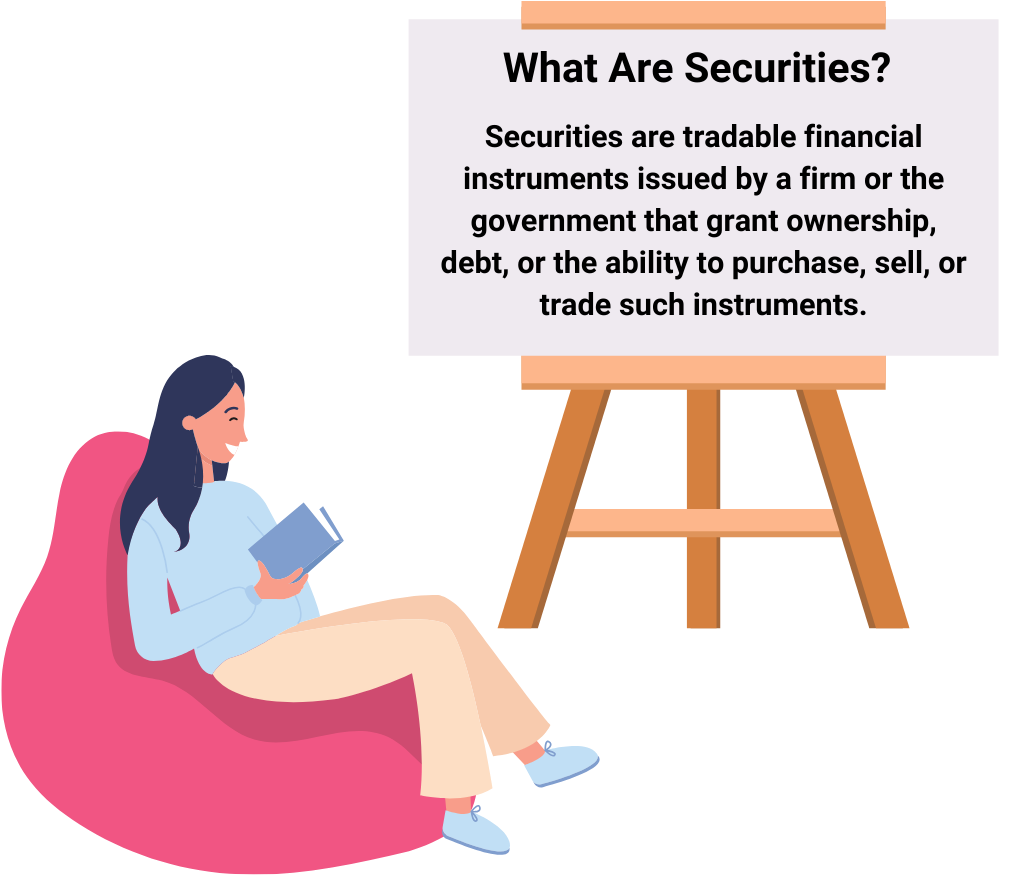
Since we have already built up a strong base by stressing that it is important to invest rather than save money because timely and well informed investments lead to financial security, prosperity, and freedom in the future. This process in a way examines the psychology of investments and investment instruments , as well as the economic and strategic aspects of making investments. Now this naturally builds a transition to the structural backbone of the investment ecosystem-The Securities Market. It connects the ‘why’ of investing to the ‘where’ and ‘how’ by delving into the roles of exchanges, regulatory authorities, and various market participants who facilitate investment activity. So let us first understand what are securities?
Remember our Example about Nirav and Vedant?
If No , Then this will help you recollect
Nirav – The Saver
Nirav was very careful about savings. Each month he would save some money from his salary into his savings account. As there was money set aside for emergencies, this gave him a feeling of safety. He was very pleased with the fact that his account was steadily growing as he saw it increase, even if only by a few dollars at a time.
Vedant – The Investor
In contrast, Vedant felt that money needed to grow. Vedant had kept a portion of his income in a savings account for emergency purposes; however he also invested a portion of his income in stocks, mutual funds and real estate. Vedant acknowledged the potential of investing to be a risky endeavour but he always believed and had faith in compounding and how the market would continue to grow.
After comparing, Vedant had earned more as inflation had eaten up all savings of Nirav. Now after realizing that an investor earns much more than the saver, Nirav decides to explore the investing opportunities and approached Vedant to know
Where Should he invest?
Nirav : Hello Vedant. You have made me realise that Saving alone will not help me get a better life. I need to Invest and put my money to work . But I am not aware about any investments and where should I Invest. Can you help me ?
Vedant : Hey Nirav. I will help you for sure. But before I make you understand where to invest you should be aware about the basic concepts. So let us begin with Securities
Vedant explains to Nirav before investing you should Know What is securities market, What are its functions and who regulates the Securities Market. So lets understand each in detail.
What are Securities?
Securities are the financial instruments through which individuals and institutions invest, lend, and trade to generate returns or hedge risks ranging from shares and bonds to derivatives and commodities. But these instruments don’t function in isolation; You need to know how the securities market provides the necessary infrastructure for these instruments to circulate efficiently. It transforms the theoretical definition of securities into practical application by explaining how capital is mobilized, prices are discovered, and risk is managed.So as we have understood what securities are lets figure out where and how they operate , making the transition from understanding financial assets to engaging with the broader financial ecosystem.
2.2 Securities Market Functions

Suppose you live in a neighborhood where families lend and borrow money to fund various needs. One day, Mr. Mehta who is one of your neighbour wants to expand his grocery shop but doesn’t want to rely solely on bank loans. So, he offers part-ownership to neighbors in exchange for money kind of like an IPO. Now, others can buy or sell their ownership based on how they feel the shop is doing. If business booms, more neighbors want in, and the value of that ownership rises now that’s price discovery at work.
Now if someone suddenly needs money and wants to sell their share. Because many neighbors are interested, they find a buyer quickly. That’s liquidity. And since every neighbor has put their money into different ventures—a tea stall, a tailoring unit, they’re practicing diversification to reduce risk.
However to make sure that everything is fair, there is a committee that takes care of the transparent business transactions and also resolves any disputes between the parties involved, just as SEBI does for the financial markets. As years pass, a new business flourish and job openings rise, the whole community will start flourishing as an efficient securities market leads to economic development.
Functions of Securities Market are
- Capital Formation and Fund raising
One of the most important role played by securities market is that it acts as a platform for fund raising and capital formation for companies and the government.Through IPOs and issuance of securities, companies can get the money needed to expand and develop themselves, rather than borrowing it from banks.
- Liquidity and Marketability of Securities
It refers to the ability of the securities to be bought or sold freely without altering their prices drastically. NSE and BSE provides liquidity through constant market making of securities.
- Price Discovery Mechanism
The securities market provides the market price of the securities based on economic and geopolitical factors and helps in influencing the market price of the securities by different market players such as individuals and institutions.
- Risk Management through Diversification
Investors use the securities market to diversify their portfolio and hedge risk using different asset classes, including stocks , bonds, commodities and derivatives. The availability of hedging instruments such as futures and options allows traders to avoid losses from price fluctuations.
- Regulatory Oversight and Investor Protection
The Securities Market Operates under the directions of Regulatory Agencies such as SEBI to ensure no one manipulates transactions and Transparency. They ensure interests of investors are protected. There are laws regarding insider trading, corporate disclosure and fair business practices.
- Economic Growth and Financial Stability
The Securities market plays a significant role in the development of an economy through the allocation of funds in profitable areas, promoting growth , employment and even effecting the growth rates of a nation’s GDP.
Vedant – Now Nirav lets understand Securities Market Regulators!
2.3 The Securities Market Regulators
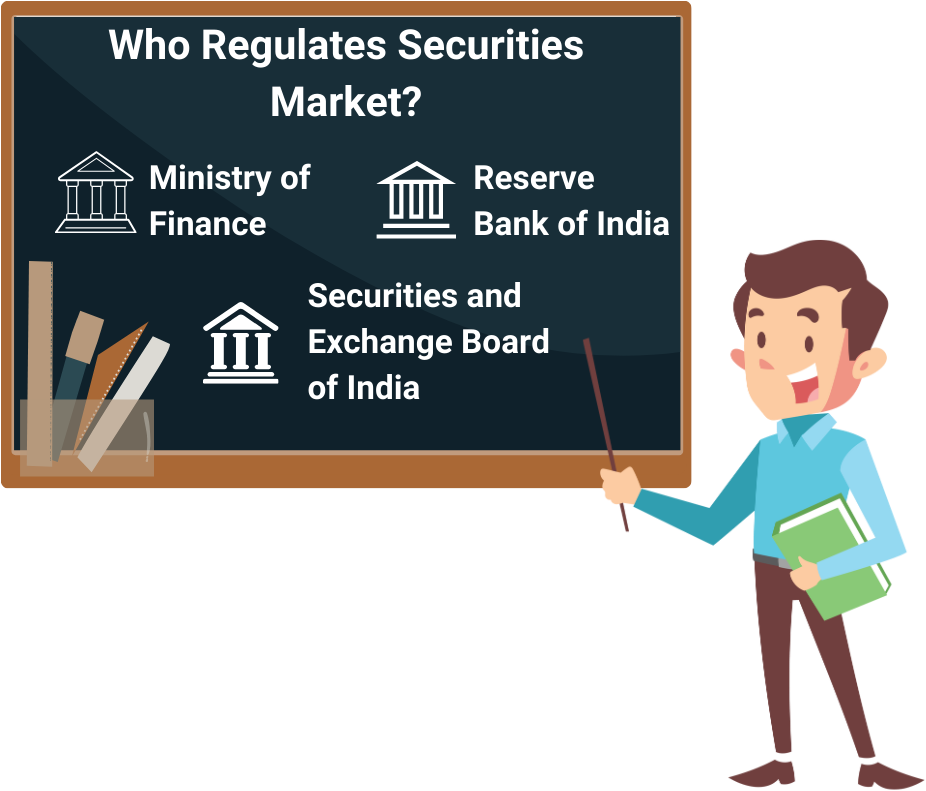
Imagine an office where you have departments like HR, Finance, Sales, Legal etc. All operating in harmony with each other under the umbrella of a CEO who implements policies and makes sure ethical behaviour is maintained , and conflicts between people are sorted out. This is precisely done by the securities market regulators like SEBI for the financial markets in India. As the head of the compliance in the securities market. SEBI monitors and regulates the actions of the brokers , investors and the listed companies. In any case of frauds it ensures to punish the wrong doers to ensure the things are back in their order. The Securities market of India is governed by such bodies to ensure that the market runs smoothly and well defined guidelines.
A. Securities and Exchange Board of India (SEBI)
The Securities and Exchange Board of India also known as SEBI is very important for India’s security market. It helps keep everything safe and fair. SEBI was started in 1992 to help people who invest their money. The Securities and Exchange Board of India does a lot of things. The main thing it does is watch over India’s securities market. The Securities and Exchange Board of India was set up in 1992 to protect peoples money when they invest. This is a job for the Securities and Exchange ‘Board of India. The Securities and Exchange Board of India has a goal. The goal of the Securities and Exchange Board of India is to protect people like you and me who invest money and make sure everyone follows the rules. The Securities and Exchange Board of India also wants to make sure the stock markets are fair and honest.
The Securities and Exchange Board of India is really working hard to do this. It is very important for the Securities and Exchange Board of India to make sure everything is safe and fair, for everyone.
1. Stock Market Participants Regulation
The Securities Exchange Board of India regulates many entities in the stock market (stock brokers, exchanges, portfolio managers, mutual funds, and listed companies) to ensure that they do not engage in fraudulent activities. SEBI makes sure all players will comply with state and federal laws and require brokers to have a license; also it provides examples of appropriate behavior in the conduct of business. Both people and businesses that offer investment counsel or purchase and/or sell securities on behalf of another person must adhere to several primary regulations. Additionally, investment Advisors must provide transparency and maintain fiduciary responsibilities for their clients. Investment Advisers are regulated by the SEBI in terms of the conduct of Investment Advisory Services, the processes for conducting trades through such services, the processes through which trades are settled through such services, and the rules governing the integrity of the market to ensure that fraud is not perpetrated in the market by any party involved in providing or receiving investment advisory services.
2. Monitoring IPOs and Corporate Listings
Before a company can launch an IPO, SEBI must review the application and ensure that all guidelines of listing shares to the public have been satisfied by that company, and all required disclosures have been made to investors. When reviewing a company’s listing application, SEBI will also verify the financial position of the company through the evaluation of financial statements and assess the risks of investing in the company based on any prospective disclosure; this will include evaluating all registered disclosures with the SEC Commission, and the prospectus submitted with the application for listing. In addition, SEBI checks the company’s financial position, governance structure, and the company’s viability prior to listing on the stock exchange. SEBI ensures that the pricing and subscription to the IPO is handled properly and fairly.Following the listing of a company on the stock exchange, that company is subject to submitting its quarterly earnings and disclosing major events regarding the company, as required by the Securities and Exchange Board of India (SEBI).
3. Preventing Insider Trading/Market Manipulation:
The Securities and Exchange Board of India (SEBI) has enacted onerous rules to prevent insider trading through the use of non-publicly available information by corporations’ executives or their large shareholders to purchase publicly traded equity in that company’s stock. SEBI works to identify suspicious price movements and therefore investigates companies for fraudulent conduct. SEBI Receives information on unethical trading practices through the facilitation of reporting suspicious trades. SEBI monitors unusual trading volumes and price fluctuations related to the receipt of insider information. SEBI imposes fines or takes legal action against individuals and firms found guilty of violating the insider trading laws.
4. Promoting Market Transparency and Financial Reporting Standards
Transparency is very important for investor confidence. SEBI requires that publicly listed companies provide financial statements to shareholders as well as announce the decisions of management and any material interest of shareholders.
5. Primary Compliance Requirements:
Publicly listed companies must provide public reports of their financial results showing how much money the company made and spent, including all costs, margins of profit, and liabilities. The boards of directors must engage in conduct that is ethical and maintain ethical leadership within the organization through the use of independent directors. SEBI will provide fair treatment to retail investors for mergers, acquisitions, and stock buybacks.
B. Reserve Bank of India (RBI)
The Reserve Bank of India regulates the monetary policy, financial institutions, the rate of interest, liquidity in banking and other operations of banking. Although the Reserve Bank of India is a central bank and therefore has a primary role as a controller of foreign exchange transactions and currency markets to affect the prices of the securities market. The Reserve Bank of India also regulates the availability of investments to be made in this securities market through the development of banking regulations and provides a mechanism for public debt issuance through the management of government bonds and securities. RBI’s policies on repo rates, inflation control, and banking stability indirectly shape stock market movements.
Financial Policies, Tax Regulations and Market Impact
The Ministry of Finance handles all matters related to the overall financial policy of India, including taxation rules, fiscal measures and their impact on investment markets. The Ministry works very closely with both the SEBI and the RBI on the development, regulation and enforcement of tax implications for securities transactions and foreign investment policy for FDI and FPI participation, and to implement and ensure compliance with all global financial regulations that may impact Indian markets. The introduction of new government policies in the Union budget, will have a considerable impact on stock market trends and investor confidence.
C. Insurance Regulation Act
The Insurance Regulatory and Development Authority of India (IRDAI) regulates and promotes all investments in insurance, including pension funds and other life insurance related investments to promote fair business practices. The IRDAI regulates all Company and Trustee based investments in equity through:
– Unit Linked Insurance Plans (ULIPs);
– Health Insurance Policies Linked to Investment; and
– All measures of Corporate Governance for companies listed on stock exchanges and the manner in which they manage their equity-based investment in the stock market.
The Insurance Regulatory and Development Authority of India also has the responsibility of protecting the funds of policyholders from market volatility, while also providing for opportunities for policyholders to benefit from market-related growth.
D . Pension Fund Regulatory and Development Authority
The NPS is the management body that oversees how an individual’s contributions are invested in NPS recognized equity and fixed income securities. The NPS uses specific guidelines to provide for the management of pension funds within its parameters.
Vedant: Nirav, do you know what securities markets are all about?
Nirav: I do know about it. However, I need to learn more about the Securities and Exchange Board of India (SEBI) because this is where most of the regulations governing the securities market come from. Please tell me more about this.
Vedant: Sure! I will provide all the information you will need to know about SEBI and the roles it plays in the financial system.
2.4 What Is SEBI And Its Role?
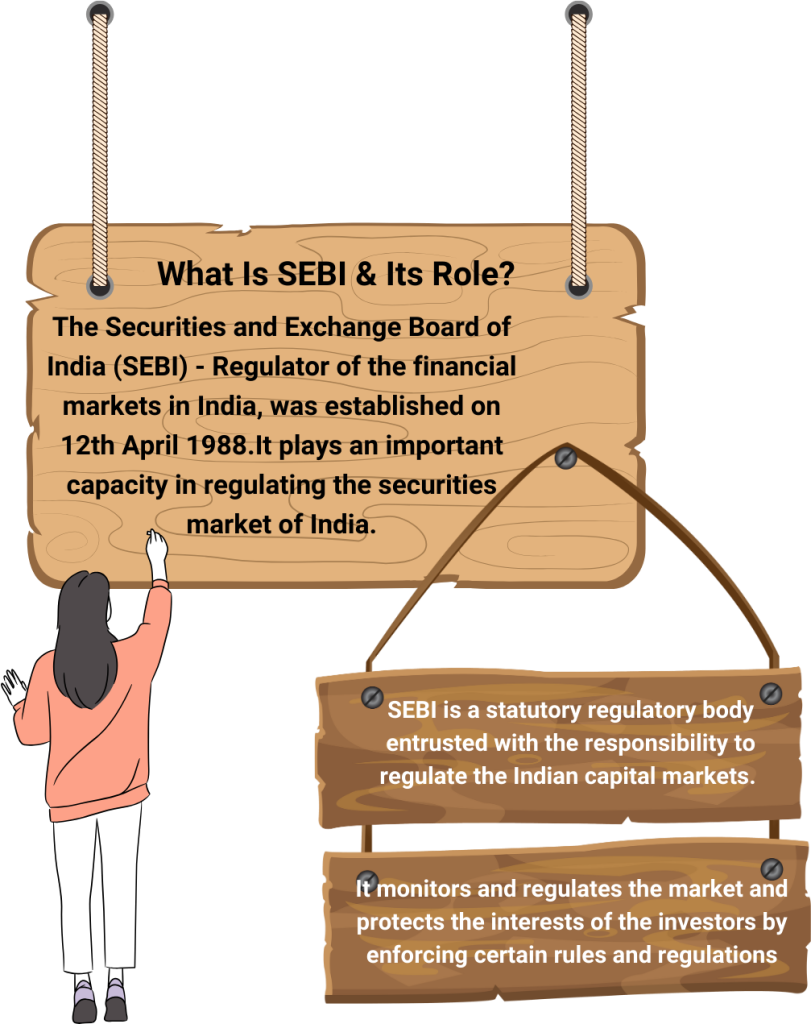
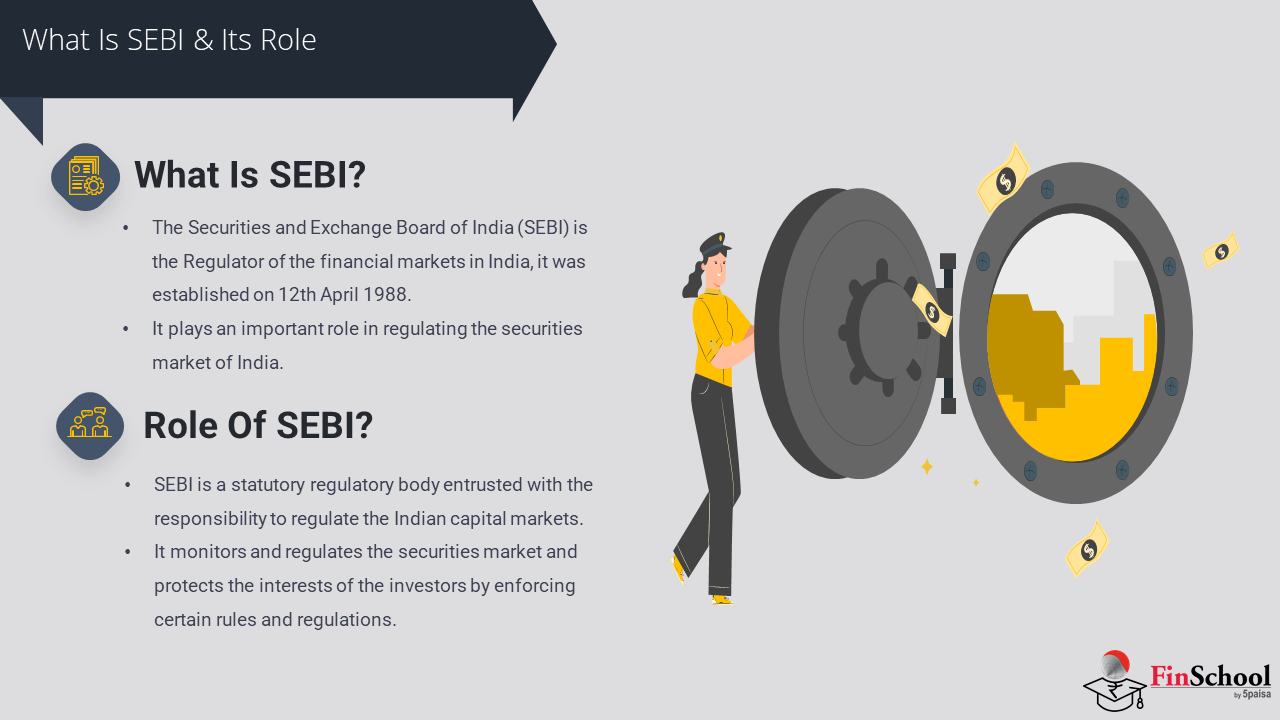
The Securities and Exchange Board of India (SEBI) is the main body that regulates the capital market in India. It was created to promote legitimate trading within the capital market and protect the interest of investors. SEBI was constituted in 1988 and given authority to establish itself as statutory or independent via an Act of Parliament (the SEBI Act) passed in 1992. The sole body responsible for governing Financial Instruments including, Stocks, Mutual Funds, Investment Advisors and/or Investment Companies are regulated by SEBI since then and are to be specifically governed as a financial body by SEBI. In addition to its functions as a regulating body, SEBI plays a key role in promoting/stabilising Capital Market Conditions and preventing Fraudulent Activity from occurring via/through its systems regarding Financial Instruments.
SEBI’s Organizational Structure:
Each of the Participants has clearly defined roles and responsibilities in order to run, regulate and monitor all types of Participants of/from the Capital Markets within India. The Organizational Structure of SEBI comprises of: Chairman: The Central Government appoints the Chairman of SEBI, and he/she is the head of SEBI for purposes of implementing policy from/throughout SEBI and to provide Strategic Direction in accordance with all functions of SEBI. Board of Directors: To manage the SEBI Board effectively, the Composition of the Board of Directors of SEBI currently consists of Representatives/Board Members from the Finance Ministry of the Government of India, Members from the Reserve Bank of India, and Members with Experience in either Financial Services or Business.
SEBI has divisions that have specialized functions including:
- Market Regulation – Responsible for regulating the stock exchanges, brokers, and trading on a stock exchange.
2. Corporate Finance
- Is incharge of approving Initial Public Offerings
- Going through company papers.
- Investor Protection and Education
- Helps investors understand their investments and makes sure they have the Enforcement and Surveillance
- Keeps an eye on people who trade using information and looks into companies that do bad
Objectives of SEBI
- It ensures fair trading practices among stock exchanges, brokers, and investment firms.
- Secondly it mandates financial reporting, IPO approvals, and corporate governance standards.
- Third objective is it promotes innovation in financial instruments, mutual funds, and investment products. It stops people from manipulating prices doing stock deals and behaving unethically in the market.
- SEBI uses tools to find out if something suspicious is happening and gives penalties to those who do
- It keeps an eye on brokers, people who help with deposits, portfolio managers and credit rating agencies.
- It also teaches investors about the risks, in the market how to invest how to plan
- SEBI protects investors from cheaters, people who use information and those who manipulate the market.
- It helps investors make
- SEBI makes sure everything is fair and
Functions of SEBI
- SEBI performs several critical functions to regulate financial markets and foster investor trust. These functions include:
- SEBI monitors stock exchanges (NSE, BSE) to ensure fair trading and prevent market manipulation.
- It implements rules to safeguard retail investors from fraud, misrepresentation, and insider trading.
- It promotes innovation in financial products, including mutual funds, derivatives, and ETFs.
- Also it reviews corporate filings before companies go public to ensure transparency and compliance. SEBI Oversees stockbrokers, investment firms, and portfolio managers to maintain ethical practices.
- Also it tracks suspicious stock movements and penalizes violations to maintain market integrity.It sets guidelines for mutual funds, ensuring fair expense ratios, investor disclosures, and risk transparency.
- Next function is it mandates financial disclosures and ethical standards for publicly listed companies.
- Uses market surveillance tools to detect fraudulent schemes and prevent stock manipulation.
- Conducts investor awareness campaigns to promote informed decision-making.
The Securities and Exchange Board of India or SEBI for short is the group that makes sure the capital market in India is fair. They do this by being open and honest protecting people who invest their money and making sure the financial market in India is stable. The Securities and Exchange Board of India is, in charge of all the exchanges, mutual funds, companies that manage money, brokers and people who give investment advice. The Securities and Exchange Board of India makes rules for all of these groups to follow.
As part of its role in regulating mutual funds, SEBI requires mutual fund companies to operate transparently – including disclosing the risks associated with investing in their funds – in accordance with the mutual fund industry standards and guidelines.
What does SEBI regulates in the Mutual Fund industry ?
- Fund Management Practices: Mutual funds must adhere to the asset allocation guidelines and provide investors with specific performance measurements.
- Transparency of the Investment Portfolio: Fund managers must inform investors about the sectors in which they hold securities, as well as the risks inherent in each sector.
- Grievance Resolution Procedures: SEBI has established processes for resolving complaints from mutual fund investors.
- Taxation and Compliance: Mutual funds must comply with SEBI’s rules related to financial reporting and taxation.
Mutual Fund Reclassification Rules by SEBI
Mutual fund reclassification was introduced by SEBI to reduce confusion and provide a uniform approach to investing that is simple for investors to comprehend.
The main guidelines issued by SEBI for this purpose are as follows:
- Clarification of categories – All mutual funds will now fit into wider classifications of investment as defined below: large-cap, mid-cap, small-cap, debt, hybrid and thematic
- Risk Profile – Each mutual fund category will be given a classification on the basis of risk to ease investor decision-making that outlines the level of risk associated with each fund as low, moderate or high
- Preventing Misleading Naming – No mutual fund company can name a mutual fund based on an arbitrary naming process. Each mutual fund company must define its investment strategy beforehand before naming a fund
- Limiting Duplicate Funds – Each mutual fund company must have a distinct portfolio strategy for every mutual fund category
Vedant: Nirav, I believe you now have an understanding of Regulation of the Securities Market, correct? However, I believe you have further questions.
Nirav: Yes! I would like to know what the various types of Participants of the Securities Market are?
Vedant: Absolutely! Let’s talk in detail regarding the Participants of the Securities Market
The different participants of the securities market can be likened to those involved in an organized cricket tournament. i.e., players, spectators who buy tickets, and sponsors who fund the event for equipment and advertising, which is similar to institutional investors supporting major market movements; a commentator making comments on the game while giving real-time updates, similar to the market analyst/broker who gives their opinion on the market activity; just as there is an umpire who enforces the rules to ensure fair play, there is SEBI, the market regulator.
The people who take part in the securities market like companies, investors, brokers and regulators are in charge of making sure the market works well and is fair. They have to make sure everything is in order. There is enough money moving around. The securities market has different people who do different jobs when it comes to buying and selling things like stocks, bonds and mutual funds. These people are very important because they help make sure there is money in the system they help figure out how much things are worth and they help keep the whole financial system stable. The securities market needs these people to work properly. The companies, investors, brokers and regulators all play a part, in the securities market. They all help make sure the market is fair and that people can buy and sell things easily.. Let us understand each one of them.
2.5 Participants Involved in Securities Market
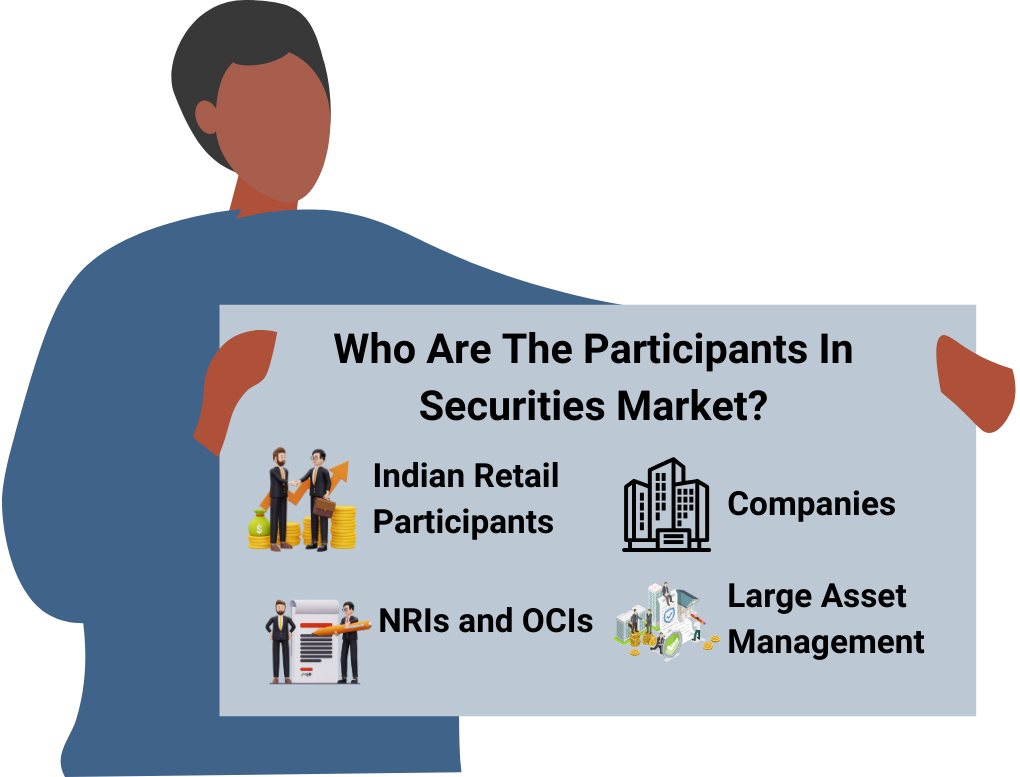
The securities market has people and companies that help with buying and selling things like stocks, bonds and mutual funds. They make sure there is money moving around prices are fair and the financial system is stable. Lets take a look.
- Investors
Investors are people or companies that buy and sell securities to make money. They are a part of the securities market. There are two types of investors: Retail Investors and Institutional investors. Retail Investors are people who buy and sell things like stocks, bonds and mutual funds. Institutional investors are companies like banks, hedge funds and insurance companies that take care of a lot of money. Foreign Portfolio Investors are people or companies from outside India who want to invest in India. Investors play a role.
- Stock Exchanges
Stock Exchanges are places where people can buy and sell securities in a way. They help figure out the price of each security. In India we have Stock Exchanges like the National Stock Exchange of India and the Bombay Stock Exchange. These Stock Exchanges help people buy and sell. There are also places to trade commodities like the Multi Commodity Exchange of India. Other countries have exchanges like the New York Stock Exchange and the London Stock Exchange.
- Regulators
Regulators make sure the market is fair. They stop people from cheating. Make sure everyone follows the law. In India the Securities and Exchange Board of India is in charge of the securities market. The Reserve Bank of India looks after the money system and the bond market. The Pension Fund Regulatory and Development Authority looks after pension fund programs. Regulators are important in the securities market. The securities market has people who help with buying and selling. Most brokers give people prices for securities and help them buy and sell. Brokers and stockbrokers play a role, in the securities market. Investors use Stock Exchanges to buy and sell securities. Regulators keep an eye on the market to ensure everything is fair and transparent. The securities market has players, including investors, Stock Exchanges and regulators.
- Issuers
Issuers refer to organisations who create capital from selling off valuable ‘securities’ to investors in order to obtain funding through these transactions. Corporations issue both shares of stock and bonds in order to finance their business expansion projects. Government bodies issue treasury bills (T-bills) and sovereign bond notes to raise money needed to finance their operations at the division and or national level.
Nirav: Hey Vedant, I know what an investor is, what the securities market is, how the securities markets are regulated and who the participants are that make up the securities markets, but there is still another important topic you have not addressed and that is financial intermediaries.
Vedant: Yes, this is an important topic you have highlighted. Let’s get to know who the financial intermediaries are.
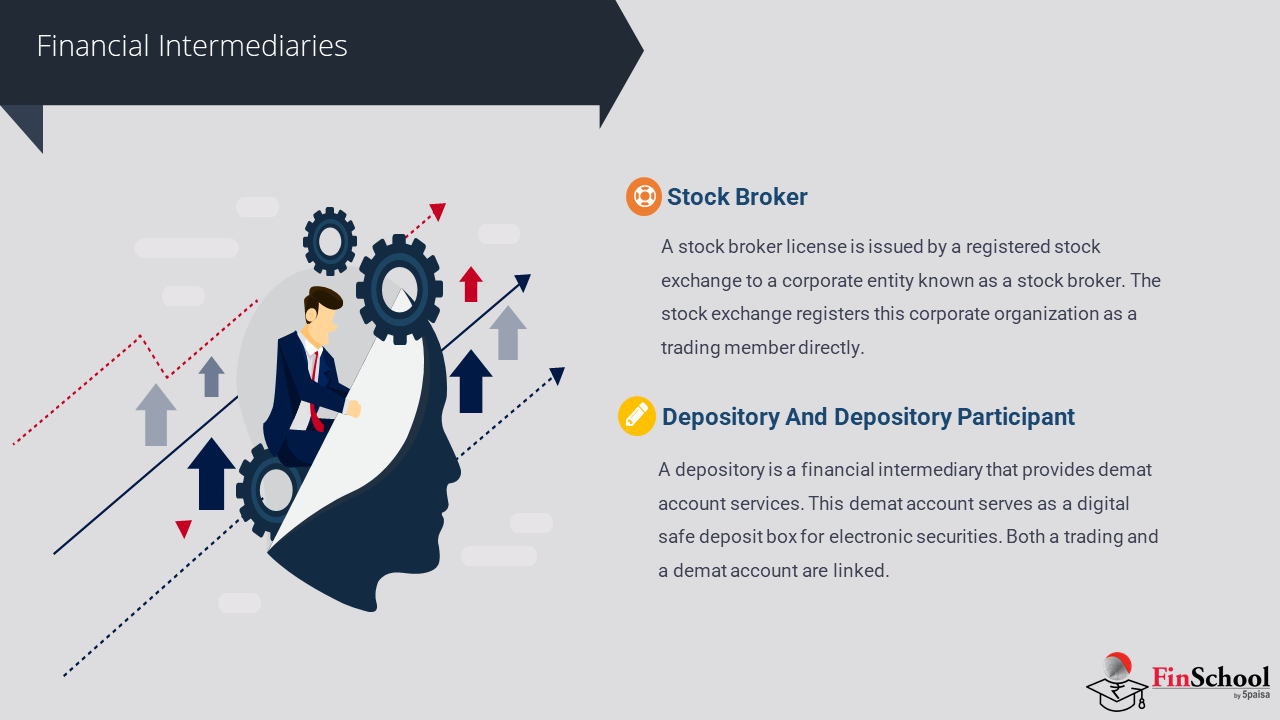
2.6 Financial Intermediaries
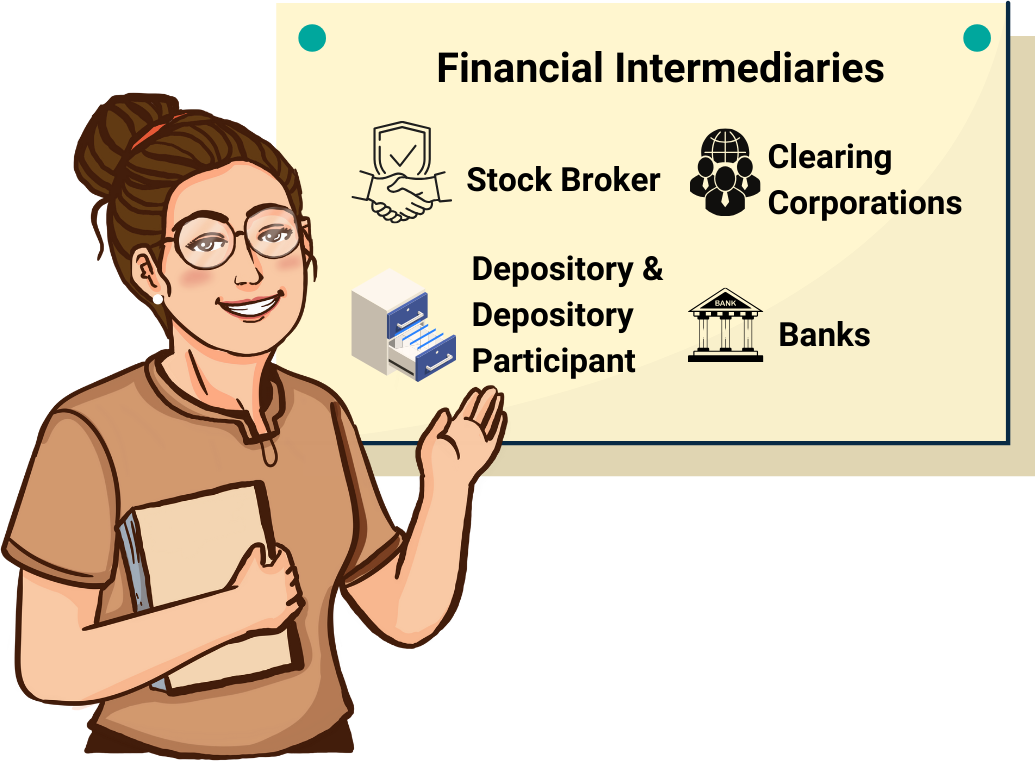
When you need funds for a wedding, you may turn to friends and family for help. However, that may not always be feasible. As such, you may go to a bank to obtain a personal loan. Your neighbour just went to the same bank to deposit ₹10 lakh into a fixed deposit account and do not know you exist either. The bank will connect your need for money with your neighbour’s desire to earn interest on his account.
The bank acts as a financial intermediary between you and your neighbour by:
- Giving you Loan and making you pay interest on the loan,
- Payingyour neighbour interest on his deposit,
- Earninga profit by managing risk and keeping track of both loans, and
- Charging fees for these
Types of Financial Intermediaries
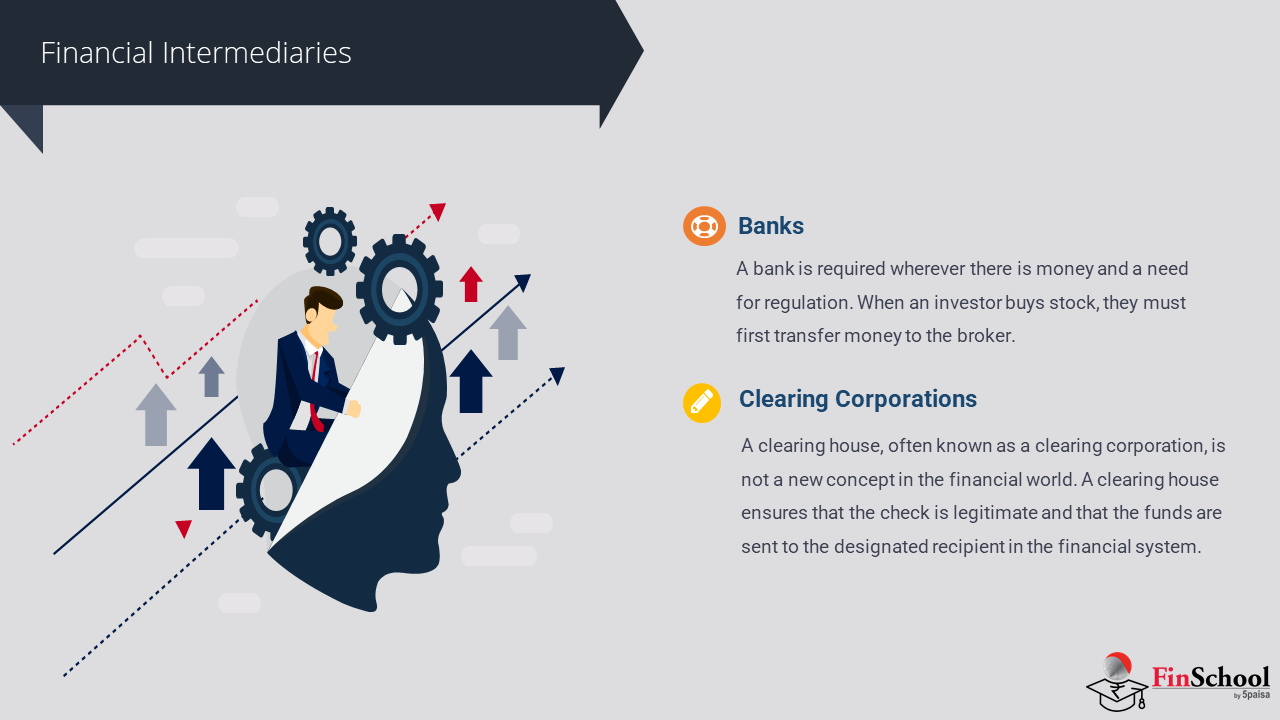
- Banks
Financial institutions act as a link between individuals and businesses so they can receive loans (funds) from other people (savers/depositors). Commercial banks including SBI, HDFC, and ICICI provide services such as savings accounts and loan facilities that help facilitate financial inclusion. Financial Institutions are regulated by the Reserve Bank of India through monetary policy.
2. Investment Banks
Investment Banks are established to assist firms in obtaining the necessary capital for their operations through investment in their equity and/or debt (+-50% of their operations) while at the same assisting clients with Mergers/Acquisitions, underwriting IPOs (Initial Public Offerings), and managing assets. Investment Banks do NOT provide traditional banking services such as keeping deposits or checking accounts, they provide advisory services related to large capital transactions. Some of the most prominent global investment banks include: Goldman Sachs, JP Morgan, and Morgan Stanley.
3. Insurance Companies
Insurance Companies give protection to people and businesses. They cover people from losses due to death, illness, accidents and damage to property They collect premiums. Invest them to earn income. They use this income to pay claims when an insured event happens. LIC, HDFC Ergo and ICICI Prudential have programs. These programs help people and businesses prepare for events. They offer life, health and property insurance policies as a safety net.
4. Mutual Funds & AMCs
Mutual Funds let people pool their money. They invest in things like stocks, bonds and commodities. Asset Management Companies manage these pooled investments. Examples include SBI Mutual Fund, HDFC Mutual Fund and Nippon India Asset Management Company. They help people diversify their investments. This makes use of their money. There are types of mutual funds. These include mutual funds, debt mutual funds, hybrid mutual funds and index mutual funds. They offer ways for people to invest. The investment options depend on how risk a person is willing to take.
5. Pension funds:
Pension funds help people save money for retirement. This way they have money after they stop working. The National Pension System and other funds like the Employees Provident Fund and Public Provident Fund help people save. They invest money while people are working. The Pension Fund Regulatory and Development Authority oversees these funds. They make sure the funds are safe and earn money. They invest in stocks and bonds. This helps keep the value of the money in the funds. They also make sure people who get money from the funds have an income. They protect people from inflation.
6. Stock Exchanges
Stock exchanges like the Bombay Stock Exchange and National Stock Exchange are places to buy and sell stocks. They create a market for buying and selling. They help figure out stock prices. They give companies a way to raise money. When people buy stocks they spread out their investments. This way they do not put all their money in one place. The Securities and Exchange Board of India oversees stock exchanges in India. They make sure stock exchanges are fair and honest. They ensure people who buy and sell stocks get a price. Stock exchanges help keep the countrys economy stable.
7. Firms that Deal in Venture Capital and Private Equity
Venture Capital Firms and Private Equity Firms give money to companies. They also fund companies with growth potential. They offer capital, strategic expertise and access to markets. This helps fuel entrepreneurship and business growth.
8. Institutions of Micro-Finance
Micro-Finance Institutions like S.K.S. M.F.I. (Bharat Financial Inclusion) and Grameen Bank offer loans. They give loans to people and small businesses. Banks often do not serve these individuals and businesses. Micro-Finance Institutions foster growth, from the grassroots level. They support inclusion.
Functions of Financial Intermediaries
- Allocation of capital: Transferring funds from savers to borrowers to facilitate productive investment in the economy
- Liquidity management: ensuring that financial instruments are available for tradingwithout causing large movements in their price
- Diversifying risk: helping to reduce risk through diversifying and through the use of structured financial instruments
- Stabilizing the market: controlling trading of financial securities thus reducing volatility within the economy
- Creating wealth: creating access to investment opportunities allowing individuals or institutions to build their wealth over time.
Nirav: Thank you very much Vedant! You explained everything so nicely. However, I have yet one more question I’d like to ask, please.
Vedant: No problem. I can help you with whatever you need to get a good understanding about the securities markets.
Nirav: We’ve talked about the definition of Securities in trading as being Financial assets that can be bought/sold/traded in the market, thus making a profit for yourself or insuring against losses to a specific asset type. Securities are Stocks, Bonds, Derivatives, Commodities, Foreign exchange (Forex), etc. However, do you know how these financial assets are traded?
Vedant: Wow – what a great question! The financial assets that we’ve talked about are all traded in some sort of trading venue, and the trading venues provide different services/functions for each type of trade.
2.7 Securities Market Segment

The securities market is divided into various segments, each serving distinct functions within the financial system. These segments facilitate capital formation, liquidity management, price discovery, and risk allocation for investors and institutions. Below is a breakdown of key securities market segments in India.
-
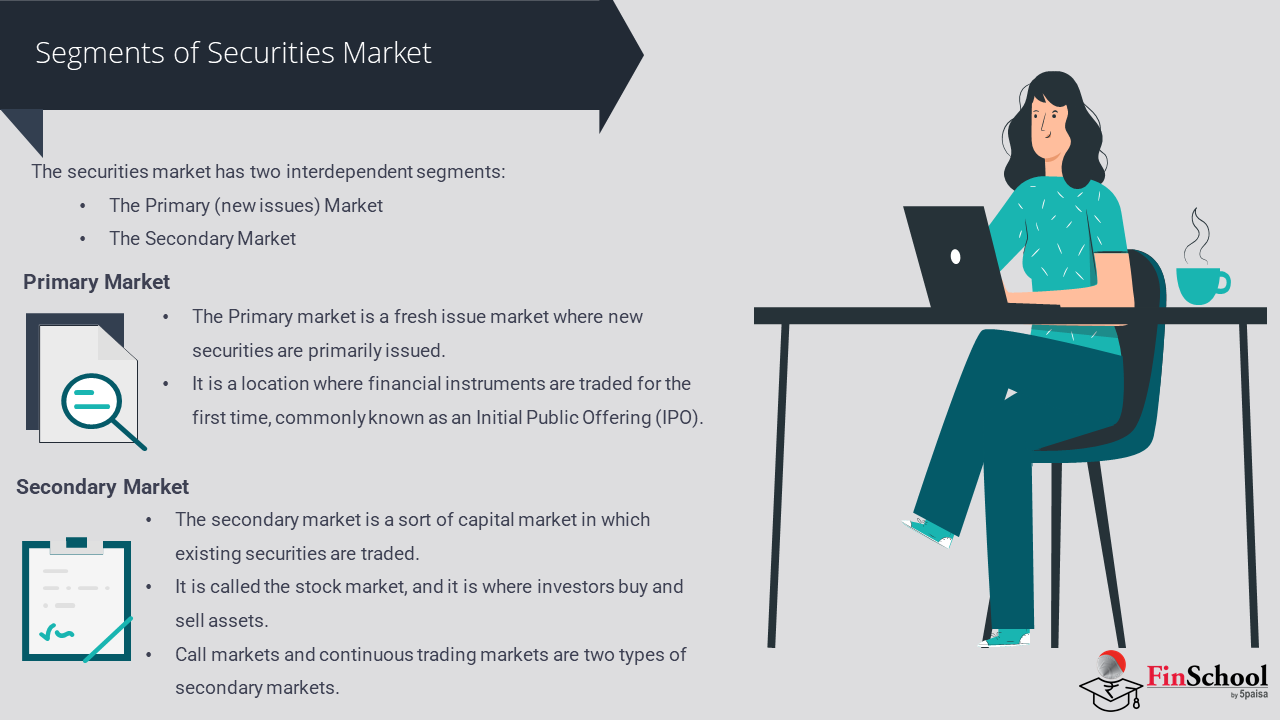
Primary Market
The primary market is where companies issue their shares for the first time. Companies and governments make financing arrangements with the assistance of investors for initial offerings of common stock or bonds.
What is IPO ? Companies can raise funds by issuing shares to the public through an initial public offering (IPO).
What are Bond Issues – Here Governments and corporations can generate money by selling fixed-income securities (bonds) and offering to pay interest periodically.
What are Rights Issues & Private Placements? – In this Companies provide current investors with access to new shares, while also offering new shares to selected institutional investors.
-
Secondary Market
The secondary market is the place where investors can buy and sell previously issued securities. Which means shares which are already available in the market. Stock Trading – Trading occurs on a stock exchange (i.e. NSE and BSE) in shares of companies. Bonds & Debentures – Reselling fixed-income securities (bonds) creates liquidity for the bond holder.
-
Futures & Options Market
In this market, investors are able to invest in financial instruments which derive their value from other securities called “underlying securities.” Examples of an underlying security would be a stock, or a commodity such as gold or oil, a stock market index, or a currency. A future is like a deal to buy or sell something on a date for a set price. It is an agreement between two parties.An option is a kind of contract. It gives an investor the choice to buy or sell something at a price on or before a specific date. This certain price is called the strike price.Having an option helps investors.It protects them from changes, in price. They can use it as a kind of insurance. This way they do not lose money if prices change a lot.Commodity Derivatives are traded (through future contracts) example of this are Gold, Crude Oil and agricultural products.
-
Debt Market
The debt market consists of debt instruments that are fixed income securities like bonds, treasury bills, and debentures. Debt instruments give the holder a predictable cash flow since their cash flow is in the form of payments made to the debt holder by the company that issues the debt. Government Securities (G-Secs): These are issued by the sovereign government in order to raise funds. G-Secs are very safe investments with fixed returns. Corporate bonds are issued by corporations to raise capital. They pay the investor periodic interest on the investment and return the principal at the end of the layoff. Municipal Bonds: These are bonds issued by the local municipality to fund infrastructure projects.
5. Commodity Market
The commodity market is where people trade things like gold, silver and crude oil. These things can be traded in their form or as a kind of agreement on an exchange. The commodity market is about buying and selling products like:
- Gold
- Silver
- Crude oil
- Agricultural products
- Other raw materials
There are spot markets too. These are markets where you can buy or sell commodities away, at the current market price. This section outlines some key points related to Forex market. In this case, it covers USD, INR, EUR, GBP, JPY and others. The following provides an overview of Forex Trading through Currency Transaction. –
Spot Forex Trading: Buying/Selling of Foreign Currencies on the spot, i.e., right at this moment.
Futures and Options Forex Contracts: Contracts to purchase or sell a currency on a specified date and at a specified price, dependent on an expected change in the exchange rate of that currency.
Central Bank Regulations: The Reserve Bank of India maintains regulatory oversight of the proper management, or stability, of the country’s currency and its exchange rate.
Vedant: Nirav, I hope you now understand better about the Securities Market and how you trade, and here’s a summary of all that’s been discussed.
Nirav : Thank you, Vedant. Next time we come together, I would love to learn from you. Vedant: Yes, I look forward to discussing the role that various Securities Market Intermediaries play in the Securities Market
2.8 Key Takeaways
- Securities are like tickets that can help you make money or reduce your They can be things like stocks, bonds or other kinds of investments. These tickets are the building blocks of investing.
- The place where people buy and sell these tickets is called the securities It is very important for companies to get the money they need to grow and for people to be able to buy and sell things easily. The securities market helps companies get the money they need. It helps the whole economy grow.
- There is a group called SEBI that makes sure the securities market is fair and honest.They make rules for companies that want to sell these They watch out for people who might be cheating. SEBI also keeps an eye on things like funds and makes sure nobody is trading unfairly.
- There are groups that help regulate the securities market Like the Reserve Bank of India which helps control the money supply and the Ministry of Finance which makes rules about taxes. There are also groups that watch over insurance and pension investments.
- The people who participate in the securities market are investors, big companies that invest money, stock brokers and stock exchanges like the BSE and There are also places called depositories, like CDSL and NSDL that help keep track of everything.
- There are also middlemen that help move money from investors to These include banks, mutual funds, insurance companies and pension funds. They help take the money that people save and invest it in companies. They try to reduce the risks.
- Thereare kinds of securities Primary, secondary and special markets. Investors can choose how they want to invest, based on what they want and how risk they are willing to take.
- Some investors like to use debt investments like government bonds or corporate bonds because they are relatively safe and can provide an income.
- SEBI is responsible for regulating all mutual funds in India. As such, it should develop rules and regulations governing the risk profiles of mutual funds, create clear and concise rules regarding the disclosure of mutual fund assets, develop low expense ratios and establish a fair and equitable process for reimbursement of investors in mutual funds.
- SEBI’s mission is to create financial literacy, promote good corporate governance through the establishment of sound business practices, enforce compliance with laws and regulations, control market intermediaries, promote financial awareness to investors and work to establish a fair and efficient capital market system.