
3.1 Overview

Understanding the Forwards Market Through the Saree Trade
Forward market is one of the oldest types of trading derivatives. A forward contract is a private agreement between two parties to buy or sell an asset at a specified price on a specified future date. These are customized contracts traded over the counter (OTC) and not on exchanges.
Consider, for instance the handloom saree trade in Varanasi, India. A Hyderabad retailer can pre-order with a weaver in Varanasi months before the wedding season begins. They negotiate for 100 Banarasi sarees for ₹3,000 each. The delivery shall be made after 3 months. The weaver gets a part payment in advance and has to supply the sarees at the pre-agreed price even if the price of silk or the cost of labour increase during the period.
This structure is the basic of forward contract:·Price is determined today Delivery & settlement are in future. Risk management for both parties, no price hike in festive season for retailer and income and production planning for weaver
But forward contracts are used in sectors such as banking, commodities and textiles because they are flexible and can be customised. But they are illiquid and have counterparty risk. These problems gave rise to futures contracts, standardised, exchange-traded forwards. The trade in sarees is good example of the mechanics of the futures market and a good basis to understand how forwards operate.
3.2 A Simple Forwards Example – Electronics Industry

Take the case of Bengaluru based smartphone manufacturer, NovaTech Electronics. The company purchases the lithium-ion batteries it uses for its phones from a Mumbai-based supplier PowerCell Traders. The prices of batteries are subject to demand and supply in the world market, given the critical role batteries play in the smartphone ecosystem.
PowerCell has entered into a forward contract with NovaTech to deliver 10,000 number of units of batteries at Rs 1,200 per unit on April 1st, 2026. The value of the forward contract is Rs 1.2 crore. The contract shall be binding from the date of the contract and on April 1st, 2026 each party will be obligated to perform its obligations under the contract irrespective of the price of batteries that may be prevailing in the market.
So let us find out what each side really wants:
The buyer, NovaTech Electronics, said that global demand for batteries should see prices rise. They price it today and hedge against higher prices in front of them. The Forward Contract Buyer of this contract is NovaTech .
PowerCell Traders, the seller of the shares, said it expects prices to fall on account of weaker demand or greater competition. They want to sell at the higher price today rather than waiting to sell at a lower price. 2.25 PowerCell means the seller pursuant to the Forward Contract.
This is a regular forward contract:
Price was settled now.
Payment and delivery in the future. Each counterparty has its own market view and risk management.
It is an OTC (Over-the-Counter) deal, which means it’s bespoke and done behind closed doors. But they are still widely used in areas such as electronics, textiles and commodities, especially where flexibility is needed.
But OTC forwards has its Disadvantages:
- Counterparty risk (What if one side doesn’t deliver?)
- Illiquidity (difficulty in selling or transferring the contract)
For this purpose the financial world invented futures contracts. Futures are standardised and traded on an exchange . Futures are more transparent, better protected by margin, and easier to get out of than forwards.
3.3 Three Scenarios
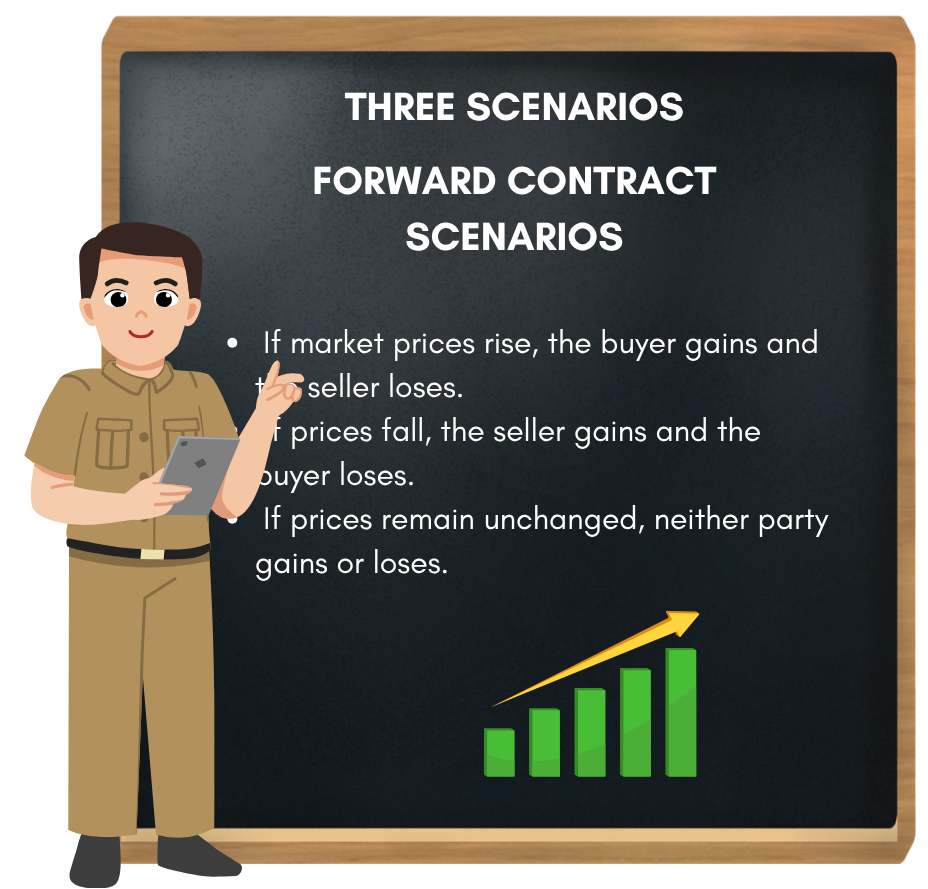
Scenario 1 – Battery Prices Rise
Let us assume that the market price of Lithium Ion Batteries increases to Rs.1350 per unit on 1st April 2026. NovaTech Electronics entered into a forward contract to purchase 10,000 batteries at ₹ 1200 per unit on 1st January, 2026. Under the deal NovaTech has the option to buy the batteries at the old contract price regardless of the market price.
The price hike is in line with NovaTech’s original expectation that battery prices would increase. The batteries are worth Rs 1.35 crore at market rate, but NovaTech pays only Rs 1.2 crore. That’s a ₹15-lakh profit for NovaTech. “They practically insulated themselves from that price surge that could have impacted their cost of production and margins.
However, the contract obligates PowerCell Traders to sell the batteries at ₹1,200 per unit, whereas it could have earned ₹1,350 per unit in the open market. If they had to buy batteries from some other supplier at the higher rate, they would be losing Rs 15 Lakh. This example illustrates how a forward contract can protect the buyer against an adverse price movement but also the potential downside risk for the seller.
|
Party |
Action |
Financial Impact |
|
NovaTech Electronics |
Buys batteries from PowerCell @ ₹1,200 per unit |
Saves ₹15 lakh (₹1.35 crore – ₹1.2 crore) |
|
PowerCell Traders |
Obligated to sell batteries @ ₹1,200 per unit |
Loses ₹15 lakh (₹1.35 crore – ₹1.2 crore) |
Scenario 2 – Battery Prices Fall
Now, suppose that on 1st April 2026, the market price of lithium-ion batteries has come down to ₹1,050 per unit. Here PowerCell Traders did get it right, by forecasting a fall in the price and locking in a higher selling price through the forward contract.
NovaTech Electronics is now forced to buy the batteries at ₹1,200 each when they are available in the market at ₹1,050. The deal is valued at ₹1.05 crore in the market but NovaTech will have to shell out ₹1.2 crore. So, the loss to NovaTech of ₹15 lakh. This could affect their cost structure and make them less competitive, particularly if competing manufacturers are purchasing batteries at lower market prices.
Meanwhile PowerCell Traders is making hay with the deal. They sell batteries at ₹1,200 a unit which is ₹15 lakh more than what they would have earned if they sold at the present market rate. In this case the forward contract has protected the seller from falling prices but has left the buyer open to losses if the market moves against him.
|
Party |
Action |
Financial Impact |
|
NovaTech Electronics |
Obligated to buy batteries @ ₹1,200 per unit |
Loses ₹15 lakh (₹1.2 crore – ₹1.05 crore) |
|
PowerCell Traders |
Entitled to sell batteries @ ₹1,200 per unit |
Gains ₹15 lakh (₹1.2 crore – ₹1.05 crore) |
Scenario 3 – Battery Prices Stay the Same
Scenario 3 – Same Battery Prices In the third scenario, let us assume that the price of lithium-ion batteries remains the same in the market i.e. ₹1,200 on 1 st April 2026, the date when delivery of the contract is to be made. In this scenario, there is no gain or loss to either NovaTech Electronics or PowerCell Traders.
As NovaTech Electronics has to pay ₹1.2 Crore for the 10,000 batteries anyway, the situation results in no gain or loss to NovaTech Electronics. On the other hand, PowerCell Traders also does not make any profit or loss by virtue of the forward contract. Thus, the forward contract helped both the parties by providing a price certainty and settlement facility to them.
|
Party |
Action |
Financial Impact |
|
NovaTech Electronics |
Buys batteries from PowerCell @ ₹1,200 per unit |
No gain or loss – pays market price |
|
PowerCell Traders |
Sells batteries to NovaTech @ ₹1,200 per unit |
No gain or loss – receives market price |
3.4 Visual Impact of Price Movements

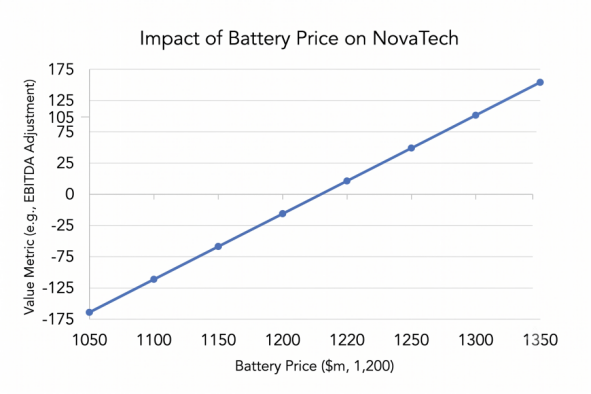
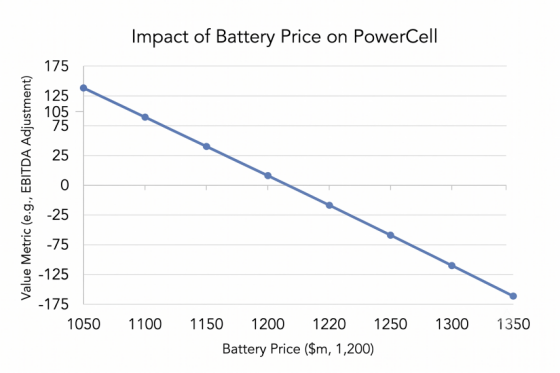
There is no financial impact on either party at the agreed price of ₹1,200 per battery unit. But when the market price deviates from ₹ 1,200, the financial results are sharply different.
If the prices of batteries rise above ₹1,200, NovaTech will profit by purchasing below the market price whereas PowerCell will suffer losses by selling below the market price.
- If the price of batteries goes below ₹1,200, then PowerCell will earn profit by selling at a price higher than the market price and NovaTech will incur losses as it will have to buy the batteries at a higher price.
Physical Settlement at Expiry
On 1st April 2026 (Expiry Date):
- NovaTech pays ₹1.2 crore in cash
- PowerCell delivers 10,000 batteries
This is physical settlement, where the actual goods and payment are exchanged — a direct, real-world outcome.
Three Scenarios
Scenario 1 – If Price Rises to ₹1,350
- NovaTech saves ₹15 lakh (buys below market)
- PowerCell loses ₹15 lakh (sells below market)
Scenario 2 – If Price Falls to ₹1,050
- NovaTech loses ₹15 lakh (buys above market)
- PowerCell gains ₹15 lakh (sells above market)
Scenario 3 – If Price Stays at ₹1,200
- No gain or loss for either party — contract matches market price
Key Learning
By showing the end-state early (₹1.2 crore cash vs 10,000 batteries delivered), students immediately connect the contract to real-world business outcomes. This builds confidence before moving on to futures contracts, which are standardized and exchange-traded in India (like on NSE or BSE).
3.5 A Quick Note on Settlement
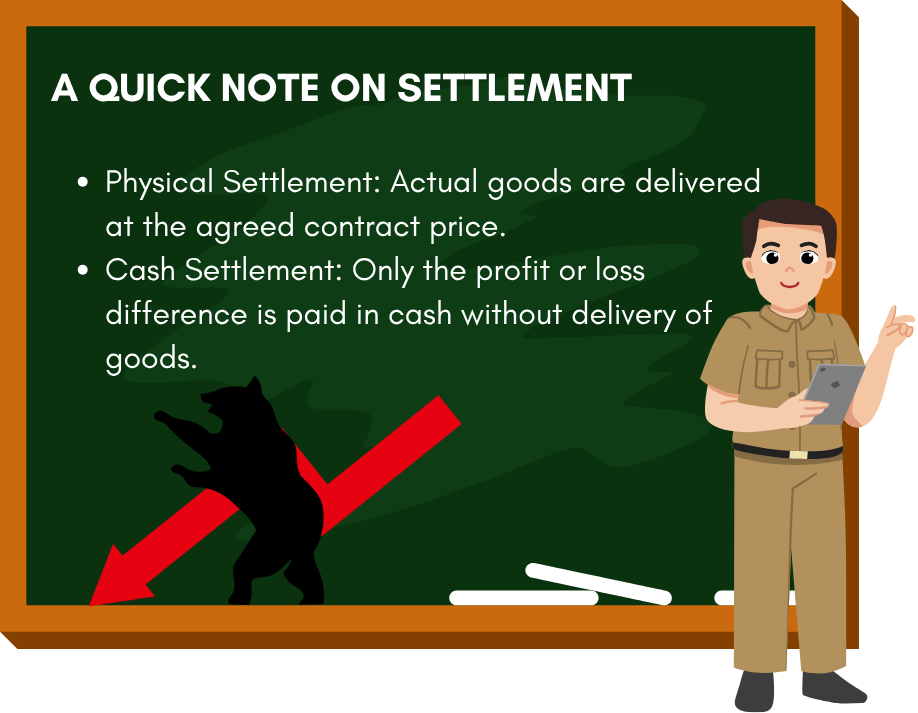
Physical Settlement
NovaTech pays the full amount of the contract, which is Rs.1.2 crore, while PowerCell delivers the 10,000 battery units to NovaTech. In case Power Cell does not have the required inventory, they might have to buy the 10,000 units at Rs.1350 per piece, amounting to a total of Rs.1.35 crore, and sell them at the price decided in the contract, thereby losing Rs.15 lakhs
Cash Settlement
Instead of physical delivery, both the parties make a cash settlement. In this case, since the market price is Rs.1.35 crore while NovaTech has the right to buy the inventory at Rs.1.2 crore, PowerCell pays Rs.15lakhs to NovaTech.
Cash Settlement – NovaTech & PowerCell Forward Contract
On 1st January 2026, NovaTech Electronics (Bengaluru) and PowerCell Traders (Mumbai) agree to a forward contract for 10,000 lithium-ion batteries at ₹1,200 per unit.
- Total Contract Value:₹1.2 crore
- Delivery Date:1st April 2026
- Settlement Type:Cash Settlement (no physical delivery of batteries, only cash difference exchanged)
How Cash Settlement Works
Instead of delivering the actual batteries, both parties settle the difference between the agreed price and the market price on expiry.
- If market price > contract price→ Seller (PowerCell) pays Buyer (NovaTech) the difference.
- If market price < contract price→ Buyer (NovaTech) pays Seller (PowerCell) the difference.
- If market price = contract price→ No cash flow, contract expires neutral.
Three Scenarios (Cash Settlement in INR)
Scenario 1 – Price Rises to ₹1,350
- Market Value = ₹1.35 crore
- Contract Value = ₹1.2 crore
- NovaTech gains ₹15 lakh(PowerCell pays difference in cash)
- PowerCell loses ₹15 lakh
Scenario 2 – Price Falls to ₹1,050
- Market Value = ₹1.05 crore
- Contract Value = ₹1.2 crore
- NovaTech loses ₹15 lakh(pays difference in cash to PowerCell)
- PowerCell gains ₹15 lakh
Scenario 3 – Price Stays at ₹1,200
- Market Value = ₹1.2 crore
- Contract Value = ₹1.2 crore
- No gain or lossfor either party
Key Difference vs Physical Settlement
- Physical Settlement:Actual batteries + cash exchanged.
- Cash Settlement:Only the profit/loss difference is exchanged in cash, no delivery of batteries.
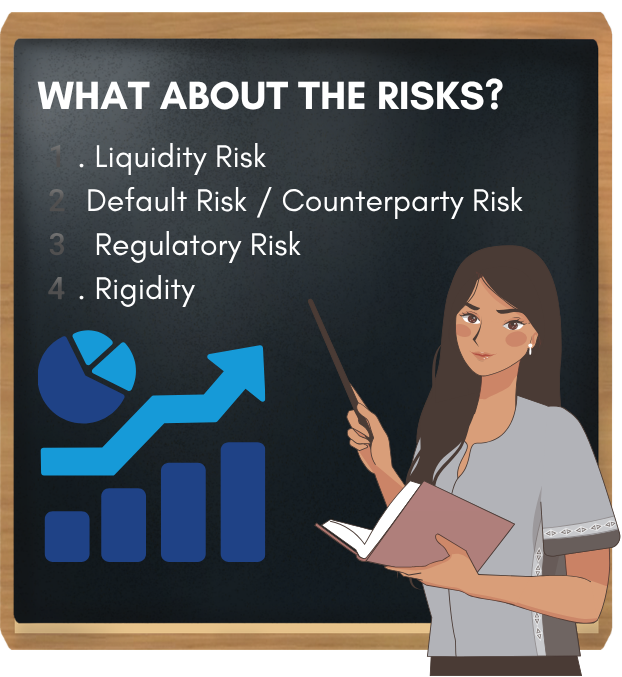
3.6 What are the Risks?
- Risk of Liquidation
In our case, there were different views between NovaTech and PowerCell, but we reached a deal easily. But in practice it is not easy to find a counterparty with a diametrically opposite view. Often companies will use an intermediary like an investment bank to help find appropriate counterparties. These banks charge a fee and may take some time to find a match.
- Credit risk / Counterparty risk
Say battery prices drop to ₹1,350 and NovaTech hopes PowerCell can hold up the deal. But what happens if PowerCell doesn’t deliver or pay the difference? Because forward contracts are private arrangements, enforcement is not guaranteed unless legal action is taken.
3️. Regulatory Risk
There is no central authority to regulate forward contracts. They are based on mutual understanding. This lack of oversight could lead to disputes, defaults or unethical behaviour. Forwards are not protected by the institutional safeguards of exchange-traded futures.
4️. Rigidity
When NovaTech and PowerCell have agreed to the contract, they are locked into the contract, even if their views of the market change halfway through. There’s no easy way out or switch. In volatile markets, rigidity can be a problem.
3.7 Key Takeaways

- Forward contracts are private, over-the-counter agreements to buy or sell an asset at a specified future price.
- They are very flexible in size, age and settlement.
- No clearinghouse- Parties have high counterparty credit risk.
- Settlement may be by physical delivery or cash settlement based on price difference.
- Companies use forwards to protect themselves against adverse price movements in commodities, currencies or assets.
- Contract is win-win. This is because the buyer and the seller have different price expectations.
- The market is subject to change in future but the contract price is fixed at the time of inception.
- Forwards settle one to one and not on an exchange so liquidity is limited.
- There is little regulation, increasing the risks as compared to standardised futures contracts.
3.8 Fun Activity

A mango farmer in western India was preparing for the summer harvest. The farmer knew that mango prices often fluctuate due to weather and market demand. To secure income and reduce uncertainty, the farmer entered into a forward contract with a fruit exporter based in Mumbai.
The agreement was simple:
- The exporter would buy 1,000 crates of Alphonso mangoes at ₹500 per crate.
- Delivery would take place in May.
- A partial payment was made upfront.
By the time May arrived, the market price had risen to ₹650 per crate. The exporter was pleased—thanks to the forward contract, the total payment was ₹5 lakh instead of ₹6.5 lakh, saving ₹1.5 lakh. The farmer, however, had to sell below market value and missed out on potential earnings.
To settle the deal, both parties opted for cash settlement. Instead of delivering mangoes, the farmer paid the exporter ₹1.5 lakh—the difference between the market price and the agreed price.
This simple arrangement helped both parties manage risk, but also revealed the trade-offs involved in forward contracts.
- What type of contract was used between the farmer and the exporter?
a) Spot contract
b) Futures contract
c) Forward contract
d) Option contract
Correct Answer: c) Forward contract
2. What was the market price at the time of delivery?
a) ₹450
b) ₹500
c) ₹600
d) ₹650
Correct Answer: d) ₹650
3. Who benefited financially from the forward contract?
a) The farmer
b) The exporter
c) Both parties
d) Neither party
Correct Answer: b) The exporter
4. How much did the exporter save in total?
a) ₹50,000
b) ₹1 lakh
c) ₹1.5 lakh
d) ₹2 lakh
Correct Answer: c) ₹1.5 lakh
5. What settlement method was used in the story?
a) Physical settlement
b) Cash settlement
c) Barter settlement
d) Deferred settlement
Correct Answer: b) Cash settlement
6. Why did the farmer lose money in this deal?
a) Delivered fewer crates
b) Paid extra for transport
c) Sold below market price
d) Missed the delivery deadline
Correct Answer: c) Sold below market price
7. What risk would the exporter face if market price dropped to ₹400?
a) Overpaid compared to market
b) Lost crates in transit
c) Received damaged goods
d) Breached the contract
Correct Answer: a) Overpaid compared to market
8. What does a forward contract help protect against?
a) Theft
b) Price fluctuations
c) Weather damage
d) Transport delays
Correct Answer: b) Price fluctuations
9. Are forward contracts regulated by an exchange?
a) Yes, always
b) Only in India
c) No, they are OTC
d) Only for commodities
Correct Answer: c) No, they are OTC