
10.1 Association For The Mutual Fund Industry?

Anand: Ridhima what is the Association for the Mutual Fund Industry?
Ridhima: The Association for the Mutual Fund Industry is the Association of Mutual Funds in India. It was set up in 1995 as a -profit organization. The Association for the Mutual Fund Industry represents all the companies that are registered with the Securities and Exchange Board of India to sell funds.
Anand: What does the Association for the Mutual Fund Industry do?
Ridhima: The main job of the Association for the Mutual Fund Industry is to protect the interests of investors.
The Association for the Mutual Fund Industry also promotes standards and makes it easier for people to invest in mutual funds.
- The Association of Mutual Funds in India (AMFI) is dedicated to developing the Indian mutual fund industry along professional, healthy, and ethical lines, while raising and maintaining standards across the board to protect mutual funds and the investors who hold them.
- AMFI, the association of SEBI-registered Asset Management Companies in India, was established as a non-profit organisation on August 22, 1995. As of today, 45 asset management companies are registered with SEBI.
AMFI’s Role in a Mutual Fund
- AMFI’s most essential role in the mutual fund industry is protecting the interests of Indian investors as well as asset management companies. It also works to make investing clearer and more approachable, in order to bring more people into the fold.
- To that end, fund houses, trustees, advisors, intermediaries, and other relevant parties are expected to register with AMFI through its website, which helps make mutual fund investing more accessible overall. Even AMFI’s advertising is designed to enhance clarity in the mutual fund market and to alert investors to the risks that come with investing.
10.2 What Are The Objectives Of AMFI?

Anand: What are the objectives of the Association for the Mutual Fund Industry?
Ridhima: The Association for the Mutual Fund Industry has objectives.
These are:
- The Association for the Mutual Fund Industry wants to set the ethical standards for everyone.
- The Association for the Mutual Fund Industry makes sure that investors and companies follow the rules.
- The Association for the Mutual Fund Industry works closely with the Securities and Exchange Board of India and the Reserve Bank of India.
- The Association for the Mutual Fund Industry educates investors about the risks involved.
- The Association for the Mutual Fund Industry helps investors who have complaints against fund managers or mutual fund companies.
Anand: So the Association for the Mutual Fund Industry looks out for both investors and mutual fund companies?
Ridhima: Yes that is correct.
The Association for the Mutual Fund Industry balances the interests of both investors and mutual fund companies.
AMFI pursues a number of goals, including the following:
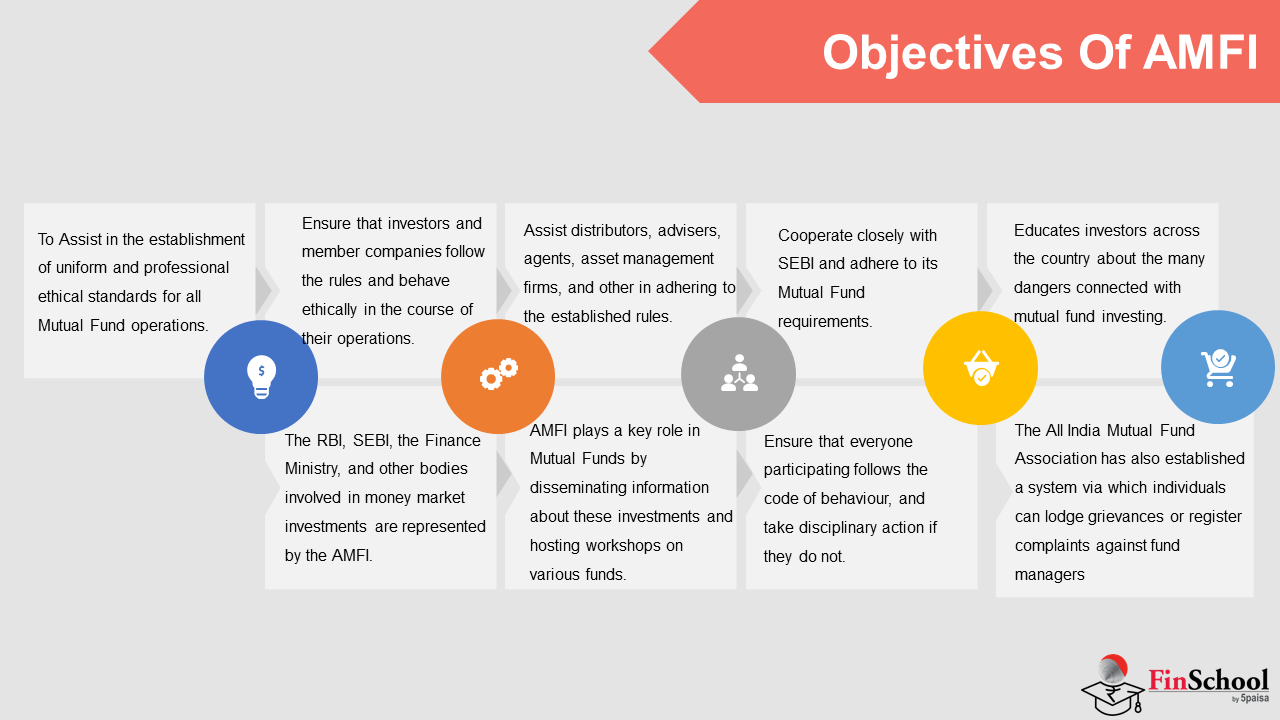
- Helping establish uniform, professional, and ethical standards across all mutual fund operations.
- Ensuring that investors and member companies alike follow the rules and behave ethically in the course of their business.
- Supporting distributors, advisers, agents, asset management companies, and other participants in the financial services and capital markets in adhering to established rules.
- Working closely with SEBI and complying with its mutual fund requirements.
- Educating investors nationwide about the various risks connected with mutual fund investing.
- Representing the industry’s interests in dealings with the RBI, SEBI, the Finance Ministry, and other bodies involved in the money markets.
- Playing a central role in disseminating information about mutual funds and hosting workshops on the subject.
- Ensuring participants follow the code of conduct and taking disciplinary action when they don’t.
- Providing a formal channel through which individuals can lodge grievances or file complaints against fund managers or asset management companies, in order to protect investor interests.
- Simultaneously helping protect the legitimate interests of asset management companies themselves.
10.3 What Is The ARN & Why Is It Important To Investors?

Anand: I have heard about the ARN times. What is the ARN?
Ridhima: The ARN means the Association for the Mutual Fund Industry Registration Number. The ARN is given to agents, brokers or intermediaries who are allowed to sell funds.
Anand: Why is the ARN important for me?
Ridhima: The ARN is important because only people with an ARN are trustworthy and trained to sell funds.It is against the law to sell funds without an ARN.
Anand: How do people get an ARN?
Ridhima: People get an ARN by passing a certification exam given by the National Institute of Securities Markets. The certification is valid, for three years.
As an investor you should always check if your advisor has an ARN before you invest in funds.
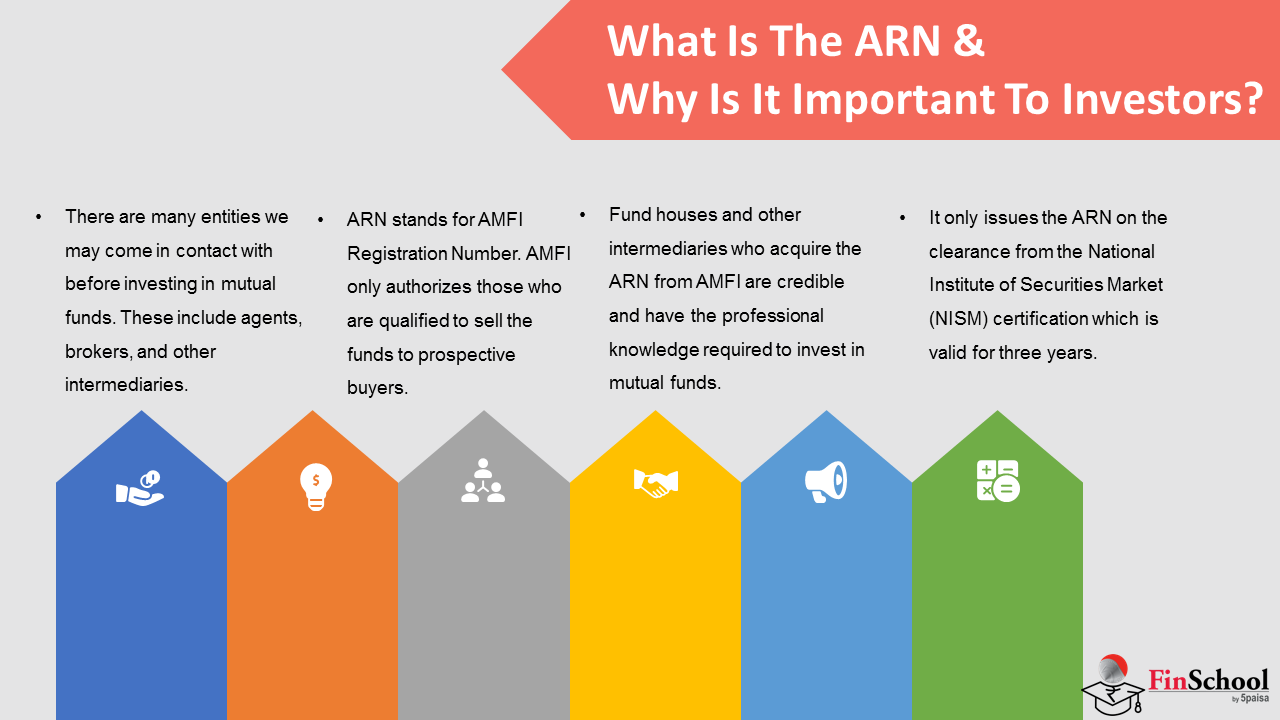
- Before investing in mutual funds, investors typically come into contact with several intermediaries — agents, brokers, and others. But how can you tell which of these are genuinely credible? That’s exactly where the ARN comes in. ARN stands for AMFI Registration Number.
- AMFI only authorises individuals and entities that are properly qualified to sell mutual funds to the public. Any fund manager, broker, agent, or company that wants to deal in mutual funds must first obtain this authorisation from AMFI, issued in the form of an ARN.
- Fund houses and intermediaries who hold a valid ARN have demonstrated the professional knowledge required to advise on mutual fund investments. It is, in fact, a legal offence to sell or recommend mutual fund units to investors without holding an ARN.
- AMFI issues the ARN only after a candidate clears a certification exam conducted by the National Institute of Securities Markets (NISM), a training institute focused on securities market education. The certification remains valid for three years.
- It is well worth investors’ time to confirm that any third-party agent or intermediary they work with holds a valid ARN before investing.