7.1 Liquid Funds & Its features
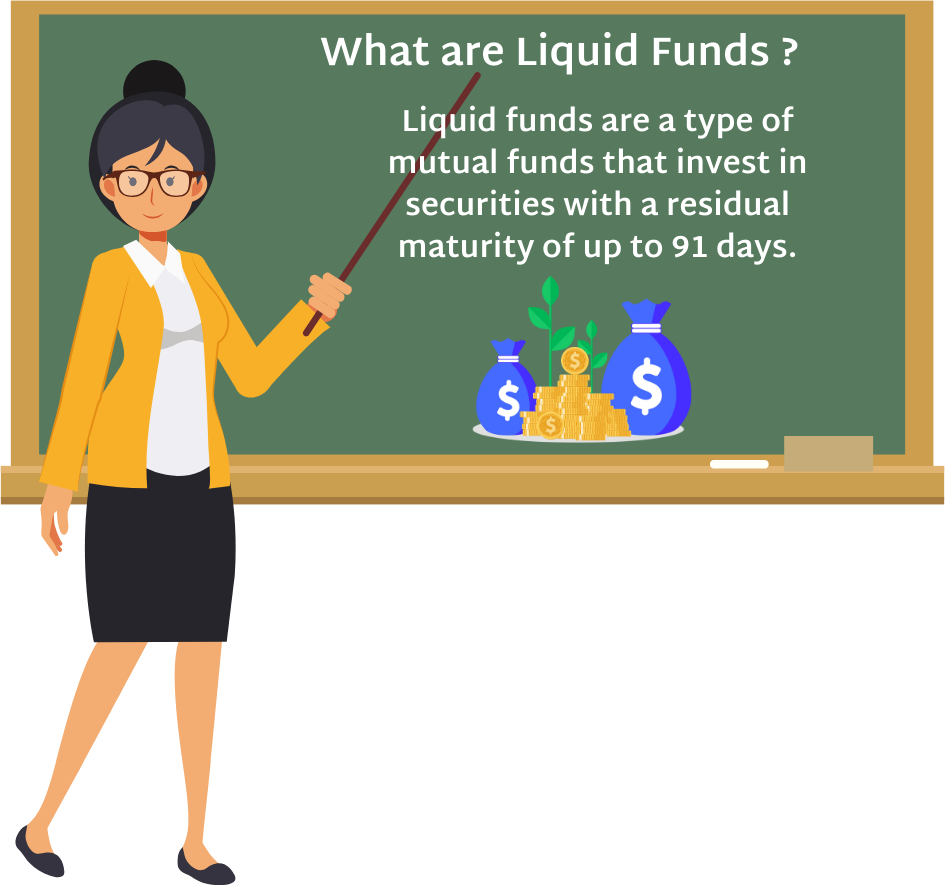
Anand: What are liquid funds?
Ridhima: Liquid funds are funds that invest in short term securities with maturity up to 91 days.
Anand: Do funds have lock in periods?
Ridhima: No liquid funds are highly liquid you can withdraw your money from funds anytime.
Anand: Are funds risky?
Ridhima: Liquid funds are low risk the Net Asset Value of liquid funds stays steady and the returns on liquid funds are usually 7 to 9 percent, which is better than savings accounts.
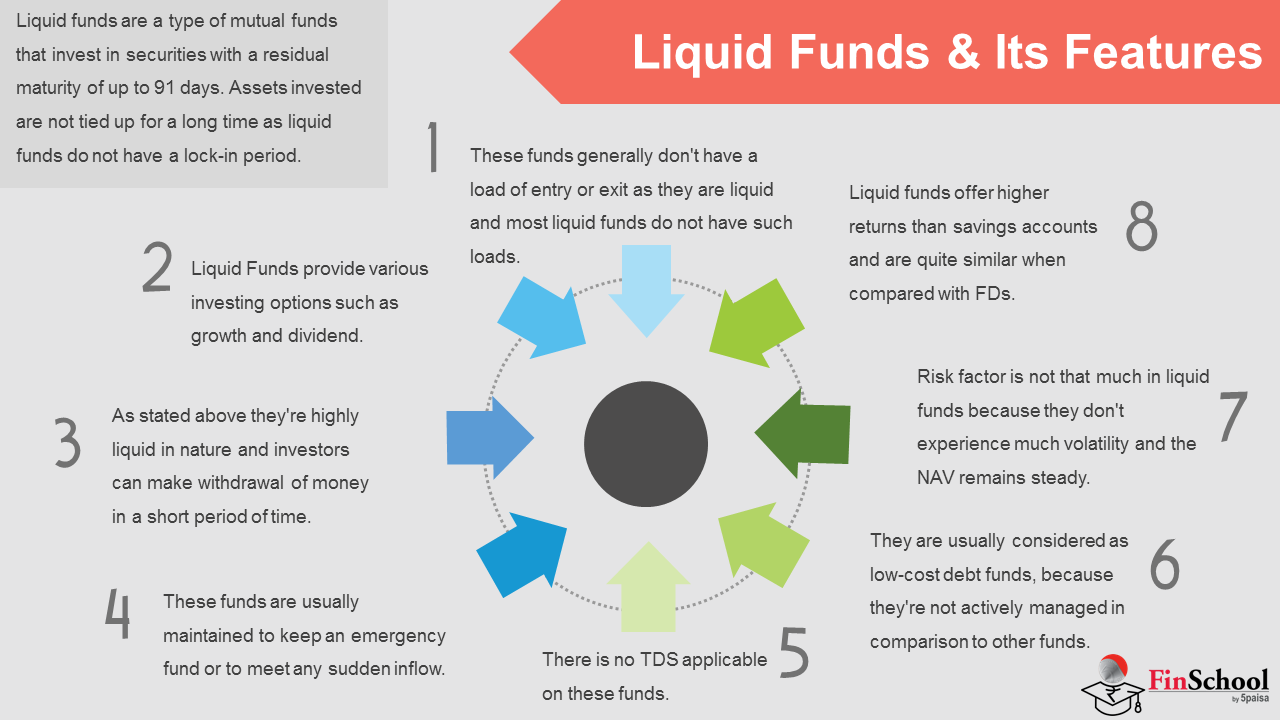
Liquid funds are a type of mutual fund that invests in securities with a residual maturity of up to 91 days. Because of this short maturity profile, liquid funds carry no lock-in period, so your money is never tied up for long.
The main features these funds have
- These funds generally carry no entry or exit load, since they’re built to be highly liquid.
- Liquid funds offer both growth and dividend options — and if you choose the dividend option, payouts can be made daily, monthly, or quarterly.
- As the name suggests, they’re highly liquid, letting investors withdraw money within a short period of time.
- No TDS applies to these funds.
- Liquid funds typically offer higher returns than a savings account and compare reasonably well with fixed deposits, with returns generally ranging from 7% to 9%.
- Risk is relatively low, since liquid funds don’t experience much volatility and their NAV stays fairly steady. Their short maturities also make them less exposed to interest rate risk compared with other debt funds.
- They’re generally considered low-cost debt funds, since they aren’t actively managed to the same degree as other fund categories.
- These funds are commonly used to park an emergency fund or manage a sudden inflow of cash.
7.2 What Is Portfolio Churning In Liquid Funds?

Anand: What is portfolio churning in funds?
Ridhima: Since liquid funds invest in short term papers the securities in funds keep maturing so the fund manager reinvests the money in liquid funds, which means the portfolio of liquid funds changes frequently.
Anand: So the turnover is high in funds?
Ridhima: Yes liquid funds see inflows and outflows of money which makes the back end activity in liquid funds quite heavy.
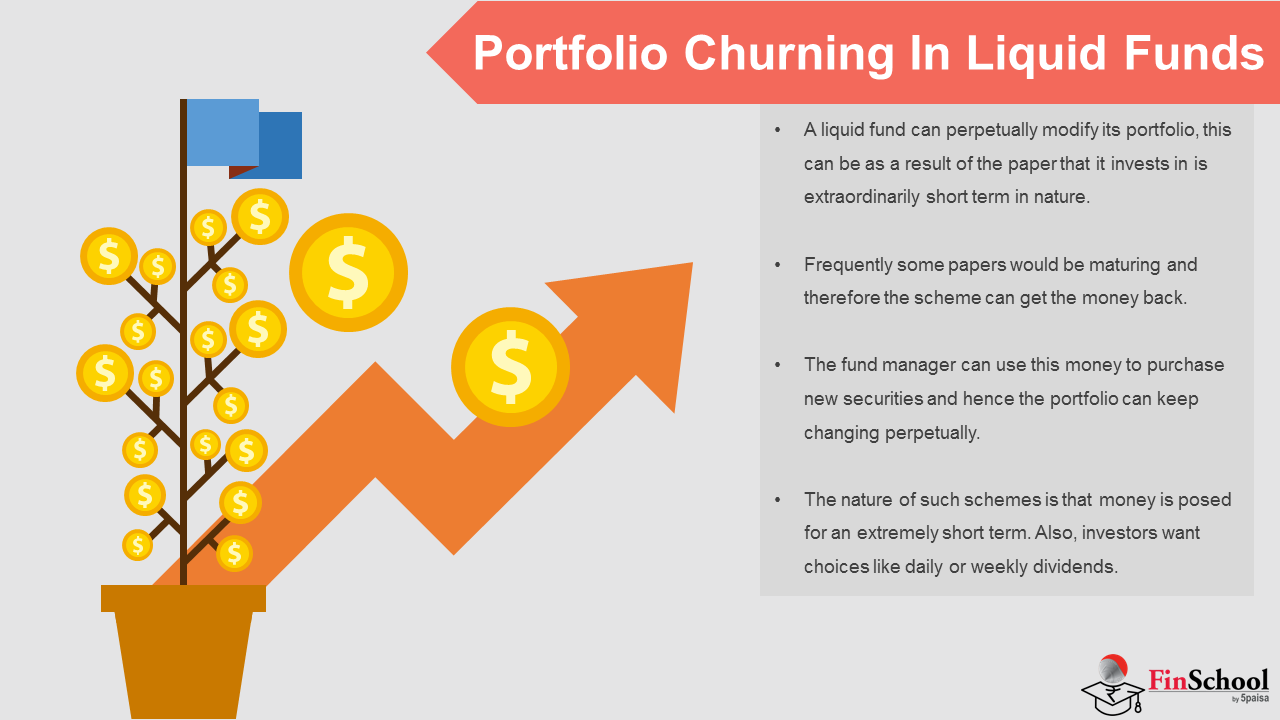
- A liquid fund’s portfolio is in near-constant motion, simply because the securities it holds are extremely short-term in nature. Instruments frequently mature, the scheme receives the money back, and the fund manager reinvests it in new securities — a cycle that keeps the portfolio continually changing.
- As a result, liquid funds tend to have unusually high portfolio turnover, with frequent inflows and outflows as a routine part of how they operate.
- Investors also often prefer daily or weekly dividend options, which adds further to the volume of back-end activity — the scale of transactions and their frequency both stay high. Much as equities have separate indices for small-cap, mid-cap, and large-cap stocks, the debt market has its own indices organised by the maturity profile of the underlying bonds.
7.3 How Do liquid Fund Work?
Anand: How do liquid funds process investments in funds?
Ridhima: If you invest your money in funds before 2 pm you get the previous days Net Asset Value of liquid funds and the redemption of liquid funds is credited the next working day.
Anand: How do liquid funds earn returns on investments?
Ridhima: Liquid funds mainly earn returns through interest on debt holdings in funds capital gains are minimal in liquid funds since the maturities are short.
Anand: Are liquid funds completely risk free?
Ridhima: No liquid funds are not entirely risk free liquid funds face interest rate and credit risk. Investing in government or AAA rated securities in liquid funds reduces the risk.
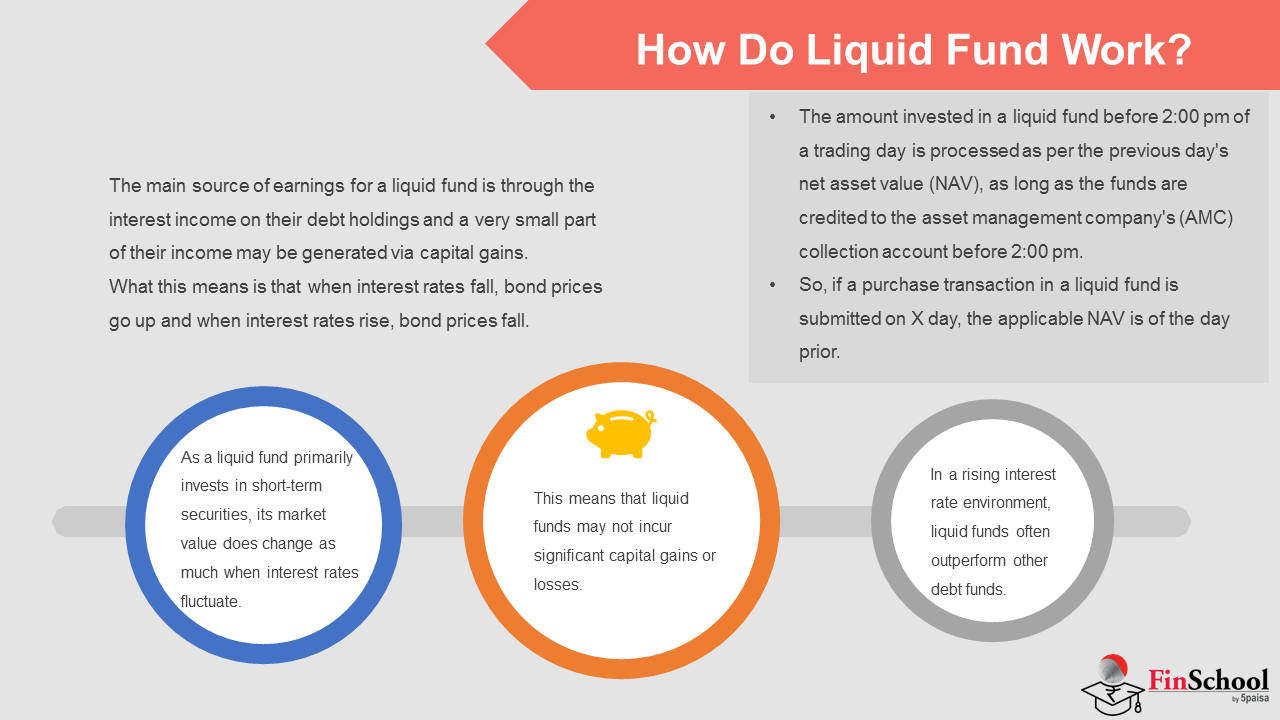
An investment made in a liquid fund before 2:00 pm on a trading day is processed at the previous day’s NAV, provided the funds reach the AMC’s collection account before that cutoff. In other words, a purchase submitted on a given day is allotted units at the prior day’s NAV.
On redemption, the proceeds are credited to the investor’s account on the next working day — for instance, a redemption request submitted on Friday before 3:00 pm is typically processed against Sunday’s NAV, with the payout landing on Monday.
The primary source of income for a liquid fund is interest earned on its debt holdings, with only a small portion coming from capital gains. Since interest rates and bond prices move inversely, falling rates push bond prices up and rising rates push them down.
- Because a liquid fund invests in short-term securities, its market value doesn’t fluctuate much when interest rates change.
- This means liquid funds are unlikely to see significant capital gains or losses.
- In a rising rate environment, liquid funds often outperform other debt funds, since their interest income rises as maturing short-tenure securities get reinvested at higher rates, while their market value is only marginally affected thanks to lower sensitivity to interest rate movements.
Liquid funds aren’t entirely risk-free. Because they invest predominantly in debt instruments, they remain exposed to interest rate risk — any shift in prevailing rates can push the price of the underlying debt instruments up or down, affecting daily returns. Debt instruments also carry credit risk, though this can be significantly reduced through a conservative investment approach — for instance, sticking to government securities and high-grade instruments such as AAA-rated paper.
7.4 Types of Liquid Fund & Features
Anand: What debt instruments do liquid funds invest in?
Ridhima: There are two debt instruments that liquid funds invest in:
- Commercial Papers which are short term debt issued by companies,
- Treasury Bills which are short term borrowing by the government up to 91 days.
Anand: So maturity is the key for investments in funds?
Ridhima: only securities with maturity up to 91 days qualify for investments in liquid funds.
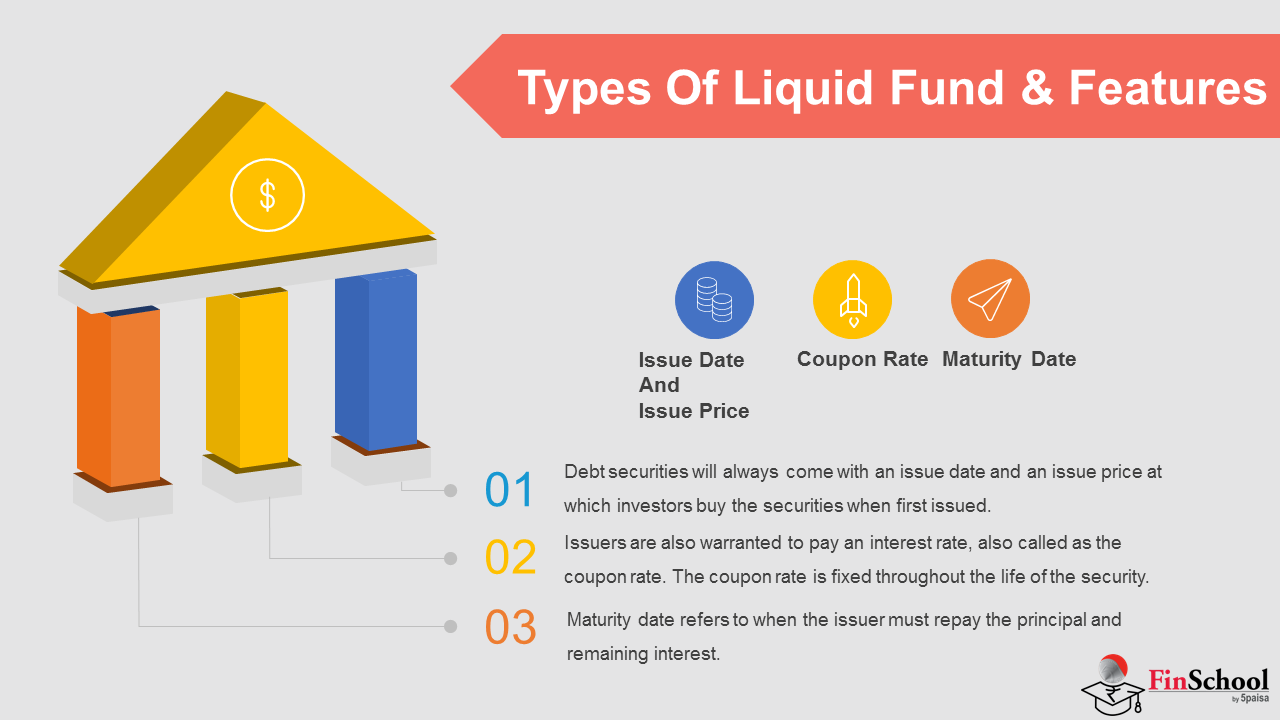
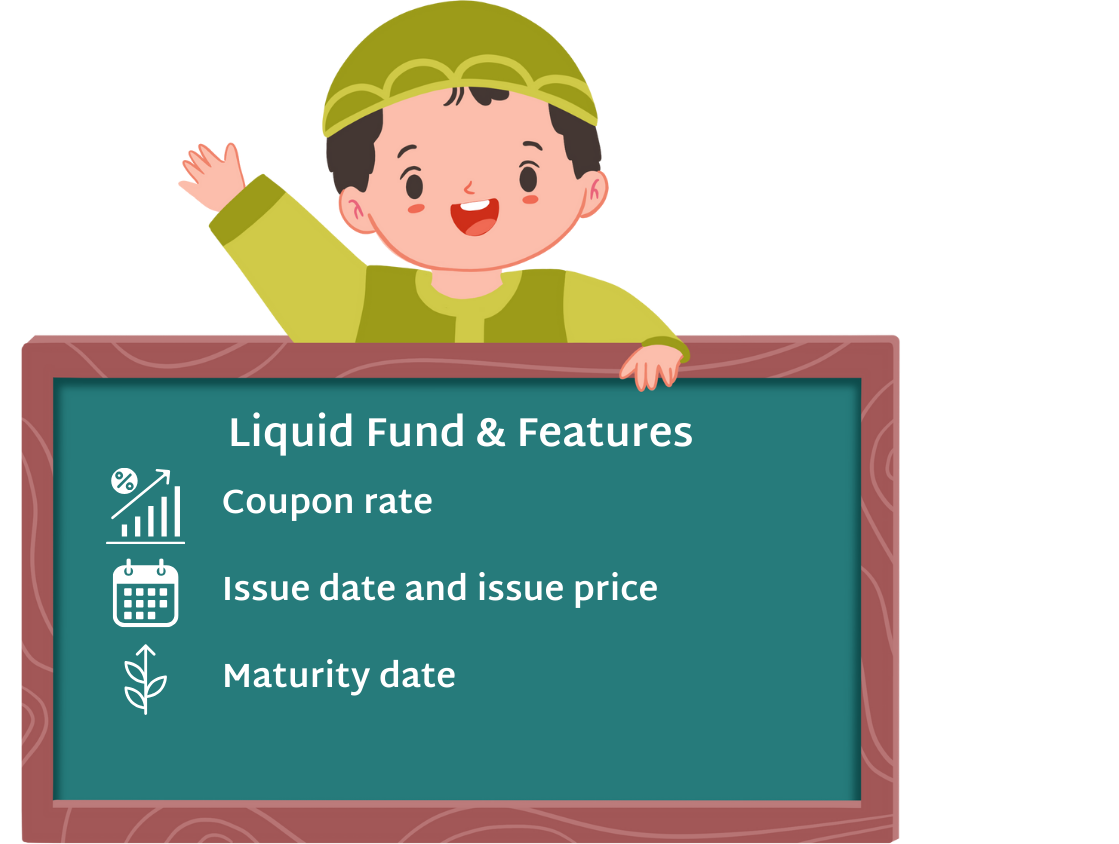
Liquid funds invest in debt instruments, and deciding which ones qualify comes down to understanding a few core features of debt securities.
Main Features
Issue date and issue price
Every debt security carries an issue date and an issue price, the price at which investors buy the security when it’s first offered.
Coupon rate
Issuers are also required to pay a fixed rate of interest, known as the coupon rate, which stays constant throughout the security’s life. Coupons are usually expressed either as a flat figure (say, 8%) or relative to a benchmark rate (say, LIBOR + 0.5%), typically shown as a percentage of the bond’s face or par value.
Maturity date
The maturity date is when the issuer must repay the principal along with any remaining interest.
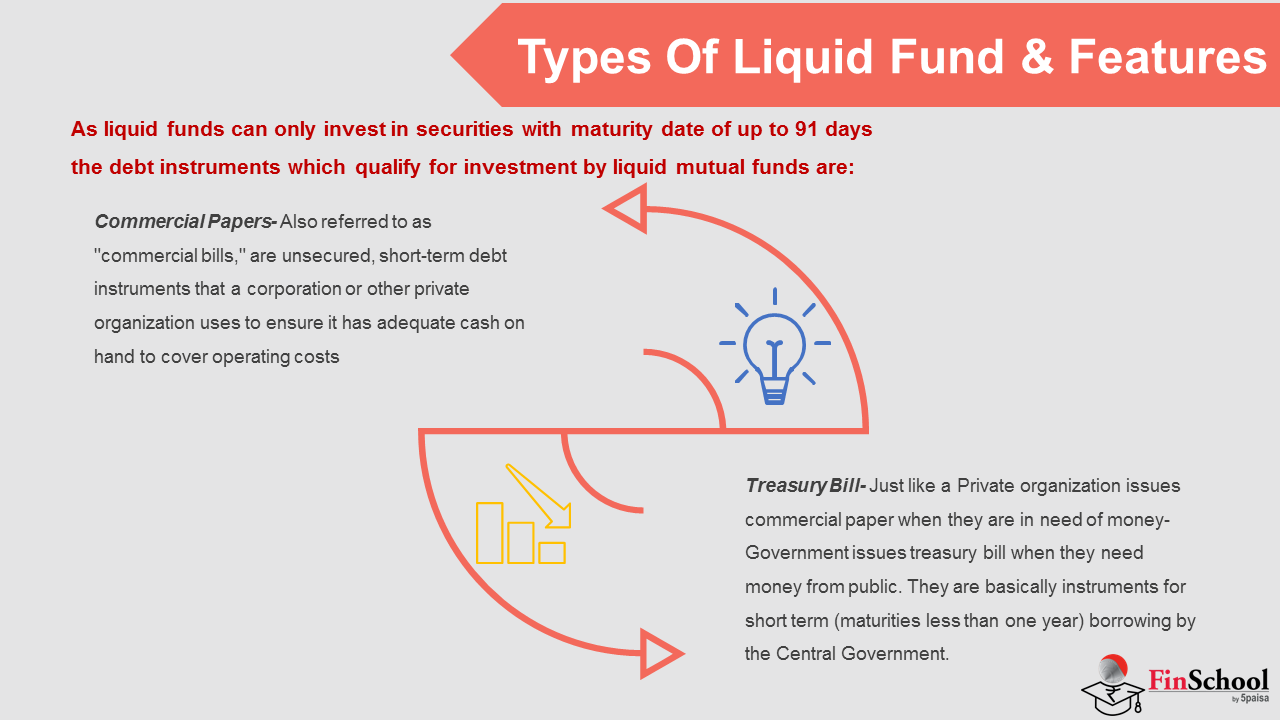
The maturity date is the critical factor determining whether a particular instrument qualifies for a liquid fund. Since liquid funds can only invest in securities maturing within 91 days, the debt instruments that qualify include:
Commercial Papers — Sometimes called “commercial bills,” these are unsecured, short-term debt instruments that corporations and other private organisations issue to ensure they have adequate cash on hand for operating expenses. They usually carry very short maturities, sometimes even overnight, and are issued at prevailing market interest rates.
Treasury Bills — Just as a private organisation issues commercial paper when it needs funds, the government issues treasury bills when it needs to borrow from the public. These are short-term borrowing instruments (with maturities under one year) issued by the Central Government. Currently, active T-Bills come with maturities of 91, 182, or 364 days, though liquid funds can only invest in T-Bills maturing within 91 days.
7.5 Who Should Invest In Liquid Fund?

Anand: Who should consider investing in funds?
Ridhima: People with cash who want better returns than savings accounts should consider investing in liquid funds liquid funds are great, for emergency funds or short term parking of money.
Anand: Can liquid funds be linked to equity investments?
Ridhima: Yes liquid funds can be linked to equity investments through Systematic Transfer Plans you can park your money in funds and gradually move it into equity, which reduces the risk of investing in equity.
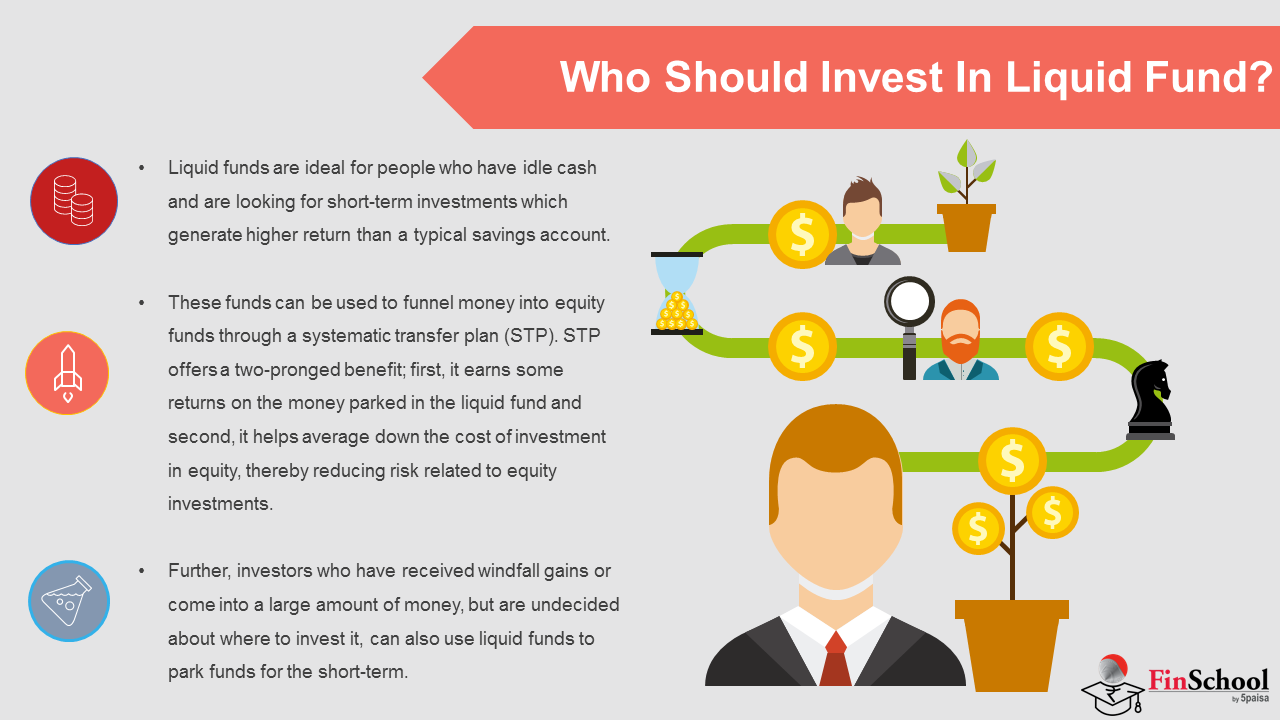
- Liquid funds suit anyone with idle cash looking for a short-term investment that offers better returns than a typical savings account. They can also be used to gradually channel money into equity funds through a Systematic Transfer Plan (STP).
- An STP offers a two-fold benefit: it earns some return on the money parked in the liquid fund, and it helps average down the cost of investing in equity over time, reducing the risk associated with equity markets. Liquid funds are also a natural home for windfall gains or a lump sum an investor hasn’t yet decided where to deploy — a safe, short-term parking spot while a longer-term plan takes shape.