13.1 औसत 'मूविंग' को समझना

स्कूल के दिनों में, संभव है कि हम औसत के बारे में नहीं सीखते हैं और मूविंग एवरेज केवल एक कदम आगे हैं. मूविंग एवरेज टेक्निकल एनालिसिस में ट्रेंड इंडिकेटर हैं, और इनका इस्तेमाल अक्सर किया जाता है क्योंकि वे सरल और प्रभावी हैं.
मूविंग एवरेज ट्रेंड इंडिकेटर हैं जो किसी निर्धारित समय अवधि में आउट प्राइस डेटा को आसान बनाकर अंतर्निहित ट्रेंड को निर्धारित करने में मदद करते हैं. आइडिया सरल है: पूर्वनिर्धारित अवधि में औसत क्लोजिंग प्राइस का पता लगाएं.
"मूविंग" शब्द का अर्थ है नए दिन के क्लोजिंग प्राइस को जोड़ने के कारण औसत करंट बनाए रखने के लिए सबसे पुराने डेटा पॉइंट को कम करने की प्रक्रिया.
सिंपल मूविंग एवरेज: साधारण मूविंग औसत गणना में प्रत्येक डेटा बिंदु को एक समान भार देता है.
एक्सपेंशियल मूविंग एवरेज (EMA):
साधारण मूविंग एवरेज की तुलना में, एक्सपोनेन्शियल मूविंग एवरेज नई जानकारी के प्रति अधिक संवेदनशील होता है और कीमतों में बदलाव के प्रति तेज़ी से प्रतिक्रिया देता है क्योंकि यह हाल ही की कीमतों पर अधिक भार डालता है. इस कारण से, ट्रेडर अक्सर SMA पर EMA का पक्ष लेते हैं.
मूविंग एवरेज में जाने से पहले, आइए बेसिक एवरेज की गणना करने के बारे में तुरंत जानकारी देते हैं.
मासिक औसत रेस्टोरेंट खर्च
मान लें कि रमेश इस बात पर नज़र रखता है कि हर सप्ताह औसतन खाने पर वह कितना खर्च करता है:
सप्ताह में खर्च की गई राशि (₹)
सप्ताह 1 ₹800
सप्ताह 2 ₹1,200
सप्ताह 3 ₹600
सप्ताह 4 ₹1,400
औसत मासिक खर्च जानने के लिए, वह हर साप्ताहिक राशि जोड़ता है, और उसे सप्ताह की संख्या से विभाजित करता है:
औसत = (₹800 + ₹1,200 + ₹600 + ₹1,400) ÷ 4 = ₹4,000 ÷ 4 = ₹1,000
इस प्रकार, रमेश ने एक सप्ताह में रेस्टोरेंट पर औसतन ₹1,000 खर्च किए हैं.
यहां, हमें औसत से एक सामान्य विचार मिलता है कि रमेश आमतौर पर खाने पर हर सप्ताह कितना खर्च करता है. जाहिर है, ऐसे सप्ताह थे जब उन्होंने औसत से अधिक और सप्ताह बिताये थे जब उन्होंने कम खर्च किया था. उदाहरण के लिए सप्ताह 4 में उन्होंने ₹1,400 खर्च किया था, जो ₹1,000 के औसत से काफी अधिक था और सप्ताह 3 में उन्होंने केवल ₹600 खर्च किया था जो औसत से बहुत कम था. यह दर्शाता है कि औसत केवल एक अनुमान है जो डेटा का सारांश देने में मदद करता है लेकिन खर्च की पूरी रेंज को पूरी तरह से ध्यान में नहीं रखता है. इसलिए, रमेश ने हर सप्ताह ₹1,000 खर्च नहीं किया, हालांकि यह औसत साप्ताहिक खर्च है.
अब, आइए इसे स्टॉक मार्केट से कनेक्ट करें. ट्रेडिंग में, हम कीमतों या वॉल्यूम पर समान तर्क लागू करते हैं. रमेश द्वारा कितना खर्च किया जाता है, इसकी गणना करने के बजाय, हम निर्धारित दिनों में स्टॉक के औसत क्लोजिंग प्राइस की गणना करते हैं. इसे मूविंग एवरेज कहा जाता है, और यह ट्रेडर को ट्रेंड को अधिक स्पष्ट रूप से पहचानने के लिए शॉर्ट-टर्म उतार-चढ़ाव को आसान बनाने में मदद करता है.
कॉन्सेप्ट को स्टॉक की कीमतों तक बढ़ाना
आइए स्टॉक मार्केट में औसत के विचार को लागू करें. मान लीजिए कि हम पिछले 5 ट्रेडिंग सेशन में Larsen & Toubro (L&T) की क्लोजिंग कीमतों पर विचार कर रहे हैं. जैसे हमने हर सप्ताह रमेश द्वारा खर्च की गई औसत संख्या की गणना की, अब हम एक स्टॉक की औसत क्लोजिंग कीमत की गणना करेंगे.
L&T के लिए क्लोजिंग प्राइस यहां दिए गए हैं:
|
दिन |
अंतिम कीमत (₹) |
|
दिन 1 |
₹3,120.50 |
|
दिन 2 |
₹3,145.75 |
|
दिन 3 |
₹3,110.20 |
|
दिन 4 |
₹3,135.60 |
|
दिन 5 |
₹3,160.40 |
कुल = ₹3,120.50 + ₹3,145.75 + ₹3,110.20 + ₹3,135.60 + ₹3,160.40 ₹15,672.45
5-दिन की औसत क्लोजिंग प्राइस खोजने के लिए, हम कुल 5 से विभाजित करते हैं:
औसत = ₹15,672.45 ÷ 5 = ₹3,134.49
इसलिए, पिछले 5 ट्रेडिंग सेशन में L&T का औसत क्लोजिंग प्राइस ₹3,134.49 है.
यह औसत ट्रेडर को दैनिक कीमत के उतार-चढ़ाव को आसान बनाने और स्टॉक के शॉर्ट-टर्म ट्रेंड की स्पष्ट समझ प्राप्त करने में मदद करता है. टेक्निकल एनालिसिस में, यह मूविंग एवरेज का आधार बनाता है, जिसकी गणना लगातार की जाती है क्योंकि नया डेटा आता है.
13.1 - 'मूविंग' औसत को समझना (सरल मूविंग एवरेज)
मान लें कि आप लेटेस्ट 5 ट्रेडिंग सेशन में Tata कंज्यूमर प्रोडक्ट की औसत क्लोजिंग प्राइस की गणना करना चाहते हैं. क्लोजिंग प्राइस यहां दिए गए हैं:
|
तिथि |
अंतिम कीमत (₹) |
|
01/08/25 |
₹875.20 |
|
04/08/25 |
₹878.50 |
|
05/08/25 |
₹880.10 |
|
06/08/25 |
₹882.40 |
|
07/08/25 |
₹884.30 |
कुल = ₹875.20 + ₹878.50 + ₹880.10 + ₹882.40 + ₹884.30 ₹4,400.50
5-दिन की औसत क्लोजिंग प्राइस खोजने के लिए, कुल 5 से विभाजित करें:
औसत = ₹4,400.50 ÷ 5 = ₹880.10
इसलिए, इन 5 सेशन में Tata कंज्यूमर की औसत क्लोजिंग कीमत ₹880.10 है.
अब क्या है है एक "मूविंग" औसत?
मान लीजिए कि अगले ट्रेडिंग दिन 08/08/25 है. नई क्लोजिंग प्राइस उपलब्ध है: ₹886.50.
औसत अपडेट रखने के लिए, हम इस नए डेटा पॉइंट को शामिल करते हैं और सबसे पुराना (01/08/25) छोड़ देते हैं. तिथियों का नया सेट बन जाता है:
|
तिथि |
अंतिम कीमत (₹) |
|
04/08/25 |
₹878.50 |
|
05/08/25 |
₹880.10 |
|
06/08/25 |
₹882.40 |
|
07/08/25 |
₹884.30 |
|
08/08/25 |
₹886.50 |
नया कुल = ₹4,411.80
नया औसत = ₹4,411.80 ÷ 5 = ₹882.36
जैसा कि आप देख सकते हैं, हमने लेटेस्ट क्लोजिंग प्राइस को शामिल करके और सबसे पुरानी कीमत को छोड़कर आगे बढ़ाया है. यह प्रोसेस हर दिन जारी रहती है, हमेशा सबसे हाल ही के 5 डेटा पॉइंट का उपयोग करना. इसलिए इसे "मूविंग" औसत कहा जाता है, क्योंकि यह प्रत्येक नए ट्रेडिंग सेशन के साथ आगे बढ़ जाता है.
उपरोक्त उदाहरण में मूविंग एवरेज की गणना क्लोजिंग प्राइस का उपयोग करके की जाती है, जिसे आमतौर पर ट्रेडर्स और निवेशकों द्वारा पसंद किया जाता है. क्लोजिंग प्राइस उस अंतिम वैल्यू को दर्शाता है, जिस पर स्टॉक उस दिन के लिए ट्रेड करता है, जिससे यह मार्केट सेंटीमेंट का एक विश्वसनीय संकेतक बन जाता है. क्लोजिंग प्राइस का उपयोग अक्सर किया जाता है, जबकि मूविंग एवरेज की गणना अन्य डेटा पॉइंट जैसे OHL डेटा का उपयोग करके भी की जा सकती है, जिसका मतलब है कि विशिष्ट विश्लेषण या रणनीति के आधार पर ओपनिंग, हाई और लो प्राइस. मूविंग एवरेज बेहद फ्लेक्सिबल होते हैं और इसे विभिन्न समय-सीमाओं में लागू किया जा सकता है.
जो लोग अक्सर एक्सेल का उपयोग करते हैं, वे मिनटों के भीतर औसत की गणना कर सकते हैं. देखें कि सेल रेफरेंस औसत फॉर्मूला में कैसे मूव करता है, जिससे नवीनतम डेटा पॉइंट शामिल करने के लिए सबसे पुराने को समाप्त हो जाता है. एक्सेल कैलकुलेशन का स्क्रीनशॉट यहां दिया गया है.
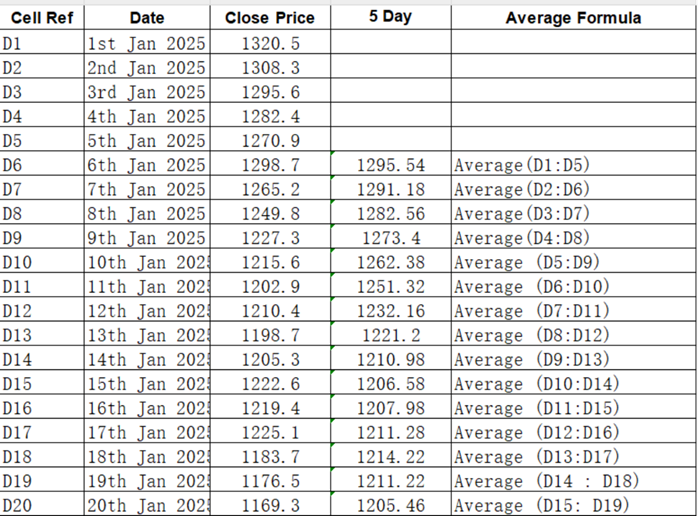
मूविंग एवरेज प्रत्येक नए क्लोजिंग प्राइस के साथ डायनेमिक रूप से एडजस्ट होता है, जो लेटेस्ट मार्केट ट्रेंड को दर्शाता है. इस प्रकार के औसत को साधारण चल औसत (SMA) के रूप में जाना जाता है. हाल ही के पांच दिनों के डेटा का उपयोग करके गणना की जाती है, तो इसे विशेष रूप से 5-दिन के SMA के रूप में जाना जाता है.
आमतौर पर 5, 10, 50, 100, या 200 दिनों की एक निश्चित संख्या में औसत की गणना करके - परिणामी मूल्यों को एक सुगम, प्रवाह लाइन बनाने के लिए प्लॉट किया जा सकता है जिसे मूविंग एवरेज लाइन कहा जाता है. यह लाइन समय के साथ लगातार विकसित होती है, जो प्राइस डायरेक्शन का स्पष्ट व्यू प्रदान करती है और शॉर्ट-टर्म उतार-चढ़ाव को फिल्टर करने में मदद करती है.
यहां एक चार्ट दिया गया है जो 50, 100 और 200 दिनों के साधारण मूविंग एवरेज को दर्शाता है.

एक मूविंग एवरेज हमें क्या बताता है, और इसका उपयोग कैसे किया जाता है? वास्तव में, मूविंग एवरेज में फाइनेंशियल विश्लेषण और ट्रेडिंग में कई तरह के एप्लीकेशन होते हैं. अब एक और शक्तिशाली बदलाव को समझना महत्वपूर्ण है- एक्सपोनेंशियल मूविंग एवरेज.
आपके लिए ऐक्टिविटी

वर्तमान कीमत ₹930.65 है, जो SMA 100 (₹854.14) से अधिक है और एसएमए 200 (₹809.32), और एसएमए 50 के बराबर.
प्रश्न:अगर आप एक ट्रेडर हैं और आप सभी तीन SMA से ऊपर की कीमत देखते हैं, तो यह क्या इंगित कर सकता है?
- A) मार्केट की कमजोर गति
- B) बुलिश ट्रेंड की संभावित निरंतरता
- C) तुरंत ब्रेकडाउन
- घ) ट्रेंड के लिए कोई प्रासंगिकता नहीं है
सही उत्तर: B) बुलिश ट्रेंड की संभावित निरंतरता
क्यों: जब कीमत SMA 50, SMA 100 और SMA 200 से अधिक रहती है, तो यह आमतौर पर ताकत का संकेत देता है और चल रहे अपट्रेंड की संभावना को सपोर्ट करता है.
13.2 एक्सपोनेंशियल मूविंग एवरेज (EMA) को समझना

आइए क्लोजिंग प्राइस के एक नए सेट पर विचार करें:
|
तिथि |
क्लोजिंग प्राइस |
|
22/07/14 |
310.5 |
|
23/07/14 |
312.8 |
|
24/07/14 |
315.2 |
|
25/07/14 |
318.6 |
|
28/07/14 |
320.9 |
|
कुल |
1,578.0 |
जब हम इन मूल्यों के साधारण औसत की गणना करते हैं, तो हम मान रहे हैं कि प्रत्येक डेटा बिंदु का समान वजन होता है. इसका मतलब है कि 22 जुलाई को कीमत को 28 जुलाई को कीमत की तरह ही महत्वपूर्ण माना जाता है. लेकिन फाइनेंशियल मार्केट के संदर्भ में, यह धारणा हमेशा होल्ड नहीं करती है.
टेक्निकल एनालिसिस के प्रमुख सिद्धांतों में से एक यह है कि मार्केट सब कुछ डिस्काउंट करता है, जिसका मतलब है कि सबसे हाल ही की कीमत सभी ज्ञात और अज्ञात जानकारी को दर्शाती है. इसके परिणामस्वरूप, लेटेस्ट कीमत यानी 28 जुलाई को पहले की तुलना में अधिक महत्वपूर्ण माना जाता है.
इसके लिए, हम नए डेटा पॉइंट को अधिक वजन देते हैं. इसलिए, 28 जुलाई को क्लोजिंग प्राइस को सबसे अधिक वजन प्राप्त होता है, इसके बाद 25 जुलाई, फिर 24 जुलाई, आदि. यह दृष्टिकोण अभी भी ऐतिहासिक डेटा पर विचार करते हुए हाल ही के मार्केट व्यवहार पर ज़ोर देता है.
इन वजनों को लागू करके, हम एक स्केल्ड औसत बनाते हैं जहां नई कीमतों का अधिक प्रभाव होता है. इसका परिणाम एक्सपोनेंशियल मूविंग एवरेज (EMA) है, जो मूविंग एवरेज का एक रिफाइंड वर्ज़न है जो कीमत में बदलाव के प्रति अधिक तेजी से प्रतिक्रिया देता है.
एक्सपोनेन्शियल मूविंग एवरेज की गणना
एक्सपोनेन्शियल मूविंग एवरेज (EMA) एक प्रकार का मूविंग एवरेज है जो हाल की कीमतों को अधिक भार देता है, जिससे यह सिम्पल मूविंग एवरेज (SMA) की तुलना में नई जानकारी के प्रति अधिक प्रतिक्रियाशील हो जाता है. इसका इस्तेमाल ट्रेंड की पहचान करने के लिए टेक्निकल एनालिसिस में व्यापक रूप से किया जाता है.
EMA के लिए फॉर्मूला है:
ईएमएटी = (पीटी × के) + (ईएमएटी−1×(1 − के))
जहां:
- EMAt= EMA टुडे
- Pt= आज की कीमत
- EMAt−1 = कल EMA
- K = स्मूथिंग कॉन्स्टेंट = 2/N+1
- n = अवधि की संख्या
भारतीय स्टॉक का उपयोग करने का उदाहरण: इंफोसिस लिमिटेड (इन्फी)
मान लें कि हम Infosys स्टॉक के लिए 10-दिन के EMA की गणना करना चाहते हैं.
चरण 1: अंतिम 10 क्लोजिंग प्राइस प्राप्त करें :
|
दिन |
अंतिम कीमत (₹) |
|
1 |
1,450 |
|
2 |
1,460 |
|
3 |
1,455 |
|
4 |
1,470 |
|
5 |
1,465 |
|
6 |
1,475 |
|
7 |
1,480 |
|
8 |
1,490 |
|
9 |
1,495 |
|
10 |
1,500 |
चरण 2: 10-दिन के एसएमए की गणना करें (पहले ईएमए वैल्यू के रूप में उपयोग किया जाता है):
एसएमए = 1450+1460+1455 + 1470+1465+1475+1480+1490+1495+1500/10 = ₹1,474
चरण 3: मल्टीप्लायर की गणना करें:
K=2/10+1
=0.1818
चरण 4: दिन 11 के लिए EMA की गणना करें (मान लें कि क्लोजिंग प्राइस ₹1,510 है):
EMAt = (Pt × K) + (EMAt−1×(1 − K)
ईमा11= (1510×0.1818) + (1474×0.8182) = ₹1,480.5
अगर EMA बढ़ रहा है, तो यह एक बुलिश ट्रेंड का सुझाव देता है. ट्रेडर अक्सर खरीद/बिक्री सिग्नल के रूप में क्रॉसओवर (जैसे, 50-दिन के EMA को पार करके 10-दिन का EMA) का उपयोग करते हैं.
यहां एक चार्ट दिया गया है जो 20, 50, 100, 200 दिनों का EMA प्लॉट दिखाता है.

13.3 मूविंग एवरेज का सरल अनुप्रयोग

50-दिन के EMA के साथ ट्रेडिंग: एक आसान सिस्टम
50-दिन की एक्सपोनेंशियल मूविंग एवरेज (EMA) केवल चार्ट पर एक लाइन नहीं है-यह मार्केट सेंटीमेंट का संकेत है. जब प्राइस इस औसत के संबंध में चलता है, तो यह दर्शाता है कि ट्रेडर स्टॉक के भविष्य के बारे में कैसे महसूस करते हैं.
- EMA से ऊपर की कीमत: ट्रेडर्स हाल के औसत से अधिक स्तर पर खरीद रहे हैं. यह विश्वास का वोट है. मोमेंटम बिल्डिंग है. लंबी स्थिति में प्रवेश करने पर विचार करने का समय.
- EMA से कम कीमत: ट्रेडर औसत से कम बेच रहे हैं. यह सावधानी है, शायद डर भी. मोमेंटम फेडिंग है. बाहर निकलने या बाहर रहने के बारे में सोचने का समय.
रणनीति
आइए इसे साफ और नियम-आधारित रखें. कोई अनुमान नहीं. सिर्फ दो मूल नियम:
- प्रविष्टि नियम: जब वर्तमान कीमत 50-दिन के EMA से अधिक हो जाती है, तो लंबे समय तक चलें. यह ऊपर की ओर गति का संकेत देता है. बाहर निकलने की स्थिति पूरी होने तक ट्रेड में रहें.
- बाहर निकलने का नियम: जब कीमत 50-दिन के EMA से कम हो जाती है, तो पोजीशन बंद करें. यह संभावित कमजोरी या रिवर्सल का संकेत देता है.
यह सिस्टम भविष्य की भविष्यवाणी नहीं करता है, यह इस पर प्रतिक्रिया करता है. यह इसकी ताकत है. यह ट्रेंड को फॉलो करने के लिए बनाया गया है, उनसे लड़ने के लिए नहीं.

आइए विश्लेषण करते हैं कि आपके द्वारा प्रदान किए गए चार्ट का उपयोग करके निफ्टी 50 इंडेक्स पर एक्सपोनेंशियल मूविंग एवरेज (ईएमए) स्ट्रेटेजी ने कैसे प्ले किया होगा. जब कीमत मुख्य ईएमए (जैसे 50 ईएमए) से ऊपर या उससे कम हो जाती है, तो हम खरीद और बिक्री संकेतों पर ध्यान केंद्रित करेंगे, और ट्रेंड व्यवहार लाभप्रदता को कैसे प्रभावित करता है.
ट्रेड 1: B1 नियर ~5,727 → S1 नियर ~7,000
- सिग्नल खरीदें (B1):2013 के मध्य में कीमत 50 EMA से अधिक हो गई है.
- सेल सिग्नल (S1):जब एक रैली के बाद कीमत EMA से नीचे गिरती है, तो बाहर निकलना ट्रिगर हो जाता है.
- परिणाम:₹1,273 का अनुमानित लाभ (7000-5727)
- ट्रेंड संदर्भ:समेकन से मजबूत ऊपर की ओर ब्रेकआउट.
ट्रेड 2: B2 नियर ~7,000 → S2 नियर ~7,300
- सिग्नल खरीदें (B2):EMA से ऊपर एक और क्रॉसओवर, लेकिन कीमत साइडवेज़ पर चलती है.
- सेल सिग्नल (S2):EMA के नीचे मामूली डिप्लोमा.
- परिणाम:₹300 का मार्जिनल गेन
- ट्रेंड संदर्भ:साइडवेज़ मूवमेंट, कम मोमेंटम.
🔹 ट्रेड 3: B3 नियर ~7,300 → S3 नियर ~11,500
- सिग्नल खरीदें (B3):EMA के ऊपर स्पष्ट ब्रेकआउट, उसके बाद निरंतर रैली.
- सेल सिग्नल (S3):सुधार से पहले पीक के पास बाहर निकलें.
- परिणाम:₹4,200 का बड़ा लाभ
- ट्रेंड संदर्भ:कई महीनों तक मजबूत बुलिश ट्रेंड.
सारांश तालिका (चार्ट के आधार पर)
|
ट्रेड नंबर |
खरीद का स्तर |
बिक्री का स्तर |
लाभ (लगभग) |
ट्रेंड का प्रकार |
|
1 |
₹5,727 |
₹7,000 |
₹1,273 |
ट्रेंडिंग अप |
|
2 |
₹7,000 |
₹7,300 |
₹300 |
साइडवेज़ |
|
3 |
₹7,300 |
₹11,500 |
₹4,200 |
मजबूत रैली |
चार्ट से जानकारी
- EMA ट्रेंडिंग मार्केट में सर्वश्रेष्ठ काम करता हैट्रेड 1 और 3 मजबूत लाभ दिखाते हैं.
- साइडवेज़ फेज़ कमजोर सिग्नल जनरेट करते हैंट्रेड 2 के रिटर्न बहुत कम थे.
- बड़े विजेताओं को छोटे नुकसान या फ्लैट ट्रेड के लिए क्षतिपूर्ति मिलती है.
- स्थिरता महत्वपूर्ण हैसिग्नल न छोड़ें; अगला ब्रेकआउट हो सकता है.
- EMA लॉन्ग-टर्म ट्रेंड की राइड करने में मदद करता हैट्रेड 3 कई महीनों तक चल रहा था, जो पोजिशनल निवेशकों के लिए आदर्श है.
13.4 मूविंग एवरेज क्रॉसओवर सिस्टम

मूविंग एवरेज क्रॉसओवर सिस्टम एक लोकप्रिय तरीका है जिसका उपयोग ट्रेडर द्वारा स्टॉक मार्केट में संभावित खरीद और बिक्री संकेतों की पहचान करने के लिए किया जाता है. केवल एक मूविंग एवरेज पर निर्भर रहने के बजाय, यह सिस्टम दो का उपयोग करता है, एक जो कीमत में बदलाव (जिसे शॉर्ट-टर्म या फास्ट मूविंग एवरेज कहा जाता है) पर तेज़ी से प्रतिक्रिया करता है और दूसरा जो अधिक धीरे-धीरे प्रतिक्रिया करता है (जिसे लॉन्ग-टर्म या स्लो मूविंग एवरेज कहा जाता है). विचार यह देखना है कि ये दोनों लाइन प्राइस चार्ट पर एक-दूसरे के साथ कैसे इंटरैक्ट करते हैं.
मूविंग एवरेज क्रॉसओवर सिस्टम
मूविंग एवरेज क्रॉसओवर सिस्टम एक अधिक परिष्कृत रणनीति है. यह दो मूविंग एवरेज का उपयोग करता है: तेज़ एक (जैसे, 9-दिन का EMA) और धीमी एक (जैसे, 21-दिन का EMA)
बुलिश क्रॉसओवर: जब तेज़ EMA धीमी EMA को पार करता है, तो यह संभावित अपवर्ड ट्रेंड को दर्शाता है और खरीद सिग्नल जनरेट करता है. बेयरिश क्रॉसओवर: जब तेज़ EMA धीमी EMA को पार करता है, तो यह संभावित गिरावट को दर्शाता है और बिक्री सिग्नल जनरेट करता है.
यह दृष्टिकोण शोर या गलत संकेतों को कम करने में मदद करता है जो अक्सर साइडवेज़ के दौरान होते हैं और ट्रेंडिंग मार्केट में काफी सफल होते हैं.
फास्ट मूविंग एवरेज, जैसे 50-दिन का EMA (एक्सपोनेन्शियल मूविंग एवरेज), वर्तमान मार्केट प्राइस के करीब रहता है क्योंकि यह कम डेटा पॉइंट का उपयोग करता है. धीमी चलती औसत, जैसे 100-दिन की EMA, अधिक डेटा पॉइंट का उपयोग करता है और इसलिए धीरे-धीरे आगे बढ़ जाता है. जब तेज गति औसत धीमी गति औसत से अधिक हो जाता है, तो यह संकेत देता है कि गति बढ़ रही है, इसे खरीद सिग्नल माना जाता है. दूसरी ओर, जब फास्ट मूविंग एवरेज धीमी गति से नीचे जाता है, तो यह दर्शाता है कि ट्रेंड कमजोर हो सकता है-यह एक सेल सिग्नल बन जाता है.
यह क्रॉसओवर विधि ट्रेडर्स को साइडवेज़ मार्केट में अक्सर होने वाले गलत संकेतों से बचने में मदद करती है. बेसिक मूविंग एवरेज सिस्टम में, जहां केवल एक एवरेज का उपयोग किया जाता है, कम अस्थिरता की अवधि के दौरान ट्रेडर को बहुत से सिग्नल प्राप्त हो सकते हैं, जिससे छोटे या लाभदायक ट्रेड हो सकते हैं. क्रॉसओवर सिस्टम, दोनों औसत से कन्फर्मेशन की आवश्यकता के साथ इस शोर के अधिकांश हिस्से को फिल्टर करता है, जिससे यह ट्रेंडिंग चरणों के दौरान अधिक विश्वसनीय बन जाता है.

ट्रेडर के लक्ष्यों के आधार पर मूविंग एवरेज के विभिन्न कॉम्बिनेशन का उपयोग किया जा सकता है. शॉर्ट-टर्म ट्रेड के लिए, 9-दिन और 21-दिन के EMA का उपयोग किया जा सकता है. मध्यम अवधि के ट्रेड के लिए, 25-दिन और 50-दिन के EMA जैसे कॉम्बिनेशन आम हैं. लॉन्ग-टर्म निवेशक महीनों या वर्षों तक चलने वाले प्रमुख ट्रेंड की पहचान करने के लिए 100-दिन और 200-दिन के EMA का उपयोग करना पसंद कर सकते हैं. समय सीमा जितनी लंबी होगी, आपको कम संकेत मिलेंगे, लेकिन वे संकेत मजबूत और अधिक अर्थपूर्ण होते हैं.
इस सिस्टम को 5-मिनट और 10-मिनट के ईएमए जैसे कम समय फ्रेम का उपयोग करके इंट्रा-डे ट्रेडिंग पर भी लागू किया जा सकता है. आक्रामक ट्रेडर अक्सर ट्रेडिंग दिन के दौरान तुरंत मूव करने के लिए इनका उपयोग करते हैं. समय-सीमा के बावजूद, सिद्धांत समान रहता है: जब तेज़ औसत धीमा होता है, तो यह ट्रेड में प्रवेश करने का संकेत होता है; जब यह नीचे आता है, तो बाहर निकलने का समय होता है.
संक्षेप में, मूविंग एवरेज क्रॉसओवर सिस्टम मार्केट ट्रेंड का पालन करने का एक सरल लेकिन प्रभावी तरीका है. यह ट्रेडर को मजबूत मूव के दौरान निवेश करने में मदद करता है और चप्पल, दिशाहीन मार्केट में फंसने से बचाता है. एक के बजाय दो औसत का उपयोग करके, यह सिस्टम ट्रेडिंग निर्णयों में बेहतर समय और अधिक आत्मविश्वास प्रदान करता है - विशेष रूप से उन शुरुआती लोगों के लिए जो ट्रेंड को पहचानना और जोखिम को मैनेज करना सीख रहे हैं.
आपके लिए ऐक्टिविटी

वर्तमान कीमत ₹950.15 है, जो ₹964.62 पर EMA 9 लाइन से थोड़ा कम है.
प्रश्न:अगर आप ट्रेडर हैं और आपको हाल ही में हुए अपट्रेंड के बाद EMA 9 से कम कीमत दिखाई देती है, तो यह संकेत क्या हो सकता है?
- A) मजबूत बुलिश मोमेंटम
- B) संभावित शॉर्ट-टर्म बेयरिश शिफ्ट
- C) मार्केट इंडिसिजन
- घ) ट्रेंड के लिए कोई प्रासंगिकता नहीं है
सही उत्तर: B) संभावित शॉर्ट-टर्म बेयरिश शिफ्ट क्यों: जब कीमत EMA 9 जैसे शॉर्ट-टर्म EMA से कम हो जाती है, तो यह कमजोर होने वाली गति और संभावित शॉर्ट-टर्म रिवर्सल या पुलबैक का संकेत दे सकता है.
13.5 मुख्य टेकअवे

- मूविंग एवरेज, टेक्निकल एनालिसिस में इस्तेमाल किए जाने वाले ट्रेंड इंडिकेटर हैं, जो ट्रेडर को शॉर्ट-टर्म प्राइस के उतार-चढ़ाव को आसान बनाने और ट्रेंड की स्पष्ट पहचान करने में मदद करते हैं.
- एक मूविंग एवरेज की गणना एक निर्धारित दिनों में स्टॉक की औसत क्लोजिंग प्राइस को लेकर की जाती है.
- मूविंग एवरेज के "मूविंग" भाग का मतलब है कि नए दिन की क्लोजिंग प्राइस को जोड़ा जाता है, इसलिए औसत अपडेट रखने के लिए सबसे पुराना डेटा पॉइंट गणना से कम हो जाता है.
- औसत केवल एक अनुमान है और कीमत के व्यवहार की पूरी रेंज को ध्यान में नहीं रखता है, क्योंकि ऐसे दिन होंगे जब कीमत औसत से अधिक या कम होगी.
- मूविंग एवरेज क्रॉसओवर सिस्टम खरीदने और बेचने के सिग्नल बनाने के लिए दो अलग-अलग मूविंग एवरेज का उपयोग करता है.
- बुलिश क्रॉसओवर में, तेज़ चलती औसत (जैसे 9-दिन) धीमी चलती औसत (जैसे 21-दिन) से अधिक होती है, जो संभावित अपवर्ड ट्रेंड और खरीद के अवसर का संकेत देती है.
- बेयरिश क्रॉसओवर में, तेज़ मूविंग औसत धीमी गति से नीचे पहुंच जाता है, जो संभावित डाउनट्रेंड और बाहर निकलने या बेचने के अवसर का संकेत देता है.
- यह क्रॉसओवर सिस्टम ट्रेडर को मजबूत मूव के दौरान निवेश करने में मदद करता है और चप्पल, दिशाहीन मार्केट में फंसने से बचाता है.
- मूविंग एवरेज के विभिन्न कॉम्बिनेशन का उपयोग ट्रेडिंग टाइम फ्रेम के आधार पर किया जाता है: शॉर्ट-टर्म ट्रेडर 9-दिन और 21-दिन के ईएमए का उपयोग कर सकते हैं, जबकि लॉन्ग-टर्म निवेशक 100-दिन और 200-दिन के ईएमए का उपयोग कर सकते हैं.
- समय सीमा जितनी लंबी होगी, आपको कम संकेत मिलेंगे, लेकिन वे संकेत मजबूत और अधिक अर्थपूर्ण होते हैं.
13.1 औसत 'मूविंग' को समझना
स्कूल के दिनों में, संभव है कि हम औसत के बारे में नहीं सीखते हैं और मूविंग एवरेज केवल एक कदम आगे हैं. मूविंग एवरेज टेक्निकल एनालिसिस में ट्रेंड इंडिकेटर हैं, और इनका इस्तेमाल अक्सर किया जाता है क्योंकि वे सरल और प्रभावी हैं.
मूविंग एवरेज ट्रेंड इंडिकेटर हैं जो किसी निर्धारित समय अवधि में आउट प्राइस डेटा को आसान बनाकर अंतर्निहित ट्रेंड को निर्धारित करने में मदद करते हैं. आइडिया सरल है: पूर्वनिर्धारित अवधि में औसत क्लोजिंग प्राइस का पता लगाएं.
"मूविंग" शब्द का अर्थ है नए दिन के क्लोजिंग प्राइस को जोड़ने के कारण औसत करंट बनाए रखने के लिए सबसे पुराने डेटा पॉइंट को कम करने की प्रक्रिया.
सिंपल मूविंग एवरेज: साधारण मूविंग औसत गणना में प्रत्येक डेटा बिंदु को एक समान भार देता है.
एक्सपेंशियल मूविंग एवरेज (EMA):
साधारण मूविंग एवरेज की तुलना में, एक्सपोनेन्शियल मूविंग एवरेज नई जानकारी के प्रति अधिक संवेदनशील होता है और कीमतों में बदलाव के प्रति तेज़ी से प्रतिक्रिया देता है क्योंकि यह हाल ही की कीमतों पर अधिक भार डालता है. इस कारण से, ट्रेडर अक्सर SMA पर EMA का पक्ष लेते हैं.
मूविंग एवरेज में जाने से पहले, आइए बेसिक एवरेज की गणना करने के बारे में तुरंत जानकारी देते हैं.
मासिक औसत रेस्टोरेंट खर्च
मान लें कि रमेश इस बात पर नज़र रखता है कि हर सप्ताह औसतन खाने पर वह कितना खर्च करता है:
सप्ताह में खर्च की गई राशि (₹)
सप्ताह 1 ₹800
सप्ताह 2 ₹1,200
सप्ताह 3 ₹600
सप्ताह 4 ₹1,400
औसत मासिक खर्च जानने के लिए, वह हर साप्ताहिक राशि जोड़ता है, और उसे सप्ताह की संख्या से विभाजित करता है:
औसत = (₹800 + ₹1,200 + ₹600 + ₹1,400) ÷ 4 = ₹4,000 ÷ 4 = ₹1,000
इस प्रकार, रमेश ने एक सप्ताह में रेस्टोरेंट पर औसतन ₹1,000 खर्च किए हैं.
यहां, हमें औसत से एक सामान्य विचार मिलता है कि रमेश आमतौर पर खाने पर हर सप्ताह कितना खर्च करता है. जाहिर है, ऐसे सप्ताह थे जब उन्होंने औसत से अधिक और सप्ताह बिताये थे जब उन्होंने कम खर्च किया था. उदाहरण के लिए सप्ताह 4 में उन्होंने ₹1,400 खर्च किया था, जो ₹1,000 के औसत से काफी अधिक था और सप्ताह 3 में उन्होंने केवल ₹600 खर्च किया था जो औसत से बहुत कम था. यह दर्शाता है कि औसत केवल एक अनुमान है जो डेटा का सारांश देने में मदद करता है लेकिन खर्च की पूरी रेंज को पूरी तरह से ध्यान में नहीं रखता है. इसलिए, रमेश ने हर सप्ताह ₹1,000 खर्च नहीं किया, हालांकि यह औसत साप्ताहिक खर्च है.
अब, आइए इसे स्टॉक मार्केट से कनेक्ट करें. ट्रेडिंग में, हम कीमतों या वॉल्यूम पर समान तर्क लागू करते हैं. रमेश द्वारा कितना खर्च किया जाता है, इसकी गणना करने के बजाय, हम निर्धारित दिनों में स्टॉक के औसत क्लोजिंग प्राइस की गणना करते हैं. इसे मूविंग एवरेज कहा जाता है, और यह ट्रेडर को ट्रेंड को अधिक स्पष्ट रूप से पहचानने के लिए शॉर्ट-टर्म उतार-चढ़ाव को आसान बनाने में मदद करता है.
कॉन्सेप्ट को स्टॉक की कीमतों तक बढ़ाना
आइए स्टॉक मार्केट में औसत के विचार को लागू करें. मान लीजिए कि हम पिछले 5 ट्रेडिंग सेशन में Larsen & Toubro (L&T) की क्लोजिंग कीमतों पर विचार कर रहे हैं. जैसे हमने हर सप्ताह रमेश द्वारा खर्च की गई औसत संख्या की गणना की, अब हम एक स्टॉक की औसत क्लोजिंग कीमत की गणना करेंगे.
L&T के लिए क्लोजिंग प्राइस यहां दिए गए हैं:
|
दिन |
अंतिम कीमत (₹) |
|
दिन 1 |
₹3,120.50 |
|
दिन 2 |
₹3,145.75 |
|
दिन 3 |
₹3,110.20 |
|
दिन 4 |
₹3,135.60 |
|
दिन 5 |
₹3,160.40 |
कुल = ₹3,120.50 + ₹3,145.75 + ₹3,110.20 + ₹3,135.60 + ₹3,160.40 ₹15,672.45
5-दिन की औसत क्लोजिंग प्राइस खोजने के लिए, हम कुल 5 से विभाजित करते हैं:
औसत = ₹15,672.45 ÷ 5 = ₹3,134.49
इसलिए, पिछले 5 ट्रेडिंग सेशन में L&T का औसत क्लोजिंग प्राइस ₹3,134.49 है.
यह औसत ट्रेडर को दैनिक कीमत के उतार-चढ़ाव को आसान बनाने और स्टॉक के शॉर्ट-टर्म ट्रेंड की स्पष्ट समझ प्राप्त करने में मदद करता है. टेक्निकल एनालिसिस में, यह मूविंग एवरेज का आधार बनाता है, जिसकी गणना लगातार की जाती है क्योंकि नया डेटा आता है.
13.1 - 'मूविंग' औसत को समझना (सरल मूविंग एवरेज)
मान लें कि आप लेटेस्ट 5 ट्रेडिंग सेशन में Tata कंज्यूमर प्रोडक्ट की औसत क्लोजिंग प्राइस की गणना करना चाहते हैं. क्लोजिंग प्राइस यहां दिए गए हैं:
|
तिथि |
अंतिम कीमत (₹) |
|
01/08/25 |
₹875.20 |
|
04/08/25 |
₹878.50 |
|
05/08/25 |
₹880.10 |
|
06/08/25 |
₹882.40 |
|
07/08/25 |
₹884.30 |
कुल = ₹875.20 + ₹878.50 + ₹880.10 + ₹882.40 + ₹884.30 ₹4,400.50
5-दिन की औसत क्लोजिंग प्राइस खोजने के लिए, कुल 5 से विभाजित करें:
औसत = ₹4,400.50 ÷ 5 = ₹880.10
इसलिए, इन 5 सेशन में Tata कंज्यूमर की औसत क्लोजिंग कीमत ₹880.10 है.
अब क्या है है एक "मूविंग" औसत?
मान लीजिए कि अगले ट्रेडिंग दिन 08/08/25 है. नई क्लोजिंग प्राइस उपलब्ध है: ₹886.50.
औसत अपडेट रखने के लिए, हम इस नए डेटा पॉइंट को शामिल करते हैं और सबसे पुराना (01/08/25) छोड़ देते हैं. तिथियों का नया सेट बन जाता है:
|
तिथि |
अंतिम कीमत (₹) |
|
04/08/25 |
₹878.50 |
|
05/08/25 |
₹880.10 |
|
06/08/25 |
₹882.40 |
|
07/08/25 |
₹884.30 |
|
08/08/25 |
₹886.50 |
नया कुल = ₹4,411.80
नया औसत = ₹4,411.80 ÷ 5 = ₹882.36
जैसा कि आप देख सकते हैं, हमने लेटेस्ट क्लोजिंग प्राइस को शामिल करके और सबसे पुरानी कीमत को छोड़कर आगे बढ़ाया है. यह प्रोसेस हर दिन जारी रहती है, हमेशा सबसे हाल ही के 5 डेटा पॉइंट का उपयोग करना. इसलिए इसे "मूविंग" औसत कहा जाता है, क्योंकि यह प्रत्येक नए ट्रेडिंग सेशन के साथ आगे बढ़ जाता है.
उपरोक्त उदाहरण में मूविंग एवरेज की गणना क्लोजिंग प्राइस का उपयोग करके की जाती है, जिसे आमतौर पर ट्रेडर्स और निवेशकों द्वारा पसंद किया जाता है. क्लोजिंग प्राइस उस अंतिम वैल्यू को दर्शाता है, जिस पर स्टॉक उस दिन के लिए ट्रेड करता है, जिससे यह मार्केट सेंटीमेंट का एक विश्वसनीय संकेतक बन जाता है. क्लोजिंग प्राइस का उपयोग अक्सर किया जाता है, जबकि मूविंग एवरेज की गणना अन्य डेटा पॉइंट जैसे OHL डेटा का उपयोग करके भी की जा सकती है, जिसका मतलब है कि विशिष्ट विश्लेषण या रणनीति के आधार पर ओपनिंग, हाई और लो प्राइस. मूविंग एवरेज बेहद फ्लेक्सिबल होते हैं और इसे विभिन्न समय-सीमाओं में लागू किया जा सकता है.
जो लोग अक्सर एक्सेल का उपयोग करते हैं, वे मिनटों के भीतर औसत की गणना कर सकते हैं. देखें कि सेल रेफरेंस औसत फॉर्मूला में कैसे मूव करता है, जिससे नवीनतम डेटा पॉइंट शामिल करने के लिए सबसे पुराने को समाप्त हो जाता है. एक्सेल कैलकुलेशन का स्क्रीनशॉट यहां दिया गया है.
मूविंग एवरेज प्रत्येक नए क्लोजिंग प्राइस के साथ डायनेमिक रूप से एडजस्ट होता है, जो लेटेस्ट मार्केट ट्रेंड को दर्शाता है. इस प्रकार के औसत को साधारण चल औसत (SMA) के रूप में जाना जाता है. हाल ही के पांच दिनों के डेटा का उपयोग करके गणना की जाती है, तो इसे विशेष रूप से 5-दिन के SMA के रूप में जाना जाता है.
आमतौर पर 5, 10, 50, 100, या 200 दिनों की एक निश्चित संख्या में औसत की गणना करके - परिणामी मूल्यों को एक सुगम, प्रवाह लाइन बनाने के लिए प्लॉट किया जा सकता है जिसे मूविंग एवरेज लाइन कहा जाता है. यह लाइन समय के साथ लगातार विकसित होती है, जो प्राइस डायरेक्शन का स्पष्ट व्यू प्रदान करती है और शॉर्ट-टर्म उतार-चढ़ाव को फिल्टर करने में मदद करती है.
यहां एक चार्ट दिया गया है जो 50, 100 और 200 दिनों के साधारण मूविंग एवरेज को दर्शाता है.
एक मूविंग एवरेज हमें क्या बताता है, और इसका उपयोग कैसे किया जाता है? वास्तव में, मूविंग एवरेज में फाइनेंशियल विश्लेषण और ट्रेडिंग में कई तरह के एप्लीकेशन होते हैं. अब एक और शक्तिशाली बदलाव को समझना महत्वपूर्ण है- एक्सपोनेंशियल मूविंग एवरेज.
आपके लिए ऐक्टिविटी
वर्तमान कीमत ₹930.65 है, जो SMA 100 (₹854.14) से अधिक है और एसएमए 200 (₹809.32), और एसएमए 50 के बराबर.
प्रश्न:अगर आप एक ट्रेडर हैं और आप सभी तीन SMA से ऊपर की कीमत देखते हैं, तो यह क्या इंगित कर सकता है?
- A) मार्केट की कमजोर गति
- B) बुलिश ट्रेंड की संभावित निरंतरता
- C) तुरंत ब्रेकडाउन
- घ) ट्रेंड के लिए कोई प्रासंगिकता नहीं है
सही उत्तर: B) बुलिश ट्रेंड की संभावित निरंतरता
क्यों: जब कीमत SMA 50, SMA 100 और SMA 200 से अधिक रहती है, तो यह आमतौर पर ताकत का संकेत देता है और चल रहे अपट्रेंड की संभावना को सपोर्ट करता है.
13.2 एक्सपोनेंशियल मूविंग एवरेज (EMA) को समझना
आइए क्लोजिंग प्राइस के एक नए सेट पर विचार करें:
|
तिथि |
क्लोजिंग प्राइस |
|
22/07/14 |
310.5 |
|
23/07/14 |
312.8 |
|
24/07/14 |
315.2 |
|
25/07/14 |
318.6 |
|
28/07/14 |
320.9 |
|
कुल |
1,578.0 |
जब हम इन मूल्यों के साधारण औसत की गणना करते हैं, तो हम मान रहे हैं कि प्रत्येक डेटा बिंदु का समान वजन होता है. इसका मतलब है कि 22 जुलाई को कीमत को 28 जुलाई को कीमत की तरह ही महत्वपूर्ण माना जाता है. लेकिन फाइनेंशियल मार्केट के संदर्भ में, यह धारणा हमेशा होल्ड नहीं करती है.
टेक्निकल एनालिसिस के प्रमुख सिद्धांतों में से एक यह है कि मार्केट सब कुछ डिस्काउंट करता है, जिसका मतलब है कि सबसे हाल ही की कीमत सभी ज्ञात और अज्ञात जानकारी को दर्शाती है. इसके परिणामस्वरूप, लेटेस्ट कीमत यानी 28 जुलाई को पहले की तुलना में अधिक महत्वपूर्ण माना जाता है.
इसके लिए, हम नए डेटा पॉइंट को अधिक वजन देते हैं. इसलिए, 28 जुलाई को क्लोजिंग प्राइस को सबसे अधिक वजन प्राप्त होता है, इसके बाद 25 जुलाई, फिर 24 जुलाई, आदि. यह दृष्टिकोण अभी भी ऐतिहासिक डेटा पर विचार करते हुए हाल ही के मार्केट व्यवहार पर ज़ोर देता है.
इन वजनों को लागू करके, हम एक स्केल्ड औसत बनाते हैं जहां नई कीमतों का अधिक प्रभाव होता है. इसका परिणाम एक्सपोनेंशियल मूविंग एवरेज (EMA) है, जो मूविंग एवरेज का एक रिफाइंड वर्ज़न है जो कीमत में बदलाव के प्रति अधिक तेजी से प्रतिक्रिया देता है.
एक्सपोनेन्शियल मूविंग एवरेज की गणना
एक्सपोनेन्शियल मूविंग एवरेज (EMA) एक प्रकार का मूविंग एवरेज है जो हाल की कीमतों को अधिक भार देता है, जिससे यह सिम्पल मूविंग एवरेज (SMA) की तुलना में नई जानकारी के प्रति अधिक प्रतिक्रियाशील हो जाता है. इसका इस्तेमाल ट्रेंड की पहचान करने के लिए टेक्निकल एनालिसिस में व्यापक रूप से किया जाता है.
EMA के लिए फॉर्मूला है:
ईएमएटी = (पीटी × के) + (ईएमएटी−1×(1 − के))
जहां:
- EMAt= EMA टुडे
- Pt= आज की कीमत
- EMAt−1 = कल EMA
- K = स्मूथिंग कॉन्स्टेंट = 2/N+1
- n = अवधि की संख्या
भारतीय स्टॉक का उपयोग करने का उदाहरण: इंफोसिस लिमिटेड (इन्फी)
मान लें कि हम Infosys स्टॉक के लिए 10-दिन के EMA की गणना करना चाहते हैं.
चरण 1: अंतिम 10 क्लोजिंग प्राइस प्राप्त करें :
|
दिन |
अंतिम कीमत (₹) |
|
1 |
1,450 |
|
2 |
1,460 |
|
3 |
1,455 |
|
4 |
1,470 |
|
5 |
1,465 |
|
6 |
1,475 |
|
7 |
1,480 |
|
8 |
1,490 |
|
9 |
1,495 |
|
10 |
1,500 |
चरण 2: 10-दिन के एसएमए की गणना करें (पहले ईएमए वैल्यू के रूप में उपयोग किया जाता है):
एसएमए = 1450+1460+1455 + 1470+1465+1475+1480+1490+1495+1500/10 = ₹1,474
चरण 3: मल्टीप्लायर की गणना करें:
K=2/10+1
=0.1818
चरण 4: दिन 11 के लिए EMA की गणना करें (मान लें कि क्लोजिंग प्राइस ₹1,510 है):
EMAt = (Pt × K) + (EMAt−1×(1 − K)
ईमा11= (1510×0.1818) + (1474×0.8182) = ₹1,480.5
अगर EMA बढ़ रहा है, तो यह एक बुलिश ट्रेंड का सुझाव देता है. ट्रेडर अक्सर खरीद/बिक्री सिग्नल के रूप में क्रॉसओवर (जैसे, 50-दिन के EMA को पार करके 10-दिन का EMA) का उपयोग करते हैं.
यहां एक चार्ट दिया गया है जो 20, 50, 100, 200 दिनों का EMA प्लॉट दिखाता है.
13.3 मूविंग एवरेज का सरल अनुप्रयोग
50-दिन के EMA के साथ ट्रेडिंग: एक आसान सिस्टम
50-दिन की एक्सपोनेंशियल मूविंग एवरेज (EMA) केवल चार्ट पर एक लाइन नहीं है-यह मार्केट सेंटीमेंट का संकेत है. जब प्राइस इस औसत के संबंध में चलता है, तो यह दर्शाता है कि ट्रेडर स्टॉक के भविष्य के बारे में कैसे महसूस करते हैं.
- EMA से ऊपर की कीमत: ट्रेडर्स हाल के औसत से अधिक स्तर पर खरीद रहे हैं. यह विश्वास का वोट है. मोमेंटम बिल्डिंग है. लंबी स्थिति में प्रवेश करने पर विचार करने का समय.
- EMA से कम कीमत: ट्रेडर औसत से कम बेच रहे हैं. यह सावधानी है, शायद डर भी. मोमेंटम फेडिंग है. बाहर निकलने या बाहर रहने के बारे में सोचने का समय.
रणनीति
आइए इसे साफ और नियम-आधारित रखें. कोई अनुमान नहीं. सिर्फ दो मूल नियम:
- प्रविष्टि नियम: जब वर्तमान कीमत 50-दिन के EMA से अधिक हो जाती है, तो लंबे समय तक चलें. यह ऊपर की ओर गति का संकेत देता है. बाहर निकलने की स्थिति पूरी होने तक ट्रेड में रहें.
- बाहर निकलने का नियम: जब कीमत 50-दिन के EMA से कम हो जाती है, तो पोजीशन बंद करें. यह संभावित कमजोरी या रिवर्सल का संकेत देता है.
यह सिस्टम भविष्य की भविष्यवाणी नहीं करता है, यह इस पर प्रतिक्रिया करता है. यह इसकी ताकत है. यह ट्रेंड को फॉलो करने के लिए बनाया गया है, उनसे लड़ने के लिए नहीं.
आइए विश्लेषण करते हैं कि आपके द्वारा प्रदान किए गए चार्ट का उपयोग करके निफ्टी 50 इंडेक्स पर एक्सपोनेंशियल मूविंग एवरेज (ईएमए) स्ट्रेटेजी ने कैसे प्ले किया होगा. जब कीमत मुख्य ईएमए (जैसे 50 ईएमए) से ऊपर या उससे कम हो जाती है, तो हम खरीद और बिक्री संकेतों पर ध्यान केंद्रित करेंगे, और ट्रेंड व्यवहार लाभप्रदता को कैसे प्रभावित करता है.
ट्रेड 1: B1 नियर ~5,727 → S1 नियर ~7,000
- सिग्नल खरीदें (B1):2013 के मध्य में कीमत 50 EMA से अधिक हो गई है.
- सेल सिग्नल (S1):जब एक रैली के बाद कीमत EMA से नीचे गिरती है, तो बाहर निकलना ट्रिगर हो जाता है.
- परिणाम:₹1,273 का अनुमानित लाभ (7000-5727)
- ट्रेंड संदर्भ:समेकन से मजबूत ऊपर की ओर ब्रेकआउट.
ट्रेड 2: B2 नियर ~7,000 → S2 नियर ~7,300
- सिग्नल खरीदें (B2):EMA से ऊपर एक और क्रॉसओवर, लेकिन कीमत साइडवेज़ पर चलती है.
- सेल सिग्नल (S2):EMA के नीचे मामूली डिप्लोमा.
- परिणाम:₹300 का मार्जिनल गेन
- ट्रेंड संदर्भ:साइडवेज़ मूवमेंट, कम मोमेंटम.
🔹 ट्रेड 3: B3 नियर ~7,300 → S3 नियर ~11,500
- सिग्नल खरीदें (B3):EMA के ऊपर स्पष्ट ब्रेकआउट, उसके बाद निरंतर रैली.
- सेल सिग्नल (S3):सुधार से पहले पीक के पास बाहर निकलें.
- परिणाम:₹4,200 का बड़ा लाभ
- ट्रेंड संदर्भ:कई महीनों तक मजबूत बुलिश ट्रेंड.
सारांश तालिका (चार्ट के आधार पर)
|
ट्रेड नंबर |
खरीद का स्तर |
बिक्री का स्तर |
लाभ (लगभग) |
ट्रेंड का प्रकार |
|
1 |
₹5,727 |
₹7,000 |
₹1,273 |
ट्रेंडिंग अप |
|
2 |
₹7,000 |
₹7,300 |
₹300 |
साइडवेज़ |
|
3 |
₹7,300 |
₹11,500 |
₹4,200 |
मजबूत रैली |
चार्ट से जानकारी
- EMA ट्रेंडिंग मार्केट में सर्वश्रेष्ठ काम करता हैट्रेड 1 और 3 मजबूत लाभ दिखाते हैं.
- साइडवेज़ फेज़ कमजोर सिग्नल जनरेट करते हैंट्रेड 2 के रिटर्न बहुत कम थे.
- बड़े विजेताओं को छोटे नुकसान या फ्लैट ट्रेड के लिए क्षतिपूर्ति मिलती है.
- स्थिरता महत्वपूर्ण हैसिग्नल न छोड़ें; अगला ब्रेकआउट हो सकता है.
- EMA लॉन्ग-टर्म ट्रेंड की राइड करने में मदद करता हैट्रेड 3 कई महीनों तक चल रहा था, जो पोजिशनल निवेशकों के लिए आदर्श है.
13.4 मूविंग एवरेज क्रॉसओवर सिस्टम
मूविंग एवरेज क्रॉसओवर सिस्टम एक लोकप्रिय तरीका है जिसका उपयोग ट्रेडर द्वारा स्टॉक मार्केट में संभावित खरीद और बिक्री संकेतों की पहचान करने के लिए किया जाता है. केवल एक मूविंग एवरेज पर निर्भर रहने के बजाय, यह सिस्टम दो का उपयोग करता है, एक जो कीमत में बदलाव (जिसे शॉर्ट-टर्म या फास्ट मूविंग एवरेज कहा जाता है) पर तेज़ी से प्रतिक्रिया करता है और दूसरा जो अधिक धीरे-धीरे प्रतिक्रिया करता है (जिसे लॉन्ग-टर्म या स्लो मूविंग एवरेज कहा जाता है). विचार यह देखना है कि ये दोनों लाइन प्राइस चार्ट पर एक-दूसरे के साथ कैसे इंटरैक्ट करते हैं.
मूविंग एवरेज क्रॉसओवर सिस्टम
मूविंग एवरेज क्रॉसओवर सिस्टम एक अधिक परिष्कृत रणनीति है. यह दो मूविंग एवरेज का उपयोग करता है: तेज़ एक (जैसे, 9-दिन का EMA) और धीमी एक (जैसे, 21-दिन का EMA)
बुलिश क्रॉसओवर: जब तेज़ EMA धीमी EMA को पार करता है, तो यह संभावित अपवर्ड ट्रेंड को दर्शाता है और खरीद सिग्नल जनरेट करता है. बेयरिश क्रॉसओवर: जब तेज़ EMA धीमी EMA को पार करता है, तो यह संभावित गिरावट को दर्शाता है और बिक्री सिग्नल जनरेट करता है.
यह दृष्टिकोण शोर या गलत संकेतों को कम करने में मदद करता है जो अक्सर साइडवेज़ के दौरान होते हैं और ट्रेंडिंग मार्केट में काफी सफल होते हैं.
फास्ट मूविंग एवरेज, जैसे 50-दिन का EMA (एक्सपोनेन्शियल मूविंग एवरेज), वर्तमान मार्केट प्राइस के करीब रहता है क्योंकि यह कम डेटा पॉइंट का उपयोग करता है. धीमी चलती औसत, जैसे 100-दिन की EMA, अधिक डेटा पॉइंट का उपयोग करता है और इसलिए धीरे-धीरे आगे बढ़ जाता है. जब तेज गति औसत धीमी गति औसत से अधिक हो जाता है, तो यह संकेत देता है कि गति बढ़ रही है, इसे खरीद सिग्नल माना जाता है. दूसरी ओर, जब फास्ट मूविंग एवरेज धीमी गति से नीचे जाता है, तो यह दर्शाता है कि ट्रेंड कमजोर हो सकता है-यह एक सेल सिग्नल बन जाता है.
यह क्रॉसओवर विधि ट्रेडर्स को साइडवेज़ मार्केट में अक्सर होने वाले गलत संकेतों से बचने में मदद करती है. बेसिक मूविंग एवरेज सिस्टम में, जहां केवल एक एवरेज का उपयोग किया जाता है, कम अस्थिरता की अवधि के दौरान ट्रेडर को बहुत से सिग्नल प्राप्त हो सकते हैं, जिससे छोटे या लाभदायक ट्रेड हो सकते हैं. क्रॉसओवर सिस्टम, दोनों औसत से कन्फर्मेशन की आवश्यकता के साथ इस शोर के अधिकांश हिस्से को फिल्टर करता है, जिससे यह ट्रेंडिंग चरणों के दौरान अधिक विश्वसनीय बन जाता है.
ट्रेडर के लक्ष्यों के आधार पर मूविंग एवरेज के विभिन्न कॉम्बिनेशन का उपयोग किया जा सकता है. शॉर्ट-टर्म ट्रेड के लिए, 9-दिन और 21-दिन के EMA का उपयोग किया जा सकता है. मध्यम अवधि के ट्रेड के लिए, 25-दिन और 50-दिन के EMA जैसे कॉम्बिनेशन आम हैं. लॉन्ग-टर्म निवेशक महीनों या वर्षों तक चलने वाले प्रमुख ट्रेंड की पहचान करने के लिए 100-दिन और 200-दिन के EMA का उपयोग करना पसंद कर सकते हैं. समय सीमा जितनी लंबी होगी, आपको कम संकेत मिलेंगे, लेकिन वे संकेत मजबूत और अधिक अर्थपूर्ण होते हैं.
इस सिस्टम को 5-मिनट और 10-मिनट के ईएमए जैसे कम समय फ्रेम का उपयोग करके इंट्रा-डे ट्रेडिंग पर भी लागू किया जा सकता है. आक्रामक ट्रेडर अक्सर ट्रेडिंग दिन के दौरान तुरंत मूव करने के लिए इनका उपयोग करते हैं. समय-सीमा के बावजूद, सिद्धांत समान रहता है: जब तेज़ औसत धीमा होता है, तो यह ट्रेड में प्रवेश करने का संकेत होता है; जब यह नीचे आता है, तो बाहर निकलने का समय होता है.
संक्षेप में, मूविंग एवरेज क्रॉसओवर सिस्टम मार्केट ट्रेंड का पालन करने का एक सरल लेकिन प्रभावी तरीका है. यह ट्रेडर को मजबूत मूव के दौरान निवेश करने में मदद करता है और चप्पल, दिशाहीन मार्केट में फंसने से बचाता है. एक के बजाय दो औसत का उपयोग करके, यह सिस्टम ट्रेडिंग निर्णयों में बेहतर समय और अधिक आत्मविश्वास प्रदान करता है - विशेष रूप से उन शुरुआती लोगों के लिए जो ट्रेंड को पहचानना और जोखिम को मैनेज करना सीख रहे हैं.
आपके लिए ऐक्टिविटी
वर्तमान कीमत ₹950.15 है, जो ₹964.62 पर EMA 9 लाइन से थोड़ा कम है.
प्रश्न:अगर आप ट्रेडर हैं और आपको हाल ही में हुए अपट्रेंड के बाद EMA 9 से कम कीमत दिखाई देती है, तो यह संकेत क्या हो सकता है?
- A) मजबूत बुलिश मोमेंटम
- B) संभावित शॉर्ट-टर्म बेयरिश शिफ्ट
- C) मार्केट इंडिसिजन
- घ) ट्रेंड के लिए कोई प्रासंगिकता नहीं है
सही उत्तर: B) संभावित शॉर्ट-टर्म बेयरिश शिफ्ट क्यों: जब कीमत EMA 9 जैसे शॉर्ट-टर्म EMA से कम हो जाती है, तो यह कमजोर होने वाली गति और संभावित शॉर्ट-टर्म रिवर्सल या पुलबैक का संकेत दे सकता है.
13.5 मुख्य टेकअवे
- मूविंग एवरेज, टेक्निकल एनालिसिस में इस्तेमाल किए जाने वाले ट्रेंड इंडिकेटर हैं, जो ट्रेडर को शॉर्ट-टर्म प्राइस के उतार-चढ़ाव को आसान बनाने और ट्रेंड की स्पष्ट पहचान करने में मदद करते हैं.
- एक मूविंग एवरेज की गणना एक निर्धारित दिनों में स्टॉक की औसत क्लोजिंग प्राइस को लेकर की जाती है.
- मूविंग एवरेज के "मूविंग" भाग का मतलब है कि नए दिन की क्लोजिंग प्राइस को जोड़ा जाता है, इसलिए औसत अपडेट रखने के लिए सबसे पुराना डेटा पॉइंट गणना से कम हो जाता है.
- औसत केवल एक अनुमान है और कीमत के व्यवहार की पूरी रेंज को ध्यान में नहीं रखता है, क्योंकि ऐसे दिन होंगे जब कीमत औसत से अधिक या कम होगी.
- मूविंग एवरेज क्रॉसओवर सिस्टम खरीदने और बेचने के सिग्नल बनाने के लिए दो अलग-अलग मूविंग एवरेज का उपयोग करता है.
- बुलिश क्रॉसओवर में, तेज़ चलती औसत (जैसे 9-दिन) धीमी चलती औसत (जैसे 21-दिन) से अधिक होती है, जो संभावित अपवर्ड ट्रेंड और खरीद के अवसर का संकेत देती है.
- बेयरिश क्रॉसओवर में, तेज़ मूविंग औसत धीमी गति से नीचे पहुंच जाता है, जो संभावित डाउनट्रेंड और बाहर निकलने या बेचने के अवसर का संकेत देता है.
- यह क्रॉसओवर सिस्टम ट्रेडर को मजबूत मूव के दौरान निवेश करने में मदद करता है और चप्पल, दिशाहीन मार्केट में फंसने से बचाता है.
- मूविंग एवरेज के विभिन्न कॉम्बिनेशन का उपयोग ट्रेडिंग टाइम फ्रेम के आधार पर किया जाता है: शॉर्ट-टर्म ट्रेडर 9-दिन और 21-दिन के ईएमए का उपयोग कर सकते हैं, जबकि लॉन्ग-टर्म निवेशक 100-दिन और 200-दिन के ईएमए का उपयोग कर सकते हैं.
- समय सीमा जितनी लंबी होगी, आपको कम संकेत मिलेंगे, लेकिन वे संकेत मजबूत और अधिक अर्थपूर्ण होते हैं.