
16.1 डॉव सिद्धांत सिद्धांत

चार्ल्स एच. डॉ, राष्ट्र के अग्रणी फाइनेंशियल समाचार प्रदाता डॉ, जोन्स और कंपनी के मास्टरमाइंड हैं, जो वॉल स्ट्रीट जर्नल के सह-मालिक हैं, जो 1902 में उनके निधन तक इसके संपादक के रूप में कार्य करते हैं. उन्होंने अपने करियर की शुरुआत में स्टॉक सट्टेबाजी से संबंधित कुछ संपादकीय लिखे, जो स्टॉक मार्केट के बार-बार होने वाले पैटर्न के बारे में अपनी अंतर्दृष्टि का एकमात्र प्रत्यक्ष विवरण प्रदान करते हैं. डाउ जोन्स एवरेज में रेलवे और औद्योगिक स्टॉक की दैनिक औसत कीमतों से ये जानकारी सामने आई है.
"डो थ्योरी" लेबल श्री डाउ ने अपने स्टॉक मार्केट के अवलोकनों का वर्णन नहीं किया. यह उनके सहयोगी एस. ए. नेल्सन का निर्माण था, जिन्होंने 1902 में "एबीसी ऑफ स्टॉक सट्टेबाजी" की रचना की थी. नेल्सन वह व्यक्ति था जिसने डॉव की तकनीकों को सुलभ तरीके से प्रसारित करने का प्रयास किया. कई समृद्ध व्यक्ति अब डाउ जोन्स रेल और औद्योगिक औसत के रोजमर्रा के उतार-चढ़ाव से प्राप्त संकेतों को कीमत और आर्थिक पैटर्न दोनों के सबसे विश्वसनीय माप के रूप में देखते हैं, जो अक्सर इन औसत उतार-चढ़ाव से प्राप्त निष्कर्षों को दर्शाते हैं“डॉव सिद्धांत. “
कई समृद्ध व्यक्ति अब डॉ-जोन्स रेल और औद्योगिक औसत के रोजमर्रा के उतार-चढ़ाव से प्राप्त संकेतों को कीमत और आर्थिक पैटर्न दोनों के सबसे विश्वसनीय माप के रूप में देखते हैं, जो अक्सर इन औसत उतार-चढ़ाव से प्राप्त निष्कर्षों को दर्शाते हैं “डॉव सिद्धांत. “
1897 तक, डाउ, जोन्स और कंपनी ने केवल एक स्टॉक औसत बनाए रखा; हालांकि, उस वर्ष की शुरुआत में, रेलवे और औद्योगिक स्टॉक दोनों के लिए अलग औसत पेश किए गए. डॉव की लेखन अवधि के दौरान, उनके पास विश्लेषण के लिए दोनों औसत के केवल पांच वर्ष के इतिहास तक पहुंच थी. आश्चर्यजनक रूप से, इतने कम समय के भीतर, उन्होंने इन दोहरी औसतों पर आधारित कीमतों के उतार-चढ़ाव के एक उल्लेखनीय मूल्यवान सिद्धांत के लिए आधार तैयार किया. उनके बाद के कुछ निष्कर्ष गलत साबित हुए, लेकिन बुनियादी सिद्धांतों ने उनकी मृत्यु के बाद 28 वर्षों तक बाज़ार की गतिविधि के खिलाफ मूल्यांकन करने पर उनकी वैधता प्रदर्शित की है.
1902 से ऑटोमोबाइल और डॉव सिद्धांत के विकास में कुछ समानताएं हैं. 1902 के ऑटोमोबाइल में, हमारे इंजीनियरों ने बाद में बेहतर मोटिव पावर, डिमाउंटेबल रिम, इलेक्ट्रिक लाइट, सेल्फ स्टार्टर और अन्य आवश्यक रिफाइनमेंट को जोड़ा, जिससे अंततः हमें परिवहन के विश्वसनीय और सुविधाजनक साधन मिले. इसी तरह, हैमिल्टन ने 1902 और 1929 के बीच डॉव सिद्धांत का परीक्षण और सुधार किया. वर्षों के दौरान औसत के रिकॉर्ड के रूप में उन्होंने हमें स्टॉक की कीमतों और बिज़नेस गतिविधि दोनों के ट्रेंड का पूर्वानुमान करने की एक अच्छी परिभाषित और असाधारण रूप से विश्वसनीय विधि प्रदान की.
डॉव थ्योरी तकनीकी विश्लेषण में बुनियादी ढांचा है जो मुख्य स्टॉक मार्केट इंडेक्सों के मूवमेंट के आधार पर मार्केट ट्रेंड को दर्शाती है, जो मूल रूप से डाउ जोन्स इंडस्ट्रियल एवरेज और डाउ जोन्स ट्रांसपोर्टेशन एवरेज के आधार पर होती है. सिद्धांत यह प्रस्ताव करता है कि बाजार तीन रुझानों में आगे बढ़ रहा है
Pरिमेरी ट्रेंड : मार्केट की लॉन्ग-टर्म दिशा, लंबे समय तक चलने वाले महीने या साल
Sइकॉन्डरी ट्रेंड : एक अस्थायी सुधार या रैली जो प्राइमरी ट्रेंड के खिलाफ चलती है, जो कुछ सप्ताह से कुछ महीनों तक चलती है
नाबालिग ट्रेंड : शॉर्ट-टर्म उतार-चढ़ाव जिन्हें अक्सर मार्केट के शोर माना जाता है
ट्रेंड की पुष्टि केवल तभी की जाती है जब दोनों इंडेक्स एक ही दिशा में चलते हैं. यह सिद्धांत एक सहायक संकेतक के रूप में वॉल्यूम पर भी ज़ोर देता है और यह सुझाव देता है कि मार्केट चरण में चल रही सभी उपलब्ध जानकारी को दर्शाते हैं: संचयन, भागीदारी और वितरण. ट्रेडर डॉव सिद्धांत का उपयोग व्यापक मार्केट की दिशा की पहचान करने और उसके अनुसार अपनी रणनीतियों को संरेखित करने के लिए करते हैं.
डॉव सिद्धांत सिद्धांत
- मार्केट डिस्काउंट सब कुछ: इस सिद्धांत का मतलब है कि सभी ज्ञात जानकारी, आर्थिक डेटा, राजनीतिक घटनाएं, कंपनी की आय और यहां तक कि इन्वेस्टर मनोविज्ञान भी पहले से ही स्टॉक की कीमतों में दिखाई दे रहा है. डॉव सिद्धांत के अनुसार, प्राइस मूवमेंट बेतरतीब नहीं हैं, बल्कि सामूहिक मार्केट ज्ञान से आकार लेते हैं. इसलिए, टेक्निकल एनालिस्ट समाचार या आर्थिक रिपोर्ट की अलग से व्याख्या करने की कोशिश करने के बजाय प्राइस चार्ट पर ध्यान केंद्रित करते हैं.
- मार्केट में तीन ट्रेंड में बदलाव: डॉव थियरी प्राइस मूवमेंट को तीन अलग-अलग ट्रेंड में वर्गीकृत करता है. प्राइमरी ट्रेंड मार्केट की लॉन्ग-टर्म दिशा है, जो महीनों या वर्षों तक चल सकती है और निवेशकों के लिए सबसे महत्वपूर्ण है. सेकेंडरी ट्रेंड एक अस्थायी सुधार या रैली है जो प्राइमरी ट्रेंड के खिलाफ चलती है और आमतौर पर कुछ हफ्तों से कुछ महीनों तक रहती है. मामूली ट्रेंड में दैनिक या साप्ताहिक रूप से होने वाले शॉर्ट-टर्म उतार-चढ़ाव होते हैं और इन्हें अक्सर मार्केट के शोर माना जाता है. इन ट्रेंड को समझने से ट्रेडर को अपनी स्ट्रेटेजी को व्यापक मार्केट डायरेक्शन के साथ संरेखित करने में मदद मिलती है.
- प्रत्येक प्राथमिक ट्रेंड में तीन चरण होते हैं: पहला चरण संचय है, जहां सूचित निवेशक सामान्य सार्वजनिक सूचनाओं से पहले चुपचाप खरीदना या बेचना शुरू करते हैं. दूसरा चरण सार्वजनिक भागीदारी है, जब व्यापक मार्केट ट्रेंड में शामिल होता है और कीमतें अधिक तेज़ी से बढ़ती हैं. तीसरा चरण डिस्ट्रीब्यूशन है, जहां शुरुआती निवेशक अपनी पोजीशन से बाहर निकलना शुरू करते हैं, जबकि जनता उत्साही रूप से ट्रेड कर रही है. इन चरणों को पहचानने से ट्रेडर को बहुत देर से प्रवेश करने या बहुत जल्दी बाहर निकलने से बचने में मदद मिल सकती है.
- दोनों इंडेक्स सहमत होने पर ट्रेंड की पुष्टि की जाती है: डॉव थ्योरी ने मूलतः Dow Jones Industrial Average और Dow Jones Transportation Average का इस्तेमाल बाज़ार के रुझानों की पुष्टि के लिए किया. ट्रेंड को केवल तभी मान्य माना जाता है जब दोनों इंडेक्स एक ही दिशा में चलते हैं. उदाहरण के लिए, अगर औद्योगिक स्टॉक बढ़ रहे हैं लेकिन परिवहन स्टॉक गिर रहे हैं, तो ट्रेंड की पुष्टि नहीं की जाती है. यह सिद्धांत ट्रेंड को सत्यापित करने में व्यापक मार्केट भागीदारी के महत्व पर जोर देता है.
- वॉल्यूम को ट्रेंड कन्फर्म करना चाहिए: वॉल्यूम किसी निर्धारित अवधि के दौरान ट्रेड किए गए शेयरों की संख्या को दर्शाता है. डॉव सिद्धांत में, अपट्रेंड के दौरान बढ़ती मात्रा मजबूत खरीद रुचि को दर्शाती है और ट्रेंड की ताकत की पुष्टि करती है. इसके विपरीत, रैली के दौरान घटती मात्रा कम होने से कमजोरी या विश्वास की कमी का संकेत मिल सकता है. वॉल्यूम एक सहायक इंडिकेटर के रूप में कार्य करता है जो ट्रेडर को यह आकलन करने में मदद करता है कि ट्रेंड जारी रखने या रिवर्स करने की संभावना है.
- एक ट्रेंड तब तक प्रभावी रहता है जब तक कि कोई स्पष्ट रिवर्सल नहीं होता है : यह सिद्धांत ट्रेडर्स को यह मानने की सलाह देता है कि जब तक रिवर्सल का स्पष्ट प्रमाण न हो तब तक ट्रेंड जारी रहेगा. अस्थायी पुलबैक या रैलियों का मतलब यह नहीं है कि ट्रेंड समाप्त हो गया है. केवल जब प्राइस एक्शन मुख्य सपोर्ट या रेजिस्टेंस लेवल को तोड़ता है और वॉल्यूम और इंडेक्स एग्रीमेंट द्वारा कन्फर्म किया जाता है, तो ट्रेडर को ट्रेंड में बदलाव की संभावना पर विचार करना चाहिए. यह शॉर्ट-टर्म अस्थिरता के आधार पर समय से पहले निर्णय लेने से बचने में मदद करता है.
16.2 मार्केट के विभिन्न चरण

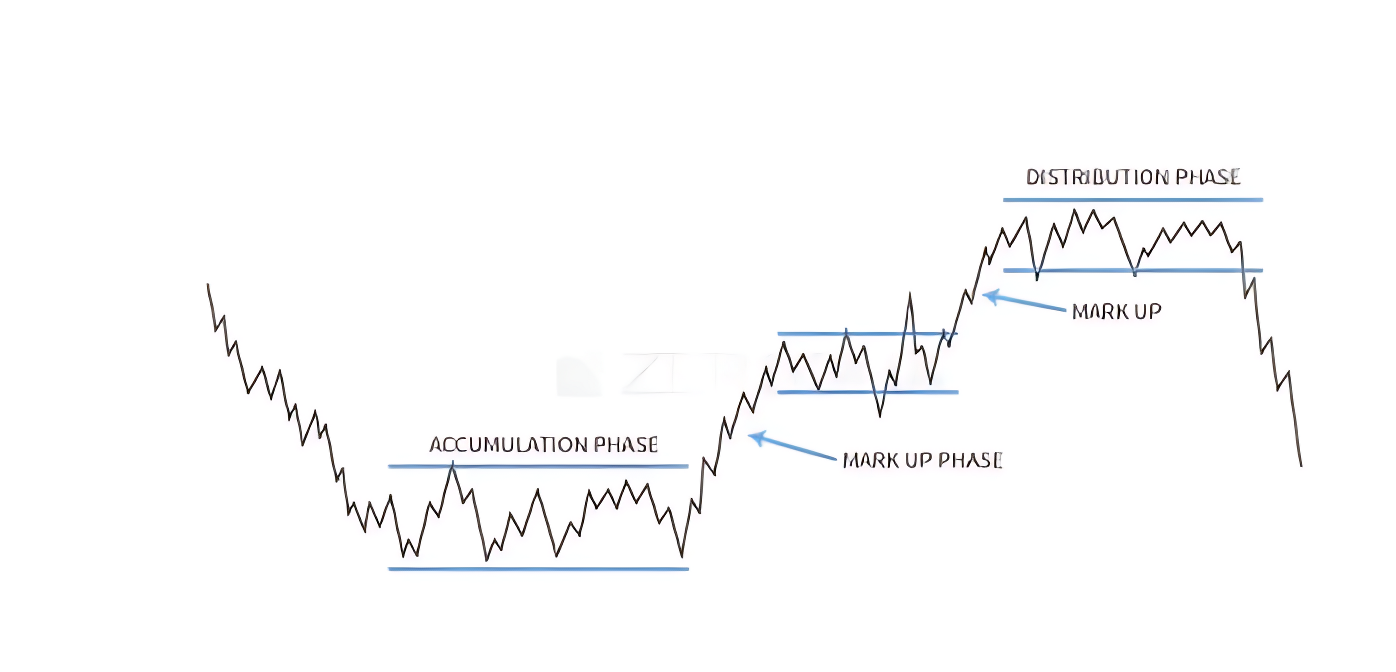
- संचय चरण: यह चरण तब शुरू होता है जब मार्केट लंबे समय तक डाउनट्रेंड के बाद नीचे आ गया है. कीमतें कम होती हैं, भावना निराशावादी होती है, और अधिकांश रिटेल निवेशक या तो डर रखते हैं या स्वार्थहीन होते हैं. हालांकि, सूचित निवेशक और संस्थान चुपचाप स्टॉक खरीदना शुरू करते हैं, अंडरवैल्यूएशन को पहचानते हैं और भविष्य में अपट्रेंड की उम्मीद करते हैं. इस चरण के दौरान प्राइस मूवमेंट सूक्ष्म और अक्सर रेंज-बाउंड होते हैं, क्योंकि खरीद गतिविधि धीरे-धीरे होती है और अभी तक व्यापक मार्केट के लिए दिखाई नहीं देती है. वॉल्यूम थोड़ा बढ़ना शुरू हो सकता है, लेकिन कोई व्यापक उत्साह नहीं है. यह चरण उन लोगों द्वारा रणनीतिक स्थिति को दर्शाता है जो मार्केट साइकिल को समझते हैं और भीड़ से पहले काम करने के लिए तैयार हैं.
- मार्क-अप फेज : एक बार संचयन एक टिप पॉइंट तक पहुंचने के बाद, कीमतें अधिक ध्यान से बढ़ना शुरू हो जाती हैं. इस चरण में बढ़ती आशावाद, आर्थिक संकेतकों में सुधार और जनता की भागीदारी बढ़ रही है. जैसे-जैसे अधिक निवेशक अपट्रेंड को पहचानते हैं, मांग में तेज़ी आती है और कीमतें लगातार बढ़ रही हैं. तकनीकी ब्रेकआउट, उच्च उच्च और उच्च निम्न, और विस्तार आयतन इस चरण की सामान्य विशेषताएं हैं. मीडिया कवरेज पॉजिटिव हो जाती है, और रिटेल निवेशक मार्केट में प्रवेश करना शुरू कर देते हैं, जो अक्सर लापता होने के डर से प्रेरित होते हैं. यह आमतौर पर साइकिल का सबसे लंबा और सबसे लाभदायक चरण है, जहां ट्रेंड-फॉलोइंग स्ट्रेटेजी अच्छी तरह से काम करती हैं और विभिन्न क्षेत्रों में मोमेंटम बनता है.
- वितरण चरण: इस अंतिम चरण में, कीमतें काफी बढ़ गई हैं और वैल्यूएशन में वृद्धि हो सकती है. स्मार्ट मनी और संस्थागत निवेशक अपनी पोजीशन से बाहर निकलना शुरू करते हैं, जबकि रिटेल निवेशक लगातार खरीद रहे हैं. मार्केट सेंटीमेंट आशावादी है, खबर बहुत सकारात्मक है, और कई लोगों का मानना है कि रैली अनिश्चितकाल तक जारी रहेगी. हालांकि, प्राइस एक्शन अस्थिर हो जाता है, वॉल्यूम बिना स्पष्ट दिशा के बढ़ सकता है, और थकान के लक्षण दिखाई देने लगते हैं. इस चरण में अक्सर गलत ब्रेकआउट और बढ़ी हुई अस्थिरता शामिल होती है. अंत में, बिक्री दबाव मांग से अधिक होता है, जिससे रिवर्सल हो जाता है और नए डाउनट्रेंड की शुरुआत होती है. इस चरण को पहचानना महत्वपूर्ण है ताकि नीचे दी गई गिरावट में फंसने से बचा जा सके.
16.3 डॉव पैटर्न
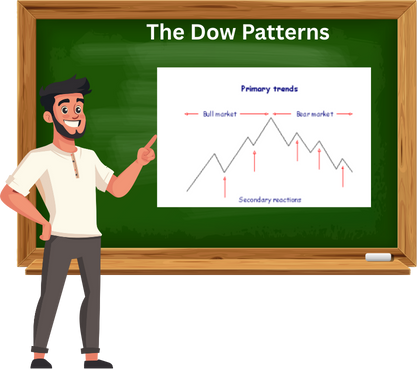
जैसे कैंडलस्टिक चार्ट प्रमुख कीमत पैटर्न को प्रकट करते हैं, डॉव थ्योरी भी पहचान योग्य फॉर्मेशन का एक सेट प्रदान करता है जिसका उपयोग ट्रेडर संभावित ट्रेडिंग अवसरों को पहचानने के लिए कर सकते हैं. ये पैटर्न मार्केट के व्यवहार की व्याख्या करने और ट्रेंड में रिवर्सल या निरंतरता का अनुमान लगाने में मदद करते हैं. सबसे अधिक अध्ययन किए जाने वाले निम्न हैं
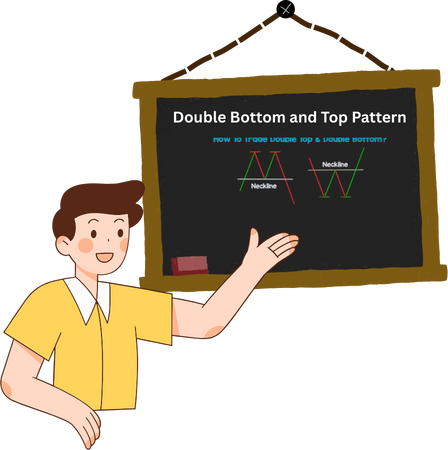
- डबल टॉप और डबल बॉटम: ट्रेंड रिवर्सल पैटर्न तब होता है जब कीमत दो बार प्रमुख सपोर्ट या रेजिस्टेंस लेवल का टेस्ट करती है, लेकिन यह ब्रेक नहीं हो पाता है, जिससे मार्केट की दिशा में संभावित बदलाव का संकेत मिलता है.
- ट्रिपल बॉटम/टॉप: डबल फॉर्मेशन के समान, लेकिन तीन प्राइस टेस्ट के साथ, इसे एक मजबूत रिवर्सल सिग्नल बनाता है
- ट्रेडिंग रेंज: समेकन की अवधि जिसमें कीमत निर्धारित समर्थन और प्रतिरोध स्तर के बीच साइडवे को मूव करती है, जो अक्सर ब्रेकआउट से पहले होती है.
- ध्वज निर्माण: एक तेज, लगभग वर्टिकल रैली के बाद होता है और ट्रेंड दोबारा शुरू होने से पहले एक संक्षिप्त विराम या पुलबैक को दर्शाता है. यह ट्रेडर्स के लिए दूसरी एंट्री का अवसर प्रदान कर सकता है
हालांकि सपोर्ट और रेजिस्टेंस इन सभी पैटर्न में महत्वपूर्ण भूमिका निभाते हैं, विशेष रूप से एंट्री, एग्जिट और स्टॉप-लॉस लेवल सेट करने के लिए-उनके बुनियादी महत्व को पहले से ही उस अवधारणा के लिए समर्पित एक पहले अध्याय में कवर किया गया है.
16.4 डबल बॉटम और टॉप पैटर्न
डबल बॉटम फॉर्मेशन
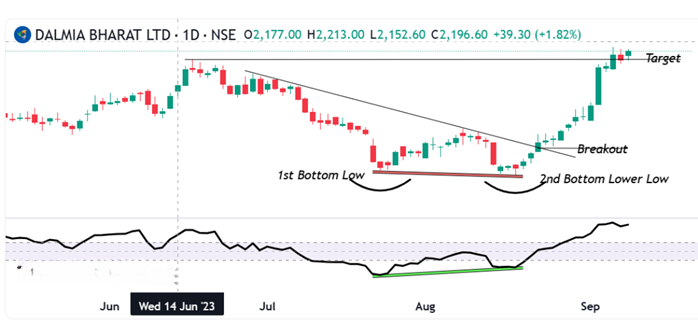
डबल बॉटम एक बुलिश रिवर्सल पैटर्न है जो आमतौर पर निरंतर डाउनट्रेंड के बाद बनता है. यह संकेत देता है कि बिक्री दबाव समाप्त हो सकता है और खरीदार नियंत्रण लेना शुरू कर रहे हैं.
संरचना और मनोविज्ञान:
- प्रथम तल:कीमत गिरती है और सपोर्ट लेवल को हिट करती है, फिर थोड़ा वापस बाउंस हो जाती है. इसे अक्सर एक नियमित पुलबैक के रूप में देखा जाता है.
- द्वितीय तल:कीमत फिर से पहले बॉटम के समान स्तर पर आ जाती है, लेकिन कम नहीं हो पाती है. इससे पता चलता है कि विक्रेताओं की ताकत कम हो रही है.
- नेकलाइन ब्रेकआउट:दूसरे बॉटम के बाद, प्राइस रैलियां और इंटरमीडिएट रेजिस्टेंस (जिसे नेकलाइन कहा जाता है) से ऊपर टूट जाती हैं, जो रिवर्सल की पुष्टि करती है.
यह पैटर्न भावना में बदलाव को दर्शाता है. स्मार्ट मनी पहले बॉटम के दौरान जमा हो सकती है, और दूसरा बॉटम उनके विश्वास की पुष्टि करता है. जब नेकलाइन वॉल्यूम के साथ टूट जाती है, तो ट्रेडर अक्सर लंबी पोजीशन में प्रवेश करते हैं, जिसमें स्टॉप-लॉस को दूसरे बॉटम से नीचे रखा जाता है और बॉटम और नेकलाइन के बीच ऊंचाई के बराबर मूव को टारगेट किया जाता है.
डबल टॉप फॉर्मेशन
डबल टॉप पैटर्न: स्ट्रक्चर, डिटेक्शन और इंटरप्रिटेशन
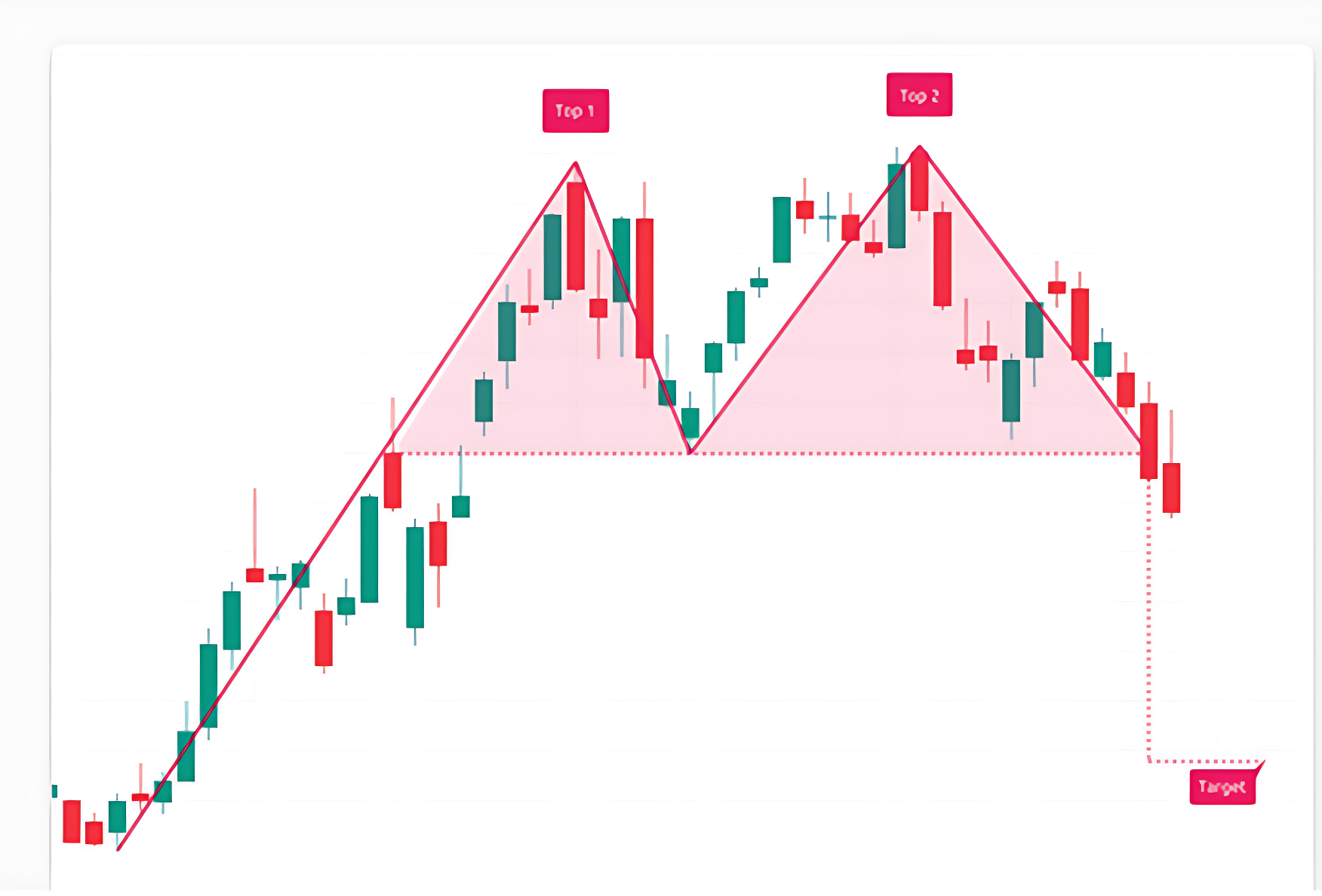
डबल टॉप एक क्लासिक बेयरिश रिवर्सल पैटर्न है जो तब बनता है जब कीमत हाई हो जाती है, वापस खींचती है, और फिर इसे बिना ब्रेक किए उस हाई को रीटेस्ट करती है. दो शिखर लगभग एक ही स्तर पर होते हैं, जो मध्यवर्ती निम्न से अलग होते हैं. अगर कीमत दूसरे टॉप से ऊपर ब्रेक करने में विफल रहती है और इसके बजाय इंटरमीडिएट लो से नीचे गिर जाती है, तो यह अक्सर डाउनवर्ड मूव की शुरुआत का संकेत देता है. अपेक्षित गिरावट आमतौर पर टॉप्स और लो के बीच वर्टिकल दूरी के बराबर होती है.
संरचना और मनोविज्ञान:
- फर्स्ट टॉप:कीमत बढ़ती है और रेज़िस्टेंस लेवल को हिट करती है, फिर थोड़ा वापस आ जाती है. इसे अक्सर एक सामान्य सुधार के रूप में देखा जाता है.
- सेकेंड टॉप:कीमत फिर से एक समान स्तर पर पहुंचती है, लेकिन यह अधिक नहीं हो पाता है. यह कमजोर होने की मांग को दर्शाता है.
- नेकलाइन ब्रेकडाउन:दूसरे टॉप के बाद, कीमत गिरती है और इंटरमीडिएट सपोर्ट (नेकलाइन) से नीचे टूट जाती है, जो रिवर्सल की पुष्टि करती है.
इस पैटर्न से पता चलता है कि मार्केट ने दो बार रेजिस्टेंस लेवल टेस्ट किया है और फेल हो गया है. वॉल्यूम के साथ नेकलाइन टूटने के बाद, ट्रेडर अक्सर शॉर्ट पोजीशन शुरू करते हैं, जो दूसरे टॉप से स्टॉप-लॉस रखता है और टॉप और नेकलाइन के बीच ऊंचाई के बराबर गिरावट को लक्ष्य करता है.
16.5 ट्रिपल टॉप और बॉटम

ट्रिपल टॉप पैटर्न
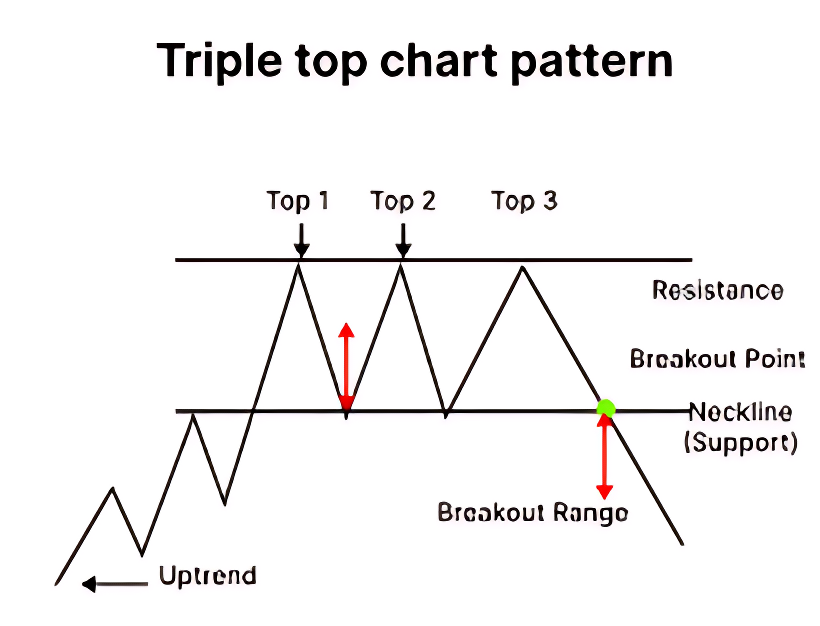
ट्रिपल टॉप एक बेयरिश रिवर्सल पैटर्न है जो एक्सटेंडेड अपट्रेंड के बाद बनता है. यह संकेत देता है कि मार्केट बार-बार प्रतिरोध स्तर को तोड़ने में विफल रहा है, जिससे कमजोर खरीद दबाव और डाउनट्रेंड की ओर संभावित बदलाव का संकेत मिलता है.
संरचना और मनोविज्ञान:
- तीन पीक्स:कीमत तीन गुना अधिक होती है, हर बार प्रतिरोध को हिट करने के बाद वापस खींचती है. हाई मोटे तौर पर बराबर होते हैं, मामूली वेरिएशन की अनुमति होती है.
- इंटरवेंनिंग लोस:प्रत्येक शिखर के बीच, कीमत दो मध्यवर्ती निचले स्तर बनाने के लिए कम हो जाती है, जिससे एक क्षैतिज समर्थन स्तर बनता है जिसे नेकलाइन के रूप में जाना जाता है.
- ब्रेकडाउन कन्फर्मेशन:पैटर्न की पुष्टि तब की जाती है जब कीमत तीसरे शिखर के बाद गर्दन के नीचे बंद हो जाती है. यह ब्रेकडाउन दर्शाता है कि विक्रेताओं ने नियंत्रण प्राप्त किया है.
ट्रिपल टॉप की रेजिस्टेंस लेवल पर लगातार सेलिंग प्रेशर को दर्शाता है. ट्रेडर अक्सर शॉर्ट पोजीशन में प्रवेश करने से पहले नेकलाइन के नीचे एक निर्णायक बंद होने की प्रतीक्षा करते हैं. अपेक्षित गिरावट आमतौर पर शिखरों और गर्दन के बीच लंबवत दूरी के बराबर होती है.
ट्रिपल बॉटम पैटर्न
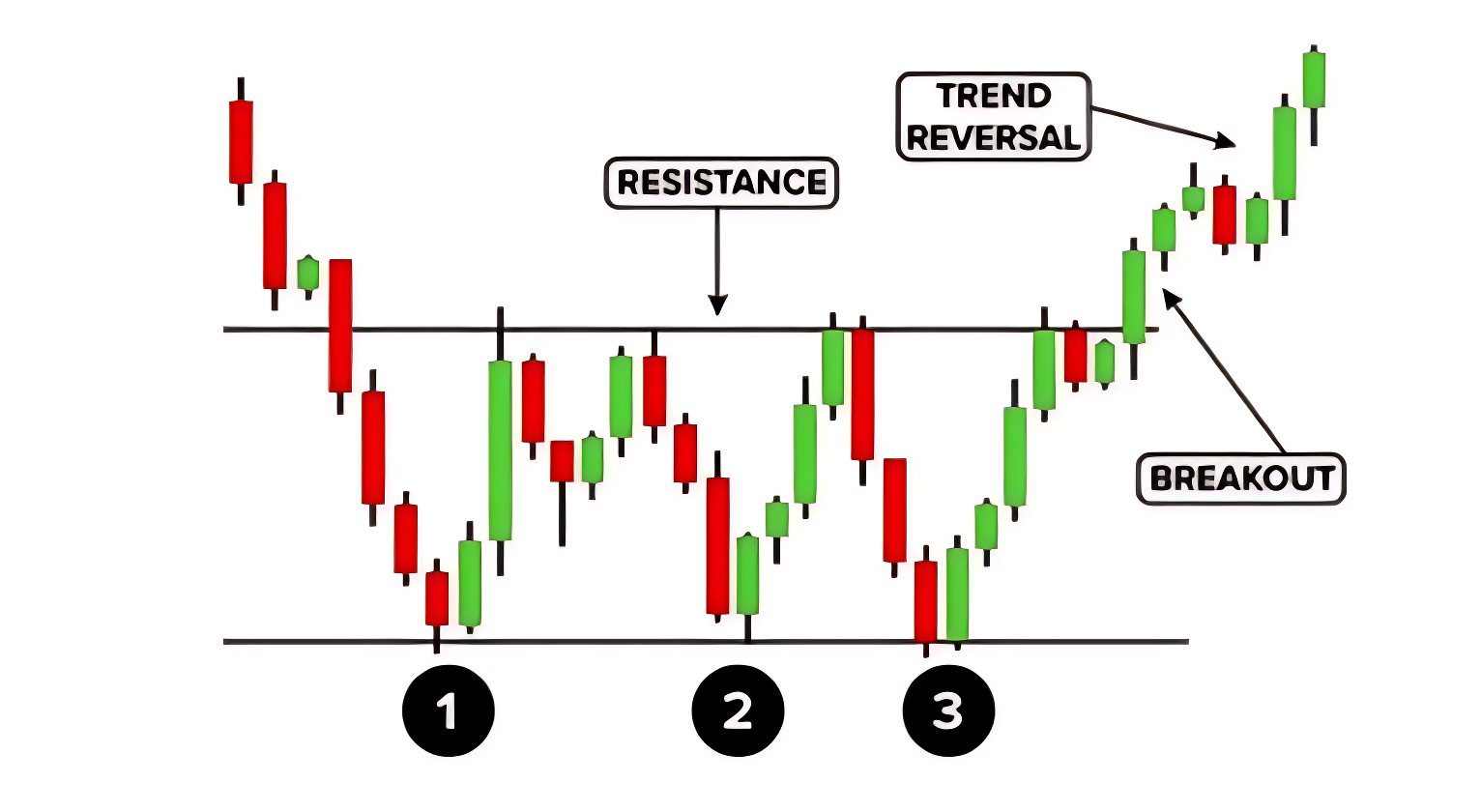
ट्रिपल बॉटम एक बुलिश रिवर्सल पैटर्न है जो लंबे डाउनट्रेंड के बाद दिखाई देता है. यह सुझाव देता है कि मार्केट ने तीन बार सपोर्ट लेवल का टेस्ट किया है और इसे नीचे तोड़ने में विफल रहा है, जो मांग को मजबूत करने और संभावित ऊपर की ओर कदम को दर्शाता है.
संरचना और मनोविज्ञान:
- तीन ट्रफ:कीमत तीन गुना समान कम हो जाती है, हर बार सपोर्ट को हिट करने के बाद वापस बाउंस हो जाती है. ये निचले स्तर लगभग समान हैं, जिससे मजबूत खरीद इंटरेस्ट दिखाई दे रहा है.
- इंटरवेंनिंग हाई:प्रत्येक ट्रफ के बीच, कीमत दो इंटरमीडिएट हाई बनाने के लिए बढ़ जाती है, जिससे प्रतिरोध की एक गर्दन पैदा होती है.
- ब्रेकआउट कन्फर्मेशन:पैटर्न की पुष्टि तब की जाती है जब कीमत तीसरी ट्रफ के बाद नेकलाइन के ऊपर बंद हो जाती है. यह ब्रेकआउट संकेत देता है कि खरीदारों ने नियंत्रण लिया है.
ट्रिपल बॉटम दिखाता है कि विक्रेताओं ने बार-बार कीमतों को कम करने में विफल रहे हैं. जब नेकलाइन वॉल्यूम के साथ टूट जाती है, तो ट्रेडर अक्सर लंबी पोजीशन में प्रवेश करते हैं. अपेक्षित वृद्धि आमतौर पर ट्रफ और नेकलाइन के बीच लंबवत दूरी के बराबर होती है.
16.6 ट्रेडिंग रेंज

ट्रेडिंग रेंज को समझें
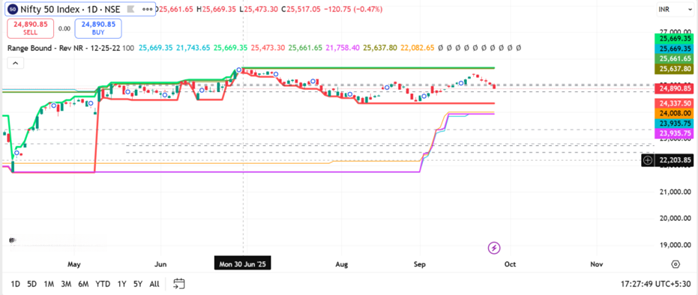
A ट्रेडिंग रेंज एक क्षैतिज कीमत चैनल है जहां मार्केट एक निर्धारित समर्थन और प्रतिरोध स्तर के बीच साइडवे को मूव करता है. यह अनिश्चितताओं या समेकन के एक चरण को दर्शाता है, जहां न तो खरीदार और न ही विक्रेताओं का प्रभुत्व है. आपके चार्ट में, यह रेंज जून के अंत और सितंबर के अंत के बीच स्पष्ट रूप से दिखाई देती है.
- ऊपरी सीमा (प्रतिरोध): इस स्तर का लगभग 25,200 रुपये कई बार टेस्ट किया गया है, लेकिन यह सुनिश्चित रूप से ब्रेक नहीं हो पाया है. यह उस रेंज की सीलिंग को चिह्नित करता है जहां सेलिंग प्रेशर बढ़ जाता है. जुलाई के अंत और सितंबर की शुरुआत के बीच, निफ्टी 50 इंडेक्स ने हर बार 25,200 रुपये से अधिक बढ़ने के कई प्रयास किए, इस स्तर को छूने या उसके पास पहुंचने के तुरंत बाद कीमत वापस कर दी गई. ये शिखर कैंडलस्टिक टॉप के रूप में दिखाई देते हैं जो क्षैतिज रूप से संरेखित होते हैं, जो एक प्राकृतिक प्रतिरोध क्षेत्र बनाते हैं.
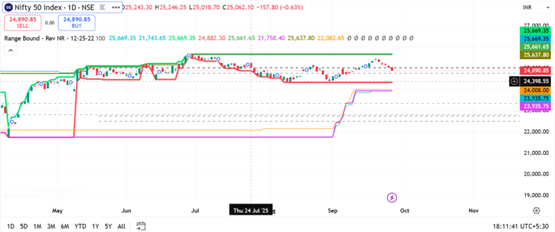
- निचली सीमा (सपोर्ट): लगभग 24,600 रुपये इस स्तर ने फ्लोर के रूप में काम किया है, जिससे और गिरावट की रोकथाम हुई है. खरीदार यहां कदम रखते हैं, जिससे बाउंस होता है.
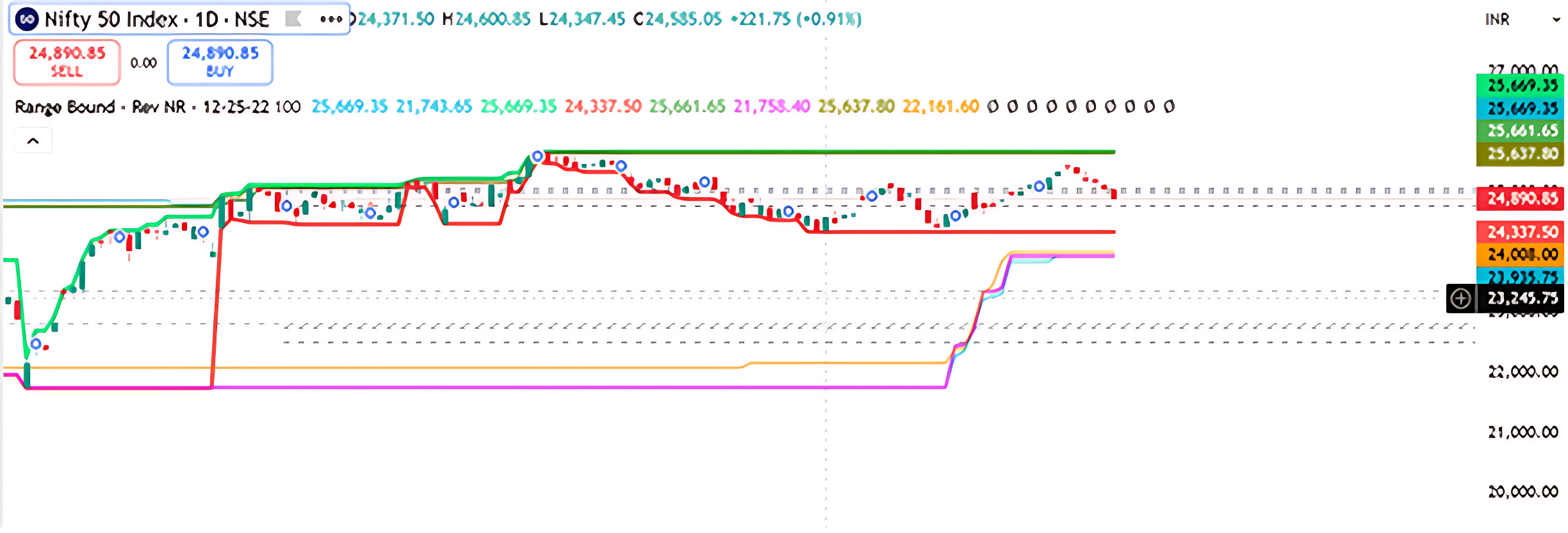
वर्तमान कीमत: 24,890.65 INR index वर्तमान में रेंज के बीच ट्रेडिंग कर रहा है, जो अनिश्चितताओं का संकेत देता है. "सेल" इंडिकेटर ऊपरी बैंड से हाल ही में अस्वीकृति या कस्टम इंडिकेटर से सिग्नल पर आधारित हो सकता है.
चार्ट से विजुअल क्यूज़
- हॉरिजॉन्टल लाइनमार्किंग सपोर्ट और रेजिस्टेंस अच्छी तरह से परिभाषित हैं, जो टेक्स्टबुक रेंज-बाउंड सेटअप को दर्शाता है.
- रेंज बाउंड-रेव एनआर - 12-25-12-12label का सुझाव है कि एक कस्टम इंडिकेटर इस समेकन जोन की पहचान कर रहा है, संभवतः अस्थिरता संकुचन या रिवर्सल लॉजिक का उपयोग कर रहा है.
- कैंडलस्टिक के व्यवहार में 25,200 के आस-पास बार-बार अस्वीकृति दिखाई देती है और 24,600 के आस-पास रिबाउंड होता है, जिससे रेंज की सीमाएं मजबूत होती हैं.
- हाल ही में डाउनवर्ड मूवमेंट से पता चलता है कि जब तक ब्रेकआउट नहीं होता है, तब तक index सपोर्ट की ओर वापस जा सकता है.
ट्रेडिंग के प्रभाव
- रेंज ट्रेडिंग स्ट्रेटजी: ट्रेडर 24,600 के आस-पास खरीदने और 25,200 के आस-पास बेचने पर विचार कर सकते हैं, ताकि रेंज के बाहर सख्त स्टॉप-लॉस का उपयोग किया जा सके.
- ब्रेकआउट वॉच: वॉल्यूम के साथ 25,200 से अधिक बंद होने से बुलिश ब्रेकआउट हो सकता है, जबकि 24,600 से कम ड्रॉप से बेयरिश मूव हो सकता है.
- न्यूट्रल बायस: ब्रेकआउट होने तक, मार्केट कंसोलिडेशन में रहता है, और डायरेक्शनल ट्रेड में अधिक रिस्क होता है.
16.7 रेंज ब्रेकआउट

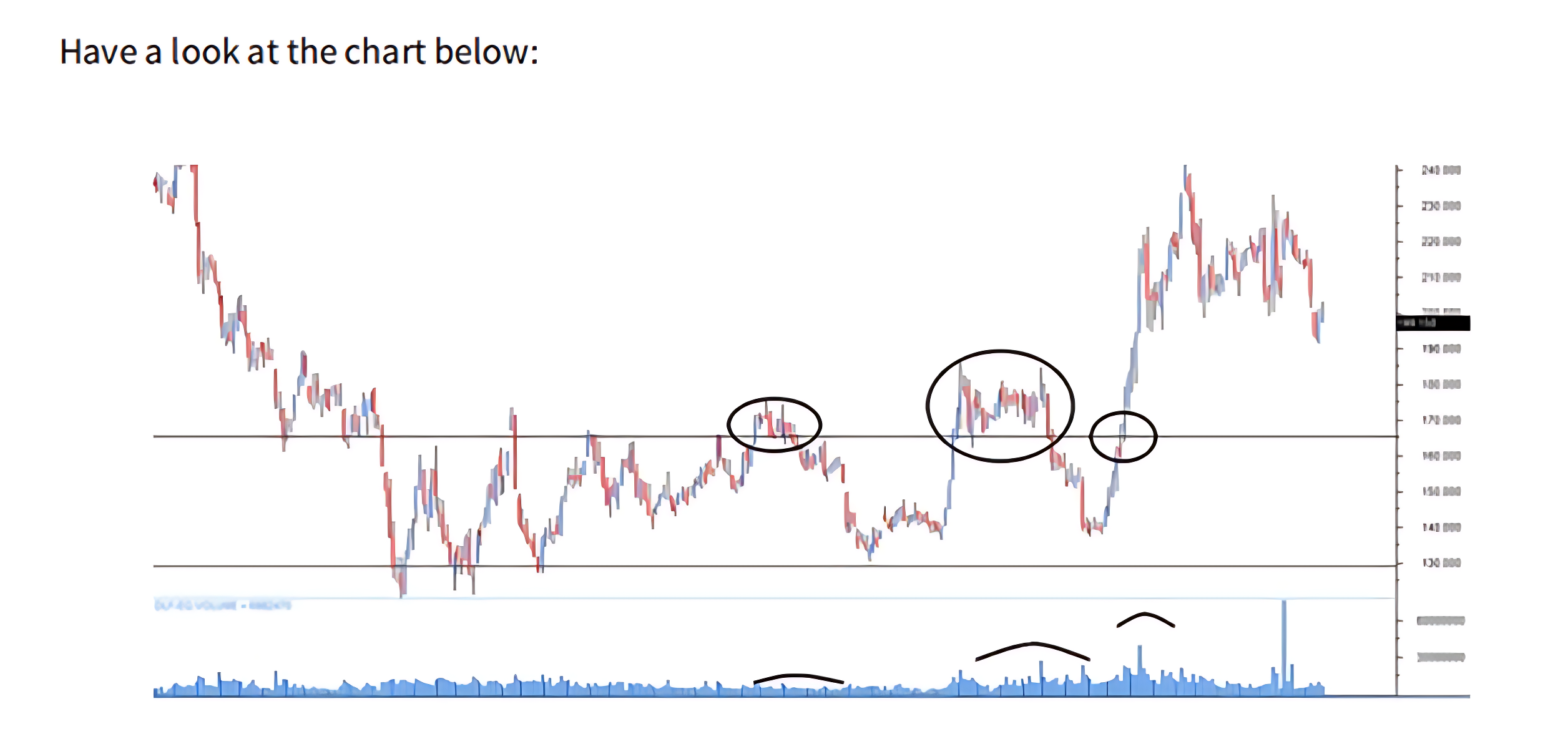
स्टॉक ने अपनी स्थापित रेंज से तीन ब्रेकआउट प्रयास किए, लेकिन केवल तीसरा निर्णायक साबित हुआ. चार्ट के बाईं ओर देखा गया पहला प्रयास, विश्वास-परिमाण की कमी कम थी और गति न्यूनतम थी, जिसके परिणामस्वरूप तुरंत रिवर्सल हुआ. दूसरा ब्रेकआउट मजबूत वॉल्यूम दिखा रहा है, फिर भी मूव को बनाए रखने के लिए पर्याप्त मोमेंटम नहीं ले सका, जिससे यह एक और गलत सिग्नल बन गया है. यह तीसरा प्रयास था जिसने एक वास्तविक ब्रेकआउट के हॉलमार्क गुण प्रदर्शित किए: मजबूत ऊपर की गति के साथ मजबूत वॉल्यूम, जो मार्केट की दिशा में स्पष्ट बदलाव की पुष्टि करता है.
ट्रेडिंग रेंज ब्रेकआउट
जब कोई स्टॉक मजबूत वॉल्यूम के साथ अच्छी तरह से परिभाषित कीमत रेंज से बाहर हो जाता है, तो ट्रेडर अक्सर इसे ट्रेड में प्रवेश करने के लिए संकेत मानते हैं. हालांकि, वॉल्यूम अकेले ब्रेकआउट समीकरण के केवल एक हिस्से की पुष्टि करता है. दूसरा मुख्य कारक, मोमेंटम का अनुमान लगाना कठिन है. क्योंकि इस बात की कोई गारंटी नहीं है कि मोमेंटम का पालन होगा, इसलिए ट्रेडर के लिए ट्रेडिंग ब्रेकआउट के दौरान हमेशा स्टॉप-लॉस का उपयोग करना आवश्यक है.
उदाहरण: मान लीजिए कि एक स्टॉक कई हफ्तों से ₹ 215 से ₹ 260 के बीच ट्रेडिंग कर रहा है. एक दिन, यह ₹ 260 से अधिक ब्रेक होता है और ₹ 266 से ट्रेडिंग शुरू करता है. ट्रेडर ₹266 तक लंबे समय तक जाने का विकल्प चुन सकता है, रिस्क को मैनेज करने के लिए ब्रेकआउट लेवल से कम ₹260 पर स्टॉप-लॉस लगा सकता है.
वैकल्पिक रूप से, कल्पना करें कि स्टॉक ₹215 से कम हो जाता है और ₹208 तक गिर जाता है. इस मामले में, ट्रेडर स्टॉप-लॉस लेवल के रूप में ₹215 का उपयोग करके ₹208 में शॉर्ट पोजीशन शुरू कर सकता है.
ट्रेड ऐक्टिव होने के बाद, अगर ब्रेकआउट वास्तविक है, तो कीमत पिछले रेंज की चौड़ाई से कम से कम मूव होने की उम्मीद है. इस उदाहरण में, रेंज की चौड़ाई ₹260 - ₹215 = ₹45 है. इसलिए, अपसाइड ब्रेकआउट के लिए, न्यूनतम लक्ष्य ₹ 266 + ₹ 45 = ₹ 311 होगा. डाउनसाइड ब्रेकडाउन के लिए, लक्ष्य ₹208 - ₹45 = ₹163 होगा.
16.8 ध्वज निर्माण

फ्लैग पैटर्न आमतौर पर स्टॉक की कीमत में तेज़, लगभग वर्टिकल रैली के बाद उभरता है. यह रैली "फ्लैगपोल" की तरह काम करती है इस वृद्धि के बाद, स्टॉक एक संक्षिप्त विराम या पुलबैक चरण में प्रवेश करता है, जहां कीमतें दो समानांतर लाइनों के भीतर नीचे या साइडवेज़ में आ जाती हैं - जो "फ्लैग" बनाती हैं. यह सुधार आमतौर पर अल्पकालिक होता है, जो 5 से 15 ट्रेडिंग सेशन के बीच रहता है.
ऐसा क्यों होता है
एक मजबूत रैली के बाद, कई रिटेल ट्रेडर लाभ बुक करना शुरू कर देते हैं. इस बिक्री दबाव के कारण कीमत में अस्थायी कमी होती है. हालांकि, संस्थागत निवेशक या "स्मार्ट मनी" अक्सर निवेश करते रहते हैं, जिससे कुल भावनाएं तेजी से बढ़ती हैं. क्योंकि सुधार खुदरा बिक्री द्वारा संचालित होता है और फंडामेंटल में बदलाव नहीं होता है, इसलिए फ्लैग फेज के दौरान वॉल्यूम कम होता है.
बिक्री के बाद, स्टॉक अक्सर नए मोमेंटम और वॉल्यूम के साथ फ्लैग से बाहर निकलता है, जो अपनी ऊपर की यात्रा को फिर से शुरू करता है. यह ब्रेकआउट आमतौर पर तेज़ होता है, जो शुरुआती रैली से चूकने वाले ट्रेडर्स के लिए दूसरा एंट्री अवसर प्रदान करता है.
उदाहरण
कल्पना करें कि केवल कुछ सेशन में स्टॉक ₹180 से ₹230 तक बढ़ गया है. फिर यह एक हल्के सुधार में आता है, जो लगभग 10 दिनों के लिए ₹ 220 से ₹ 230 के बीच हो जाता है. यह फ्लैग बनाता है. अचानक, स्टॉक मजबूत वॉल्यूम के साथ ₹ 230 से अधिक टूट जाता है और रैली ₹ 260 हो जाती है. ₹180 से मूव करने से चूकने वाले ट्रेडर को अब ₹220 से कम स्टॉप-लॉस के साथ लगभग ₹232-₹235 में प्रवेश करने का मौका मिलता है.
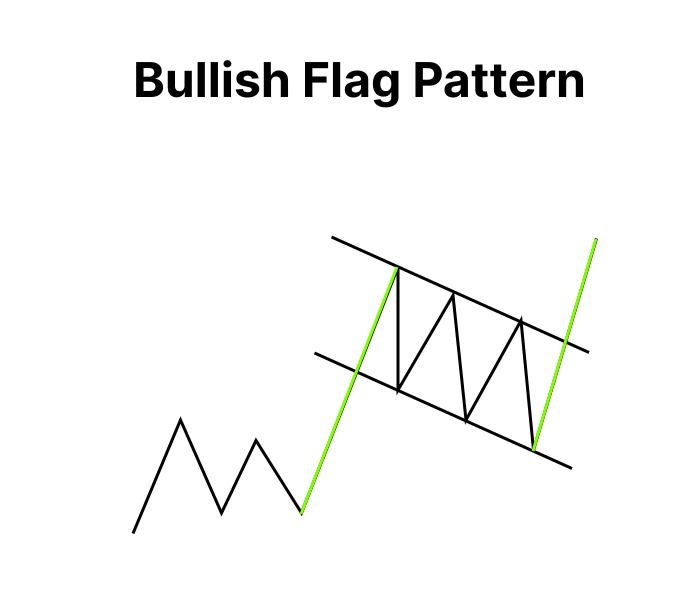
बुल फ्लैग चार्ट पैटर्न
बुल फ्लैग एक क्लासिक निरंतरता पैटर्न है जो ट्रेंडिंग मार्केट में देखा जाता है, विशेष रूप से मजबूत अपट्रेंड के दौरान. इसकी शुरुआत एक शार्प, इम्पल्सिव रैली के साथ होती है, जिसे फ्लैगपोल के नाम से जाना जाता है, जो आक्रामक खरीद और उच्च मात्रा के कारण होती है. इसके बाद एक संक्षिप्त समेकन चरण होता है- फ्लैग-जहां कीमत थोड़ा वापस आ जाती है या डाउनवर्ड-स्लोपिंग चैनल में साइडवे चलाती है. यह पुलबैक आमतौर पर हल्के वॉल्यूम पर होता है, जो रिवर्सल के बजाय एक विराम का संकेत देता है. यह स्ट्रक्चर ट्रेंड दोबारा शुरू होने से पहले एक अस्थायी संतुलन को दर्शाता है. ट्रेडर फ्लैग की रेजिस्टेंस लाइन के ऊपर ब्रेकआउट के लिए इस पैटर्न की निगरानी करते हैं, आदर्श रूप से वॉल्यूम सर्ज के साथ, जो बुलिश मोमेंटम जारी रखने की पुष्टि करता है. एंट्री आमतौर पर फ्लैग की ऊपरी सीमा से ठीक ऊपर रखी जाती है, जिसमें फ्लैग के निचले स्तर से नीचे स्टॉप-लॉस होते हैं. मापा गया गति लक्ष्य अक्सर फ्लैगपोल की लंबाई को ब्रेकआउट बिंदु में जोड़कर अनुमानित किया जाता है. यह सेटअप अपने स्पष्ट रिस्क-रिवॉर्ड प्रोफाइल और मोमेंटम-संचालित वातावरण में विश्वसनीयता के लिए पसंद किया जाता है.
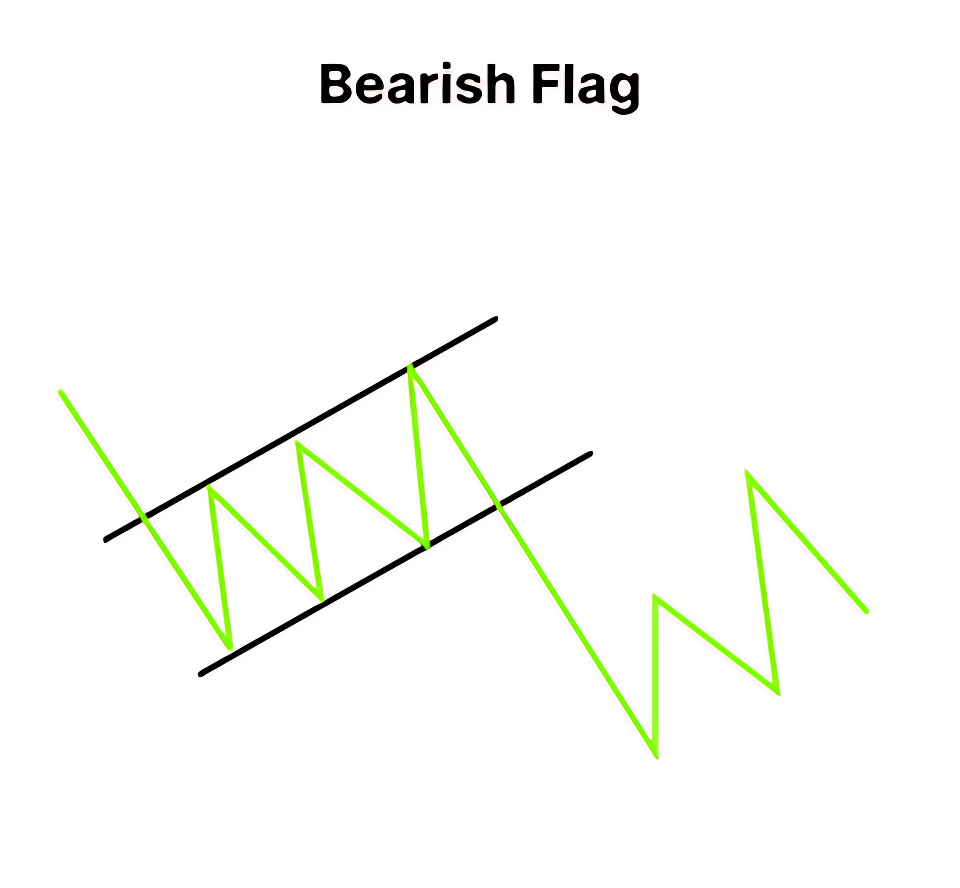
बीयर फ्लैग
बीयर फ्लैग एक बीयरिश कंटिन्यूएशन पैटर्न है जो आमतौर पर मजबूत डाउनट्रेंड के दौरान बनता है. इसकी शुरुआत एक भारी और प्रभावशाली गिरावट के साथ होती है, जिसे फ्लैगपोल के रूप में जाना जाता है, जो आक्रामक बिक्री और उच्च मात्रा के कारण होता है. इसके बाद एक संक्षिप्त समेकन चरण होता है- फ्लैग-जहां कीमत थोड़ी ऊपर की ओर मुड़ जाती है या एक संकीर्ण, ऊपर की ओर झुकने वाले चैनल के भीतर साइडवे को मूव करती है. यह काउंटर-ट्रेंड मूव आमतौर पर कम वॉल्यूम पर होता है, जो रिवर्सल के बजाय अस्थायी विराम को दर्शाता है. यह संरचना प्रमुख मंदी की प्रवृत्ति को फिर से शुरू करने से पहले बाजार को अपनी सांस लेने में मदद करती है. ट्रेडर फ्लैग की सपोर्ट लाइन के नीचे ब्रेकडाउन देखते हैं, आदर्श रूप से वॉल्यूम में वृद्धि के साथ, जो बिक्री के दबाव को जारी रखने की पुष्टि करता है. एंट्री आमतौर पर फ्लैग की निचली सीमा के ठीक नीचे रखी जाती है, जिसमें फ्लैग के उच्च स्तर पर स्टॉप-लॉस होते हैं. प्रॉफिट टार्गेट अक्सर ब्रेकडाउन पॉइंट से फ्लैगपोल की लंबाई को घटाकर अनुमान लगाया जाता है. यह सेटअप मोमेंटम-आधारित डाउनट्रेंड में अपनी स्पष्ट संरचना और प्रभावशीलता के लिए पसंद किया जाता है.
16.9 रिवॉर्ड टू रिस्क रेशियो: ट्रेड फिल्टर

रिस्क-रिवॉर्ड रेशियो (RRR) एक प्रमुख मेट्रिक है जो ट्रेडर को संभावित नुकसान से अपेक्षित लाभ की तुलना करके ट्रेड की व्यवहार्यता का आकलन करने में मदद करता है. उच्च RRR अधिक ट्रेड एफिशिएंसी को दर्शाता है, जिसका मतलब है कि ट्रेडर हर रुपये के रिस्क के लिए अधिक कमाता है. अनुशासन बनाए रखने के लिए, ट्रेडर्स को अपनी रिस्क सहनशीलता के अनुरूप न्यूनतम रिवॉर्ड-टू-रिस्क रेशियो थ्रेशोल्ड स्थापित करना चाहिए, जिससे वे कम गुणवत्ता वाले सेटअप को फिल्टर कर सकते हैं और केवल उन ट्रेड पर ध्यान केंद्रित कर सकते हैं जो रिस्क को सही ठहराते हैं.
रिवॉर्ड टू रिस्क रेशियो ट्रेडर को यह मूल्यांकन करने में मदद करता है कि ट्रेड लेने के योग्य है या नहीं. यह संभावित लाभ (रिवॉर्ड) की तुलना संभावित नुकसान (रिस्क) से करता है. उच्च RRR का मतलब बेहतर ट्रेड एफिशिएंसी है-आप अपने जोखिम वाले प्रत्येक रुपये के लिए अधिक कमा रहे हैं.
कैसे कैलकुलेट करें
रिवॉर्ड टू रिस्क रेशियो = (टार्गेट - एंट्री) ÷ (एंट्री - स्टॉप-लॉस)
उदाहरण 1: रिस्क रेशियो के लिए कम रिवॉर्ड (प्रतिकूल व्यापार)
- प्रविष्टि: 320
- स्टॉप-लॉस: 310
- लक्ष्य: 325
- जोखिम: 10
- रिवॉर्ड:5
- RRR: 5 ÷ 10 = 5
इसका मतलब है कि आप ₹ 5 बनाने के लिए ₹ 10 का जोखिम उठा रहे हैं - आदर्श नहीं. भले ही सेटअप आशाजनक लग रहा हो, गणित कहता है कि यह इसके लायक नहीं है.
उदाहरण 2: रिस्क रेशियो के लिए एक मजबूत रिवॉर्ड (अनुकूल व्यापार)
प्रविष्टि: Rs.450
- स्टॉप-लॉस:440
- लक्ष्य:470
- जोखिम:10
- रिवॉर्ड:20
- RRR:20 ÷ 10 = 0
यहां, आपके जोखिम वाले प्रत्येक ₹1 के लिए, आपको ₹2 मिलेंगे. यह एक ठोस व्यापार सेटअप है.
रिवॉर्ड टू रिस्क रेशियो क्यों महत्वपूर्ण है
अगर कोई चार्ट परफेक्ट ब्रेकआउट या टेक्स्टबुक कैंडलस्टिक पैटर्न दिखाता है, तो भी खराब RRR ट्रेड को अकुशल बना सकता है. ट्रेडर्स को अपनी स्टाइल के आधार पर अपनी न्यूनतम RRR थ्रेशोल्ड को परिभाषित करना चाहिए:
- कंजर्वेटिव ट्रेडर्स 2 से अधिक RRR को पसंद कर सकते हैं
- मध्यम व्यापारी 1.5 का RRR स्वीकार कर सकता है
- अग्रेसिव ट्रेडर्स तेज़ी से चल रहे मार्केट में RRR 1 या उससे भी कम हो सकता है
रिवॉर्ड टू रिस्क रेशियो एक फिल्टर की तरह काम करता है. यह आपको उन ट्रेड के लिए "नहीं" कहने में मदद करता है जो अच्छे लगते हैं लेकिन इसमें शामिल रिस्क के लिए पर्याप्त रिवॉर्ड नहीं देते हैं. समय के साथ, यह अनुशासन पूंजी की सुरक्षा करता है और निरंतरता में सुधार करता है.
16.10 ग्रैंड चेकलिस्ट: स्पष्टता के लिए ट्रेडर का फिल्टर

तकनीकी विश्लेषण के प्रमुख स्तंभों की खोज करने के बाद, अब समय आ गया है कि हर चीज़ को एक व्यावहारिक निर्णय लेने के ढांचे में लाया जाए. यह चेकलिस्ट केवल एक औपचारिकता नहीं है-यह प्रभावशाली अनुमानों से उच्च गुणवत्ता वाले ट्रेड सेटअप को अलग करने के लिए आपका फिल्टर है. आपके द्वारा विचार किए जाने वाले प्रत्येक ट्रेड को निष्पादन से पहले इस लेंस से गुजरना चाहिए.
- एक पहचान योग्य कैंडलस्टिक पैटर्न
प्राइस एक्शन एक स्पष्ट और अर्थपूर्ण पैटर्न बनाता है, यह सुनिश्चित करके शुरुआत करें. कैंडलस्टिक निर्माण अक्सर पहला दृश्य संकेत होते हैं, लेकिन उन्हें संदर्भ से समर्थित होना चाहिए.
- प्रमुख समर्थन या प्रतिरोध स्तर पर रखा गया स्टॉप-लॉस
देखें कि सपोर्ट और रेजिस्टेंस ज़ोन के संबंध में पैटर्न कहां बन रहा है. अगर सेटअप इन स्तरों के साथ मेल खाता है, तो यह ट्रेड आइडिया को महत्व देता है और आपके स्टॉप-लॉस प्लेसमेंट को परिभाषित करने में मदद करता है.
- वॉल्यूम से कन्फर्मेशन, विशेष रूप से ब्रेकआउट पर
वॉल्यूम इरादे को कन्फर्म करने में महत्वपूर्ण भूमिका निभाता है. मजबूत वॉल्यूम द्वारा समर्थित ब्रेकआउट या ब्रेकडाउन वास्तविक भागीदारी को दर्शाता है, जबकि कमजोर वॉल्यूम संकोच या गलत मूव का संकेत दे सकता है. अगर वॉल्यूम प्राइस ऐक्शन को सपोर्ट नहीं करता है, तो पॉज़ करना और दोबारा आकलन करना ठीक है.
- डॉव सिद्धांत से सत्यापन
डॉव सिद्धांत अंतर्दृष्टि की एक और परत जोड़ता है. यह आपको यह समझने में मदद करता है कि ट्रेड व्यापक मार्केट ट्रेंड के साथ मेल खाता है या नहीं. अगर प्राइमरी ट्रेंड आपकी दिशा को सपोर्ट करता है, तो यह एक ग्रीन लाइट है. लेकिन अगर आप सेकेंडरी ट्रेंड के खिलाफ ट्रेडिंग कर रहे हैं, तो सावधानी बरतनी चाहिए. डबल टॉप, ट्रिपल बॉटम या रेंज फॉर्मेशन जैसे पैटर्न को पहचानने से आपके सेटअप को और सत्यापित किया जा सकता है.
- टेक्निकल इंडिकेटर्स से रीइन्फोर्समेंट
इंडिकेटर रीइन्फोर्समेंट के रूप में कार्य कर सकते हैं. अगर वे आपके ट्रेड थेसिस के अनुरूप हैं, तो आप अपनी स्थिति को बढ़ाने पर विचार कर सकते हैं. अगर वे नहीं करते हैं, तो बिना अधिक प्रतिबद्ध किए अपने ओरिजिनल प्लान पर टिके रहें. इंडिकेटर टूल हैं-गारंटी नहीं-लेकिन वे आपकी धार को शार्प कर सकते हैं.
- रिस्क रेशियो के लिए संतोषजनक रिवॉर्ड
अंत में, कभी भी reward-to-risk रेशियो को अनदेखा न करें. यह अनुशासित ट्रेडिंग का गाणितिक आधार है. किसी भी स्थिति में प्रवेश करने से पहले, खुद से पूछें: क्या संभावित रिवॉर्ड मेरे द्वारा लिए जा रहे जोखिम के लिए योग्य है? अगर नहीं, तो दूर जाएं. समय के साथ, यह आदत आपकी पूंजी की सुरक्षा करती है और निरंतरता में सुधार करती है. चाहे आप बिगिनर हों या ऐक्टिव ट्रेडर हों, अपनी पर्सनल RRR थ्रेशोल्ड को परिभाषित करना आवश्यक है.
इस चेकलिस्ट को उद्देश्य और अनुशासन के साथ फॉलो करके, आप भावना या अस्पष्ट तर्क के आधार पर ट्रेड से बच जाएंगे. यह केवल अवसर खोजने के बारे में नहीं है-यह उन्हें स्पष्टता और आत्मविश्वास के साथ योग्य बनाने के बारे में है.
आपके लिए ऐक्टिविटी
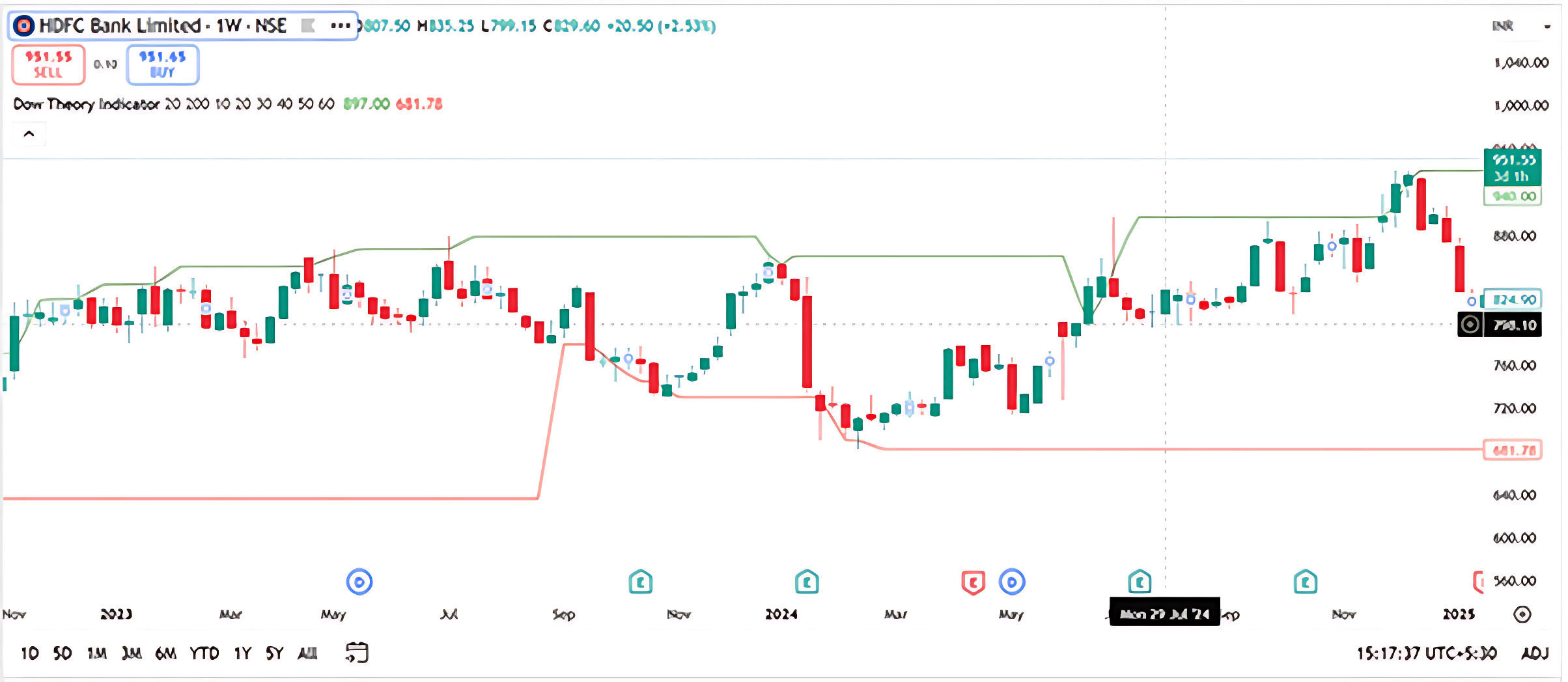
- डॉव सिद्धांत के अनुसार, उच्च और उच्च निम्न की एक श्रृंखला क्या दर्शाती है?
- A) साइडवेज़ मार्केट
- B) डाउनट्रेंड
- C) अपट्रेंड
- D) अस्थिरता में वृद्धि
सही उत्तर: C) अपट्रेंड
क्यों: उच्च और उच्च निम्न का एक निरंतर पैटर्न डॉव सिद्धांत के तहत बुलिश ट्रेंड का संकेत देता है.
- चार्ट में, सपोर्ट लेवल ₹681.78 पर चिह्नित किया गया है. यह स्तर क्या दर्शाता है?
- A) प्राइस सीलिंग
- B) गिरावट के दौरान संभावित रिवर्सल ज़ोन
- C) ब्रेकआउट लक्ष्य
- D) मूविंग एवरेज
सही उत्तर: B) गिरावट के दौरान संभावित रिवर्सल ज़ोन
क्यों: सपोर्ट वह जगह है जहां खरीदने का इंटरेस्ट उभर सकता है, बंद हो सकता है या डाउनट्रेंड को रिवर्स कर सकता है.
- अगर कीमत मजबूत वॉल्यूम के साथ ₹991.55 के रेजिस्टेंस लेवल से अधिक हो जाती है, तो डॉव थ्योरी क्या सुझाव देती है?
- A) ट्रेंड एक्सहॉशन
- B) गलत ब्रेकआउट
- C) अपट्रेंड की निरंतरता
- D) बेयर मार्केट में प्रवेश
सही उत्तर: C) अपट्रेंड की निरंतरता
क्यों: रेजिस्टेंस से ऊपर का ब्रेकआउट बुलिश स्ट्रेंथ की पुष्टि करता है और ट्रेंड को जारी रखने का संकेत दे सकता है.
- डॉव थ्योरी ट्रेंड कन्फर्मेशन में वॉल्यूम क्या भूमिका निभाता है?
- A) वॉल्यूम को अनदेखा किया जाता है
- B) उच्च वॉल्यूम ट्रेंड की दिशा की पुष्टि करता है
- C) कम वॉल्यूम रिवर्सल की पुष्टि करता है
- D) वॉल्यूम केवल इंट्राडे चार्ट में मायने रखता है
सही उत्तर: B) उच्च वॉल्यूम ट्रेंड की दिशा की पुष्टि करता है
क्यों: वॉल्यूम डॉव सिद्धांत में एक प्रमुख घटक है-यह प्राइस मूवमेंट की ताकत को सत्यापित करता है.
16.11 मुख्य टेकअवे

- मूल: डॉव सिद्धांत वॉल स्ट्रीट जर्नल के सह-संस्थापक चार्ल्स एच. डाउ द्वारा विकसित बाजार निरीक्षणों का एक समूह है. इस सिद्धांत का नाम डाउ ने स्वयं नहीं लिया था, लेकिन बाद में उनके सहयोगी एस. ए. नेल्सन ने स्पष्ट किया था.
- उद्देश्य: यह सिद्धांत समग्र मार्केट ट्रेंड का विश्लेषण करने के लिए एक फ्रेमवर्क प्रदान करता है और इसे कीमत और आर्थिक पैटर्न का एक विश्वसनीय गेज माना जाता है.
- प्राइमरी ट्रेंड: यह मार्केट की मुख्य, लॉन्ग-टर्म दिशा को दर्शाता है, जो या तो बुलिश (एक अपट्रेंड) या बेयरिश (एक डाउनट्रेंड) हो सकता है.
- द्वितीयक ट्रेंड: ये शॉर्ट-टर्म मूवमेंट हैं जो प्राइमरी ट्रेंड के खिलाफ होते हैं, जैसे अपट्रेंड में अस्थायी पुलबैक या डाउनट्रेंड में रैली.
- कन्फर्मेशन का महत्व: डॉव सिद्धांत इस बात पर जोर देता है कि जब औद्योगिक औसत और रेलमार्ग (अब परिवहन) दोनों एक ही दिशा में औसत कदम उठाते हैं तो एक ट्रेंड की पुष्टि की जाती है. यह सिद्धांत विभिन्न मार्केट सेक्टर में कन्फर्मेशन के महत्व को दर्शाता है.
- वॉल्यूम और ट्रेंड: वॉल्यूम एक मूव कन्फर्म करने के लिए महत्वपूर्ण है. जब इसे मजबूत ट्रेडिंग वॉल्यूम द्वारा समर्थित किया जाता है, तो कीमत में ब्रेकआउट या ब्रेकडाउन को अधिक मान्य माना जाता है. इसके विपरीत, कमजोर वॉल्यूम गलत मूव या संकोच का सुझाव दे सकता है.
- ट्रेडिंग चेकलिस्ट के साथ एकीकृत करना: डॉव सिद्धांत का उपयोग ट्रेडिंग चेकलिस्ट में पुष्टिकरण की परत के रूप में किया जा सकता है. एक ऐसा ट्रेड जो व्यापक मार्केट के प्राथमिक ट्रेंड के साथ मेल खाता हो, उसे अधिक विश्वसनीय माना जाता है.
- मार्केट साइकोलॉजी: सिद्धांत के सिद्धांत, जैसे बुल मार्केट के तीन चरण (एक्यूम्युलेशन, पब्लिक पार्टिसिपेशन और एक्सेस), मार्केट साइकोलॉजी को समझने पर आधारित हैं. यह सुझाव देता है कि कीमतें सभी उपलब्ध जानकारी को दर्शाती हैं और इतिहास अपने आप दोहराता है.
- शॉर्ट-टर्म टूल नहीं: डॉव सिद्धांत लॉन्ग-टर्म मार्केट ट्रेंड का विश्लेषण करने के लिए सबसे प्रभावी है और इसे शॉर्ट-टर्म ट्रेडिंग के लिए डिज़ाइन नहीं किया गया है. इसका मुख्य उद्देश्य ट्रेडर्स को मार्केट की बड़ी तस्वीर को समझने में मदद करना है.
- जोखिम प्रबंधन: यह अध्याय रिस्क मैनेजमेंट के महत्व पर जोर देता है, जिसमें स्टॉप-लॉस सेट करना और यह सुनिश्चित करना शामिल है कि संभावित रिवॉर्ड रिस्क से अधिक हो. यह फ्रेमवर्क ट्रेडर्स को आवेगपूर्ण, भावनात्मक निर्णयों से बचने में मदद करता है.
16.1 डॉव सिद्धांत सिद्धांत
चार्ल्स एच. डॉ, राष्ट्र के अग्रणी फाइनेंशियल समाचार प्रदाता डॉ, जोन्स और कंपनी के मास्टरमाइंड हैं, जो वॉल स्ट्रीट जर्नल के सह-मालिक हैं, जो 1902 में उनके निधन तक इसके संपादक के रूप में कार्य करते हैं. उन्होंने अपने करियर की शुरुआत में स्टॉक सट्टेबाजी से संबंधित कुछ संपादकीय लिखे, जो स्टॉक मार्केट के बार-बार होने वाले पैटर्न के बारे में अपनी अंतर्दृष्टि का एकमात्र प्रत्यक्ष विवरण प्रदान करते हैं. डाउ जोन्स एवरेज में रेलवे और औद्योगिक स्टॉक की दैनिक औसत कीमतों से ये जानकारी सामने आई है.
"डो थ्योरी" लेबल श्री डाउ ने अपने स्टॉक मार्केट के अवलोकनों का वर्णन नहीं किया. यह उनके सहयोगी एस. ए. नेल्सन का निर्माण था, जिन्होंने 1902 में "एबीसी ऑफ स्टॉक सट्टेबाजी" की रचना की थी. नेल्सन वह व्यक्ति था जिसने डॉव की तकनीकों को सुलभ तरीके से प्रसारित करने का प्रयास किया. कई समृद्ध व्यक्ति अब डाउ जोन्स रेल और औद्योगिक औसत के रोजमर्रा के उतार-चढ़ाव से प्राप्त संकेतों को कीमत और आर्थिक पैटर्न दोनों के सबसे विश्वसनीय माप के रूप में देखते हैं, जो अक्सर इन औसत उतार-चढ़ाव से प्राप्त निष्कर्षों को दर्शाते हैं“डॉव सिद्धांत. “
कई समृद्ध व्यक्ति अब डॉ-जोन्स रेल और औद्योगिक औसत के रोजमर्रा के उतार-चढ़ाव से प्राप्त संकेतों को कीमत और आर्थिक पैटर्न दोनों के सबसे विश्वसनीय माप के रूप में देखते हैं, जो अक्सर इन औसत उतार-चढ़ाव से प्राप्त निष्कर्षों को दर्शाते हैं “डॉव सिद्धांत. “
1897 तक, डाउ, जोन्स और कंपनी ने केवल एक स्टॉक औसत बनाए रखा; हालांकि, उस वर्ष की शुरुआत में, रेलवे और औद्योगिक स्टॉक दोनों के लिए अलग औसत पेश किए गए. डॉव की लेखन अवधि के दौरान, उनके पास विश्लेषण के लिए दोनों औसत के केवल पांच वर्ष के इतिहास तक पहुंच थी. आश्चर्यजनक रूप से, इतने कम समय के भीतर, उन्होंने इन दोहरी औसतों पर आधारित कीमतों के उतार-चढ़ाव के एक उल्लेखनीय मूल्यवान सिद्धांत के लिए आधार तैयार किया. उनके बाद के कुछ निष्कर्ष गलत साबित हुए, लेकिन बुनियादी सिद्धांतों ने उनकी मृत्यु के बाद 28 वर्षों तक बाज़ार की गतिविधि के खिलाफ मूल्यांकन करने पर उनकी वैधता प्रदर्शित की है.
1902 से ऑटोमोबाइल और डॉव सिद्धांत के विकास में कुछ समानताएं हैं. 1902 के ऑटोमोबाइल में, हमारे इंजीनियरों ने बाद में बेहतर मोटिव पावर, डिमाउंटेबल रिम, इलेक्ट्रिक लाइट, सेल्फ स्टार्टर और अन्य आवश्यक रिफाइनमेंट को जोड़ा, जिससे अंततः हमें परिवहन के विश्वसनीय और सुविधाजनक साधन मिले. इसी तरह, हैमिल्टन ने 1902 और 1929 के बीच डॉव सिद्धांत का परीक्षण और सुधार किया. वर्षों के दौरान औसत के रिकॉर्ड के रूप में उन्होंने हमें स्टॉक की कीमतों और बिज़नेस गतिविधि दोनों के ट्रेंड का पूर्वानुमान करने की एक अच्छी परिभाषित और असाधारण रूप से विश्वसनीय विधि प्रदान की.
डॉव थ्योरी तकनीकी विश्लेषण में बुनियादी ढांचा है जो मुख्य स्टॉक मार्केट इंडेक्सों के मूवमेंट के आधार पर मार्केट ट्रेंड को दर्शाती है, जो मूल रूप से डाउ जोन्स इंडस्ट्रियल एवरेज और डाउ जोन्स ट्रांसपोर्टेशन एवरेज के आधार पर होती है. सिद्धांत यह प्रस्ताव करता है कि बाजार तीन रुझानों में आगे बढ़ रहा है
Pरिमेरी ट्रेंड : मार्केट की लॉन्ग-टर्म दिशा, लंबे समय तक चलने वाले महीने या साल
Sइकॉन्डरी ट्रेंड : एक अस्थायी सुधार या रैली जो प्राइमरी ट्रेंड के खिलाफ चलती है, जो कुछ सप्ताह से कुछ महीनों तक चलती है
नाबालिग ट्रेंड : शॉर्ट-टर्म उतार-चढ़ाव जिन्हें अक्सर मार्केट के शोर माना जाता है
ट्रेंड की पुष्टि केवल तभी की जाती है जब दोनों इंडेक्स एक ही दिशा में चलते हैं. यह सिद्धांत एक सहायक संकेतक के रूप में वॉल्यूम पर भी ज़ोर देता है और यह सुझाव देता है कि मार्केट चरण में चल रही सभी उपलब्ध जानकारी को दर्शाते हैं: संचयन, भागीदारी और वितरण. ट्रेडर डॉव सिद्धांत का उपयोग व्यापक मार्केट की दिशा की पहचान करने और उसके अनुसार अपनी रणनीतियों को संरेखित करने के लिए करते हैं.
डॉव सिद्धांत सिद्धांत
- मार्केट डिस्काउंट सब कुछ: इस सिद्धांत का मतलब है कि सभी ज्ञात जानकारी, आर्थिक डेटा, राजनीतिक घटनाएं, कंपनी की आय और यहां तक कि इन्वेस्टर मनोविज्ञान भी पहले से ही स्टॉक की कीमतों में दिखाई दे रहा है. डॉव सिद्धांत के अनुसार, प्राइस मूवमेंट बेतरतीब नहीं हैं, बल्कि सामूहिक मार्केट ज्ञान से आकार लेते हैं. इसलिए, टेक्निकल एनालिस्ट समाचार या आर्थिक रिपोर्ट की अलग से व्याख्या करने की कोशिश करने के बजाय प्राइस चार्ट पर ध्यान केंद्रित करते हैं.
- मार्केट में तीन ट्रेंड में बदलाव: डॉव थियरी प्राइस मूवमेंट को तीन अलग-अलग ट्रेंड में वर्गीकृत करता है. प्राइमरी ट्रेंड मार्केट की लॉन्ग-टर्म दिशा है, जो महीनों या वर्षों तक चल सकती है और निवेशकों के लिए सबसे महत्वपूर्ण है. सेकेंडरी ट्रेंड एक अस्थायी सुधार या रैली है जो प्राइमरी ट्रेंड के खिलाफ चलती है और आमतौर पर कुछ हफ्तों से कुछ महीनों तक रहती है. मामूली ट्रेंड में दैनिक या साप्ताहिक रूप से होने वाले शॉर्ट-टर्म उतार-चढ़ाव होते हैं और इन्हें अक्सर मार्केट के शोर माना जाता है. इन ट्रेंड को समझने से ट्रेडर को अपनी स्ट्रेटेजी को व्यापक मार्केट डायरेक्शन के साथ संरेखित करने में मदद मिलती है.
- प्रत्येक प्राथमिक ट्रेंड में तीन चरण होते हैं: पहला चरण संचय है, जहां सूचित निवेशक सामान्य सार्वजनिक सूचनाओं से पहले चुपचाप खरीदना या बेचना शुरू करते हैं. दूसरा चरण सार्वजनिक भागीदारी है, जब व्यापक मार्केट ट्रेंड में शामिल होता है और कीमतें अधिक तेज़ी से बढ़ती हैं. तीसरा चरण डिस्ट्रीब्यूशन है, जहां शुरुआती निवेशक अपनी पोजीशन से बाहर निकलना शुरू करते हैं, जबकि जनता उत्साही रूप से ट्रेड कर रही है. इन चरणों को पहचानने से ट्रेडर को बहुत देर से प्रवेश करने या बहुत जल्दी बाहर निकलने से बचने में मदद मिल सकती है.
- दोनों इंडेक्स सहमत होने पर ट्रेंड की पुष्टि की जाती है: डॉव थ्योरी ने मूलतः Dow Jones Industrial Average और Dow Jones Transportation Average का इस्तेमाल बाज़ार के रुझानों की पुष्टि के लिए किया. ट्रेंड को केवल तभी मान्य माना जाता है जब दोनों इंडेक्स एक ही दिशा में चलते हैं. उदाहरण के लिए, अगर औद्योगिक स्टॉक बढ़ रहे हैं लेकिन परिवहन स्टॉक गिर रहे हैं, तो ट्रेंड की पुष्टि नहीं की जाती है. यह सिद्धांत ट्रेंड को सत्यापित करने में व्यापक मार्केट भागीदारी के महत्व पर जोर देता है.
- वॉल्यूम को ट्रेंड कन्फर्म करना चाहिए: वॉल्यूम किसी निर्धारित अवधि के दौरान ट्रेड किए गए शेयरों की संख्या को दर्शाता है. डॉव सिद्धांत में, अपट्रेंड के दौरान बढ़ती मात्रा मजबूत खरीद रुचि को दर्शाती है और ट्रेंड की ताकत की पुष्टि करती है. इसके विपरीत, रैली के दौरान घटती मात्रा कम होने से कमजोरी या विश्वास की कमी का संकेत मिल सकता है. वॉल्यूम एक सहायक इंडिकेटर के रूप में कार्य करता है जो ट्रेडर को यह आकलन करने में मदद करता है कि ट्रेंड जारी रखने या रिवर्स करने की संभावना है.
- एक ट्रेंड तब तक प्रभावी रहता है जब तक कि कोई स्पष्ट रिवर्सल नहीं होता है : यह सिद्धांत ट्रेडर्स को यह मानने की सलाह देता है कि जब तक रिवर्सल का स्पष्ट प्रमाण न हो तब तक ट्रेंड जारी रहेगा. अस्थायी पुलबैक या रैलियों का मतलब यह नहीं है कि ट्रेंड समाप्त हो गया है. केवल जब प्राइस एक्शन मुख्य सपोर्ट या रेजिस्टेंस लेवल को तोड़ता है और वॉल्यूम और इंडेक्स एग्रीमेंट द्वारा कन्फर्म किया जाता है, तो ट्रेडर को ट्रेंड में बदलाव की संभावना पर विचार करना चाहिए. यह शॉर्ट-टर्म अस्थिरता के आधार पर समय से पहले निर्णय लेने से बचने में मदद करता है.
16.2 मार्केट के विभिन्न चरण
- संचय चरण: यह चरण तब शुरू होता है जब मार्केट लंबे समय तक डाउनट्रेंड के बाद नीचे आ गया है. कीमतें कम होती हैं, भावना निराशावादी होती है, और अधिकांश रिटेल निवेशक या तो डर रखते हैं या स्वार्थहीन होते हैं. हालांकि, सूचित निवेशक और संस्थान चुपचाप स्टॉक खरीदना शुरू करते हैं, अंडरवैल्यूएशन को पहचानते हैं और भविष्य में अपट्रेंड की उम्मीद करते हैं. इस चरण के दौरान प्राइस मूवमेंट सूक्ष्म और अक्सर रेंज-बाउंड होते हैं, क्योंकि खरीद गतिविधि धीरे-धीरे होती है और अभी तक व्यापक मार्केट के लिए दिखाई नहीं देती है. वॉल्यूम थोड़ा बढ़ना शुरू हो सकता है, लेकिन कोई व्यापक उत्साह नहीं है. यह चरण उन लोगों द्वारा रणनीतिक स्थिति को दर्शाता है जो मार्केट साइकिल को समझते हैं और भीड़ से पहले काम करने के लिए तैयार हैं.
- मार्क-अप फेज : एक बार संचयन एक टिप पॉइंट तक पहुंचने के बाद, कीमतें अधिक ध्यान से बढ़ना शुरू हो जाती हैं. इस चरण में बढ़ती आशावाद, आर्थिक संकेतकों में सुधार और जनता की भागीदारी बढ़ रही है. जैसे-जैसे अधिक निवेशक अपट्रेंड को पहचानते हैं, मांग में तेज़ी आती है और कीमतें लगातार बढ़ रही हैं. तकनीकी ब्रेकआउट, उच्च उच्च और उच्च निम्न, और विस्तार आयतन इस चरण की सामान्य विशेषताएं हैं. मीडिया कवरेज पॉजिटिव हो जाती है, और रिटेल निवेशक मार्केट में प्रवेश करना शुरू कर देते हैं, जो अक्सर लापता होने के डर से प्रेरित होते हैं. यह आमतौर पर साइकिल का सबसे लंबा और सबसे लाभदायक चरण है, जहां ट्रेंड-फॉलोइंग स्ट्रेटेजी अच्छी तरह से काम करती हैं और विभिन्न क्षेत्रों में मोमेंटम बनता है.
- वितरण चरण: इस अंतिम चरण में, कीमतें काफी बढ़ गई हैं और वैल्यूएशन में वृद्धि हो सकती है. स्मार्ट मनी और संस्थागत निवेशक अपनी पोजीशन से बाहर निकलना शुरू करते हैं, जबकि रिटेल निवेशक लगातार खरीद रहे हैं. मार्केट सेंटीमेंट आशावादी है, खबर बहुत सकारात्मक है, और कई लोगों का मानना है कि रैली अनिश्चितकाल तक जारी रहेगी. हालांकि, प्राइस एक्शन अस्थिर हो जाता है, वॉल्यूम बिना स्पष्ट दिशा के बढ़ सकता है, और थकान के लक्षण दिखाई देने लगते हैं. इस चरण में अक्सर गलत ब्रेकआउट और बढ़ी हुई अस्थिरता शामिल होती है. अंत में, बिक्री दबाव मांग से अधिक होता है, जिससे रिवर्सल हो जाता है और नए डाउनट्रेंड की शुरुआत होती है. इस चरण को पहचानना महत्वपूर्ण है ताकि नीचे दी गई गिरावट में फंसने से बचा जा सके.
16.3 डॉव पैटर्न
जैसे कैंडलस्टिक चार्ट प्रमुख कीमत पैटर्न को प्रकट करते हैं, डॉव थ्योरी भी पहचान योग्य फॉर्मेशन का एक सेट प्रदान करता है जिसका उपयोग ट्रेडर संभावित ट्रेडिंग अवसरों को पहचानने के लिए कर सकते हैं. ये पैटर्न मार्केट के व्यवहार की व्याख्या करने और ट्रेंड में रिवर्सल या निरंतरता का अनुमान लगाने में मदद करते हैं. सबसे अधिक अध्ययन किए जाने वाले निम्न हैं
- डबल टॉप और डबल बॉटम: ट्रेंड रिवर्सल पैटर्न तब होता है जब कीमत दो बार प्रमुख सपोर्ट या रेजिस्टेंस लेवल का टेस्ट करती है, लेकिन यह ब्रेक नहीं हो पाता है, जिससे मार्केट की दिशा में संभावित बदलाव का संकेत मिलता है.
- ट्रिपल बॉटम/टॉप: डबल फॉर्मेशन के समान, लेकिन तीन प्राइस टेस्ट के साथ, इसे एक मजबूत रिवर्सल सिग्नल बनाता है
- ट्रेडिंग रेंज: समेकन की अवधि जिसमें कीमत निर्धारित समर्थन और प्रतिरोध स्तर के बीच साइडवे को मूव करती है, जो अक्सर ब्रेकआउट से पहले होती है.
- ध्वज निर्माण: एक तेज, लगभग वर्टिकल रैली के बाद होता है और ट्रेंड दोबारा शुरू होने से पहले एक संक्षिप्त विराम या पुलबैक को दर्शाता है. यह ट्रेडर्स के लिए दूसरी एंट्री का अवसर प्रदान कर सकता है
हालांकि सपोर्ट और रेजिस्टेंस इन सभी पैटर्न में महत्वपूर्ण भूमिका निभाते हैं, विशेष रूप से एंट्री, एग्जिट और स्टॉप-लॉस लेवल सेट करने के लिए-उनके बुनियादी महत्व को पहले से ही उस अवधारणा के लिए समर्पित एक पहले अध्याय में कवर किया गया है.
16.4 डबल बॉटम और टॉप पैटर्न
डबल बॉटम फॉर्मेशन
डबल बॉटम एक बुलिश रिवर्सल पैटर्न है जो आमतौर पर निरंतर डाउनट्रेंड के बाद बनता है. यह संकेत देता है कि बिक्री दबाव समाप्त हो सकता है और खरीदार नियंत्रण लेना शुरू कर रहे हैं.
संरचना और मनोविज्ञान:
- प्रथम तल:कीमत गिरती है और सपोर्ट लेवल को हिट करती है, फिर थोड़ा वापस बाउंस हो जाती है. इसे अक्सर एक नियमित पुलबैक के रूप में देखा जाता है.
- द्वितीय तल:कीमत फिर से पहले बॉटम के समान स्तर पर आ जाती है, लेकिन कम नहीं हो पाती है. इससे पता चलता है कि विक्रेताओं की ताकत कम हो रही है.
- नेकलाइन ब्रेकआउट:दूसरे बॉटम के बाद, प्राइस रैलियां और इंटरमीडिएट रेजिस्टेंस (जिसे नेकलाइन कहा जाता है) से ऊपर टूट जाती हैं, जो रिवर्सल की पुष्टि करती है.
यह पैटर्न भावना में बदलाव को दर्शाता है. स्मार्ट मनी पहले बॉटम के दौरान जमा हो सकती है, और दूसरा बॉटम उनके विश्वास की पुष्टि करता है. जब नेकलाइन वॉल्यूम के साथ टूट जाती है, तो ट्रेडर अक्सर लंबी पोजीशन में प्रवेश करते हैं, जिसमें स्टॉप-लॉस को दूसरे बॉटम से नीचे रखा जाता है और बॉटम और नेकलाइन के बीच ऊंचाई के बराबर मूव को टारगेट किया जाता है.
डबल टॉप फॉर्मेशन
डबल टॉप पैटर्न: स्ट्रक्चर, डिटेक्शन और इंटरप्रिटेशन
डबल टॉप एक क्लासिक बेयरिश रिवर्सल पैटर्न है जो तब बनता है जब कीमत हाई हो जाती है, वापस खींचती है, और फिर इसे बिना ब्रेक किए उस हाई को रीटेस्ट करती है. दो शिखर लगभग एक ही स्तर पर होते हैं, जो मध्यवर्ती निम्न से अलग होते हैं. अगर कीमत दूसरे टॉप से ऊपर ब्रेक करने में विफल रहती है और इसके बजाय इंटरमीडिएट लो से नीचे गिर जाती है, तो यह अक्सर डाउनवर्ड मूव की शुरुआत का संकेत देता है. अपेक्षित गिरावट आमतौर पर टॉप्स और लो के बीच वर्टिकल दूरी के बराबर होती है.
संरचना और मनोविज्ञान:
- फर्स्ट टॉप:कीमत बढ़ती है और रेज़िस्टेंस लेवल को हिट करती है, फिर थोड़ा वापस आ जाती है. इसे अक्सर एक सामान्य सुधार के रूप में देखा जाता है.
- सेकेंड टॉप:कीमत फिर से एक समान स्तर पर पहुंचती है, लेकिन यह अधिक नहीं हो पाता है. यह कमजोर होने की मांग को दर्शाता है.
- नेकलाइन ब्रेकडाउन:दूसरे टॉप के बाद, कीमत गिरती है और इंटरमीडिएट सपोर्ट (नेकलाइन) से नीचे टूट जाती है, जो रिवर्सल की पुष्टि करती है.
इस पैटर्न से पता चलता है कि मार्केट ने दो बार रेजिस्टेंस लेवल टेस्ट किया है और फेल हो गया है. वॉल्यूम के साथ नेकलाइन टूटने के बाद, ट्रेडर अक्सर शॉर्ट पोजीशन शुरू करते हैं, जो दूसरे टॉप से स्टॉप-लॉस रखता है और टॉप और नेकलाइन के बीच ऊंचाई के बराबर गिरावट को लक्ष्य करता है.
16.5 ट्रिपल टॉप और बॉटम
ट्रिपल टॉप पैटर्न
ट्रिपल टॉप एक बेयरिश रिवर्सल पैटर्न है जो एक्सटेंडेड अपट्रेंड के बाद बनता है. यह संकेत देता है कि मार्केट बार-बार प्रतिरोध स्तर को तोड़ने में विफल रहा है, जिससे कमजोर खरीद दबाव और डाउनट्रेंड की ओर संभावित बदलाव का संकेत मिलता है.
संरचना और मनोविज्ञान:
- तीन पीक्स:कीमत तीन गुना अधिक होती है, हर बार प्रतिरोध को हिट करने के बाद वापस खींचती है. हाई मोटे तौर पर बराबर होते हैं, मामूली वेरिएशन की अनुमति होती है.
- इंटरवेंनिंग लोस:प्रत्येक शिखर के बीच, कीमत दो मध्यवर्ती निचले स्तर बनाने के लिए कम हो जाती है, जिससे एक क्षैतिज समर्थन स्तर बनता है जिसे नेकलाइन के रूप में जाना जाता है.
- ब्रेकडाउन कन्फर्मेशन:पैटर्न की पुष्टि तब की जाती है जब कीमत तीसरे शिखर के बाद गर्दन के नीचे बंद हो जाती है. यह ब्रेकडाउन दर्शाता है कि विक्रेताओं ने नियंत्रण प्राप्त किया है.
ट्रिपल टॉप की रेजिस्टेंस लेवल पर लगातार सेलिंग प्रेशर को दर्शाता है. ट्रेडर अक्सर शॉर्ट पोजीशन में प्रवेश करने से पहले नेकलाइन के नीचे एक निर्णायक बंद होने की प्रतीक्षा करते हैं. अपेक्षित गिरावट आमतौर पर शिखरों और गर्दन के बीच लंबवत दूरी के बराबर होती है.
ट्रिपल बॉटम पैटर्न
ट्रिपल बॉटम एक बुलिश रिवर्सल पैटर्न है जो लंबे डाउनट्रेंड के बाद दिखाई देता है. यह सुझाव देता है कि मार्केट ने तीन बार सपोर्ट लेवल का टेस्ट किया है और इसे नीचे तोड़ने में विफल रहा है, जो मांग को मजबूत करने और संभावित ऊपर की ओर कदम को दर्शाता है.
संरचना और मनोविज्ञान:
- तीन ट्रफ:कीमत तीन गुना समान कम हो जाती है, हर बार सपोर्ट को हिट करने के बाद वापस बाउंस हो जाती है. ये निचले स्तर लगभग समान हैं, जिससे मजबूत खरीद इंटरेस्ट दिखाई दे रहा है.
- इंटरवेंनिंग हाई:प्रत्येक ट्रफ के बीच, कीमत दो इंटरमीडिएट हाई बनाने के लिए बढ़ जाती है, जिससे प्रतिरोध की एक गर्दन पैदा होती है.
- ब्रेकआउट कन्फर्मेशन:पैटर्न की पुष्टि तब की जाती है जब कीमत तीसरी ट्रफ के बाद नेकलाइन के ऊपर बंद हो जाती है. यह ब्रेकआउट संकेत देता है कि खरीदारों ने नियंत्रण लिया है.
ट्रिपल बॉटम दिखाता है कि विक्रेताओं ने बार-बार कीमतों को कम करने में विफल रहे हैं. जब नेकलाइन वॉल्यूम के साथ टूट जाती है, तो ट्रेडर अक्सर लंबी पोजीशन में प्रवेश करते हैं. अपेक्षित वृद्धि आमतौर पर ट्रफ और नेकलाइन के बीच लंबवत दूरी के बराबर होती है.
16.6 ट्रेडिंग रेंज
ट्रेडिंग रेंज को समझें
A ट्रेडिंग रेंज एक क्षैतिज कीमत चैनल है जहां मार्केट एक निर्धारित समर्थन और प्रतिरोध स्तर के बीच साइडवे को मूव करता है. यह अनिश्चितताओं या समेकन के एक चरण को दर्शाता है, जहां न तो खरीदार और न ही विक्रेताओं का प्रभुत्व है. आपके चार्ट में, यह रेंज जून के अंत और सितंबर के अंत के बीच स्पष्ट रूप से दिखाई देती है.
- ऊपरी सीमा (प्रतिरोध): इस स्तर का लगभग 25,200 रुपये कई बार टेस्ट किया गया है, लेकिन यह सुनिश्चित रूप से ब्रेक नहीं हो पाया है. यह उस रेंज की सीलिंग को चिह्नित करता है जहां सेलिंग प्रेशर बढ़ जाता है. जुलाई के अंत और सितंबर की शुरुआत के बीच, निफ्टी 50 इंडेक्स ने हर बार 25,200 रुपये से अधिक बढ़ने के कई प्रयास किए, इस स्तर को छूने या उसके पास पहुंचने के तुरंत बाद कीमत वापस कर दी गई. ये शिखर कैंडलस्टिक टॉप के रूप में दिखाई देते हैं जो क्षैतिज रूप से संरेखित होते हैं, जो एक प्राकृतिक प्रतिरोध क्षेत्र बनाते हैं.
- निचली सीमा (सपोर्ट): लगभग 24,600 रुपये इस स्तर ने फ्लोर के रूप में काम किया है, जिससे और गिरावट की रोकथाम हुई है. खरीदार यहां कदम रखते हैं, जिससे बाउंस होता है.
वर्तमान कीमत: 24,890.65 INR index वर्तमान में रेंज के बीच ट्रेडिंग कर रहा है, जो अनिश्चितताओं का संकेत देता है. "सेल" इंडिकेटर ऊपरी बैंड से हाल ही में अस्वीकृति या कस्टम इंडिकेटर से सिग्नल पर आधारित हो सकता है.
चार्ट से विजुअल क्यूज़
- हॉरिजॉन्टल लाइनमार्किंग सपोर्ट और रेजिस्टेंस अच्छी तरह से परिभाषित हैं, जो टेक्स्टबुक रेंज-बाउंड सेटअप को दर्शाता है.
- रेंज बाउंड-रेव एनआर - 12-25-12-12label का सुझाव है कि एक कस्टम इंडिकेटर इस समेकन जोन की पहचान कर रहा है, संभवतः अस्थिरता संकुचन या रिवर्सल लॉजिक का उपयोग कर रहा है.
- कैंडलस्टिक के व्यवहार में 25,200 के आस-पास बार-बार अस्वीकृति दिखाई देती है और 24,600 के आस-पास रिबाउंड होता है, जिससे रेंज की सीमाएं मजबूत होती हैं.
- हाल ही में डाउनवर्ड मूवमेंट से पता चलता है कि जब तक ब्रेकआउट नहीं होता है, तब तक index सपोर्ट की ओर वापस जा सकता है.
ट्रेडिंग के प्रभाव
- रेंज ट्रेडिंग स्ट्रेटजी: ट्रेडर 24,600 के आस-पास खरीदने और 25,200 के आस-पास बेचने पर विचार कर सकते हैं, ताकि रेंज के बाहर सख्त स्टॉप-लॉस का उपयोग किया जा सके.
- ब्रेकआउट वॉच: वॉल्यूम के साथ 25,200 से अधिक बंद होने से बुलिश ब्रेकआउट हो सकता है, जबकि 24,600 से कम ड्रॉप से बेयरिश मूव हो सकता है.
- न्यूट्रल बायस: ब्रेकआउट होने तक, मार्केट कंसोलिडेशन में रहता है, और डायरेक्शनल ट्रेड में अधिक रिस्क होता है.
16.7 रेंज ब्रेकआउट
स्टॉक ने अपनी स्थापित रेंज से तीन ब्रेकआउट प्रयास किए, लेकिन केवल तीसरा निर्णायक साबित हुआ. चार्ट के बाईं ओर देखा गया पहला प्रयास, विश्वास-परिमाण की कमी कम थी और गति न्यूनतम थी, जिसके परिणामस्वरूप तुरंत रिवर्सल हुआ. दूसरा ब्रेकआउट मजबूत वॉल्यूम दिखा रहा है, फिर भी मूव को बनाए रखने के लिए पर्याप्त मोमेंटम नहीं ले सका, जिससे यह एक और गलत सिग्नल बन गया है. यह तीसरा प्रयास था जिसने एक वास्तविक ब्रेकआउट के हॉलमार्क गुण प्रदर्शित किए: मजबूत ऊपर की गति के साथ मजबूत वॉल्यूम, जो मार्केट की दिशा में स्पष्ट बदलाव की पुष्टि करता है.
ट्रेडिंग रेंज ब्रेकआउट
जब कोई स्टॉक मजबूत वॉल्यूम के साथ अच्छी तरह से परिभाषित कीमत रेंज से बाहर हो जाता है, तो ट्रेडर अक्सर इसे ट्रेड में प्रवेश करने के लिए संकेत मानते हैं. हालांकि, वॉल्यूम अकेले ब्रेकआउट समीकरण के केवल एक हिस्से की पुष्टि करता है. दूसरा मुख्य कारक, मोमेंटम का अनुमान लगाना कठिन है. क्योंकि इस बात की कोई गारंटी नहीं है कि मोमेंटम का पालन होगा, इसलिए ट्रेडर के लिए ट्रेडिंग ब्रेकआउट के दौरान हमेशा स्टॉप-लॉस का उपयोग करना आवश्यक है.
उदाहरण: मान लीजिए कि एक स्टॉक कई हफ्तों से ₹ 215 से ₹ 260 के बीच ट्रेडिंग कर रहा है. एक दिन, यह ₹ 260 से अधिक ब्रेक होता है और ₹ 266 से ट्रेडिंग शुरू करता है. ट्रेडर ₹266 तक लंबे समय तक जाने का विकल्प चुन सकता है, रिस्क को मैनेज करने के लिए ब्रेकआउट लेवल से कम ₹260 पर स्टॉप-लॉस लगा सकता है.
वैकल्पिक रूप से, कल्पना करें कि स्टॉक ₹215 से कम हो जाता है और ₹208 तक गिर जाता है. इस मामले में, ट्रेडर स्टॉप-लॉस लेवल के रूप में ₹215 का उपयोग करके ₹208 में शॉर्ट पोजीशन शुरू कर सकता है.
ट्रेड ऐक्टिव होने के बाद, अगर ब्रेकआउट वास्तविक है, तो कीमत पिछले रेंज की चौड़ाई से कम से कम मूव होने की उम्मीद है. इस उदाहरण में, रेंज की चौड़ाई ₹260 - ₹215 = ₹45 है. इसलिए, अपसाइड ब्रेकआउट के लिए, न्यूनतम लक्ष्य ₹ 266 + ₹ 45 = ₹ 311 होगा. डाउनसाइड ब्रेकडाउन के लिए, लक्ष्य ₹208 - ₹45 = ₹163 होगा.
16.8 ध्वज निर्माण
फ्लैग पैटर्न आमतौर पर स्टॉक की कीमत में तेज़, लगभग वर्टिकल रैली के बाद उभरता है. यह रैली "फ्लैगपोल" की तरह काम करती है इस वृद्धि के बाद, स्टॉक एक संक्षिप्त विराम या पुलबैक चरण में प्रवेश करता है, जहां कीमतें दो समानांतर लाइनों के भीतर नीचे या साइडवेज़ में आ जाती हैं - जो "फ्लैग" बनाती हैं. यह सुधार आमतौर पर अल्पकालिक होता है, जो 5 से 15 ट्रेडिंग सेशन के बीच रहता है.
ऐसा क्यों होता है
एक मजबूत रैली के बाद, कई रिटेल ट्रेडर लाभ बुक करना शुरू कर देते हैं. इस बिक्री दबाव के कारण कीमत में अस्थायी कमी होती है. हालांकि, संस्थागत निवेशक या "स्मार्ट मनी" अक्सर निवेश करते रहते हैं, जिससे कुल भावनाएं तेजी से बढ़ती हैं. क्योंकि सुधार खुदरा बिक्री द्वारा संचालित होता है और फंडामेंटल में बदलाव नहीं होता है, इसलिए फ्लैग फेज के दौरान वॉल्यूम कम होता है.
बिक्री के बाद, स्टॉक अक्सर नए मोमेंटम और वॉल्यूम के साथ फ्लैग से बाहर निकलता है, जो अपनी ऊपर की यात्रा को फिर से शुरू करता है. यह ब्रेकआउट आमतौर पर तेज़ होता है, जो शुरुआती रैली से चूकने वाले ट्रेडर्स के लिए दूसरा एंट्री अवसर प्रदान करता है.
उदाहरण
कल्पना करें कि केवल कुछ सेशन में स्टॉक ₹180 से ₹230 तक बढ़ गया है. फिर यह एक हल्के सुधार में आता है, जो लगभग 10 दिनों के लिए ₹ 220 से ₹ 230 के बीच हो जाता है. यह फ्लैग बनाता है. अचानक, स्टॉक मजबूत वॉल्यूम के साथ ₹ 230 से अधिक टूट जाता है और रैली ₹ 260 हो जाती है. ₹180 से मूव करने से चूकने वाले ट्रेडर को अब ₹220 से कम स्टॉप-लॉस के साथ लगभग ₹232-₹235 में प्रवेश करने का मौका मिलता है.
बुल फ्लैग चार्ट पैटर्न
बुल फ्लैग एक क्लासिक निरंतरता पैटर्न है जो ट्रेंडिंग मार्केट में देखा जाता है, विशेष रूप से मजबूत अपट्रेंड के दौरान. इसकी शुरुआत एक शार्प, इम्पल्सिव रैली के साथ होती है, जिसे फ्लैगपोल के नाम से जाना जाता है, जो आक्रामक खरीद और उच्च मात्रा के कारण होती है. इसके बाद एक संक्षिप्त समेकन चरण होता है- फ्लैग-जहां कीमत थोड़ा वापस आ जाती है या डाउनवर्ड-स्लोपिंग चैनल में साइडवे चलाती है. यह पुलबैक आमतौर पर हल्के वॉल्यूम पर होता है, जो रिवर्सल के बजाय एक विराम का संकेत देता है. यह स्ट्रक्चर ट्रेंड दोबारा शुरू होने से पहले एक अस्थायी संतुलन को दर्शाता है. ट्रेडर फ्लैग की रेजिस्टेंस लाइन के ऊपर ब्रेकआउट के लिए इस पैटर्न की निगरानी करते हैं, आदर्श रूप से वॉल्यूम सर्ज के साथ, जो बुलिश मोमेंटम जारी रखने की पुष्टि करता है. एंट्री आमतौर पर फ्लैग की ऊपरी सीमा से ठीक ऊपर रखी जाती है, जिसमें फ्लैग के निचले स्तर से नीचे स्टॉप-लॉस होते हैं. मापा गया गति लक्ष्य अक्सर फ्लैगपोल की लंबाई को ब्रेकआउट बिंदु में जोड़कर अनुमानित किया जाता है. यह सेटअप अपने स्पष्ट रिस्क-रिवॉर्ड प्रोफाइल और मोमेंटम-संचालित वातावरण में विश्वसनीयता के लिए पसंद किया जाता है.
बीयर फ्लैग
बीयर फ्लैग एक बीयरिश कंटिन्यूएशन पैटर्न है जो आमतौर पर मजबूत डाउनट्रेंड के दौरान बनता है. इसकी शुरुआत एक भारी और प्रभावशाली गिरावट के साथ होती है, जिसे फ्लैगपोल के रूप में जाना जाता है, जो आक्रामक बिक्री और उच्च मात्रा के कारण होता है. इसके बाद एक संक्षिप्त समेकन चरण होता है- फ्लैग-जहां कीमत थोड़ी ऊपर की ओर मुड़ जाती है या एक संकीर्ण, ऊपर की ओर झुकने वाले चैनल के भीतर साइडवे को मूव करती है. यह काउंटर-ट्रेंड मूव आमतौर पर कम वॉल्यूम पर होता है, जो रिवर्सल के बजाय अस्थायी विराम को दर्शाता है. यह संरचना प्रमुख मंदी की प्रवृत्ति को फिर से शुरू करने से पहले बाजार को अपनी सांस लेने में मदद करती है. ट्रेडर फ्लैग की सपोर्ट लाइन के नीचे ब्रेकडाउन देखते हैं, आदर्श रूप से वॉल्यूम में वृद्धि के साथ, जो बिक्री के दबाव को जारी रखने की पुष्टि करता है. एंट्री आमतौर पर फ्लैग की निचली सीमा के ठीक नीचे रखी जाती है, जिसमें फ्लैग के उच्च स्तर पर स्टॉप-लॉस होते हैं. प्रॉफिट टार्गेट अक्सर ब्रेकडाउन पॉइंट से फ्लैगपोल की लंबाई को घटाकर अनुमान लगाया जाता है. यह सेटअप मोमेंटम-आधारित डाउनट्रेंड में अपनी स्पष्ट संरचना और प्रभावशीलता के लिए पसंद किया जाता है.
16.9 रिवॉर्ड टू रिस्क रेशियो: ट्रेड फिल्टर
रिस्क-रिवॉर्ड रेशियो (RRR) एक प्रमुख मेट्रिक है जो ट्रेडर को संभावित नुकसान से अपेक्षित लाभ की तुलना करके ट्रेड की व्यवहार्यता का आकलन करने में मदद करता है. उच्च RRR अधिक ट्रेड एफिशिएंसी को दर्शाता है, जिसका मतलब है कि ट्रेडर हर रुपये के रिस्क के लिए अधिक कमाता है. अनुशासन बनाए रखने के लिए, ट्रेडर्स को अपनी रिस्क सहनशीलता के अनुरूप न्यूनतम रिवॉर्ड-टू-रिस्क रेशियो थ्रेशोल्ड स्थापित करना चाहिए, जिससे वे कम गुणवत्ता वाले सेटअप को फिल्टर कर सकते हैं और केवल उन ट्रेड पर ध्यान केंद्रित कर सकते हैं जो रिस्क को सही ठहराते हैं.
रिवॉर्ड टू रिस्क रेशियो ट्रेडर को यह मूल्यांकन करने में मदद करता है कि ट्रेड लेने के योग्य है या नहीं. यह संभावित लाभ (रिवॉर्ड) की तुलना संभावित नुकसान (रिस्क) से करता है. उच्च RRR का मतलब बेहतर ट्रेड एफिशिएंसी है-आप अपने जोखिम वाले प्रत्येक रुपये के लिए अधिक कमा रहे हैं.
कैसे कैलकुलेट करें
रिवॉर्ड टू रिस्क रेशियो = (टार्गेट - एंट्री) ÷ (एंट्री - स्टॉप-लॉस)
उदाहरण 1: रिस्क रेशियो के लिए कम रिवॉर्ड (प्रतिकूल व्यापार)
- प्रविष्टि: 320
- स्टॉप-लॉस: 310
- लक्ष्य: 325
- जोखिम: 10
- रिवॉर्ड:5
- RRR: 5 ÷ 10 = 5
इसका मतलब है कि आप ₹ 5 बनाने के लिए ₹ 10 का जोखिम उठा रहे हैं - आदर्श नहीं. भले ही सेटअप आशाजनक लग रहा हो, गणित कहता है कि यह इसके लायक नहीं है.
उदाहरण 2: रिस्क रेशियो के लिए एक मजबूत रिवॉर्ड (अनुकूल व्यापार)
प्रविष्टि: Rs.450
- स्टॉप-लॉस:440
- लक्ष्य:470
- जोखिम:10
- रिवॉर्ड:20
- RRR:20 ÷ 10 = 0
यहां, आपके जोखिम वाले प्रत्येक ₹1 के लिए, आपको ₹2 मिलेंगे. यह एक ठोस व्यापार सेटअप है.
रिवॉर्ड टू रिस्क रेशियो क्यों महत्वपूर्ण है
अगर कोई चार्ट परफेक्ट ब्रेकआउट या टेक्स्टबुक कैंडलस्टिक पैटर्न दिखाता है, तो भी खराब RRR ट्रेड को अकुशल बना सकता है. ट्रेडर्स को अपनी स्टाइल के आधार पर अपनी न्यूनतम RRR थ्रेशोल्ड को परिभाषित करना चाहिए:
- कंजर्वेटिव ट्रेडर्स 2 से अधिक RRR को पसंद कर सकते हैं
- मध्यम व्यापारी 1.5 का RRR स्वीकार कर सकता है
- अग्रेसिव ट्रेडर्स तेज़ी से चल रहे मार्केट में RRR 1 या उससे भी कम हो सकता है
रिवॉर्ड टू रिस्क रेशियो एक फिल्टर की तरह काम करता है. यह आपको उन ट्रेड के लिए "नहीं" कहने में मदद करता है जो अच्छे लगते हैं लेकिन इसमें शामिल रिस्क के लिए पर्याप्त रिवॉर्ड नहीं देते हैं. समय के साथ, यह अनुशासन पूंजी की सुरक्षा करता है और निरंतरता में सुधार करता है.
16.10 ग्रैंड चेकलिस्ट: स्पष्टता के लिए ट्रेडर का फिल्टर
तकनीकी विश्लेषण के प्रमुख स्तंभों की खोज करने के बाद, अब समय आ गया है कि हर चीज़ को एक व्यावहारिक निर्णय लेने के ढांचे में लाया जाए. यह चेकलिस्ट केवल एक औपचारिकता नहीं है-यह प्रभावशाली अनुमानों से उच्च गुणवत्ता वाले ट्रेड सेटअप को अलग करने के लिए आपका फिल्टर है. आपके द्वारा विचार किए जाने वाले प्रत्येक ट्रेड को निष्पादन से पहले इस लेंस से गुजरना चाहिए.
- एक पहचान योग्य कैंडलस्टिक पैटर्न
प्राइस एक्शन एक स्पष्ट और अर्थपूर्ण पैटर्न बनाता है, यह सुनिश्चित करके शुरुआत करें. कैंडलस्टिक निर्माण अक्सर पहला दृश्य संकेत होते हैं, लेकिन उन्हें संदर्भ से समर्थित होना चाहिए.
- प्रमुख समर्थन या प्रतिरोध स्तर पर रखा गया स्टॉप-लॉस
देखें कि सपोर्ट और रेजिस्टेंस ज़ोन के संबंध में पैटर्न कहां बन रहा है. अगर सेटअप इन स्तरों के साथ मेल खाता है, तो यह ट्रेड आइडिया को महत्व देता है और आपके स्टॉप-लॉस प्लेसमेंट को परिभाषित करने में मदद करता है.
- वॉल्यूम से कन्फर्मेशन, विशेष रूप से ब्रेकआउट पर
वॉल्यूम इरादे को कन्फर्म करने में महत्वपूर्ण भूमिका निभाता है. मजबूत वॉल्यूम द्वारा समर्थित ब्रेकआउट या ब्रेकडाउन वास्तविक भागीदारी को दर्शाता है, जबकि कमजोर वॉल्यूम संकोच या गलत मूव का संकेत दे सकता है. अगर वॉल्यूम प्राइस ऐक्शन को सपोर्ट नहीं करता है, तो पॉज़ करना और दोबारा आकलन करना ठीक है.
- डॉव सिद्धांत से सत्यापन
डॉव सिद्धांत अंतर्दृष्टि की एक और परत जोड़ता है. यह आपको यह समझने में मदद करता है कि ट्रेड व्यापक मार्केट ट्रेंड के साथ मेल खाता है या नहीं. अगर प्राइमरी ट्रेंड आपकी दिशा को सपोर्ट करता है, तो यह एक ग्रीन लाइट है. लेकिन अगर आप सेकेंडरी ट्रेंड के खिलाफ ट्रेडिंग कर रहे हैं, तो सावधानी बरतनी चाहिए. डबल टॉप, ट्रिपल बॉटम या रेंज फॉर्मेशन जैसे पैटर्न को पहचानने से आपके सेटअप को और सत्यापित किया जा सकता है.
- टेक्निकल इंडिकेटर्स से रीइन्फोर्समेंट
इंडिकेटर रीइन्फोर्समेंट के रूप में कार्य कर सकते हैं. अगर वे आपके ट्रेड थेसिस के अनुरूप हैं, तो आप अपनी स्थिति को बढ़ाने पर विचार कर सकते हैं. अगर वे नहीं करते हैं, तो बिना अधिक प्रतिबद्ध किए अपने ओरिजिनल प्लान पर टिके रहें. इंडिकेटर टूल हैं-गारंटी नहीं-लेकिन वे आपकी धार को शार्प कर सकते हैं.
- रिस्क रेशियो के लिए संतोषजनक रिवॉर्ड
अंत में, कभी भी reward-to-risk रेशियो को अनदेखा न करें. यह अनुशासित ट्रेडिंग का गाणितिक आधार है. किसी भी स्थिति में प्रवेश करने से पहले, खुद से पूछें: क्या संभावित रिवॉर्ड मेरे द्वारा लिए जा रहे जोखिम के लिए योग्य है? अगर नहीं, तो दूर जाएं. समय के साथ, यह आदत आपकी पूंजी की सुरक्षा करती है और निरंतरता में सुधार करती है. चाहे आप बिगिनर हों या ऐक्टिव ट्रेडर हों, अपनी पर्सनल RRR थ्रेशोल्ड को परिभाषित करना आवश्यक है.
इस चेकलिस्ट को उद्देश्य और अनुशासन के साथ फॉलो करके, आप भावना या अस्पष्ट तर्क के आधार पर ट्रेड से बच जाएंगे. यह केवल अवसर खोजने के बारे में नहीं है-यह उन्हें स्पष्टता और आत्मविश्वास के साथ योग्य बनाने के बारे में है.
आपके लिए ऐक्टिविटी
- डॉव सिद्धांत के अनुसार, उच्च और उच्च निम्न की एक श्रृंखला क्या दर्शाती है?
- A) साइडवेज़ मार्केट
- B) डाउनट्रेंड
- C) अपट्रेंड
- D) अस्थिरता में वृद्धि
सही उत्तर: C) अपट्रेंड
क्यों: उच्च और उच्च निम्न का एक निरंतर पैटर्न डॉव सिद्धांत के तहत बुलिश ट्रेंड का संकेत देता है.
- चार्ट में, सपोर्ट लेवल ₹681.78 पर चिह्नित किया गया है. यह स्तर क्या दर्शाता है?
- A) प्राइस सीलिंग
- B) गिरावट के दौरान संभावित रिवर्सल ज़ोन
- C) ब्रेकआउट लक्ष्य
- D) मूविंग एवरेज
सही उत्तर: B) गिरावट के दौरान संभावित रिवर्सल ज़ोन
क्यों: सपोर्ट वह जगह है जहां खरीदने का इंटरेस्ट उभर सकता है, बंद हो सकता है या डाउनट्रेंड को रिवर्स कर सकता है.
- अगर कीमत मजबूत वॉल्यूम के साथ ₹991.55 के रेजिस्टेंस लेवल से अधिक हो जाती है, तो डॉव थ्योरी क्या सुझाव देती है?
- A) ट्रेंड एक्सहॉशन
- B) गलत ब्रेकआउट
- C) अपट्रेंड की निरंतरता
- D) बेयर मार्केट में प्रवेश
सही उत्तर: C) अपट्रेंड की निरंतरता
क्यों: रेजिस्टेंस से ऊपर का ब्रेकआउट बुलिश स्ट्रेंथ की पुष्टि करता है और ट्रेंड को जारी रखने का संकेत दे सकता है.
- डॉव थ्योरी ट्रेंड कन्फर्मेशन में वॉल्यूम क्या भूमिका निभाता है?
- A) वॉल्यूम को अनदेखा किया जाता है
- B) उच्च वॉल्यूम ट्रेंड की दिशा की पुष्टि करता है
- C) कम वॉल्यूम रिवर्सल की पुष्टि करता है
- D) वॉल्यूम केवल इंट्राडे चार्ट में मायने रखता है
सही उत्तर: B) उच्च वॉल्यूम ट्रेंड की दिशा की पुष्टि करता है
क्यों: वॉल्यूम डॉव सिद्धांत में एक प्रमुख घटक है-यह प्राइस मूवमेंट की ताकत को सत्यापित करता है.
16.11 मुख्य टेकअवे
- मूल: डॉव सिद्धांत वॉल स्ट्रीट जर्नल के सह-संस्थापक चार्ल्स एच. डाउ द्वारा विकसित बाजार निरीक्षणों का एक समूह है. इस सिद्धांत का नाम डाउ ने स्वयं नहीं लिया था, लेकिन बाद में उनके सहयोगी एस. ए. नेल्सन ने स्पष्ट किया था.
- उद्देश्य: यह सिद्धांत समग्र मार्केट ट्रेंड का विश्लेषण करने के लिए एक फ्रेमवर्क प्रदान करता है और इसे कीमत और आर्थिक पैटर्न का एक विश्वसनीय गेज माना जाता है.
- प्राइमरी ट्रेंड: यह मार्केट की मुख्य, लॉन्ग-टर्म दिशा को दर्शाता है, जो या तो बुलिश (एक अपट्रेंड) या बेयरिश (एक डाउनट्रेंड) हो सकता है.
- द्वितीयक ट्रेंड: ये शॉर्ट-टर्म मूवमेंट हैं जो प्राइमरी ट्रेंड के खिलाफ होते हैं, जैसे अपट्रेंड में अस्थायी पुलबैक या डाउनट्रेंड में रैली.
- कन्फर्मेशन का महत्व: डॉव सिद्धांत इस बात पर जोर देता है कि जब औद्योगिक औसत और रेलमार्ग (अब परिवहन) दोनों एक ही दिशा में औसत कदम उठाते हैं तो एक ट्रेंड की पुष्टि की जाती है. यह सिद्धांत विभिन्न मार्केट सेक्टर में कन्फर्मेशन के महत्व को दर्शाता है.
- वॉल्यूम और ट्रेंड: वॉल्यूम एक मूव कन्फर्म करने के लिए महत्वपूर्ण है. जब इसे मजबूत ट्रेडिंग वॉल्यूम द्वारा समर्थित किया जाता है, तो कीमत में ब्रेकआउट या ब्रेकडाउन को अधिक मान्य माना जाता है. इसके विपरीत, कमजोर वॉल्यूम गलत मूव या संकोच का सुझाव दे सकता है.
- ट्रेडिंग चेकलिस्ट के साथ एकीकृत करना: डॉव सिद्धांत का उपयोग ट्रेडिंग चेकलिस्ट में पुष्टिकरण की परत के रूप में किया जा सकता है. एक ऐसा ट्रेड जो व्यापक मार्केट के प्राथमिक ट्रेंड के साथ मेल खाता हो, उसे अधिक विश्वसनीय माना जाता है.
- मार्केट साइकोलॉजी: सिद्धांत के सिद्धांत, जैसे बुल मार्केट के तीन चरण (एक्यूम्युलेशन, पब्लिक पार्टिसिपेशन और एक्सेस), मार्केट साइकोलॉजी को समझने पर आधारित हैं. यह सुझाव देता है कि कीमतें सभी उपलब्ध जानकारी को दर्शाती हैं और इतिहास अपने आप दोहराता है.
- शॉर्ट-टर्म टूल नहीं: डॉव सिद्धांत लॉन्ग-टर्म मार्केट ट्रेंड का विश्लेषण करने के लिए सबसे प्रभावी है और इसे शॉर्ट-टर्म ट्रेडिंग के लिए डिज़ाइन नहीं किया गया है. इसका मुख्य उद्देश्य ट्रेडर्स को मार्केट की बड़ी तस्वीर को समझने में मदद करना है.
- जोखिम प्रबंधन: यह अध्याय रिस्क मैनेजमेंट के महत्व पर जोर देता है, जिसमें स्टॉप-लॉस सेट करना और यह सुनिश्चित करना शामिल है कि संभावित रिवॉर्ड रिस्क से अधिक हो. यह फ्रेमवर्क ट्रेडर्स को आवेगपूर्ण, भावनात्मक निर्णयों से बचने में मदद करता है.
16.1 डॉव सिद्धांत सिद्धांत
चार्ल्स एच. डॉ, राष्ट्र के अग्रणी फाइनेंशियल समाचार प्रदाता डॉ, जोन्स और कंपनी के मास्टरमाइंड हैं, जो वॉल स्ट्रीट जर्नल के सह-मालिक हैं, जो 1902 में उनके निधन तक इसके संपादक के रूप में कार्य करते हैं. उन्होंने अपने करियर की शुरुआत में स्टॉक सट्टेबाजी से संबंधित कुछ संपादकीय लिखे, जो स्टॉक मार्केट के बार-बार होने वाले पैटर्न के बारे में अपनी अंतर्दृष्टि का एकमात्र प्रत्यक्ष विवरण प्रदान करते हैं. डाउ जोन्स एवरेज में रेलवे और औद्योगिक स्टॉक की दैनिक औसत कीमतों से ये जानकारी सामने आई है.
"डो थ्योरी" लेबल श्री डाउ ने अपने स्टॉक मार्केट के अवलोकनों का वर्णन नहीं किया. यह उनके सहयोगी एस. ए. नेल्सन का निर्माण था, जिन्होंने 1902 में "एबीसी ऑफ स्टॉक सट्टेबाजी" की रचना की थी. नेल्सन वह व्यक्ति था जिसने डॉव की तकनीकों को सुलभ तरीके से प्रसारित करने का प्रयास किया. कई समृद्ध व्यक्ति अब डाउ जोन्स रेल और औद्योगिक औसत के रोजमर्रा के उतार-चढ़ाव से प्राप्त संकेतों को कीमत और आर्थिक पैटर्न दोनों के सबसे विश्वसनीय माप के रूप में देखते हैं, जो अक्सर इन औसत उतार-चढ़ाव से प्राप्त निष्कर्षों को दर्शाते हैं“डॉव सिद्धांत. “
कई समृद्ध व्यक्ति अब डॉ-जोन्स रेल और औद्योगिक औसत के रोजमर्रा के उतार-चढ़ाव से प्राप्त संकेतों को कीमत और आर्थिक पैटर्न दोनों के सबसे विश्वसनीय माप के रूप में देखते हैं, जो अक्सर इन औसत उतार-चढ़ाव से प्राप्त निष्कर्षों को दर्शाते हैं “डॉव सिद्धांत. “
1897 तक, डाउ, जोन्स और कंपनी ने केवल एक स्टॉक औसत बनाए रखा; हालांकि, उस वर्ष की शुरुआत में, रेलवे और औद्योगिक स्टॉक दोनों के लिए अलग औसत पेश किए गए. डॉव की लेखन अवधि के दौरान, उनके पास विश्लेषण के लिए दोनों औसत के केवल पांच वर्ष के इतिहास तक पहुंच थी. आश्चर्यजनक रूप से, इतने कम समय के भीतर, उन्होंने इन दोहरी औसतों पर आधारित कीमतों के उतार-चढ़ाव के एक उल्लेखनीय मूल्यवान सिद्धांत के लिए आधार तैयार किया. उनके बाद के कुछ निष्कर्ष गलत साबित हुए, लेकिन बुनियादी सिद्धांतों ने उनकी मृत्यु के बाद 28 वर्षों तक बाज़ार की गतिविधि के खिलाफ मूल्यांकन करने पर उनकी वैधता प्रदर्शित की है.
1902 से ऑटोमोबाइल और डॉव सिद्धांत के विकास में कुछ समानताएं हैं. 1902 के ऑटोमोबाइल में, हमारे इंजीनियरों ने बाद में बेहतर मोटिव पावर, डिमाउंटेबल रिम, इलेक्ट्रिक लाइट, सेल्फ स्टार्टर और अन्य आवश्यक रिफाइनमेंट को जोड़ा, जिससे अंततः हमें परिवहन के विश्वसनीय और सुविधाजनक साधन मिले. इसी तरह, हैमिल्टन ने 1902 और 1929 के बीच डॉव सिद्धांत का परीक्षण और सुधार किया. वर्षों के दौरान औसत के रिकॉर्ड के रूप में उन्होंने हमें स्टॉक की कीमतों और बिज़नेस गतिविधि दोनों के ट्रेंड का पूर्वानुमान करने की एक अच्छी परिभाषित और असाधारण रूप से विश्वसनीय विधि प्रदान की.
डॉव थ्योरी तकनीकी विश्लेषण में बुनियादी ढांचा है जो मुख्य स्टॉक मार्केट इंडेक्सों के मूवमेंट के आधार पर मार्केट ट्रेंड को दर्शाती है, जो मूल रूप से डाउ जोन्स इंडस्ट्रियल एवरेज और डाउ जोन्स ट्रांसपोर्टेशन एवरेज के आधार पर होती है. सिद्धांत यह प्रस्ताव करता है कि बाजार तीन रुझानों में आगे बढ़ रहा है
Pरिमेरी ट्रेंड : मार्केट की लॉन्ग-टर्म दिशा, लंबे समय तक चलने वाले महीने या साल
Sइकॉन्डरी ट्रेंड : एक अस्थायी सुधार या रैली जो प्राइमरी ट्रेंड के खिलाफ चलती है, जो कुछ सप्ताह से कुछ महीनों तक चलती है
नाबालिग ट्रेंड : शॉर्ट-टर्म उतार-चढ़ाव जिन्हें अक्सर मार्केट के शोर माना जाता है
ट्रेंड की पुष्टि केवल तभी की जाती है जब दोनों इंडेक्स एक ही दिशा में चलते हैं. यह सिद्धांत एक सहायक संकेतक के रूप में वॉल्यूम पर भी ज़ोर देता है और यह सुझाव देता है कि मार्केट चरण में चल रही सभी उपलब्ध जानकारी को दर्शाते हैं: संचयन, भागीदारी और वितरण. ट्रेडर डॉव सिद्धांत का उपयोग व्यापक मार्केट की दिशा की पहचान करने और उसके अनुसार अपनी रणनीतियों को संरेखित करने के लिए करते हैं.
डॉव सिद्धांत सिद्धांत
- मार्केट डिस्काउंट सब कुछ: इस सिद्धांत का मतलब है कि सभी ज्ञात जानकारी, आर्थिक डेटा, राजनीतिक घटनाएं, कंपनी की आय और यहां तक कि इन्वेस्टर मनोविज्ञान भी पहले से ही स्टॉक की कीमतों में दिखाई दे रहा है. डॉव सिद्धांत के अनुसार, प्राइस मूवमेंट बेतरतीब नहीं हैं, बल्कि सामूहिक मार्केट ज्ञान से आकार लेते हैं. इसलिए, टेक्निकल एनालिस्ट समाचार या आर्थिक रिपोर्ट की अलग से व्याख्या करने की कोशिश करने के बजाय प्राइस चार्ट पर ध्यान केंद्रित करते हैं.
- मार्केट में तीन ट्रेंड में बदलाव: डॉव थियरी प्राइस मूवमेंट को तीन अलग-अलग ट्रेंड में वर्गीकृत करता है. प्राइमरी ट्रेंड मार्केट की लॉन्ग-टर्म दिशा है, जो महीनों या वर्षों तक चल सकती है और निवेशकों के लिए सबसे महत्वपूर्ण है. सेकेंडरी ट्रेंड एक अस्थायी सुधार या रैली है जो प्राइमरी ट्रेंड के खिलाफ चलती है और आमतौर पर कुछ हफ्तों से कुछ महीनों तक रहती है. मामूली ट्रेंड में दैनिक या साप्ताहिक रूप से होने वाले शॉर्ट-टर्म उतार-चढ़ाव होते हैं और इन्हें अक्सर मार्केट के शोर माना जाता है. इन ट्रेंड को समझने से ट्रेडर को अपनी स्ट्रेटेजी को व्यापक मार्केट डायरेक्शन के साथ संरेखित करने में मदद मिलती है.
- प्रत्येक प्राथमिक ट्रेंड में तीन चरण होते हैं: पहला चरण संचय है, जहां सूचित निवेशक सामान्य सार्वजनिक सूचनाओं से पहले चुपचाप खरीदना या बेचना शुरू करते हैं. दूसरा चरण सार्वजनिक भागीदारी है, जब व्यापक मार्केट ट्रेंड में शामिल होता है और कीमतें अधिक तेज़ी से बढ़ती हैं. तीसरा चरण डिस्ट्रीब्यूशन है, जहां शुरुआती निवेशक अपनी पोजीशन से बाहर निकलना शुरू करते हैं, जबकि जनता उत्साही रूप से ट्रेड कर रही है. इन चरणों को पहचानने से ट्रेडर को बहुत देर से प्रवेश करने या बहुत जल्दी बाहर निकलने से बचने में मदद मिल सकती है.
- दोनों इंडेक्स सहमत होने पर ट्रेंड की पुष्टि की जाती है: डॉव थ्योरी ने मूलतः Dow Jones Industrial Average और Dow Jones Transportation Average का इस्तेमाल बाज़ार के रुझानों की पुष्टि के लिए किया. ट्रेंड को केवल तभी मान्य माना जाता है जब दोनों इंडेक्स एक ही दिशा में चलते हैं. उदाहरण के लिए, अगर औद्योगिक स्टॉक बढ़ रहे हैं लेकिन परिवहन स्टॉक गिर रहे हैं, तो ट्रेंड की पुष्टि नहीं की जाती है. यह सिद्धांत ट्रेंड को सत्यापित करने में व्यापक मार्केट भागीदारी के महत्व पर जोर देता है.
- वॉल्यूम को ट्रेंड कन्फर्म करना चाहिए: वॉल्यूम किसी निर्धारित अवधि के दौरान ट्रेड किए गए शेयरों की संख्या को दर्शाता है. डॉव सिद्धांत में, अपट्रेंड के दौरान बढ़ती मात्रा मजबूत खरीद रुचि को दर्शाती है और ट्रेंड की ताकत की पुष्टि करती है. इसके विपरीत, रैली के दौरान घटती मात्रा कम होने से कमजोरी या विश्वास की कमी का संकेत मिल सकता है. वॉल्यूम एक सहायक इंडिकेटर के रूप में कार्य करता है जो ट्रेडर को यह आकलन करने में मदद करता है कि ट्रेंड जारी रखने या रिवर्स करने की संभावना है.
- एक ट्रेंड तब तक प्रभावी रहता है जब तक कि कोई स्पष्ट रिवर्सल नहीं होता है : यह सिद्धांत ट्रेडर्स को यह मानने की सलाह देता है कि जब तक रिवर्सल का स्पष्ट प्रमाण न हो तब तक ट्रेंड जारी रहेगा. अस्थायी पुलबैक या रैलियों का मतलब यह नहीं है कि ट्रेंड समाप्त हो गया है. केवल जब प्राइस एक्शन मुख्य सपोर्ट या रेजिस्टेंस लेवल को तोड़ता है और वॉल्यूम और इंडेक्स एग्रीमेंट द्वारा कन्फर्म किया जाता है, तो ट्रेडर को ट्रेंड में बदलाव की संभावना पर विचार करना चाहिए. यह शॉर्ट-टर्म अस्थिरता के आधार पर समय से पहले निर्णय लेने से बचने में मदद करता है.
16.2 मार्केट के विभिन्न चरण
- संचय चरण: यह चरण तब शुरू होता है जब मार्केट लंबे समय तक डाउनट्रेंड के बाद नीचे आ गया है. कीमतें कम होती हैं, भावना निराशावादी होती है, और अधिकांश रिटेल निवेशक या तो डर रखते हैं या स्वार्थहीन होते हैं. हालांकि, सूचित निवेशक और संस्थान चुपचाप स्टॉक खरीदना शुरू करते हैं, अंडरवैल्यूएशन को पहचानते हैं और भविष्य में अपट्रेंड की उम्मीद करते हैं. इस चरण के दौरान प्राइस मूवमेंट सूक्ष्म और अक्सर रेंज-बाउंड होते हैं, क्योंकि खरीद गतिविधि धीरे-धीरे होती है और अभी तक व्यापक मार्केट के लिए दिखाई नहीं देती है. वॉल्यूम थोड़ा बढ़ना शुरू हो सकता है, लेकिन कोई व्यापक उत्साह नहीं है. यह चरण उन लोगों द्वारा रणनीतिक स्थिति को दर्शाता है जो मार्केट साइकिल को समझते हैं और भीड़ से पहले काम करने के लिए तैयार हैं.
- मार्क-अप फेज : एक बार संचयन एक टिप पॉइंट तक पहुंचने के बाद, कीमतें अधिक ध्यान से बढ़ना शुरू हो जाती हैं. इस चरण में बढ़ती आशावाद, आर्थिक संकेतकों में सुधार और जनता की भागीदारी बढ़ रही है. जैसे-जैसे अधिक निवेशक अपट्रेंड को पहचानते हैं, मांग में तेज़ी आती है और कीमतें लगातार बढ़ रही हैं. तकनीकी ब्रेकआउट, उच्च उच्च और उच्च निम्न, और विस्तार आयतन इस चरण की सामान्य विशेषताएं हैं. मीडिया कवरेज पॉजिटिव हो जाती है, और रिटेल निवेशक मार्केट में प्रवेश करना शुरू कर देते हैं, जो अक्सर लापता होने के डर से प्रेरित होते हैं. यह आमतौर पर साइकिल का सबसे लंबा और सबसे लाभदायक चरण है, जहां ट्रेंड-फॉलोइंग स्ट्रेटेजी अच्छी तरह से काम करती हैं और विभिन्न क्षेत्रों में मोमेंटम बनता है.
- वितरण चरण: इस अंतिम चरण में, कीमतें काफी बढ़ गई हैं और वैल्यूएशन में वृद्धि हो सकती है. स्मार्ट मनी और संस्थागत निवेशक अपनी पोजीशन से बाहर निकलना शुरू करते हैं, जबकि रिटेल निवेशक लगातार खरीद रहे हैं. मार्केट सेंटीमेंट आशावादी है, खबर बहुत सकारात्मक है, और कई लोगों का मानना है कि रैली अनिश्चितकाल तक जारी रहेगी. हालांकि, प्राइस एक्शन अस्थिर हो जाता है, वॉल्यूम बिना स्पष्ट दिशा के बढ़ सकता है, और थकान के लक्षण दिखाई देने लगते हैं. इस चरण में अक्सर गलत ब्रेकआउट और बढ़ी हुई अस्थिरता शामिल होती है. अंत में, बिक्री दबाव मांग से अधिक होता है, जिससे रिवर्सल हो जाता है और नए डाउनट्रेंड की शुरुआत होती है. इस चरण को पहचानना महत्वपूर्ण है ताकि नीचे दी गई गिरावट में फंसने से बचा जा सके.
16.3 डॉव पैटर्न
जैसे कैंडलस्टिक चार्ट प्रमुख कीमत पैटर्न को प्रकट करते हैं, डॉव थ्योरी भी पहचान योग्य फॉर्मेशन का एक सेट प्रदान करता है जिसका उपयोग ट्रेडर संभावित ट्रेडिंग अवसरों को पहचानने के लिए कर सकते हैं. ये पैटर्न मार्केट के व्यवहार की व्याख्या करने और ट्रेंड में रिवर्सल या निरंतरता का अनुमान लगाने में मदद करते हैं. सबसे अधिक अध्ययन किए जाने वाले निम्न हैं
- डबल टॉप और डबल बॉटम: ट्रेंड रिवर्सल पैटर्न तब होता है जब कीमत दो बार प्रमुख सपोर्ट या रेजिस्टेंस लेवल का टेस्ट करती है, लेकिन यह ब्रेक नहीं हो पाता है, जिससे मार्केट की दिशा में संभावित बदलाव का संकेत मिलता है.
- ट्रिपल बॉटम/टॉप: डबल फॉर्मेशन के समान, लेकिन तीन प्राइस टेस्ट के साथ, इसे एक मजबूत रिवर्सल सिग्नल बनाता है
- ट्रेडिंग रेंज: समेकन की अवधि जिसमें कीमत निर्धारित समर्थन और प्रतिरोध स्तर के बीच साइडवे को मूव करती है, जो अक्सर ब्रेकआउट से पहले होती है.
- ध्वज निर्माण: एक तेज, लगभग वर्टिकल रैली के बाद होता है और ट्रेंड दोबारा शुरू होने से पहले एक संक्षिप्त विराम या पुलबैक को दर्शाता है. यह ट्रेडर्स के लिए दूसरी एंट्री का अवसर प्रदान कर सकता है
हालांकि सपोर्ट और रेजिस्टेंस इन सभी पैटर्न में महत्वपूर्ण भूमिका निभाते हैं, विशेष रूप से एंट्री, एग्जिट और स्टॉप-लॉस लेवल सेट करने के लिए-उनके बुनियादी महत्व को पहले से ही उस अवधारणा के लिए समर्पित एक पहले अध्याय में कवर किया गया है.
16.4 डबल बॉटम और टॉप पैटर्न
डबल बॉटम फॉर्मेशन
डबल बॉटम एक बुलिश रिवर्सल पैटर्न है जो आमतौर पर निरंतर डाउनट्रेंड के बाद बनता है. यह संकेत देता है कि बिक्री दबाव समाप्त हो सकता है और खरीदार नियंत्रण लेना शुरू कर रहे हैं.
संरचना और मनोविज्ञान:
- प्रथम तल:कीमत गिरती है और सपोर्ट लेवल को हिट करती है, फिर थोड़ा वापस बाउंस हो जाती है. इसे अक्सर एक नियमित पुलबैक के रूप में देखा जाता है.
- द्वितीय तल:कीमत फिर से पहले बॉटम के समान स्तर पर आ जाती है, लेकिन कम नहीं हो पाती है. इससे पता चलता है कि विक्रेताओं की ताकत कम हो रही है.
- नेकलाइन ब्रेकआउट:दूसरे बॉटम के बाद, प्राइस रैलियां और इंटरमीडिएट रेजिस्टेंस (जिसे नेकलाइन कहा जाता है) से ऊपर टूट जाती हैं, जो रिवर्सल की पुष्टि करती है.
यह पैटर्न भावना में बदलाव को दर्शाता है. स्मार्ट मनी पहले बॉटम के दौरान जमा हो सकती है, और दूसरा बॉटम उनके विश्वास की पुष्टि करता है. जब नेकलाइन वॉल्यूम के साथ टूट जाती है, तो ट्रेडर अक्सर लंबी पोजीशन में प्रवेश करते हैं, जिसमें स्टॉप-लॉस को दूसरे बॉटम से नीचे रखा जाता है और बॉटम और नेकलाइन के बीच ऊंचाई के बराबर मूव को टारगेट किया जाता है.
डबल टॉप फॉर्मेशन
डबल टॉप पैटर्न: स्ट्रक्चर, डिटेक्शन और इंटरप्रिटेशन
डबल टॉप एक क्लासिक बेयरिश रिवर्सल पैटर्न है जो तब बनता है जब कीमत हाई हो जाती है, वापस खींचती है, और फिर इसे बिना ब्रेक किए उस हाई को रीटेस्ट करती है. दो शिखर लगभग एक ही स्तर पर होते हैं, जो मध्यवर्ती निम्न से अलग होते हैं. अगर कीमत दूसरे टॉप से ऊपर ब्रेक करने में विफल रहती है और इसके बजाय इंटरमीडिएट लो से नीचे गिर जाती है, तो यह अक्सर डाउनवर्ड मूव की शुरुआत का संकेत देता है. अपेक्षित गिरावट आमतौर पर टॉप्स और लो के बीच वर्टिकल दूरी के बराबर होती है.
संरचना और मनोविज्ञान:
- फर्स्ट टॉप:कीमत बढ़ती है और रेज़िस्टेंस लेवल को हिट करती है, फिर थोड़ा वापस आ जाती है. इसे अक्सर एक सामान्य सुधार के रूप में देखा जाता है.
- सेकेंड टॉप:कीमत फिर से एक समान स्तर पर पहुंचती है, लेकिन यह अधिक नहीं हो पाता है. यह कमजोर होने की मांग को दर्शाता है.
- नेकलाइन ब्रेकडाउन:दूसरे टॉप के बाद, कीमत गिरती है और इंटरमीडिएट सपोर्ट (नेकलाइन) से नीचे टूट जाती है, जो रिवर्सल की पुष्टि करती है.
इस पैटर्न से पता चलता है कि मार्केट ने दो बार रेजिस्टेंस लेवल टेस्ट किया है और फेल हो गया है. वॉल्यूम के साथ नेकलाइन टूटने के बाद, ट्रेडर अक्सर शॉर्ट पोजीशन शुरू करते हैं, जो दूसरे टॉप से स्टॉप-लॉस रखता है और टॉप और नेकलाइन के बीच ऊंचाई के बराबर गिरावट को लक्ष्य करता है.
16.5 ट्रिपल टॉप और बॉटम
ट्रिपल टॉप पैटर्न
ट्रिपल टॉप एक बेयरिश रिवर्सल पैटर्न है जो एक्सटेंडेड अपट्रेंड के बाद बनता है. यह संकेत देता है कि मार्केट बार-बार प्रतिरोध स्तर को तोड़ने में विफल रहा है, जिससे कमजोर खरीद दबाव और डाउनट्रेंड की ओर संभावित बदलाव का संकेत मिलता है.
संरचना और मनोविज्ञान:
- तीन पीक्स:कीमत तीन गुना अधिक होती है, हर बार प्रतिरोध को हिट करने के बाद वापस खींचती है. हाई मोटे तौर पर बराबर होते हैं, मामूली वेरिएशन की अनुमति होती है.
- इंटरवेंनिंग लोस:प्रत्येक शिखर के बीच, कीमत दो मध्यवर्ती निचले स्तर बनाने के लिए कम हो जाती है, जिससे एक क्षैतिज समर्थन स्तर बनता है जिसे नेकलाइन के रूप में जाना जाता है.
- ब्रेकडाउन कन्फर्मेशन:पैटर्न की पुष्टि तब की जाती है जब कीमत तीसरे शिखर के बाद गर्दन के नीचे बंद हो जाती है. यह ब्रेकडाउन दर्शाता है कि विक्रेताओं ने नियंत्रण प्राप्त किया है.
ट्रिपल टॉप की रेजिस्टेंस लेवल पर लगातार सेलिंग प्रेशर को दर्शाता है. ट्रेडर अक्सर शॉर्ट पोजीशन में प्रवेश करने से पहले नेकलाइन के नीचे एक निर्णायक बंद होने की प्रतीक्षा करते हैं. अपेक्षित गिरावट आमतौर पर शिखरों और गर्दन के बीच लंबवत दूरी के बराबर होती है.
ट्रिपल बॉटम पैटर्न
ट्रिपल बॉटम एक बुलिश रिवर्सल पैटर्न है जो लंबे डाउनट्रेंड के बाद दिखाई देता है. यह सुझाव देता है कि मार्केट ने तीन बार सपोर्ट लेवल का टेस्ट किया है और इसे नीचे तोड़ने में विफल रहा है, जो मांग को मजबूत करने और संभावित ऊपर की ओर कदम को दर्शाता है.
संरचना और मनोविज्ञान:
- तीन ट्रफ:कीमत तीन गुना समान कम हो जाती है, हर बार सपोर्ट को हिट करने के बाद वापस बाउंस हो जाती है. ये निचले स्तर लगभग समान हैं, जिससे मजबूत खरीद इंटरेस्ट दिखाई दे रहा है.
- इंटरवेंनिंग हाई:प्रत्येक ट्रफ के बीच, कीमत दो इंटरमीडिएट हाई बनाने के लिए बढ़ जाती है, जिससे प्रतिरोध की एक गर्दन पैदा होती है.
- ब्रेकआउट कन्फर्मेशन:पैटर्न की पुष्टि तब की जाती है जब कीमत तीसरी ट्रफ के बाद नेकलाइन के ऊपर बंद हो जाती है. यह ब्रेकआउट संकेत देता है कि खरीदारों ने नियंत्रण लिया है.
ट्रिपल बॉटम दिखाता है कि विक्रेताओं ने बार-बार कीमतों को कम करने में विफल रहे हैं. जब नेकलाइन वॉल्यूम के साथ टूट जाती है, तो ट्रेडर अक्सर लंबी पोजीशन में प्रवेश करते हैं. अपेक्षित वृद्धि आमतौर पर ट्रफ और नेकलाइन के बीच लंबवत दूरी के बराबर होती है.
16.6 ट्रेडिंग रेंज
ट्रेडिंग रेंज को समझें
A ट्रेडिंग रेंज एक क्षैतिज कीमत चैनल है जहां मार्केट एक निर्धारित समर्थन और प्रतिरोध स्तर के बीच साइडवे को मूव करता है. यह अनिश्चितताओं या समेकन के एक चरण को दर्शाता है, जहां न तो खरीदार और न ही विक्रेताओं का प्रभुत्व है. आपके चार्ट में, यह रेंज जून के अंत और सितंबर के अंत के बीच स्पष्ट रूप से दिखाई देती है.
- ऊपरी सीमा (प्रतिरोध): इस स्तर का लगभग 25,200 रुपये कई बार टेस्ट किया गया है, लेकिन यह सुनिश्चित रूप से ब्रेक नहीं हो पाया है. यह उस रेंज की सीलिंग को चिह्नित करता है जहां सेलिंग प्रेशर बढ़ जाता है. जुलाई के अंत और सितंबर की शुरुआत के बीच, निफ्टी 50 इंडेक्स ने हर बार 25,200 रुपये से अधिक बढ़ने के कई प्रयास किए, इस स्तर को छूने या उसके पास पहुंचने के तुरंत बाद कीमत वापस कर दी गई. ये शिखर कैंडलस्टिक टॉप के रूप में दिखाई देते हैं जो क्षैतिज रूप से संरेखित होते हैं, जो एक प्राकृतिक प्रतिरोध क्षेत्र बनाते हैं.
- निचली सीमा (सपोर्ट): लगभग 24,600 रुपये इस स्तर ने फ्लोर के रूप में काम किया है, जिससे और गिरावट की रोकथाम हुई है. खरीदार यहां कदम रखते हैं, जिससे बाउंस होता है.
वर्तमान कीमत: 24,890.65 INR index वर्तमान में रेंज के बीच ट्रेडिंग कर रहा है, जो अनिश्चितताओं का संकेत देता है. "सेल" इंडिकेटर ऊपरी बैंड से हाल ही में अस्वीकृति या कस्टम इंडिकेटर से सिग्नल पर आधारित हो सकता है.
चार्ट से विजुअल क्यूज़
- हॉरिजॉन्टल लाइनमार्किंग सपोर्ट और रेजिस्टेंस अच्छी तरह से परिभाषित हैं, जो टेक्स्टबुक रेंज-बाउंड सेटअप को दर्शाता है.
- रेंज बाउंड-रेव एनआर - 12-25-12-12label का सुझाव है कि एक कस्टम इंडिकेटर इस समेकन जोन की पहचान कर रहा है, संभवतः अस्थिरता संकुचन या रिवर्सल लॉजिक का उपयोग कर रहा है.
- कैंडलस्टिक के व्यवहार में 25,200 के आस-पास बार-बार अस्वीकृति दिखाई देती है और 24,600 के आस-पास रिबाउंड होता है, जिससे रेंज की सीमाएं मजबूत होती हैं.
- हाल ही में डाउनवर्ड मूवमेंट से पता चलता है कि जब तक ब्रेकआउट नहीं होता है, तब तक index सपोर्ट की ओर वापस जा सकता है.
ट्रेडिंग के प्रभाव
- रेंज ट्रेडिंग स्ट्रेटजी: ट्रेडर 24,600 के आस-पास खरीदने और 25,200 के आस-पास बेचने पर विचार कर सकते हैं, ताकि रेंज के बाहर सख्त स्टॉप-लॉस का उपयोग किया जा सके.
- ब्रेकआउट वॉच: वॉल्यूम के साथ 25,200 से अधिक बंद होने से बुलिश ब्रेकआउट हो सकता है, जबकि 24,600 से कम ड्रॉप से बेयरिश मूव हो सकता है.
- न्यूट्रल बायस: ब्रेकआउट होने तक, मार्केट कंसोलिडेशन में रहता है, और डायरेक्शनल ट्रेड में अधिक रिस्क होता है.
16.7 रेंज ब्रेकआउट
स्टॉक ने अपनी स्थापित रेंज से तीन ब्रेकआउट प्रयास किए, लेकिन केवल तीसरा निर्णायक साबित हुआ. चार्ट के बाईं ओर देखा गया पहला प्रयास, विश्वास-परिमाण की कमी कम थी और गति न्यूनतम थी, जिसके परिणामस्वरूप तुरंत रिवर्सल हुआ. दूसरा ब्रेकआउट मजबूत वॉल्यूम दिखा रहा है, फिर भी मूव को बनाए रखने के लिए पर्याप्त मोमेंटम नहीं ले सका, जिससे यह एक और गलत सिग्नल बन गया है. यह तीसरा प्रयास था जिसने एक वास्तविक ब्रेकआउट के हॉलमार्क गुण प्रदर्शित किए: मजबूत ऊपर की गति के साथ मजबूत वॉल्यूम, जो मार्केट की दिशा में स्पष्ट बदलाव की पुष्टि करता है.
ट्रेडिंग रेंज ब्रेकआउट
जब कोई स्टॉक मजबूत वॉल्यूम के साथ अच्छी तरह से परिभाषित कीमत रेंज से बाहर हो जाता है, तो ट्रेडर अक्सर इसे ट्रेड में प्रवेश करने के लिए संकेत मानते हैं. हालांकि, वॉल्यूम अकेले ब्रेकआउट समीकरण के केवल एक हिस्से की पुष्टि करता है. दूसरा मुख्य कारक, मोमेंटम का अनुमान लगाना कठिन है. क्योंकि इस बात की कोई गारंटी नहीं है कि मोमेंटम का पालन होगा, इसलिए ट्रेडर के लिए ट्रेडिंग ब्रेकआउट के दौरान हमेशा स्टॉप-लॉस का उपयोग करना आवश्यक है.
उदाहरण: मान लीजिए कि एक स्टॉक कई हफ्तों से ₹ 215 से ₹ 260 के बीच ट्रेडिंग कर रहा है. एक दिन, यह ₹ 260 से अधिक ब्रेक होता है और ₹ 266 से ट्रेडिंग शुरू करता है. ट्रेडर ₹266 तक लंबे समय तक जाने का विकल्प चुन सकता है, रिस्क को मैनेज करने के लिए ब्रेकआउट लेवल से कम ₹260 पर स्टॉप-लॉस लगा सकता है.
वैकल्पिक रूप से, कल्पना करें कि स्टॉक ₹215 से कम हो जाता है और ₹208 तक गिर जाता है. इस मामले में, ट्रेडर स्टॉप-लॉस लेवल के रूप में ₹215 का उपयोग करके ₹208 में शॉर्ट पोजीशन शुरू कर सकता है.
ट्रेड ऐक्टिव होने के बाद, अगर ब्रेकआउट वास्तविक है, तो कीमत पिछले रेंज की चौड़ाई से कम से कम मूव होने की उम्मीद है. इस उदाहरण में, रेंज की चौड़ाई ₹260 - ₹215 = ₹45 है. इसलिए, अपसाइड ब्रेकआउट के लिए, न्यूनतम लक्ष्य ₹ 266 + ₹ 45 = ₹ 311 होगा. डाउनसाइड ब्रेकडाउन के लिए, लक्ष्य ₹208 - ₹45 = ₹163 होगा.
16.8 ध्वज निर्माण
फ्लैग पैटर्न आमतौर पर स्टॉक की कीमत में तेज़, लगभग वर्टिकल रैली के बाद उभरता है. यह रैली "फ्लैगपोल" की तरह काम करती है इस वृद्धि के बाद, स्टॉक एक संक्षिप्त विराम या पुलबैक चरण में प्रवेश करता है, जहां कीमतें दो समानांतर लाइनों के भीतर नीचे या साइडवेज़ में आ जाती हैं - जो "फ्लैग" बनाती हैं. यह सुधार आमतौर पर अल्पकालिक होता है, जो 5 से 15 ट्रेडिंग सेशन के बीच रहता है.
ऐसा क्यों होता है
एक मजबूत रैली के बाद, कई रिटेल ट्रेडर लाभ बुक करना शुरू कर देते हैं. इस बिक्री दबाव के कारण कीमत में अस्थायी कमी होती है. हालांकि, संस्थागत निवेशक या "स्मार्ट मनी" अक्सर निवेश करते रहते हैं, जिससे कुल भावनाएं तेजी से बढ़ती हैं. क्योंकि सुधार खुदरा बिक्री द्वारा संचालित होता है और फंडामेंटल में बदलाव नहीं होता है, इसलिए फ्लैग फेज के दौरान वॉल्यूम कम होता है.
बिक्री के बाद, स्टॉक अक्सर नए मोमेंटम और वॉल्यूम के साथ फ्लैग से बाहर निकलता है, जो अपनी ऊपर की यात्रा को फिर से शुरू करता है. यह ब्रेकआउट आमतौर पर तेज़ होता है, जो शुरुआती रैली से चूकने वाले ट्रेडर्स के लिए दूसरा एंट्री अवसर प्रदान करता है.
उदाहरण
कल्पना करें कि केवल कुछ सेशन में स्टॉक ₹180 से ₹230 तक बढ़ गया है. फिर यह एक हल्के सुधार में आता है, जो लगभग 10 दिनों के लिए ₹ 220 से ₹ 230 के बीच हो जाता है. यह फ्लैग बनाता है. अचानक, स्टॉक मजबूत वॉल्यूम के साथ ₹ 230 से अधिक टूट जाता है और रैली ₹ 260 हो जाती है. ₹180 से मूव करने से चूकने वाले ट्रेडर को अब ₹220 से कम स्टॉप-लॉस के साथ लगभग ₹232-₹235 में प्रवेश करने का मौका मिलता है.
बुल फ्लैग चार्ट पैटर्न
बुल फ्लैग एक क्लासिक निरंतरता पैटर्न है जो ट्रेंडिंग मार्केट में देखा जाता है, विशेष रूप से मजबूत अपट्रेंड के दौरान. इसकी शुरुआत एक शार्प, इम्पल्सिव रैली के साथ होती है, जिसे फ्लैगपोल के नाम से जाना जाता है, जो आक्रामक खरीद और उच्च मात्रा के कारण होती है. इसके बाद एक संक्षिप्त समेकन चरण होता है- फ्लैग-जहां कीमत थोड़ा वापस आ जाती है या डाउनवर्ड-स्लोपिंग चैनल में साइडवे चलाती है. यह पुलबैक आमतौर पर हल्के वॉल्यूम पर होता है, जो रिवर्सल के बजाय एक विराम का संकेत देता है. यह स्ट्रक्चर ट्रेंड दोबारा शुरू होने से पहले एक अस्थायी संतुलन को दर्शाता है. ट्रेडर फ्लैग की रेजिस्टेंस लाइन के ऊपर ब्रेकआउट के लिए इस पैटर्न की निगरानी करते हैं, आदर्श रूप से वॉल्यूम सर्ज के साथ, जो बुलिश मोमेंटम जारी रखने की पुष्टि करता है. एंट्री आमतौर पर फ्लैग की ऊपरी सीमा से ठीक ऊपर रखी जाती है, जिसमें फ्लैग के निचले स्तर से नीचे स्टॉप-लॉस होते हैं. मापा गया गति लक्ष्य अक्सर फ्लैगपोल की लंबाई को ब्रेकआउट बिंदु में जोड़कर अनुमानित किया जाता है. यह सेटअप अपने स्पष्ट रिस्क-रिवॉर्ड प्रोफाइल और मोमेंटम-संचालित वातावरण में विश्वसनीयता के लिए पसंद किया जाता है.
बीयर फ्लैग
बीयर फ्लैग एक बीयरिश कंटिन्यूएशन पैटर्न है जो आमतौर पर मजबूत डाउनट्रेंड के दौरान बनता है. इसकी शुरुआत एक भारी और प्रभावशाली गिरावट के साथ होती है, जिसे फ्लैगपोल के रूप में जाना जाता है, जो आक्रामक बिक्री और उच्च मात्रा के कारण होता है. इसके बाद एक संक्षिप्त समेकन चरण होता है- फ्लैग-जहां कीमत थोड़ी ऊपर की ओर मुड़ जाती है या एक संकीर्ण, ऊपर की ओर झुकने वाले चैनल के भीतर साइडवे को मूव करती है. यह काउंटर-ट्रेंड मूव आमतौर पर कम वॉल्यूम पर होता है, जो रिवर्सल के बजाय अस्थायी विराम को दर्शाता है. यह संरचना प्रमुख मंदी की प्रवृत्ति को फिर से शुरू करने से पहले बाजार को अपनी सांस लेने में मदद करती है. ट्रेडर फ्लैग की सपोर्ट लाइन के नीचे ब्रेकडाउन देखते हैं, आदर्श रूप से वॉल्यूम में वृद्धि के साथ, जो बिक्री के दबाव को जारी रखने की पुष्टि करता है. एंट्री आमतौर पर फ्लैग की निचली सीमा के ठीक नीचे रखी जाती है, जिसमें फ्लैग के उच्च स्तर पर स्टॉप-लॉस होते हैं. प्रॉफिट टार्गेट अक्सर ब्रेकडाउन पॉइंट से फ्लैगपोल की लंबाई को घटाकर अनुमान लगाया जाता है. यह सेटअप मोमेंटम-आधारित डाउनट्रेंड में अपनी स्पष्ट संरचना और प्रभावशीलता के लिए पसंद किया जाता है.
16.9 रिवॉर्ड टू रिस्क रेशियो: ट्रेड फिल्टर
रिस्क-रिवॉर्ड रेशियो (RRR) एक प्रमुख मेट्रिक है जो ट्रेडर को संभावित नुकसान से अपेक्षित लाभ की तुलना करके ट्रेड की व्यवहार्यता का आकलन करने में मदद करता है. उच्च RRR अधिक ट्रेड एफिशिएंसी को दर्शाता है, जिसका मतलब है कि ट्रेडर हर रुपये के रिस्क के लिए अधिक कमाता है. अनुशासन बनाए रखने के लिए, ट्रेडर्स को अपनी रिस्क सहनशीलता के अनुरूप न्यूनतम रिवॉर्ड-टू-रिस्क रेशियो थ्रेशोल्ड स्थापित करना चाहिए, जिससे वे कम गुणवत्ता वाले सेटअप को फिल्टर कर सकते हैं और केवल उन ट्रेड पर ध्यान केंद्रित कर सकते हैं जो रिस्क को सही ठहराते हैं.
रिवॉर्ड टू रिस्क रेशियो ट्रेडर को यह मूल्यांकन करने में मदद करता है कि ट्रेड लेने के योग्य है या नहीं. यह संभावित लाभ (रिवॉर्ड) की तुलना संभावित नुकसान (रिस्क) से करता है. उच्च RRR का मतलब बेहतर ट्रेड एफिशिएंसी है-आप अपने जोखिम वाले प्रत्येक रुपये के लिए अधिक कमा रहे हैं.
कैसे कैलकुलेट करें
रिवॉर्ड टू रिस्क रेशियो = (टार्गेट - एंट्री) ÷ (एंट्री - स्टॉप-लॉस)
उदाहरण 1: रिस्क रेशियो के लिए कम रिवॉर्ड (प्रतिकूल व्यापार)
- प्रविष्टि: 320
- स्टॉप-लॉस: 310
- लक्ष्य: 325
- जोखिम: 10
- रिवॉर्ड:5
- RRR: 5 ÷ 10 = 5
इसका मतलब है कि आप ₹ 5 बनाने के लिए ₹ 10 का जोखिम उठा रहे हैं - आदर्श नहीं. भले ही सेटअप आशाजनक लग रहा हो, गणित कहता है कि यह इसके लायक नहीं है.
उदाहरण 2: रिस्क रेशियो के लिए एक मजबूत रिवॉर्ड (अनुकूल व्यापार)
प्रविष्टि: Rs.450
- स्टॉप-लॉस:440
- लक्ष्य:470
- जोखिम:10
- रिवॉर्ड:20
- RRR:20 ÷ 10 = 0
यहां, आपके जोखिम वाले प्रत्येक ₹1 के लिए, आपको ₹2 मिलेंगे. यह एक ठोस व्यापार सेटअप है.
रिवॉर्ड टू रिस्क रेशियो क्यों महत्वपूर्ण है
अगर कोई चार्ट परफेक्ट ब्रेकआउट या टेक्स्टबुक कैंडलस्टिक पैटर्न दिखाता है, तो भी खराब RRR ट्रेड को अकुशल बना सकता है. ट्रेडर्स को अपनी स्टाइल के आधार पर अपनी न्यूनतम RRR थ्रेशोल्ड को परिभाषित करना चाहिए:
- कंजर्वेटिव ट्रेडर्स 2 से अधिक RRR को पसंद कर सकते हैं
- मध्यम व्यापारी 1.5 का RRR स्वीकार कर सकता है
- अग्रेसिव ट्रेडर्स तेज़ी से चल रहे मार्केट में RRR 1 या उससे भी कम हो सकता है
रिवॉर्ड टू रिस्क रेशियो एक फिल्टर की तरह काम करता है. यह आपको उन ट्रेड के लिए "नहीं" कहने में मदद करता है जो अच्छे लगते हैं लेकिन इसमें शामिल रिस्क के लिए पर्याप्त रिवॉर्ड नहीं देते हैं. समय के साथ, यह अनुशासन पूंजी की सुरक्षा करता है और निरंतरता में सुधार करता है.
16.10 ग्रैंड चेकलिस्ट: स्पष्टता के लिए ट्रेडर का फिल्टर
तकनीकी विश्लेषण के प्रमुख स्तंभों की खोज करने के बाद, अब समय आ गया है कि हर चीज़ को एक व्यावहारिक निर्णय लेने के ढांचे में लाया जाए. यह चेकलिस्ट केवल एक औपचारिकता नहीं है-यह प्रभावशाली अनुमानों से उच्च गुणवत्ता वाले ट्रेड सेटअप को अलग करने के लिए आपका फिल्टर है. आपके द्वारा विचार किए जाने वाले प्रत्येक ट्रेड को निष्पादन से पहले इस लेंस से गुजरना चाहिए.
- एक पहचान योग्य कैंडलस्टिक पैटर्न
प्राइस एक्शन एक स्पष्ट और अर्थपूर्ण पैटर्न बनाता है, यह सुनिश्चित करके शुरुआत करें. कैंडलस्टिक निर्माण अक्सर पहला दृश्य संकेत होते हैं, लेकिन उन्हें संदर्भ से समर्थित होना चाहिए.
- प्रमुख समर्थन या प्रतिरोध स्तर पर रखा गया स्टॉप-लॉस
देखें कि सपोर्ट और रेजिस्टेंस ज़ोन के संबंध में पैटर्न कहां बन रहा है. अगर सेटअप इन स्तरों के साथ मेल खाता है, तो यह ट्रेड आइडिया को महत्व देता है और आपके स्टॉप-लॉस प्लेसमेंट को परिभाषित करने में मदद करता है.
- वॉल्यूम से कन्फर्मेशन, विशेष रूप से ब्रेकआउट पर
वॉल्यूम इरादे को कन्फर्म करने में महत्वपूर्ण भूमिका निभाता है. मजबूत वॉल्यूम द्वारा समर्थित ब्रेकआउट या ब्रेकडाउन वास्तविक भागीदारी को दर्शाता है, जबकि कमजोर वॉल्यूम संकोच या गलत मूव का संकेत दे सकता है. अगर वॉल्यूम प्राइस ऐक्शन को सपोर्ट नहीं करता है, तो पॉज़ करना और दोबारा आकलन करना ठीक है.
- डॉव सिद्धांत से सत्यापन
डॉव सिद्धांत अंतर्दृष्टि की एक और परत जोड़ता है. यह आपको यह समझने में मदद करता है कि ट्रेड व्यापक मार्केट ट्रेंड के साथ मेल खाता है या नहीं. अगर प्राइमरी ट्रेंड आपकी दिशा को सपोर्ट करता है, तो यह एक ग्रीन लाइट है. लेकिन अगर आप सेकेंडरी ट्रेंड के खिलाफ ट्रेडिंग कर रहे हैं, तो सावधानी बरतनी चाहिए. डबल टॉप, ट्रिपल बॉटम या रेंज फॉर्मेशन जैसे पैटर्न को पहचानने से आपके सेटअप को और सत्यापित किया जा सकता है.
- टेक्निकल इंडिकेटर्स से रीइन्फोर्समेंट
इंडिकेटर रीइन्फोर्समेंट के रूप में कार्य कर सकते हैं. अगर वे आपके ट्रेड थेसिस के अनुरूप हैं, तो आप अपनी स्थिति को बढ़ाने पर विचार कर सकते हैं. अगर वे नहीं करते हैं, तो बिना अधिक प्रतिबद्ध किए अपने ओरिजिनल प्लान पर टिके रहें. इंडिकेटर टूल हैं-गारंटी नहीं-लेकिन वे आपकी धार को शार्प कर सकते हैं.
- रिस्क रेशियो के लिए संतोषजनक रिवॉर्ड
अंत में, कभी भी reward-to-risk रेशियो को अनदेखा न करें. यह अनुशासित ट्रेडिंग का गाणितिक आधार है. किसी भी स्थिति में प्रवेश करने से पहले, खुद से पूछें: क्या संभावित रिवॉर्ड मेरे द्वारा लिए जा रहे जोखिम के लिए योग्य है? अगर नहीं, तो दूर जाएं. समय के साथ, यह आदत आपकी पूंजी की सुरक्षा करती है और निरंतरता में सुधार करती है. चाहे आप बिगिनर हों या ऐक्टिव ट्रेडर हों, अपनी पर्सनल RRR थ्रेशोल्ड को परिभाषित करना आवश्यक है.
इस चेकलिस्ट को उद्देश्य और अनुशासन के साथ फॉलो करके, आप भावना या अस्पष्ट तर्क के आधार पर ट्रेड से बच जाएंगे. यह केवल अवसर खोजने के बारे में नहीं है-यह उन्हें स्पष्टता और आत्मविश्वास के साथ योग्य बनाने के बारे में है.
आपके लिए ऐक्टिविटी
- डॉव सिद्धांत के अनुसार, उच्च और उच्च निम्न की एक श्रृंखला क्या दर्शाती है?
- A) साइडवेज़ मार्केट
- B) डाउनट्रेंड
- C) अपट्रेंड
- D) अस्थिरता में वृद्धि
सही उत्तर: C) अपट्रेंड
क्यों: उच्च और उच्च निम्न का एक निरंतर पैटर्न डॉव सिद्धांत के तहत बुलिश ट्रेंड का संकेत देता है.
- चार्ट में, सपोर्ट लेवल ₹681.78 पर चिह्नित किया गया है. यह स्तर क्या दर्शाता है?
- A) प्राइस सीलिंग
- B) गिरावट के दौरान संभावित रिवर्सल ज़ोन
- C) ब्रेकआउट लक्ष्य
- D) मूविंग एवरेज
सही उत्तर: B) गिरावट के दौरान संभावित रिवर्सल ज़ोन
क्यों: सपोर्ट वह जगह है जहां खरीदने का इंटरेस्ट उभर सकता है, बंद हो सकता है या डाउनट्रेंड को रिवर्स कर सकता है.
- अगर कीमत मजबूत वॉल्यूम के साथ ₹991.55 के रेजिस्टेंस लेवल से अधिक हो जाती है, तो डॉव थ्योरी क्या सुझाव देती है?
- A) ट्रेंड एक्सहॉशन
- B) गलत ब्रेकआउट
- C) अपट्रेंड की निरंतरता
- D) बेयर मार्केट में प्रवेश
सही उत्तर: C) अपट्रेंड की निरंतरता
क्यों: रेजिस्टेंस से ऊपर का ब्रेकआउट बुलिश स्ट्रेंथ की पुष्टि करता है और ट्रेंड को जारी रखने का संकेत दे सकता है.
- डॉव थ्योरी ट्रेंड कन्फर्मेशन में वॉल्यूम क्या भूमिका निभाता है?
- A) वॉल्यूम को अनदेखा किया जाता है
- B) उच्च वॉल्यूम ट्रेंड की दिशा की पुष्टि करता है
- C) कम वॉल्यूम रिवर्सल की पुष्टि करता है
- D) वॉल्यूम केवल इंट्राडे चार्ट में मायने रखता है
सही उत्तर: B) उच्च वॉल्यूम ट्रेंड की दिशा की पुष्टि करता है
क्यों: वॉल्यूम डॉव सिद्धांत में एक प्रमुख घटक है-यह प्राइस मूवमेंट की ताकत को सत्यापित करता है.
16.11 मुख्य टेकअवे
- मूल: डॉव सिद्धांत वॉल स्ट्रीट जर्नल के सह-संस्थापक चार्ल्स एच. डाउ द्वारा विकसित बाजार निरीक्षणों का एक समूह है. इस सिद्धांत का नाम डाउ ने स्वयं नहीं लिया था, लेकिन बाद में उनके सहयोगी एस. ए. नेल्सन ने स्पष्ट किया था.
- उद्देश्य: यह सिद्धांत समग्र मार्केट ट्रेंड का विश्लेषण करने के लिए एक फ्रेमवर्क प्रदान करता है और इसे कीमत और आर्थिक पैटर्न का एक विश्वसनीय गेज माना जाता है.
- प्राइमरी ट्रेंड: यह मार्केट की मुख्य, लॉन्ग-टर्म दिशा को दर्शाता है, जो या तो बुलिश (एक अपट्रेंड) या बेयरिश (एक डाउनट्रेंड) हो सकता है.
- द्वितीयक ट्रेंड: ये शॉर्ट-टर्म मूवमेंट हैं जो प्राइमरी ट्रेंड के खिलाफ होते हैं, जैसे अपट्रेंड में अस्थायी पुलबैक या डाउनट्रेंड में रैली.
- कन्फर्मेशन का महत्व: डॉव सिद्धांत इस बात पर जोर देता है कि जब औद्योगिक औसत और रेलमार्ग (अब परिवहन) दोनों एक ही दिशा में औसत कदम उठाते हैं तो एक ट्रेंड की पुष्टि की जाती है. यह सिद्धांत विभिन्न मार्केट सेक्टर में कन्फर्मेशन के महत्व को दर्शाता है.
- वॉल्यूम और ट्रेंड: वॉल्यूम एक मूव कन्फर्म करने के लिए महत्वपूर्ण है. जब इसे मजबूत ट्रेडिंग वॉल्यूम द्वारा समर्थित किया जाता है, तो कीमत में ब्रेकआउट या ब्रेकडाउन को अधिक मान्य माना जाता है. इसके विपरीत, कमजोर वॉल्यूम गलत मूव या संकोच का सुझाव दे सकता है.
- ट्रेडिंग चेकलिस्ट के साथ एकीकृत करना: डॉव सिद्धांत का उपयोग ट्रेडिंग चेकलिस्ट में पुष्टिकरण की परत के रूप में किया जा सकता है. एक ऐसा ट्रेड जो व्यापक मार्केट के प्राथमिक ट्रेंड के साथ मेल खाता हो, उसे अधिक विश्वसनीय माना जाता है.
- मार्केट साइकोलॉजी: सिद्धांत के सिद्धांत, जैसे बुल मार्केट के तीन चरण (एक्यूम्युलेशन, पब्लिक पार्टिसिपेशन और एक्सेस), मार्केट साइकोलॉजी को समझने पर आधारित हैं. यह सुझाव देता है कि कीमतें सभी उपलब्ध जानकारी को दर्शाती हैं और इतिहास अपने आप दोहराता है.
- शॉर्ट-टर्म टूल नहीं: डॉव सिद्धांत लॉन्ग-टर्म मार्केट ट्रेंड का विश्लेषण करने के लिए सबसे प्रभावी है और इसे शॉर्ट-टर्म ट्रेडिंग के लिए डिज़ाइन नहीं किया गया है. इसका मुख्य उद्देश्य ट्रेडर्स को मार्केट की बड़ी तस्वीर को समझने में मदद करना है.
- जोखिम प्रबंधन: यह अध्याय रिस्क मैनेजमेंट के महत्व पर जोर देता है, जिसमें स्टॉप-लॉस सेट करना और यह सुनिश्चित करना शामिल है कि संभावित रिवॉर्ड रिस्क से अधिक हो. यह फ्रेमवर्क ट्रेडर्स को आवेगपूर्ण, भावनात्मक निर्णयों से बचने में मदद करता है.