6.1 What Is An ETF?
Anand: Ridhima what is an Exchange Traded Fund?
Ridhima: It is an Exchange Traded Fund. It is like a fund but it is traded on stock exchanges throughout the day just like shares of an Exchange Traded Fund.
Anand: What can Exchange Traded Funds track?
Ridhima: Exchange Traded Funds can track indices, sectors, commodities, currencies or even gold.
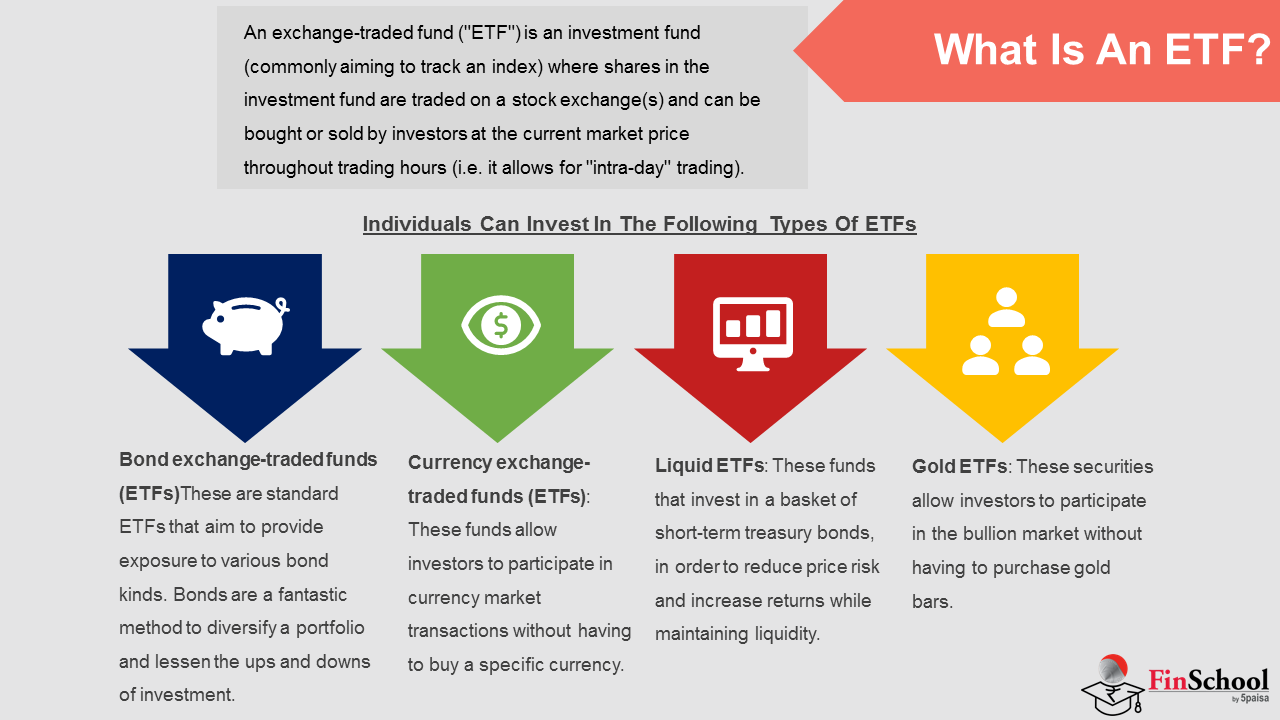
An Exchange-Traded Fund (ETF) is a pooled investment vehicle that trades on stock exchanges just like individual shares. Unlike mutual funds, which are priced only once at the end of the trading day, ETFs let investors buy and sell units throughout market hours at prices set by the market — making them highly liquid and flexible instruments for both retail and institutional investors.
Core Features
- Market-Linked Trading:ETFs mirror the performance of an index, sector, commodity, or asset class, and their units can be traded intraday.
- Diversification:A single ETF can provide exposure to dozens, even hundreds, of securities, reducing concentration risk.
- Cost Efficiency:Passive management keeps expense ratios lower than those of actively managed funds.
- Transparency:Holdings are typically disclosed daily, compared with the quarterly disclosures common among mutual funds.
- Flexibility:Investors can use ETFs for long-term investing, tactical asset allocation, or even hedging strategies.
Types of ETFs
- Equity ETFs
- Track stock indices such as NIFTY 50 or S&P 500.
- Provide diversified equity exposure without requiring individual stock selection.
- Bond ETFs
- Invest in government, corporate, or municipal bonds.
- Useful for investors seeking steady income with lower volatility than equities.
- Commodity ETFs
- Track commodities like gold, silver, or oil.
- Let investors participate in commodity markets without physically owning the underlying asset.
- Currency ETFs
- Provide exposure to foreign exchange movements — for example, an ETF tracking the US Dollar against the Indian Rupee.
- Liquid ETFs
- Invest in short-term treasury bills and money market instruments.
- Designed for investors seeking safety, liquidity, and modest returns.
- Sectoral/Thematic ETFs
- Focus on specific industries such as technology, healthcare, or renewable energy.
- Allow investors to make targeted bets on growth sectors.
Illustrative Example
- Gold ETF: Rather than buying physical gold, an investor can purchase units of a Gold ETF that tracks bullion prices — eliminating storage and purity concerns while still capturing gold price movements.
- NIFTY 50 ETF: Investing here automatically provides exposure to the top 50 companies listed on the NSE, mirroring the index’s overall performance.
- US Treasury Bond ETF: Offers access to US government bonds, providing stability and predictable income.
Why Investors Choose ETFs
- Accessibility: Easy to trade, just like stocks.
- Diversification: Exposure to multiple securities in a single instrument.
- Transparency: Daily disclosure of holdings.
- Cost Advantage: Lower fees than actively managed funds.
- Flexibility: Suited to both long-term wealth creation and short-term tactical strategies.
6.2 Salient Features
Anand: What are the main features of Exchange Traded Funds?
Ridhima: They are passive meaning they just replicate an index of an Exchange Traded Fund.
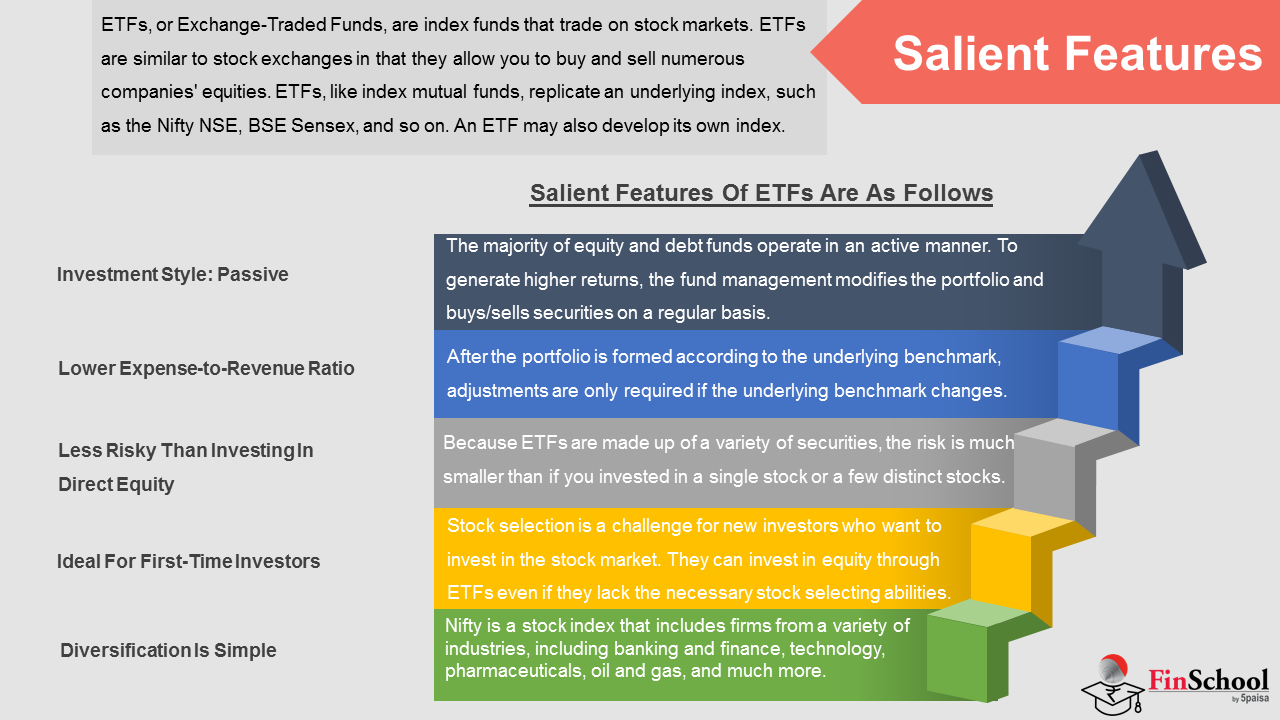
They have expense ratios, less risk than direct stocks are ideal for beginners who want to invest in Exchange Traded Funds and provide easy diversification. ETFs are essentially index funds that trade on stock exchanges. Much like shares, they allow investors to buy and sell exposure to numerous companies at once. Like index mutual funds, ETFs replicate an underlying index — such as the Nifty or the BSE Sensex — though an ETF can also track a custom, self-constructed index. A Nifty-tracking ETF, for instance, will hold the same 50 stocks that make up the Nifty, in the same proportions.
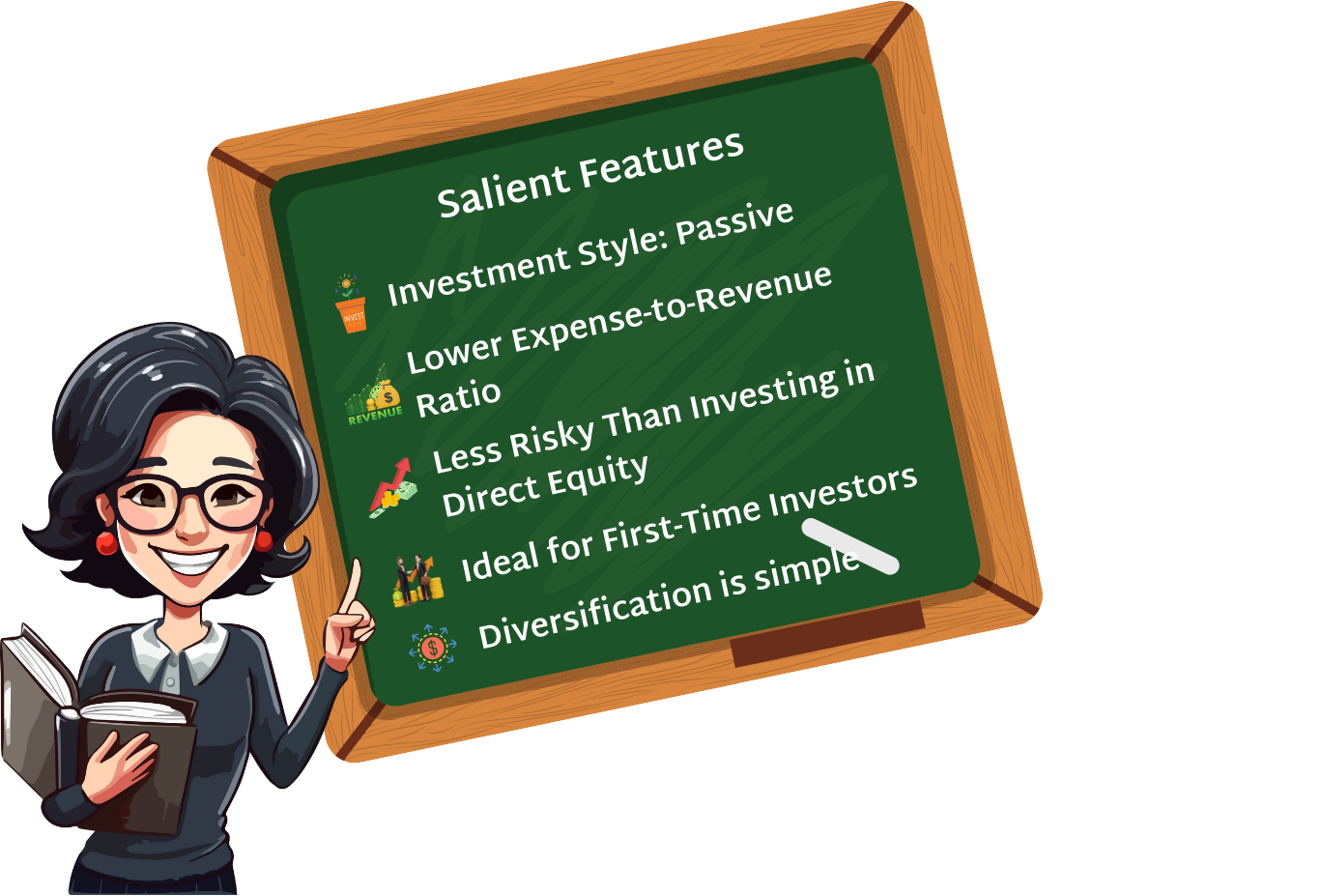
Salient features of ETFs are as follows
Investment Style: Passive
Most equity and debt funds are managed actively, with the fund manager regularly buying and selling securities in pursuit of higher returns. ETFs, by contrast, are a passive investment vehicle — the fund manager’s sole objective is to replicate the composition of the benchmark index as closely as possible.
Lower Expense Ratio
Because of their passive management style, ETFs typically carry a lower expense ratio, since they don’t require the frequent buying and selling that active funds do. Once the portfolio is constructed to mirror the benchmark, adjustments are only needed when the benchmark itself changes.
Less Risky Than Investing in Direct Equity
Because an ETF holds a variety of securities, the risk is considerably lower than investing in a single stock or a handful of individual stocks. Indices like the Nifty and Sensex are also composed of high-quality companies, so investing in an ETF that tracks these benchmarks effectively means investing in a curated basket of quality stocks — lowering your overall risk.
Ideal for First-Time Investors
Stock selection is a genuine challenge for new investors entering the market. ETFs let them gain equity exposure even without the skills needed to pick individual stocks, since investments are made consistently in line with the index, without requiring either the investor or the fund manager to constantly hunt for new opportunities.
Diversification Made Simple
The Nifty spans companies from a wide range of industries — banking and finance, technology, pharmaceuticals, automobiles, oil and gas, and more. Investing in a Nifty-tracking ETF, therefore, naturally diversifies a portfolio across all these sectors. Handpicking quality stocks across such a range of industries would otherwise demand significant expertise and capital — ETFs make that diversification simple and cost-effective.
6.3 How Is The Value Of An ETF Determined?
Anand: How is the value of an Exchange Traded Fund decided?
Ridhima: By supply and demand in the market plus the performance of its underlying assets of the Exchange Traded Fund.
Anand: What is Net Tangible Assets?
Ridhima: Net Tangible Assets show the value of the Exchange Traded Funds holdings.
If market price is above Net Tangible Assets, the Exchange Traded Fund is trading at a premium; if below, at a discount.
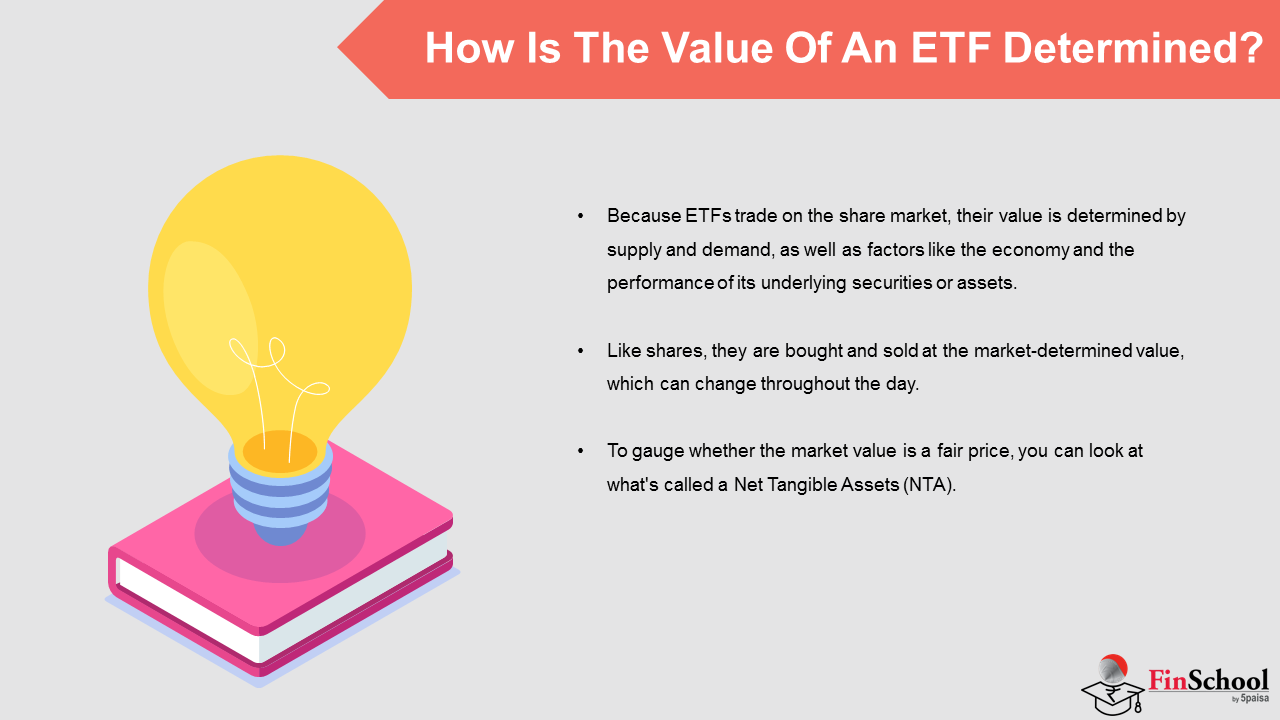
- Because ETFs trade on stock exchanges, their price is shaped by supply and demand, along with broader economic conditions and the performance of the underlying securities — much like ordinary shares, they’re bought and sold at a market-determined value that can shift throughout the day.
- To gauge whether that market price is a fair one, investors can look at what’s called Net Tangible Assets (NTA).
- NTA is an important figure that represents the actual value of an ETF’s underlying holdings, per unit. It’s published alongside other pricing details for the ETF, and comparing it with the market price tells investors whether the ETF is trading at a premium (above NTA) or a discount (below NTA).
6.4 How Can ETFs Make Money For Investors?
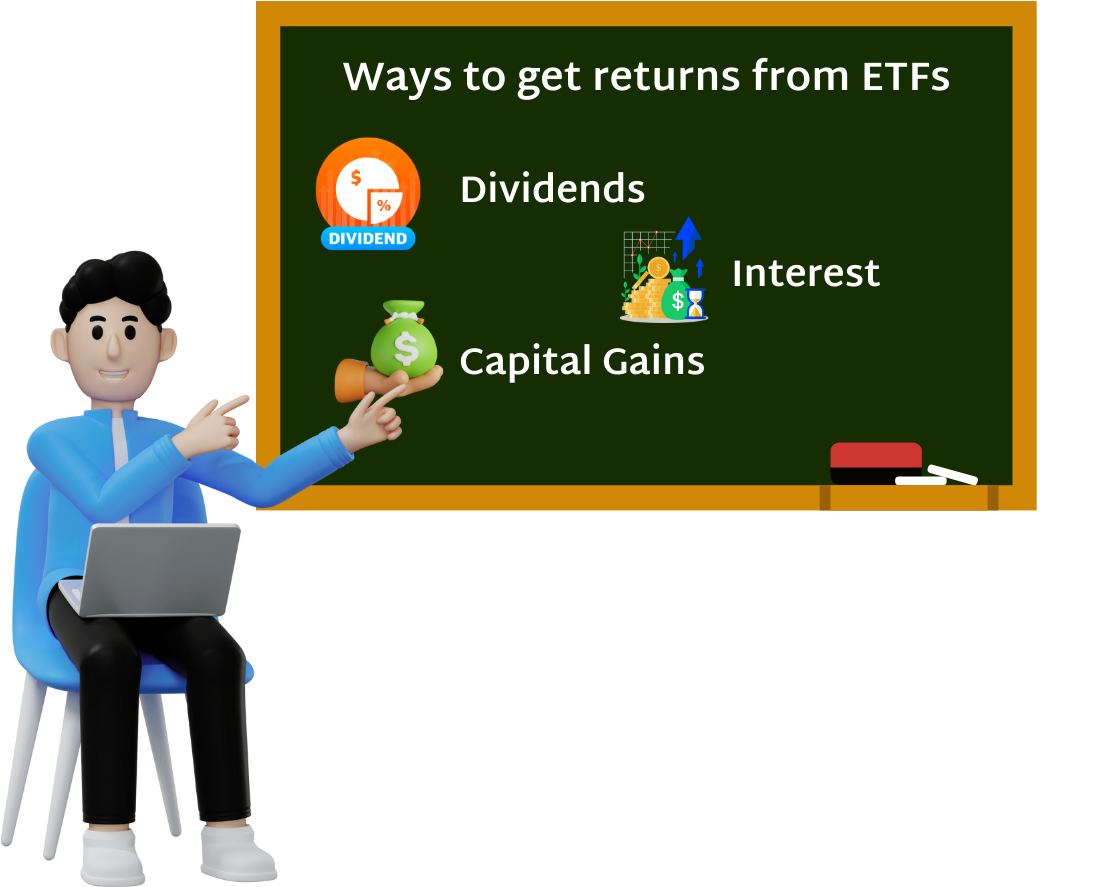
Anand: How do Exchange Traded Funds give returns to investors who invest in Exchange Traded Funds?
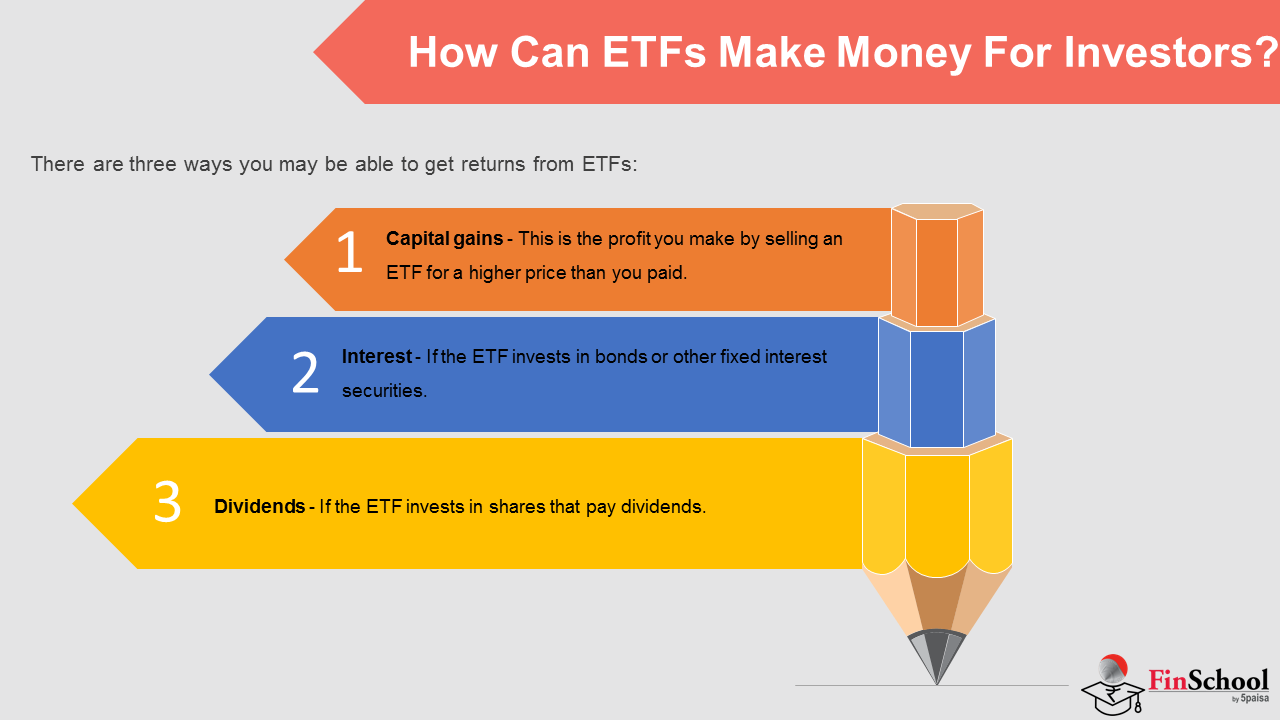
Ridhima: Three ways: dividends from stocks interest from bonds and capital gains when you sell an Exchange Traded Fund at a price.
Anand: Do they pay regularly to investors who invest in Exchange Traded Funds?
Ridhima: Yes distributions are usually quarterly, semi-annual or annual for investors who invest in Exchange Traded Funds.
How an ETF generates returns depends on the specific ETF, but broadly, there are three routes:
- Dividends— if the ETF holds dividend-paying shares.
- Interest— if the ETF holds bonds or other fixed-income securities.
- Capital gains— the profit from selling an ETF unit for more than you paid for it.
Distributions from dividends and interest are typically paid quarterly, semi-annually, or annually depending on the ETF, with any management fees deducted before the payout is made. Since every ETF differs in this respect, it’s worth reading the specific product disclosure statement for the details.
6.5 Working Of An ETF
Anand: How do Exchange Traded Funds actually work for investors who invest in Exchange Traded Funds?
Ridhima: Exchange Traded Fund providers use participants, usually banks to create or redeem Exchange Traded Fund shares.
Anand: What is a creation unit of an Exchange Traded Fund?
Ridhima: A large block of Exchange Traded Fund shares like 25,000 to 200,000, created in exchange for underlying securities of the Exchange Traded Fund.
Investors then sell these shares of the Exchange Traded Fund in the market.
An ETF provider relies on entities known as authorised participants — typically investment banks — to create and redeem ETF shares that are then made available to ordinary investors in what’s called the secondary market. Authorised participants are appointed by the ETF provider but aren’t obligated to trade, nor are they paid fees for their role. Instead, they’re motivated by the opportunity to profit from any gap between an ETF’s net asset value and its trading price, through what’s known as the creation-redemption mechanism.
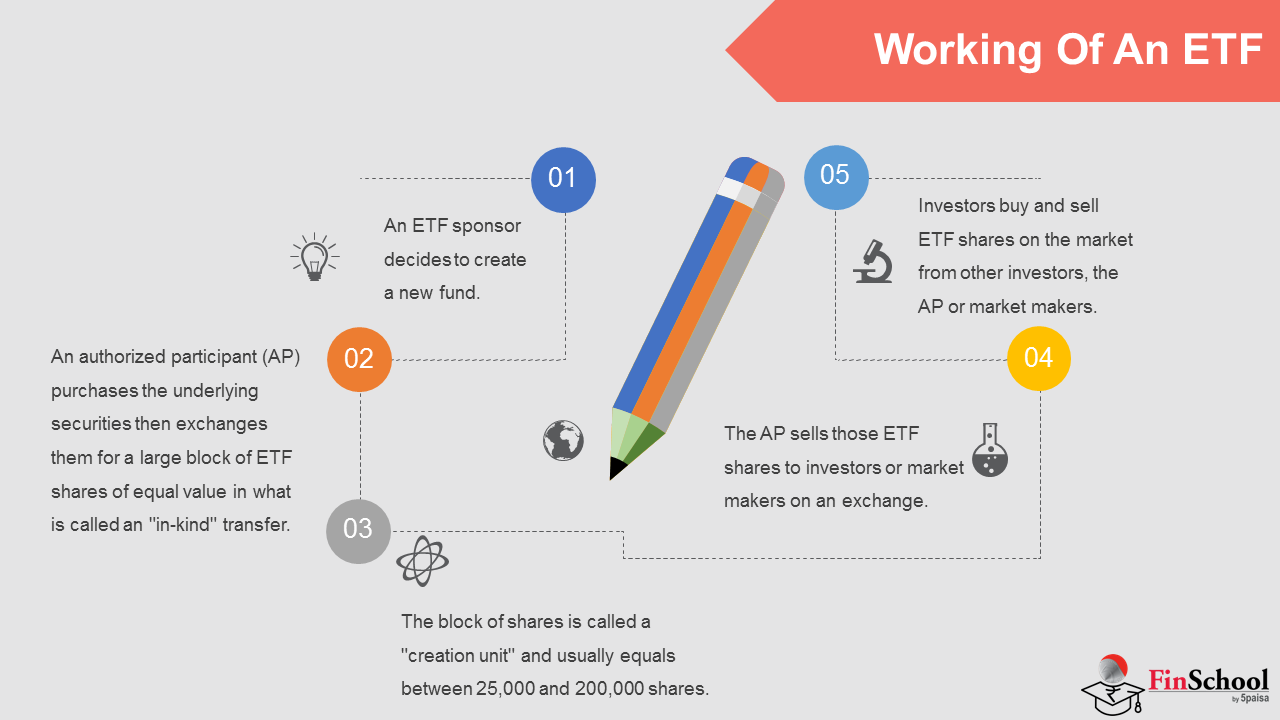
Here is how it works:
- An ETF sponsor decides to launch a new fund.
- An authorised participant (AP) buys the underlying securities and exchanges them for a large block of ETF shares of equal value, in what’s called an “in-kind” transfer — so named because the AP is exchanging securities of equivalent value rather than cash.
- This block of shares is known as a “creation unit,” typically comprising between 25,000 and 200,000 shares.
- The AP then sells those ETF shares to investors or market makers on an exchange.
- From there, investors buy and sell ETF shares among themselves, or with the AP and market makers.
An AP can also reverse this process to redeem ETF shares — buying enough shares to form a full creation unit and exchanging them back for the underlying securities, effectively removing those ETF shares from circulation. This mechanism plays an important role in keeping an ETF’s market price closely aligned with its actual value.
The Mechanics Of Share Creation
Thanks to how ETF shares are created, bought, and sold, they tend to carry lower costs and generate fewer capital gains than traditional mutual funds.
6.6 Difference Between ETF’s & Index Funds
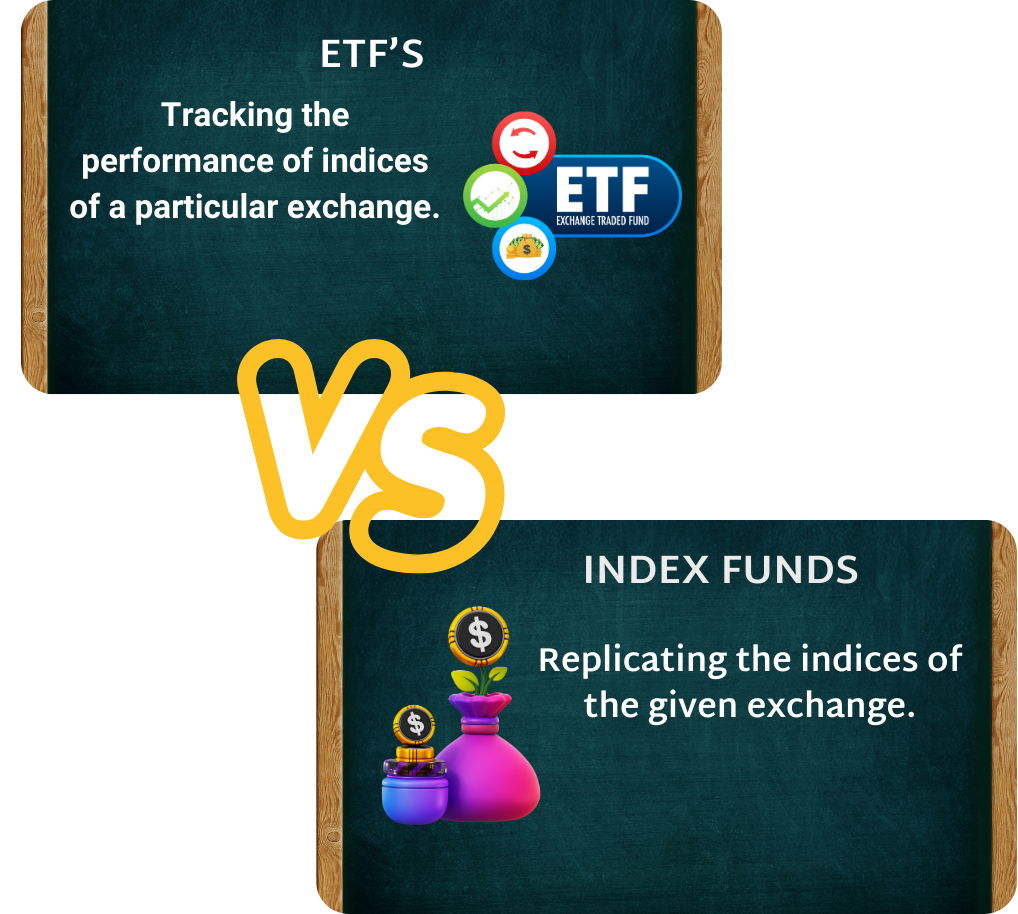
Anand: How’re Exchange Traded Funds different from index funds for investors who invest in Exchange Traded Funds?
Ridhima: Both track indices, but Exchange Traded Funds trade on stock exchanges like shares allowing -day buying and selling of Exchange Traded Funds.
Index funds do not trade during the day. You. Redeem them only through the fund house at end-of-day NAV, which is different, from Exchange Traded Funds.
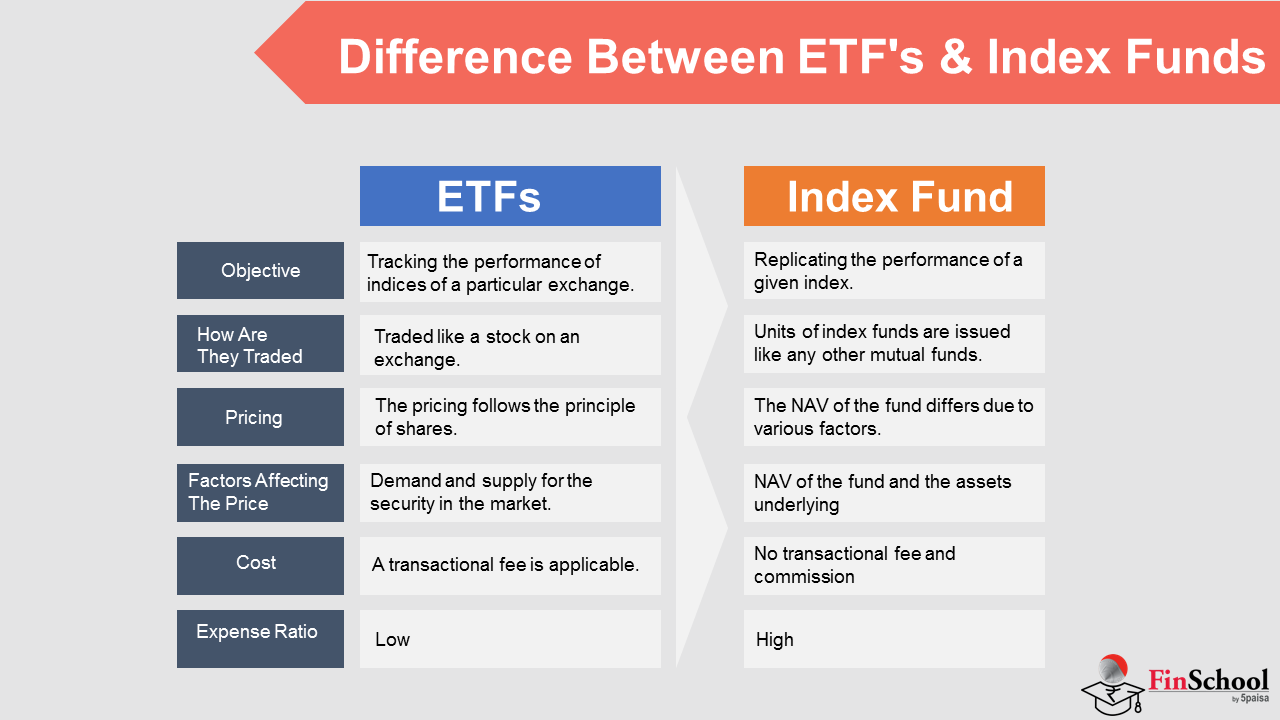
ETF vs Index Fund Comparison
|
Aspect |
ETFs |
Index Funds |
|
Trading Style |
Traded on stock exchanges throughout the day at market prices (intra-day trading) |
Bought or redeemed directly from the fund house at end-of-day NAV |
|
Pricing |
Market-driven, fluctuates in real time |
Fixed once daily based on NAV |
|
Liquidity |
High liquidity; can be bought/sold instantly like stocks |
Less liquid; transactions processed only once per day |
|
Costs |
Lower expense ratios; brokerage charges apply |
Slightly higher expense ratios; no brokerage fees |
|
Transparency |
Holdings usually disclosed daily |
Holdings disclosed quarterly or monthly |
|
Accessibility |
Requires a demat and trading account |
Can be purchased directly from the AMC without a demat account |
|
Flexibility |
Suitable for tactical trading, hedging, and intraday strategies |
Better for long-term, systematic investment plans (SIPs) |
|
Tracking Error |
Generally lower due to passive structure and real-time pricing |
Slightly higher tracking error due to daily NAV calculation |
|
Best For |
Investors seeking flexibility, liquidity, and cost efficiency |
Investors preferring simplicity, SIPs, and long-term passive investing |