 5paisa Capital Ltd

Sensex Nifty Updates April 2: Markets End Slightly Higher Led by IT Stocks; Global Weakness Caps Gains
by Varda Khade

 5paisa Capital Ltd
- 4 min read
5paisa Capital Ltd
- 4 min read
Last Updated: 16th March 2026 - 05:28 pm

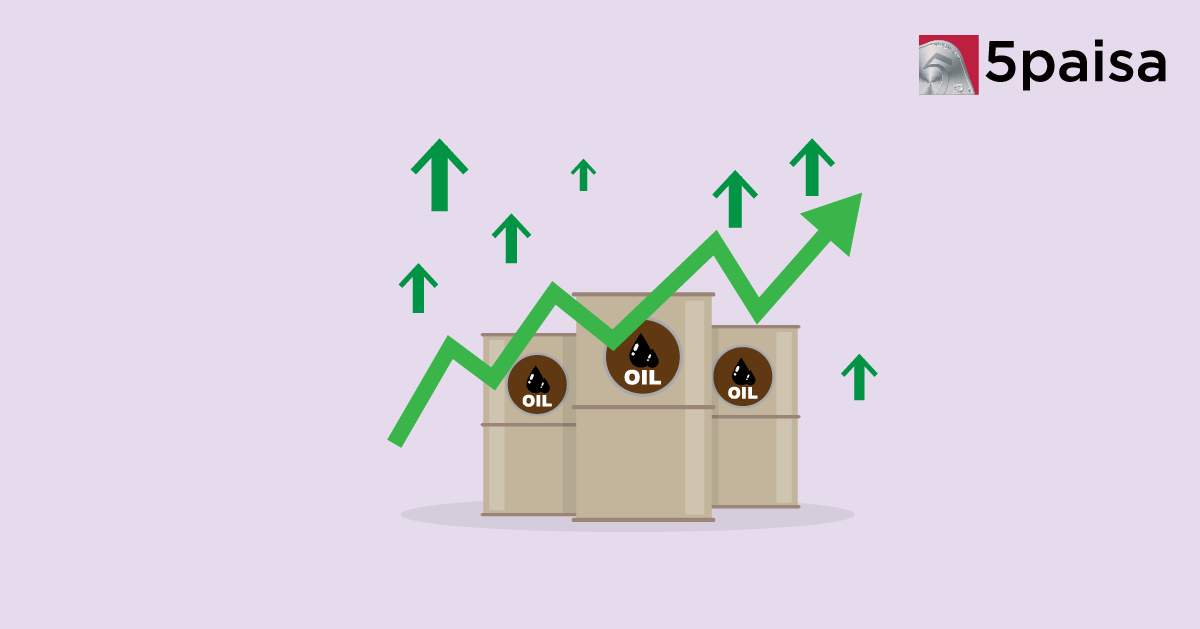
Escalating tensions in the Middle East, particularly the conflict involving Iran, have pushed global crude prices past the $100 threshold yet again.
Brent crude surged above $118 per barrel while the US benchmark, West Texas Intermediate (WTI), jumped nearly 30% in a single trading session before easing slightly, as a result of the supply routes being threatened.
Oil prices have always been volatile. Over the past two decades alone, crude prices have swung from record highs near $150 to negative territory below -$40 during wars, sanctions, or periods of economic expansion. The recent surge is only the newest chapter in that long, turbulent story.
To understand why crude is back above $100, it helps to look at how oil markets reached this point.
 Invest in Indian Markets and Unlock Future Potential With 5paisa!
In late February 2026, the United States and Israel carried out air strikes on Iran, setting off the latest rally. Afterwards, tensions across the region rose quickly, with the situation escalating within days.
Shipping through the Strait of Hormuz slowed to a trickle as security risks increased. Tankers stopped loading cargo, and insurers began reassessing coverage. Within days, energy markets were pricing in the possibility of a major supply disruption.
Nearly 20 million barrels of oil and petroleum products normally pass through the Strait every day. With exports stalled and storage facilities filling up, major Gulf producers, including Iraq and Kuwait, began reducing production.
Estimation is that at least 8 million barrels per day of crude output has already been shut in, along with additional volumes of condensates and natural gas liquids. That scale of disruption has global consequences.
To ease the pressure, member countries of the International Energy Agency (IEA) agreed to release 400 million barrels from emergency reserves. It is one of the largest coordinated stock releases ever attempted. Even so, it is widely seen as a temporary buffer rather than a long-term solution.
Much depends on how long the conflict lasts. And whether shipping through the Strait can safely resume.
Oil markets experienced a similar shock in early 2022; Russia’s invasion of Ukraine triggered another surge in crude oil prices. Russia is one of the world’s largest exporters of oil and natural gas, and Western sanctions quickly tightened global supply.
At the same time, global demand was rebounding strongly after the pandemic. Predictably, the prices shot up:
Energy markets remained tight for months before prices gradually eased as supply increased and economic growth slowed.
Still, the episode underscored how quickly geopolitical shocks can move the oil market.
Just two years earlier, oil markets experienced the exact opposite problem. There was too much supply and almost no demand.
When the COVID-19 pandemic spread across the world in 2020, governments imposed lockdowns on an unprecedented scale. Air travel stopped. Factories closed. Roads emptied. Demand for fuel collapsed almost overnight.
At the same time, a price war between Saudi Arabia and Russia flooded the market with additional supply. Storage capacity quickly ran out because producers could not shut wells fast enough. Traders holding futures contracts suddenly had nowhere to store the oil they were obligated to receive.
That is when something extraordinary happened. In April 2020, the price of WTI futures fell to –$40.32 per barrel. Producers were effectively paying buyers to take oil away. Brent crude did not go negative, but it still plunged below $16 per barrel, the lowest level in decades, exposing how fragile oil markets can be when demand disappears.
A decade earlier, geopolitical tensions in the Middle East had already pushed oil prices back into triple digits.
Western governments introduced sweeping sanctions on Iran in 2012, directing them at the country’s oil exports and banking network. The measures were designed to force Tehran to reconsider its nuclear ambitions. The restrictions sharply cut how much Iranian crude reached global markets.
At the same time, instability across the region, particularly the war in Syria, added to fears about potential supply disruptions. Oil prices responded accordingly.
Oil prices remained above $100 per barrel for much of 2012–2014. The rally eventually ended as rising US shale production increased global supply. By early 2015, crude prices had fallen below $50 per barrel.
Even before the sanctions era, political unrest across the Middle East had already rattled oil markets.
The Arab Spring uprisings in 2011 swept through several countries in North Africa and the Middle East, toppling governments and destabilising several oil-producing regions.
Countries affected included:
Energy traders quickly began pricing in the risk that unrest could spread to other producing nations. At the peak of the unrest, Brent crude surged to around $127 per barrel in March 2011.
The biggest oil price rally in modern history came a few years earlier.
During the 2008 global commodity boom, crude prices climbed to levels never seen before. Rapid industrial growth in China and other emerging economies pushed global demand for energy sharply higher.
At the same time, investors flooded commodity markets with speculative capital. The rally gathered momentum. And then accelerated.
On July 11, 2008, prices reached:
But the peak did not last. Later that year, the global financial crisis triggered a deep recession. Demand collapsed almost as quickly as it had risen. By December 2008, oil prices had fallen to around $36 per barrel.
Conclusion
Oil prices have repeatedly shown how quickly markets react when supply risks emerge. Oil prices have jumped past $100 again. This time the push comes from disruptions near the Strait of Hormuz along with fresh production cuts across the Middle East.
Moments like this tend to follow a well-known script. History shows that oil markets swing between extremes when supply and demand fall out of balance. For governments, businesses, and investors, the message is straightforward: geopolitical shifts must be watched closely. Strategic reserves need to be maintained, and energy sources diversified to manage volatility.
Global economies remain deeply tied to crude oil. Because of that reliance, disruptions such as the 2026 price surge are likely to appear again and again.
Disclaimer: Investment in securities market are subject to market risks, read all the related documents carefully before investing. For detailed disclaimer please Click here.