The U.S.-Iran Conflict: Escalating Tensions and Their Profound Implications for Indian Markets

No image 5paisa Capital Ltd - 2 min read

Last Updated: 4th March 2026 - 09:36 pm

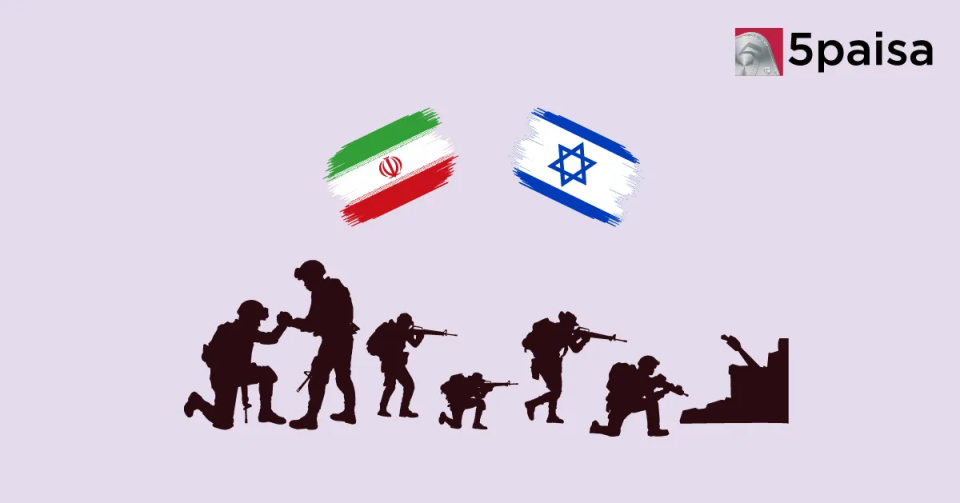
The ongoing U.S.-Iran conflict has escalated dramatically all over GCCs (Middle East) starting late Friday 28, 2026 (U.S. timezone) ─ after the killing of Iran’s Supreme Leader Khamenei. Iran has retaliated with a deluge of ballistic missile (including hypersonic) and drone attacks on U.S. military/intelligence bases, Israeli targets, and sites across Gulf nations, leading to a widening regional war now in its fifth day as of March 4, 2026. The conflict has disrupted Middle East airspace, shipping, and caused significant casualties and infrastructure damage.

Potential Impacts on India

India, as a major oil importer with over 85-90% dependence on imported crude, faces significant exposure.

  • Crude Oil Prices and Supply Disruptions:

    • India now has only 25-50 days of crude oil supply, apart from some Russian oil in transit
    • The Strait of Hormuz, through which about 20% of global oil flows, has been closed or heavily disrupted by Iran.
    • Roughly half of India's crude imports (around 2.5-2.7 million barrels per day, mainly from Iraq, Saudi Arabia, UAE, and Kuwait) transit this route.
    • Middle East sources account for about 55% of India's imports recently.
    • Prolonged disruption could spike global Brent crude (already up sharply to around $82-83),
    • This would raise India's oil import bill substantially, fueling inflation in fuel, transport, and goods (if government allows price hike of retail petrol & diesel)
  • Import Bill and Current Account Deficit (CAD):

    • Higher oil prices directly inflate India's oil import bill, a major component of its trade deficit.
    • India already runs a persistent twin deficit: Oil & CAD, and a sustained $10-20/barrel rise could add billions to annual costs, pressuring the rupee (which has weakened) and widening the CAD further.
    • This risks macroeconomic strain, higher borrowing costs, and potential RBI intervention.
  • Other Trade and Economic Ripples:

    • Broader supply chain issues (e.g., rerouting shipments, higher insurance/freight costs) could hit exports/imports.
    • Sectors like aviation, paints, tires, chemicals, and autos face margin pressure from costlier inputs.
    • Travel & Tourism may be affected directly due to air space disruptions in the Middle East
    • Conversely, defense-related stocks might see gains, and gold could rally as a safe haven.
  • Immediate Impact on Indian Markets

    • Nifty corrected almost 4%
    • Sectors hit hardest include Middle East savvy banks, autos, oil marketing companies (OMCs), IT, consumer durables, and energy-sensitive names due to crude oil spikes
    • U.S.DINR soared to 92, at record high
    • Safe havens like gold rose; oil zoomed (direct beneficiary)

What to Expect Next

Logically, outcomes hinge on conflict duration and scope:

  • Best to base case: If the war resolves quickly (e.g., within weeks, as some U.S. statements suggest), oil disruptions may ease, allowing partial recovery in markets
  • Worst Case Scenario: Prolonged escalation (e.g., sustained Strait closure, wider regional involvement) could keep oil elevated ($90-130 possible in extremes), exacerbating inflation, and CAD widening, rupee weakness, and equity volatility— potentially pressuring growth. The chain of events in Iran war may also eventually lead to an all-out WW-III or serious regional conflict (dominos effect)
  • India may accelerate oil diversification (higher Russian/U.S. volumes) and draw on reserves
  • Indian Stock markets could see continued choppiness, with defensive sectors (e.g., pharma, some defensives) holding better amid global uncertainty.
  • Middle East heavy companies like L&T (various infra/EPC projects), HDFC Bank (deposit mobilisations) are under stress as the Iran war has now virtually tuned into a regional conflict with attack & counter attack.

India's structural tailwinds include domestic demand, services growth, policy buffers, and sourcing alternatives, but the conflict underscores energy import headwinds in an interconnected world. These dynamics highlight why India appears especially exposed among major economies to Middle East energy shocks in the current escalation. If the Iran war lingers beyond 6-8 weeks, it may adversely affect the Indian and global stock market ─ expect 10-15% more corrections in that scenario; otherwise 5-10% correction would be a reasonable expectation.

FREE Trading & Demat Account
Open FREE Demat Account with endless opportunities.
  • Flat ₹20 Brokerage
  • Next-gen Trading
  • Advanced Charting
  • Actionable Ideas
+91
''
By proceeding, you agree to our T&Cs*
Mobile No. belongs to
OR
hero_form

Disclaimer: Investment in securities market are subject to market risks, read all the related documents carefully before investing. For detailed disclaimer please Click here.

Open Free Demat Account

Be a part of 5paisa community - The first listed discount broker of India.

+91

By proceeding, you agree to all T&C*

footer_form

Aticles to read next