

ॲडव्हान्स्ड पॅटर्न्स: ताकुरी, सँडविच आणि हॅमर
 वरदा खाडे
- 0 मिनिटांचे वाचन
वरदा खाडे
- 0 मिनिटांचे वाचन
अंतिम अपडेट: 16 जून 2026 - 02:40 pm

सर्व कँडलस्टिक पॅटर्नला ट्रेडर्सद्वारे समान महत्त्व दिले जात नाही. डोजी आणि एंगल्फिंग पॅटर्न सारख्या प्रसिद्ध फॉर्मेशन्सचा पूर्णपणे अभ्यास केला जातो, तर काही कमी प्रसिद्ध फॉर्मेशन्स आहेत जे मार्केटची भावना आणि संभाव्य ट्रेंड बदलांविषयी मौल्यवान अंतर्दृष्टी प्रदान करू शकतात. ताकुरी लाईन, स्टिक सँडविच आणि हॅमर सारखे पॅटर्न खरेदी आणि विक्रीच्या दबावात बदल करण्यास संकेत देतात जे पहिल्या नजरेत स्पष्ट नसतील.
हे प्रगत कँडलस्टिक पॅटर्न शिकल्याने ट्रेडर्सला किंमतीच्या कृतीची चांगली माहिती मिळू शकते आणि त्यांना वाढीव निश्चिततेसह संभाव्य ट्रेडिंग संधी शोधण्यास मदत होऊ शकते.
 भारतीय मार्केटमध्ये इन्व्हेस्ट करा आणि 5paisa सह भविष्यातील क्षमता अनलॉक करा!
विविध कँडलस्टिक पॅटर्न फॉर्मेशन्स
सिंगल-कँडल निर्मिती उपयुक्त अंतर्दृष्टी प्रदान करू शकतात, तर प्रगत कँडलस्टिक पॅटर्नमध्ये अनेकदा एकाधिक कँडल्स किंवा अधिक जटिल किंमत संरचना समाविष्ट केल्या जातात, ज्यामुळे मार्केटची भावना आणि किंमत कृतीविषयी अतिरिक्त संदर्भ प्रदान केला जातो. कारण ते दीर्घ कालावधीत किमतीचे वर्तन प्रतिबिंबित करतात, अनेक व्यापारी संभाव्य ट्रेंड रिव्हर्सल, सातत्य किंवा गतीतील बदल ओळखण्यासाठी या पॅटर्नचा वापर करतात.
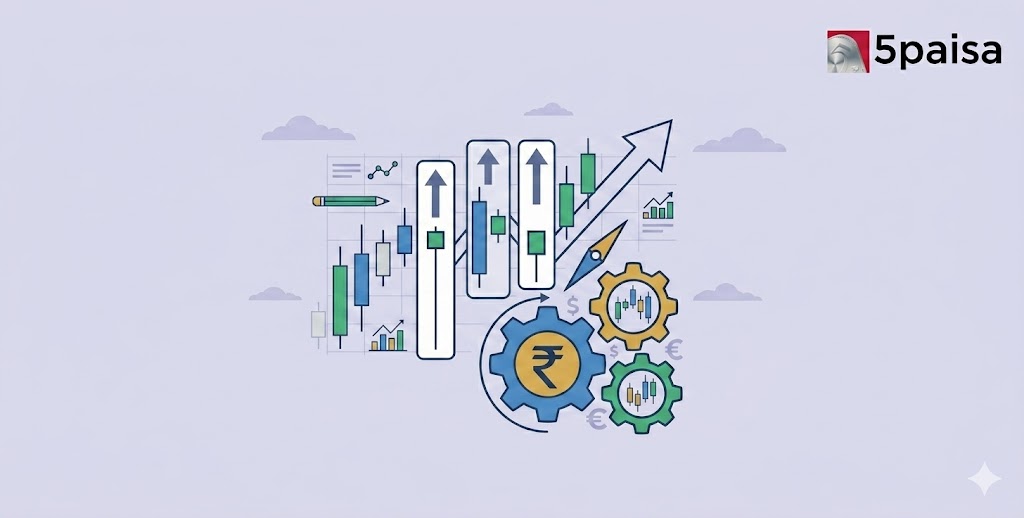
ही रचना कशी विकसित करतात हे समजून घेणे ट्रेडर्सना मार्केट ॲक्टिव्हिटी अधिक प्रभावीपणे समजून घेण्यास मदत करू शकते. खाली काही व्यापकपणे फॉलो केलेले प्रगत पॅटर्न आहेत, ज्यामध्ये ताकुरी कँडलस्टिक पॅटर्न, स्टिक सँडविच पॅटर्न, डबल हॅमर पॅटर्न आणि तीन ड्राईव्ह पॅटर्न समाविष्ट आहेत.
ताकुरी कँडल स्टिक पॅटर्न
ताकुरी कँडलस्टिक पॅटर्न ही तांत्रिक विश्लेषणातील एक लपविलेल्या रत्नाची गोष्ट आहे. हे मूलभूतपणे एक डोजी किंवा हॅमर कँडल आहे ज्यामध्ये लाँग लोअर शेडो (विक) आणि वरच्या बाजूला अतिशय लहान बॉडी आहे.
जपानी भाषांमध्ये, ताकुरी या शब्दाचे रस्सीवर टगिंग म्हणून किंवा तळागाळ भावना म्हणून अनुवाद केले जाते. आणि म्हणूनच कँडल म्हणतात. ताकुरी दर्शविते की विक्रेत्याने डाउनट्रेंड नंतर किंमत कमी करण्याचा प्रयत्न केला, परंतु खरेदीदारांनी पाऊल टाकले आणि किंमत कुठे सुरू झाली तिथून पुढे नेली.
- ते कसे वाचावे: जर ते दीर्घकाळ घसरणीनंतर दिसून येत असेल तर याचा अर्थ असा की विक्रेत्यांना स्टीम संपली आहे आणि खरेदीदार पाण्याची चाचणी करीत आहेत.
- भारतीय मार्केट संदर्भ: जेव्हा आम्ही NSE-लिस्टेड स्टॉकमध्ये प्रमुख सपोर्ट लेव्हलच्या जवळ ताकुरी पॅटर्न पाहतो, तेव्हा हे सूचित करू शकते की विक्रीचा दबाव कमकुवत आहे आणि संभाव्य रिव्हर्सल विकसित होऊ शकते.
स्टॉक मार्केटसाठी सँडविच पॅटर्न
सँडविच पॅटर्न हा स्टॉक मार्केट मधील विशेष तीन-कँडल निर्मिती आहे. या पॅटर्नमध्ये सँडविच किंमतीच्या कृतीसाठी तीन मेणबत्ती आहेत, जसे की बाहेरील ब्रेड आणि मध्यभागी भरलेली वास्तविक सँडविच. सामान्यपणे दोन प्रकार आहेत:
- बुलिश सँडविच: तुम्हाला ग्रीन कँडल दिसते, त्यानंतर लाल कँडल हिरव्या कँडलच्या खाली जाते, नंतर लाल मेणबत्तीच्या वर बंद होते. रेड कँडल दोन ग्रीन कँडल्स दरम्यान आहे. हे दर्शविते की घसरण झाल्यानंतरही, खरेदीदार अद्याप प्रभारी आहेत.
- बरिश सँडविच: तुम्हाला रेड कँडल दिसते, त्यानंतर ग्रीन कँडल जे रेड कँडलच्या वर जाते आणि नंतर लाल कँडल हिरव्या कँडलच्या खाली मागे टाकते. याचा अर्थ असा की विक्रेते त्यांचे वर्चस्व पुन्हा उभारत आहेत.
हे पॅटर्न सूचित करू शकते की मार्केट विरोधी ट्रेंड नाकारत आहे आणि सामान्यत: पुष्टीची शिफारस केली जात असली तरीही प्रचलित दिशा चालू ठेवण्याचा सल्ला देऊ शकते.
दुहेरी हॅमर निर्मिती
हॅमर कँडल, ज्यामध्ये लहान बॉडी आणि लांब निच सावली आहे, ते एक क्लासिक रिव्हर्सल सिग्नल आहे. जर यापैकी दोन सलग किंवा सलगपणे दिसतात, तर त्याला डबल हॅमर पॅटर्न म्हणून ओळखले जाते.
- ते का महत्त्वाचे आहे: कमी किंमती नाकारण्याचे लक्षण म्हणजे एक हॅमर. याचा अर्थ असा की मार्केटने दोनदा खाली जाण्याचा प्रयत्न केला आणि दोन्ही वेळा खरेदीदारांनी नाकारली. ते त्या किंमतीच्या लेव्हलवर बरेच लवचिकता दर्शविते.
- ते कसे ट्रेड करावे: काही व्यापारी दुहेरी हॅमर पॅटर्नला संभाव्य बुलिश सिग्नल म्हणून अर्थ लावतात, विशेषत: जेव्हा ते स्थापित सपोर्ट लेव्हल जवळ तयार होते आणि त्यानंतरच्या प्राईस ॲक्शनद्वारे पुष्टी केली जाते. हे सूचित करू शकते की खरेदीदार सपोर्ट क्षेत्राचे संरक्षण करीत आहेत आणि वरची गती बिल्डिंग असू शकते.
तीन ड्राईव्ह पॅटर्न
तीन ड्राईव्ह पॅटर्न हा हार्मोनिक रिव्हर्सल चार्ट पॅटर्न आहे जो ट्रेंड त्याच्या शेवटी कधी जवळ येईल ते ओळखण्यास ट्रेडर्सना मदत करतो. कँडलस्टिक पॅटर्न प्रमाणेच, यामध्ये सलग तीन किंमतीच्या स्विंग किंवा ड्राईव्हचा समावेश होतो, ज्यामध्ये समप्रमाणित पॅटर्न असतो आणि अनेकदा किंमतीच्या हालचाली आणि वेळेच्या बाबतीत समान प्रमाण असते.
संभाव्य ट्रेंड रिव्हर्सल्स ओळखण्याचा मार्ग म्हणून ट्रेडर्स या पॅटर्नचा शोध घेतात, कारण वारंवार आणि मोजलेल्या हालचालींमुळे वर्तमान ट्रेंडची उलथापालथ होत आहे हे संकेत मिळू शकतात. हे सामान्यपणे पारंपारिक कँडलस्टिक पॅटर्नपेक्षा अधिक प्रगत मानले जाते कारण पॅटर्न सममेट्री आणि विशिष्ट किंमत संबंधांवर अवलंबून असतात.
- स्ट्रक्चर: हे एकाच दिशेने तीन वेगवेगळ्या मूव्ह्ज (किंवा ड्राईव्ह) ने बनवले जाते आणि प्रत्येक पाऊल नवीन उच्च/कमी आहे. शॉर्ट करेक्शन या ड्राईव्हला लिंक करतात.
- तर्क: हा पॅटर्न या तत्त्वावर आधारित आहे की सर्व ट्रेंडमध्ये शेवटी स्टीम संपत आहेत. थर्ड ड्राईव्ह म्हणजे जेव्हा मार्केट सामान्यपणे मोठ्या प्रमाणात उलट होते.
- मान्यता: तुम्ही ट्रेंड लाईन्स तयार करून हा पॅटर्न ओळखू शकता. किंमत तिसऱ्या ड्राईव्हवर पोहोचते आणि अनेकदा ते अशा पॉईंटवर पोहोचते जिथे ते आता गती टिकवू शकत नाही आणि ट्रेंड रिव्हर्स होते.
हे पॅटर्न सुज्ञपणे कसे वापरावे
हे पॅटर्न अत्याधुनिक आहेत, तरीही ते केवळ पझलचा एक भाग आहेत. तांत्रिक विश्लेषण ही एक कला आहे, विज्ञान नाही. लक्षात ठेवण्यासाठी काही सोपे नियम येथे दिले आहेत:
- नेहमी पुष्टीची मागणी करा: पॅटर्न केवळ आकार आहेत. कृती करण्यापूर्वी दिशानिर्देश कन्फर्म करण्यासाठी पुढील मेणबत्तीची प्रतीक्षा करा. उदाहरणार्थ, जर तुम्हाला ताकुरी पॅटर्न दिसत असेल तर वरच्या हालचालीची पुष्टी करण्यासाठी पुढील ग्रीन कँडलची प्रतीक्षा करा. पॅटर्न हा सामान्यपणे फॉलो-थ्रू शिवाय खोटा अलार्म असतो.
- परिस्थिती तपासा: कोणताही पॅटर्न स्वत: चांगले काम करत नाही. ऐतिहासिक किंमत सपोर्ट लेव्हल जवळ डबल हॅमर पॅटर्न अधिक शक्तिशाली आहेत. वर्तमान किंमत स्तर भूतकाळात महत्त्वपूर्ण आहे की नाही हे पाहण्यासाठी तुम्ही नॅशनल स्टॉक एक्सचेंज (एनएसई) वेबसाईटवर ऐतिहासिक डाटा तपासू शकता. वॉल्यूम पाहा. उच्च वॉल्यूम वर तयार होणारा पॅटर्न सामान्यपणे कमी वॉल्यूम वर तयार होणाऱ्यापेक्षा अधिक विश्वसनीय असतो.
तुमची रिस्क नियंत्रित करा
सिक्युरिटीज अँड एक्सचेंज बोर्ड ऑफ इंडिया (SEBI) ने वारंवार रिस्क मॅनेजमेंटच्या महत्त्वावर भर दिला आहे. कॉम्प्लेक्स पॅटर्न वेगळे असू शकतात. नेहमी:
- स्टॉप लॉस वापरा: जर पॅटर्न तुमच्या कॅपिटलचे संरक्षण करण्यासाठी काम करत नसेल तर तुम्हाला ट्रेडमधून कुठे मिळेल ते निवडा.
- तुमची पोझिशन्स आकारणे: तुम्ही पॅटर्नविषयी कितीही निश्चित असाल तरीही तुमचे संपूर्ण कॅपिटल एकाच ट्रेडवर ठेवू नका.
- अप-टू-डेट ठेवा: मॅक्रो-इकॉनॉमिक न्यूज, जसे की इंटरेस्ट रेट्स किंवा कॉर्पोरेट परिणामांमध्ये बदल, कोणतेही तांत्रिक पॅटर्न ओव्हरराईड करू शकतात. विश्वसनीय भारतीय फायनान्शियल न्यूज पोर्टलच्या लेटेस्ट न्यूजसह अपडेटेड राहा.
निष्कर्ष
टाकुरी, सँडविच, डबल हॅमर आणि तीन ड्राईव्ह सारख्या लर्निंग पॅटर्नला वेळ आणि प्रॅक्टिस लागतो. स्टॉक मार्केटमधील तुमच्या प्रवासात मार्गदर्शक म्हणून या पॅटर्नचा विचार करा. ते तुम्हाला सांगतात की केव्हा जलद जावे, कधी धीमा व्हावे आणि केव्हा दिशा बदलावी. आत्मविश्वास मिळवण्याचा सर्वोत्तम मार्ग म्हणजे खरोखरच त्यांच्या ट्रेडिंगशिवाय तुमच्या चार्टवर हे पॅटर्न पाहून सुरुवात करणे. एकदा तुम्हाला त्यांची ओळख करून मिळाल्यानंतर, तुम्ही त्यांना अनुशासित ट्रेडिंग प्लॅनमध्ये समाविष्ट करणे सुरू करू शकता. लक्षात ठेवा, हे मोठ्या विजयाचे अनुसरण करण्याविषयी नाही, परंतु सातत्य हे भारतीय बाजारातील यशस्वी व्यापाऱ्याला परिभाषित करते.
- फ्लॅट ₹20 ब्रोकरेज
- नेक्स्ट-जेन ट्रेडिंग
- प्रगत चार्टिंग
- कृतीयोग्य कल्पना
5paisa वर ट्रेंडिंग
अस्वीकृती: सिक्युरिटीज मार्केटमधील इन्व्हेस्टमेंट मार्केट रिस्कच्या अधीन आहेत, इन्व्हेस्टमेंट करण्यापूर्वी सर्व संबंधित डॉक्युमेंट्स काळजीपूर्वक वाचा. तपशीलवार अस्वीकृतीसाठी कृपया येथे क्लिक करा.