What is Market Breadth and How Traders Use It
by Swaroop Kollepalli


 Indrashish Mitra
- 0 min read
Indrashish Mitra
- 0 min read
Last Updated: 19th August 2026 - 10:39 am

Promoter pledge data is easy to miss in a standard fundamental analysis. When you read a company's annual report or results presentation, you read about its ratios, its management, and its credit history. One line often missed: how much of the promoters' own stake is pledged.
Promoters pledge shares to raise funds, and the level of pledging can influence how investors assess the stock. A high or rising pledge ratio can raise concerns about repayment capacity, increase the risk of forced selling on a fall in share price, add to volatility and impact promoter control.
For a long-term investor, this makes the pledge ratio worth tracking alongside the company’s fundamentals and the promoter’s financial position. In this article, you will learn how promoter pledging works and how it can affect stock performance.
A promoter is a person or group identified as a promoter under securities regulations. They may hold a significant stake and exercise influence over the company’s management and affairs. When they need financing, for example, to fund an investment, repay debt, or meet another financial requirement, they can offer their company shares as collateral to a bank or other lender. The bank lends money against those shares but does not take ownership of them. Instead, the shares are subject to an encumbrance that grants the lender a security interest in the pledged shares.
The company or promoter needs money and gets it by giving shares as security. They go to a bank and offer the promoter shares as collateral. The lender values the shares at their market price and loans them out as a percentage of their value. The pledge is filed with the depository and made known to the exchanges.
As per SEBI’s Prohibition of Insider Trading Regulations, creation, invocation or release of a pledge shall be deemed to be trading. Such events are also subject to disclosure requirements under SEBI regulations.
The lender generally lends only a portion of the market value of the pledged shares, based on the loan-to-value ratio and other terms of the financing arrangement. Let's do a round-figure walk-through. Suppose a share is trading at ₹100 in the market and, for example, the lender offers financing of ₹50 against every pledged share. If the stock price falls to ₹70 and the collateral value dips below the lender's required level, the lender may ask the borrower to provide additional collateral or make a partial repayment.
If the promoter is unable to provide further collateral or otherwise satisfy the lender’s requirements, the lender may exercise the pledge and sell or otherwise enforce its security rights (subject to the terms of the financing and applicable law).
Promoter pledging is a financing decision in which the promoter's own stake is used as collateral. Here are five channels through which that decision reaches the share price:
Market Perception and Investor Confidence
The pledge ratio is the signal: pledged promoter shares divided by total promoter holdings. A rising ratio signals that a larger portion of the promoter's holding has been used as collateral. Investors may view this as a higher-risk signal, although the pledge itself does not explain why the promoter needed financing or how the funds will be used.
The share can drift lower once the market marks up that risk, with the filing itself acting as the trigger rather than any change in the company’s operations.
If the market re-rates the risk, then the share can drift lower even without any operational bad news.
Stock Price Volatility
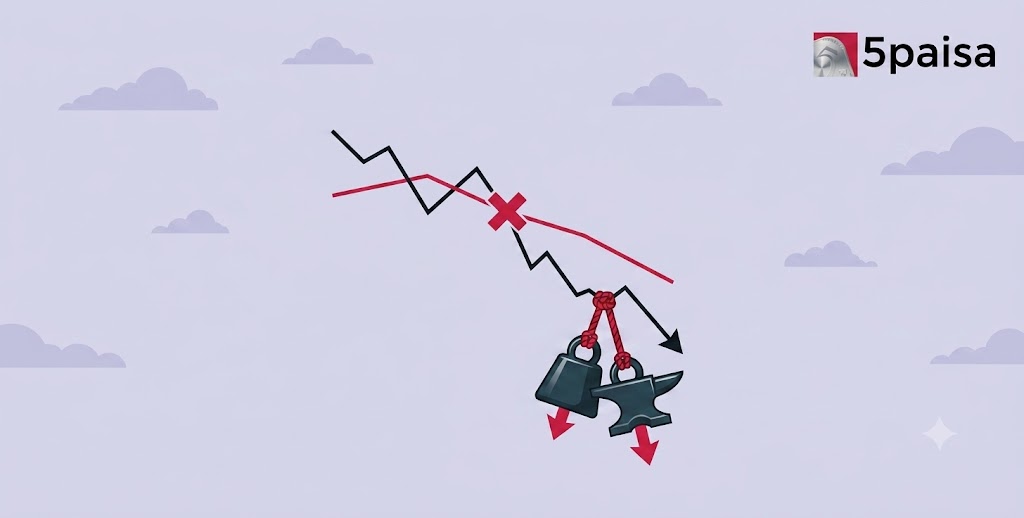
Heavily pledged stocks swing harder on the same news that leaves unpledged stocks steady. Pledged shares sit inside a margin-maintenance contract with the lender.
A significant fall in the share price can reduce the value of the pledged collateral and may trigger a margin call, depending on the terms of the financing arrangement.
Consider a mid-cap company with a large proportion of its promoter holding pledged. If the market crashes and the stock price falls sharply and the collateral value falls below the lender’s threshold, the promoter may be required to put up more collateral or pay a portion of the loan. If they are not able to, the pledge can be called and the shares sold, adding to selling pressure.
Risk of Forced Sale and Price Erosion
Instead of relying on a fixed pledge threshold, investors should assess the pledge alongside promoter-level borrowing, the company's debt, operating cash flow, liquidity, and the trend in pledged shares.
If the pledge is rising quarter-over-quarter, treat that as a stronger warning than a stable, high pledge.
Pressure on Future Earnings
If the borrowing costs of financing affect the company’s earnings or cash flows, earnings growth may slow, even if revenues remain the same.
If financing pressures affect cash flow or earnings, investors may re-evaluate the company’s growth prospects and valuation.
Loss of Promoter Control
Promoters risk losing control of the company if lenders invoke the pledge and sell the shares.
For example, if a promoter owns 60% of a company and pledges half of that holding, 30% of the company's total shares would be pledged. If the lender ultimately invokes and sells all of those pledged shares, the promoter's stake could theoretically fall from 60% to 30%.
A lower promoter stake can reduce the promoter’s voting influence and, depending on the resulting ownership structure, may affect control of the company.
Promoter pledging is a financing choice and is not automatically a sign of financial distress. The funds may be used for a range of purposes, such as investment, refinancing, or meeting other financing needs. Investors should verify the purpose and assess whether the promoter can comfortably meet the associated obligations.
The disciplined reader looks for two things together: a low or falling pledge ratio and steady or growing operating cash flow. Together, these signals can help investors assess whether the borrowing appears consistent with growth financing or may indicate financial pressure.
Here is where you can check the data and what to look for:
Promoter pledge data reads as a single number that carries the promoter's leverage decision into the share price. A low and stable pledge generally presents less pledge-related risk than a high or rapidly increasing pledge, all else being equal. As the pledge rises, investors pay closer attention to the potential effects on volatility, promoter control, and earnings. You should read the pledge ratio alongside the operating cash flow before you form a view on the stock.
01
 5paisa Capital Ltd
Disclaimer: Investment in securities market are subject to market risks, read all the related documents carefully before investing. For detailed disclaimer please Click here.