
Wedge Pattern Trading Guide
 Varda Khade
- 0 min read
Varda Khade
- 0 min read
Last Updated: 16th June 2026 - 01:50 pm

Traders in the Indian stock market are always looking for ways to better understand where prices may move next. When you start out, a lot of people learn to read simple lines on a chart. More experienced traders look for shapes that suggest a big move is coming. The wedge pattern is one of the most powerful and popular shapes you can find on a chart.
Understanding these patterns is like having a secret map that points you to where the tension is building up in the market. When that tension breaks, it often results in a big price move. In this guide, we’ll explain what these patterns are, how to identify them, and how you can apply them in your trading journey.
 Invest in Indian Markets and Unlock Future Potential With 5paisa!
What is a Wedge Pattern?
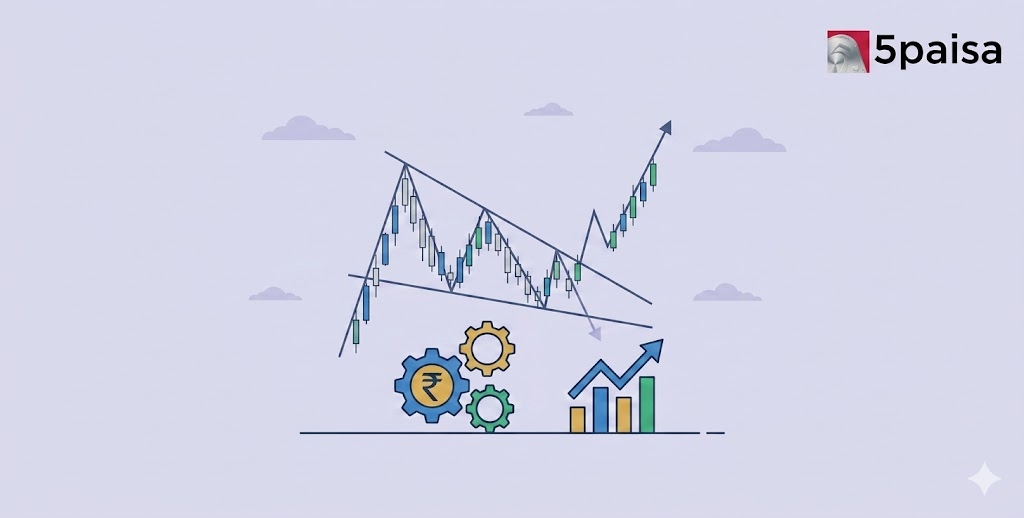
A wedge pattern is a chart pattern formed when the price of a stock consolidates between two converging trendlines. If you draw a line between the highs and a line between the lows, you'll see that the distance between the two lines becomes narrower and narrower over time to form a shape that resembles a wedge.
Imagine a spring that is curled up. The buyers and sellers are fighting each other as the price moves between these narrowing lines, but they are running out of room to manoeuvre.The price will eventually break out in one direction, and this breakout often signals a potential trend continuation or reversal. Many traders watch for these breakouts as possible trade entry opportunities.
There are two broad types of wedge patterns, depending on which way they point. There are falling wedges and rising wedges.
Types of Wedge Patterns
To identify a wedge, you draw two lines on your chart. One line goes across the peaks (highs) and the other goes across the troughs (lows). If the lines are not parallel, that is to say, if they are coming closer together, you are probably looking at a wedge.
1. Falling Wedge
If the trend lines slope down, this is called a falling wedge. This pattern is often a sign that the selling pressure is running out of steam. The price is making lower highs and lower lows, but the sellers are less aggressive. When the price finally breaks above the top trend line, it is a sign that the bulls (the buyers) have officially taken over.
2. The Rising Wedge
The opposite is a rising wedge. It happens when the trendlines slope upward. Here, the price is creating higher highs and higher lows, but there are signs that buying pressure is starting to decline. Even with the price going up, the momentum is slowing down. When the bottom trendline is broken, it is often a sign that a reversal is coming, and the price could start dropping.
What is a Bullish Wedge Pattern?
Traders generally use the term bullish wedge pattern to describe a Falling Wedge that forms in an uptrend.
Even in a strong market, stocks don’t go straight up forever. Often, they will pause, sidle or dip slightly before resuming their climb. This dip is the falling wedge. It’s a pause in the sense that it comes in a bigger upward trend, and it gives an opportunity for new buyers to get in. When the price breaks out of the top of this falling wedge, the previous uptrend often continues with even more strength.
For Indian traders watching indices like the Nifty 50 or mid-cap stocks, spotting a bullish wedge in a dip can be a good way to catch a good entry point ahead of the next wave of growth.
How to Trade Wedge Patterns Successfully
A wedge pattern, like any other trading tool, is only as useful as the strategy you use with it. Here is how you can trade these patterns:
1. Keep an eye out for the Breakout
The most important part of the trade is the breakout. You want to see a clear candle close outside of the wedge trendline. If the price hits the line and bounces back inside, it’s not a real breakout yet. All you need is patience.
2. Volume Testing
Volume is the number of shares traded. As the wedge tightens up, you should see the volume begin to drop. This confirms the market is taking a breather. When the breakout occurs, you want to see a sudden, sharp increase in volume. This confirms that most of the traders are now favouring the new direction.
3. Use Support & Resistance Levels
A wedge is much more reliable if it occurs at a known level of support or resistance. For example, a falling wedge pattern formation very close to a price level where the stock has stopped falling previously makes the signal a lot stronger. To see how stocks have reacted to certain price levels in the past, check out official resources like the National Stock Exchange (NSE) India to view historical price charts.
4. Manage Your Risk
Never enter a trade without knowing your exit plan.
- Stop Loss: Place your stop loss just beyond the wedge on the opposite side. If the price breaks out but then immediately falls back inside the wedge, your pattern has failed, and it is time to get out.
- Target Price: A common method of determining the target is to measure the widest distance of the wedge (the beginning) and extrapolate that distance from the breakout point.
The Value of Being Informed
Chart patterns like the wedge are great, but they don’t exist in a vacuum. In the Indian financial landscape, company news, government policies and global market shifts have a huge role to play in price movement.
The Securities and Exchange Board of India (SEBI) provides investor education resources that help market participants understand trading risks and regulatory requirements.
Being a successful trader is not just about drawing lines on a screen, but staying informed on the big picture events that could cause your patterns to fail. Always make sure you are following the latest news from good sources before you make a trade.
Conclusion
One of the most reliable ways to visualise the tug-of-war between buyers and sellers is the wedge pattern. These shapes provide a clear structure to your trading plan, whether you are looking for a bullish wedge pattern to ride the next move up, or a rising wedge to warn you of a drop.
Always use a stop loss to protect your trading capital. Trading is a skill that develops over time. If a pattern doesn’t come out how you thought once in a while, don’t be discouraged, that’s part of the game. Keep practising, keep your risk small and focus on becoming a better trader in the long-term process.
- Flat ₹20 Brokerage
- Next-gen Trading
- Advanced Charting
- Actionable Ideas
Trending on 5paisa
Disclaimer: Investment in securities market are subject to market risks, read all the related documents carefully before investing. For detailed disclaimer please Click here.