
Scalping vs. Swing Trading: What's the Difference?
 5paisa Capital Ltd
- 0 min read
5paisa Capital Ltd
- 0 min read
Last Updated: 17th October 2025 - 03:47 pm

When it comes to the stock market, there are many trading styles. Some traders prefer to buy and hold for the long term, while others focus on shorter timeframes. Two of the most common short-term trading strategies are scalping and swing trading. At first glance, both might look similar because they aim to make profits in a shorter period compared to long-term investing. However, the way they work, the risks involved, and the skills needed are very different.
 Start Your Trading Journey with 5paisa – Trade Smarter, Trade Faster!
What is Scalping?
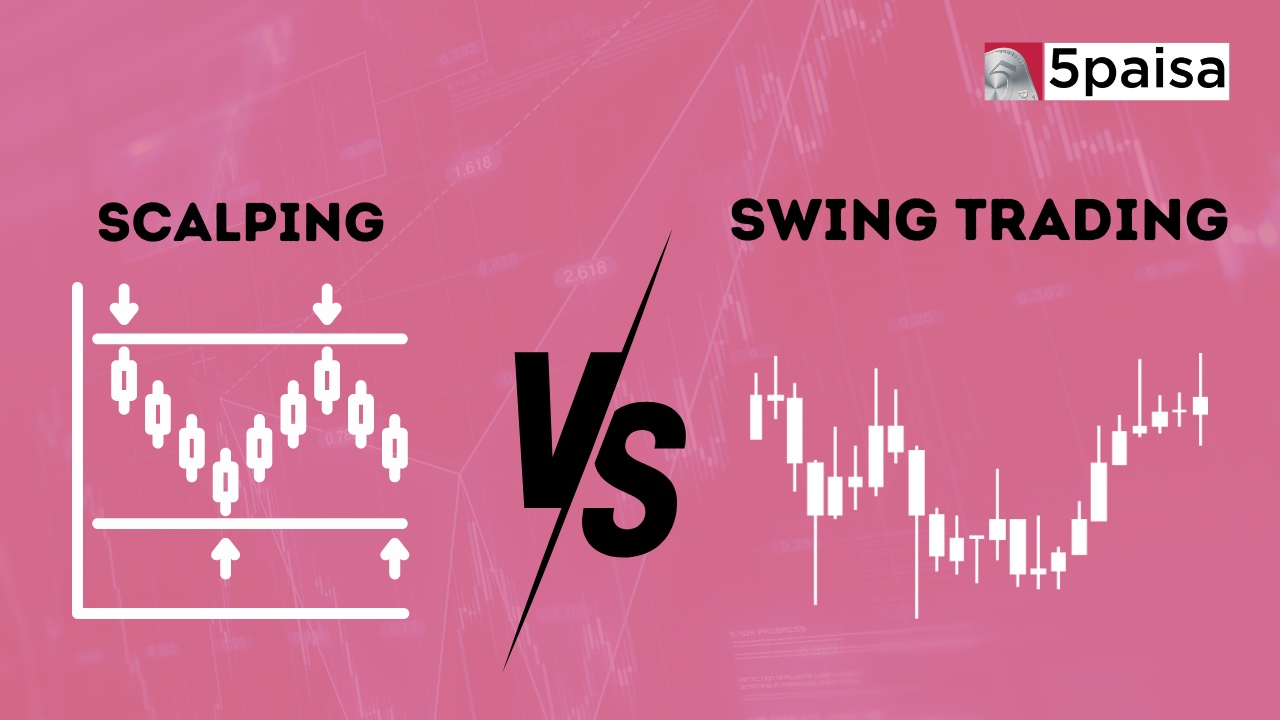
Scalping is one of the fastest trading styles in the market. A scalper buys and sells a stock, currency, or commodity within seconds or minutes. The goal is to profit from small price movements multiple times a day.
Example: A scalper may buy a stock at ₹500 and sell it at ₹502 just a few minutes later. The profit per trade is small, but this process is repeated many times throughout the trading session.
Scalping requires constant focus, quick decisions, and fast order execution. Traders often use 1-minute or 5-minute charts to identify opportunities. Low brokerage and high-speed internet are crucial because trade frequency is very high.
- Extremely short holding periods
- Dozens or even hundreds of trades daily
- Small profits per trade but high volume overall
- High stress and fast reflexes required
What is Swing Trading?
Swing trading is a relatively slower trading style where traders hold positions for a few days to weeks. Instead of capturing tiny price fluctuations, they aim for larger movements based on broader market trends.
Example: A swing trader may buy a stock at ₹500 and sell it at ₹550 after a week. The profit per trade is higher, though the number of trades is fewer.
Swing traders rely on daily or weekly charts and use technical indicators like moving averages, support, and resistance levels. They may also consider earnings reports, sector trends, and macroeconomic factors.
- Hold trades for days to weeks
- Fewer trades with larger profits per trade
- Requires patience and trend-following discipline
- Less screen time compared to scalping
Key Differences Between Scalping and Swing Trading
| Factor | Scalping | Swing Trading |
|---|---|---|
| Holding Period | Seconds to minutes | Days to weeks |
| Number of Trades | Dozens or hundreds daily | Few trades per week |
| Profit Target | Small profits repeatedly | Larger profit per trade |
| Charts Used | 1–5 minute charts | Daily or weekly charts |
| Stress Level | Very high due to speed | Moderate, needs patience |
| Trader Profile | Suits fast decision-makers | Suits patient trend followers |
Which Trading Style is Right for You?
The right trading style depends on your personality, risk tolerance, and time availability.
- Scalping suits traders who enjoy fast-paced action and can dedicate full-time screen hours. It requires focus, discipline, and strong emotional control.
- Swing Trading is ideal for those who prefer a balanced approach. You can continue your job or studies while analysing charts after market hours.
Aspect Comparison
| Aspect | Scalping | Swing Trading |
|---|---|---|
| Timeframe | Very short-term (minutes) | Short-to-medium term (days to weeks) |
| Advantages |
|
|
| Disadvantages |
|
|
Scalping vs Swing Trading for Beginners
For beginners in India, swing trading is generally easier to start with. It requires less capital, less technical precision, and offers more flexibility. A working professional or student can manage trades with daily analysis and periodic adjustments.
Scalping, however, is better suited for experienced traders with high-speed trading platforms, low brokerage plans, and a strong understanding of intraday price movement.
Conclusion
Scalping and swing trading are two distinct approaches, each with unique advantages. Scalping focuses on speed, small profits, and constant attention, while swing trading emphasises patience, trend analysis, and larger profits over a longer horizon.
For Indian traders, the best approach depends on personal style. If you enjoy fast-paced markets, try scalping; if you prefer a calmer, strategy-based method, opt for swing trading. Whichever you choose, remember — discipline, risk management, and continuous learning are the real keys to trading success.
- Flat ₹20 Brokerage
- Next-gen Trading
- Advanced Charting
- Actionable Ideas
Trending on 5paisa
Disclaimer: Investment in securities market are subject to market risks, read all the related documents carefully before investing. For detailed disclaimer please Click here.