
PNG vs LPG: Why Is the Indian Government Trying to Shift from LPG to PNG?
 5paisa Capital Ltd
- 0 min read
5paisa Capital Ltd
- 0 min read
Last Updated: 8th May 2026 - 06:31 pm

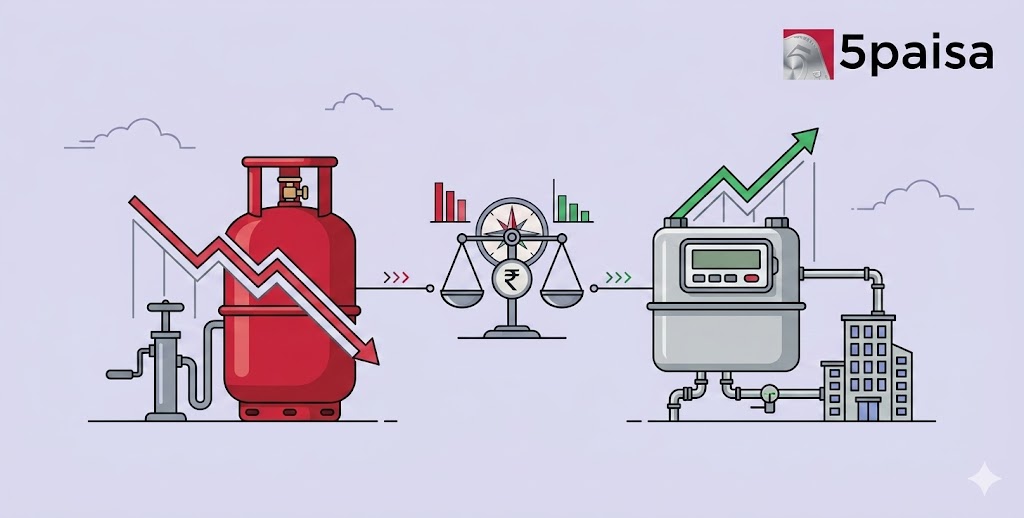
For many years, Liquefied Petroleum Gas (LPG) cylinders have been a common part of Indian kitchens. From small towns to big cities, households have depended on cylinder deliveries for their daily cooking needs. But now, the government is slowly changing this. In many urban areas, households are being encouraged to switch from LPG to Piped Natural Gas (PNG).
This has become more important after rising tensions between the US and Iran which have led to closure of Strait of Hormuz as a result it has disrupted the energy prices and supplies. The conflict has highlighted how dependent India remains on imported fuel. It has also exposed the risks linked to global supply chains and shipping routes.
 Invest in Indian Markets and Unlock Future Potential With 5paisa!
Because of this, the government now sees PNG as a safer and more stable option for India.
How the US-Iran Conflict Matters to India?
India imports a large share of its LPG requirement from countries in the Middle East. Over 60% of this supply is through the Strait of Hormuz.
Whenever tensions rise in the Strait of Hormuz, energy markets react immediately. Oil prices move higher, shipping costs rise, and supply concerns increase. The recent conflict involving the US and Iran created a similar situation. Several cargo routes faced disruptions, while freight and insurance charges also increased.
For India, this became a serious concern. The government realised that relying heavily on imported LPG could be a long-term risk.
This is where PNG gained more importance.
What is PNG?
PNG stands for Piped Natural Gas. It is natural gas supplied directly to homes through underground pipelines. Unlike LPG cylinders, PNG does not need physical delivery or regular refilling of the cylinders.
PNG mainly contains methane and flows continuously through pipelines connected to homes. It works like a regular utility service such as water supply. Consumers receive gas directly through a pipe and are charged according to their usage of gas.
PNG vs LPG – Key Differences and Advantages
1. Lower Dependence on Imports
One of the biggest advantages of PNG is that it reduces imports of LPG
Natural gas can come from domestic production as well as imports from different regions. Pipeline networks also reduce dependence on large-scale cylinder transportation and shipping movements.
2. Continuous Supply
LPG distribution depends on several moving parts. Consumers need to book cylinders first, wait for deliveries, and also arrange replacements regularly. During periods of supply stress, delivery timelines can increase sharply. This was seen during the COVID-19 crisis.
In recent times, households faced delays and concerns around refill availability of cylinders. Panic buying also added pressure to this situation.
PNG removes most of these problems as the supply comes directly from pipelines. Consumers do not need to book, refill or worry about running out of cooking gas suddenly. This gives households a more stable supply.
3. PNG is Often Cheaper
LPG prices are closely linked to international energy markets. When crude oil prices rise or shipping becomes expensive, LPG prices usually increase as well. Recently, due to the war, crude oil prices went up over $120.
PNG, however, is often cheaper in urban centres because distribution costs are lower. There is no need for cylinder transport, storage, or delivery logistics. Consumers are billed according to their actual usage. This is done through gas meters, which are installed at their respective homes.
For many middle-class families in cities, this helps reduce monthly cooking expenses.
4. Better Convenience
Convenience is another reason behind the growing shift.
Managing LPG cylinders can sometimes become difficult, especially in apartments and high-rise buildings. Households need to monitor refill schedules and handle heavy cylinders during replacement.
PNG makes the process much simpler. Gas supply remains available throughout the day, and billing works in a predictable manner.
As a result, many consumers now prefer uninterrupted utility services rather than physical delivery systems.
Government’s Push Towards PNG
Adding to this, the government is no longer only promoting PNG through awareness campaigns. It has now started introducing policy measures to speed up the transition in cities where pipeline infrastructure already exists.
Under recent rules introduced in 2026, households in certain PNG-covered areas may eventually lose LPG supply if they refuse to shift despite having pipeline access. Consumers with active PNG connections are also being encouraged to surrender duplicate LPG connections.
At the same time, city gas distribution companies are being asked to expand infrastructure at a faster pace.
The government believes LPG cylinders should mainly serve rural and remote areas where PNG networks are not yet practical.
Challenges Still Remain
Even though PNG offers several advantages, expansion across India will take a lot of time and money.
PNG is currently available mostly in metro cities, large urban centres, and selected industrial regions. Many smaller towns and rural areas still do not have pipeline connectivity. For crores of households outside major cities, LPG remains the only practical cooking fuel option.
Building underground gas pipelines requires heavy investment as well. Companies need approvals, excavation permissions, and large-scale infrastructure planning before expanding their networks.
This makes expansion slower compared to regular LPG distribution.
Conclusion
India’s push towards PNG reflects a much bigger change in the country’s energy planning. The government is trying to build a fuel system that is less exposed to global shocks and supply disruptions.
At present, the transition may look beneficial mainly for cities where pipeline infrastructure already exists. However, over the long term, this appears to be the need of the future. As India’s energy demand rises and global uncertainties continue, building a wider PNG network could help the country create a more stable and secure fuel ecosystem.
Frequently Asked Questions
- Flat ₹20 Brokerage
- Next-gen Trading
- Advanced Charting
- Actionable Ideas
Trending on 5paisa
 Varda Khade
Disclaimer: Investment in securities market are subject to market risks, read all the related documents carefully before investing. For detailed disclaimer please Click here.