
How Rising Oil Prices Are Causing a Plastic Packaging Crunch in India
 5paisa Capital Ltd
- 0 min read
5paisa Capital Ltd
- 0 min read
Last Updated: 8th April 2026 - 04:40 pm

Plastic is something that most of us use in our daily lives. Bags, food containers, water bottles, etc., all contain plastic. Due to its widespread use, a small disruption may impact multiple businesses. Businesses that depend heavily on the regular delivery of plastic packing supplies are impacted right away.
 Invest in Indian Markets and Unlock Future Potential With 5paisa!
Relationship Between Crude Oil and Plastic Packaging Industry
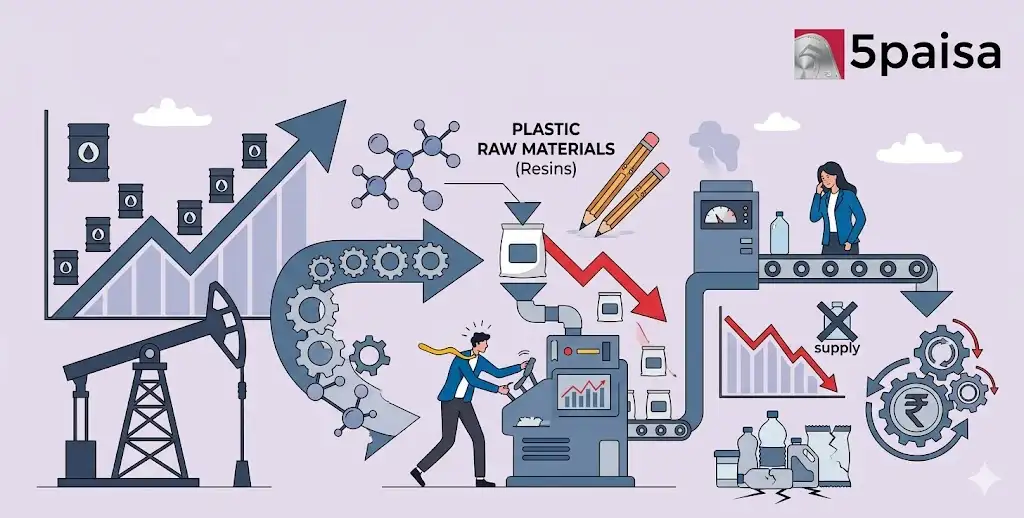
Since most plastics are made from ingredients generated from natural gas or oil, including naphtha, the plastic packaging sector is strongly linked to crude oil. Basic ingredients like PET, polyethylene (PE), and polypropylene (PP) are used to make important resins.
This implies that the cost of making these plastics increases along with the price of crude oil. Manufacturers have to pay more for the raw materials that go into bottles, milk pouches, food containers, and other packaging. Profit margins are squeezed by rising costs, which businesses frequently transfer to customers by raising product pricing.
Put simply, the price of oil serves as the "basis cost" for the plastics business as a whole.
In 2025, resin prices had softened in some markets, which gave packaging companies some breathing space. Lower input costs helped them manage even when demand was not very strong. For example, a packaging firm reported better profits largely because cheaper Polyethylene and Polypropylene balanced weaker sales.
But this situation has changed in the new calendar year (2026).
As of April 2026, India’s plastic packaging industry is once again under strain. The turmoil in West Asia has led to major disruptions, pushing crude oil prices past $110 per barrel. This has increased costs across the board. At the same time, supply constraints have made it harder for manufacturers to secure raw materials.
The timing could not have been worse. Summer is when demand is at its highest, especially for bottled drinks, packaged water, and dairy products. All of these depend heavily on plastic packaging. So just as demand is rising, manufacturers are dealing with higher costs and tighter supply, making it much harder to keep up.
The main problem here seems to be the issue of materials like PET resin and polyolefins. PET is commonly used to make water and soft drink bottles. Polyolefins are used for milk pouches, caps, containers, and flexible packaging. These materials form the base of most everyday plastic products.
In the past few weeks, their prices have risen sharply. PET resin and polyolefins are now 40% to 80% more expensive. For many manufacturers, this is no longer just about higher costs. It is becoming difficult to plan production or even secure enough material, turning it into a serious challenge for survival.
Packaging Industry Stocks to Watch
| Script Name | Market Cap (in ₹ crore) | Current Price (April 07, 2026 in ₹) |
| Uflex Ltd | 2,518 | 349 |
| Jindal Poly Films Ltd | 3,729 | 852 |
| Cosmo First Ltd | 1,642 | 626 |
| Polyplex Corporation Ltd | 2,536 | 808 |
| Hitech Corporation Ltd | 236 | 137 |
| TCPL Packaging Ltd | 2,171 | 2,386 |
| Apt Packaging Ltd | 207 | 176 |
| Huhtamaki India Ltd | 1,271 | 168 |
| Mold-Tek Packaging Ltd | 1,835 | 552 |
| EPL Ltd | 6,828 | 213 |
| Garware Hi Tech Films Ltd | 8,657 | 3,726 |
Small Manufacturers Struggle
Big companies with long-term contracts are managing the situation. However, small manufacturers are facing serious trouble. They rely on “spot buying”, which involves purchasing materials at current market rates. Now, many cannot get enough stock. Orders are being cancelled, and some factories are slowing production or shutting down temporarily. This creates a chain reaction: delays in packaging mean delays in delivery to retailers, which can affect consumers.
High prices are only part of the problem. Availability is also emerging as a big problem. Companies are stockpiling materials ahead of the summer rush. Procurement cycles that used to take 2-3 weeks now stretch up to 6 weeks. Some dealers are deliberately holding back stock, betting that prices will rise further.
Industries Hit Hard
Majorly, all industries have faced the ripple effects of this. The beverage and dairy sectors are particularly vulnerable. This is because packaging makes up nearly 50% of their total costs. So, the price spike is estimated to reduce profit margins by 6-7% in the coming quarters.
At the same time, passing these higher costs on to consumers is difficult. Even a small price increase can change buying behaviour. For instance, many customers might move to a rival brand that still sells for ₹10 if a soft drink that typically costs ₹10 per bottle is raised to ₹11.
This small shift in preference can have a larger impact. Over time, it can lead to a loss of market share for the brand that increases prices. For companies, this creates a tough situation. They must either choose between absorbing higher costs or risking a drop in sales.
In parallel, Dairy companies face what some call a “triple squeeze”: rising packaging costs, higher fuel expenses for transportation, and increased milk procurement prices. Similarly, small bottled water brands may be forced to raise prices or limit production if packaging supplies do not stabilise soon.
Conclusion
Manufacturers are finding it difficult to meet demand due to strained supply chains and dramatically rising raw material costs. Because plastic supply cycles are lengthy, the full effects of increased costs and restricted supplies would be apparent by May or June 2026,
For many businesses, maintaining operations has become more important than safeguarding profit margins. Businesses are preparing for a difficult summer season, and securing a consistent supply of packing materials has become the top priority.
Frequently Asked Questions
- Flat ₹20 Brokerage
- Next-gen Trading
- Advanced Charting
- Actionable Ideas
Trending on 5paisa
01
5paisa Capital Ltd
 Anupama VM
Disclaimer: Investment in securities market are subject to market risks, read all the related documents carefully before investing. For detailed disclaimer please Click here.