
How ETFs Play a Crucial Role in Diversifying Your Investment Portfolio
5paisa Capital Ltd


Content
- What Are ETFs?
- Key Benefits of Portfolio Diversification Using ETFs
- Practical Considerations When Choosing ETFs
- How to Use ETFs for Diversified Investing
- ETF Investment Strategies for a Diversified Portfolio
- Conclusion
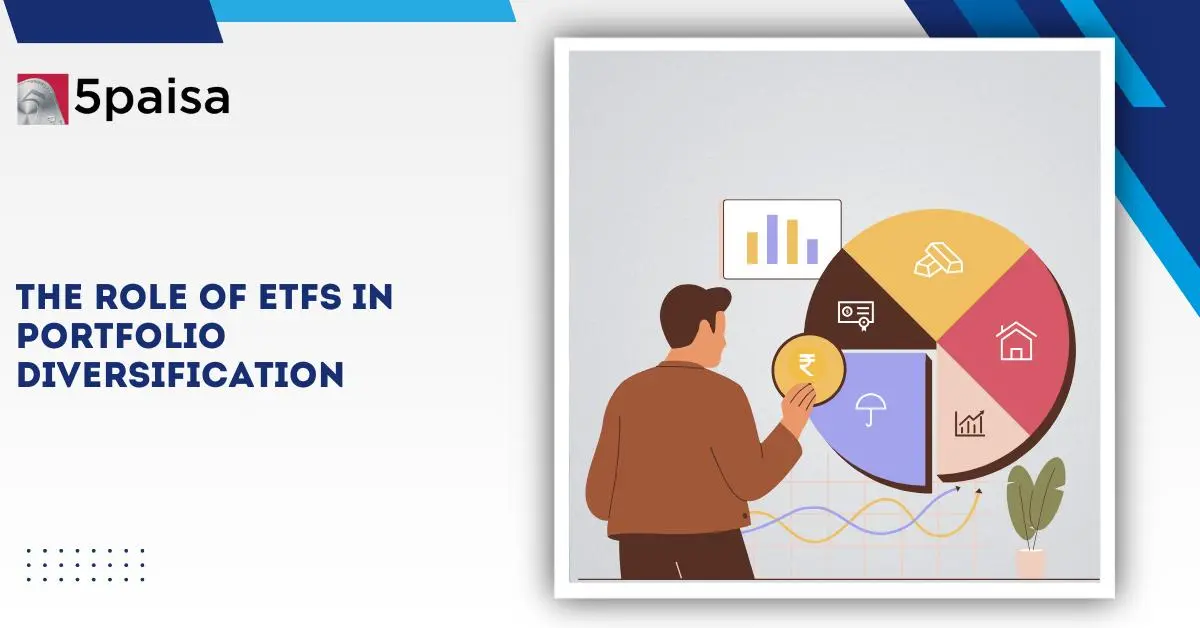
Diversification is vital for not only risk management but also return optimisation in the dynamic world of investment. Adding exchange-traded funds (ETFs) to your financial portfolio is the most effective way to diversify. Seldom having to buy individual assets, exchange-traded funds (ETFs) offer investors a convenient way to distribute their money across not only several asset classes and sectors, but also businesses.
Let's examine how ETFs can help diversify your investing portfolio, emphasising their advantages, usefulness, and best practices for achieving a well-rounded investment approach.

More Articles to Explore
- Difference between NSDL and CDSL
- Lowest brokerage charges in India for online trading
- How to find your demat account number using PAN card
- What are bonus shares and how do they work?
- How to transfer shares from one demat account to another?
- What is BO ID?
- Open demat account without a PAN card - a complete guide
- What are DP charges?
- What is DP ID in a demat account
- How to transfer money from demat account to bank account
Disclaimer: Investment in securities market are subject to market risks, read all the related documents carefully before investing. For detailed disclaimer please Click here.
Frequently Asked Questions
An ETF is a type of fund traded on stock exchanges like shares. Unlike mutual funds, ETFs can be bought or sold anytime during market hours.
ETFs spread investments across various assets, sectors, or strategies—reducing reliance on any single component.
Yes. They offer simplicity, low costs, and broad market exposure, making them ideal for new investors.
Check the ETF’s underlying index, expense ratio, tracking error, liquidity, and how it aligns with your investment goals.