A Comprehensive Guide to Algo Trading

5paisa Capital Ltd

What is Algo Trading?

Want to start your Investment Journey?

+91
By proceeding, you agree to all T&C*
hero_form

Content

Why Algo Trading is Impacting the Financial Markets?

Technology-driven trading is reshaping how investors engage with the stock market in today's rapidly evolving financial industry. 
Algorithmic trading has disrupted traditional trading by allowing traders to execute high-speed, data-driven trades with unparalleled efficiency. Instead of relying on human intuition and emotional decision-making, automated trading software leverages mathematical models, real-time market data, and predefined trading algorithms to optimise trading strategies.

If you’ve ever asked, “What is algo trading?” or “How does algorithmic trading work?”, this in-depth article will share insights about everything you need to know. 

The article will provide detailed information about the fundamentals of algo trading, its benefits, how it works, and whether it is profitable. Whosoever you are - a retail trader, institutional investor, or someone just interested in stock market automation, this comprehensive guide will provide a clear and detailed understanding of algo trading strategies.
 

What is Algo Trading? Understanding the Basics

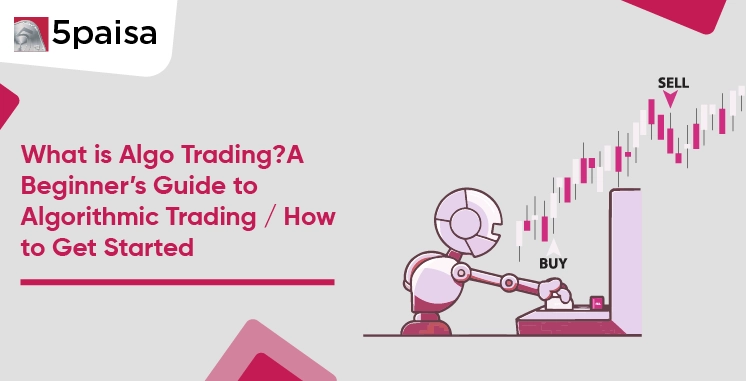
Algo trading, short for algorithmic trading, refers to the use of computer programs and trading algorithms to automate trade execution based on predefined criteria. These stock market algorithms analyse market data, detect trading opportunities, and place buy or sell orders without human intervention.

Instead of manually placing trades, automated trading systems operate based on technical indicators, price movements, and fundamental market conditions. Traders use these AI-powered trading algorithms to enhance precision, reduce latency, and eliminate human error in stock market execution.
 

Key characteristics of Algo trading include

  • Automation: Trades are executed automatically based on predefined trading rules.
  • Speed: Orders are placed within milliseconds, ensuring quick response to market movements.
  • Data-driven decision-making: Trades are executed using real-time market data and historical trends.
  • Scalability: Algorithms can handle high-frequency trading (HFT), executing multiple trades simultaneously.
     

How Algo Trading Works: The Step-by-Step Process

Understanding how algo trading in practical life works is crucial before implementing automated trading strategies. Below are the key steps involved,

1. Strategy Development: Defining Algorithmic Trading Rules

The foundation of any algorithmic trading strategy is a well-defined set of trading rules. These rules are based on,

  • Technical indicators: Moving Averages (SMA/EMA), Bollinger Bands, MACD, RSI.
  • Price action & market trends: Trend following, breakout strategies, mean reversion.
  • Order execution methods: Limit orders, stop-loss, take-profit, market orders.
  • Risk management techniques: Position sizing, stop-loss placement, volatility filters.


Traders design these strategies using programming languages like Python, C++, or R and implement them in Algo trading software.

2. Backtesting: Analyzing Past Market Performance

Before deploying an algorithm in a live market, backtesting is performed using historical stock market data. Backtesting in algo trading helps traders,

  • Evaluate historical performance, but it does not guarantee future profitability due to changing market conditions.
  • Optimise profitability potential and reduce trading risks.
  • Identify weaknesses and improvise the strength of the strategy.


3. Trade Execution: Deploying the Algorithm in Live Markets

Once tested and optimised, the algorithm is deployed to automatically execute trades when predefined conditions are met. The main benefits of automated trade execution include,

  • Ultra-fast order placement (reducing slippage).
  • Elimination of human emotions, ensuring objective trading.
  • Scalability to trade across multiple asset classes.


4. Risk Management in Algo Trading

Since stock market volatility can lead to unpredictable price movements, algo trading risk management plays a significant role. Effective risk control methods include,

  • Stop-loss orders: Automatically closing losing positions to limit losses.
  • Diversification: Spreading investments across different asset classes.
  • Position Sizing: Adjusting the sise of the trade based on risk tolerance.
  • Algorithmic safeguards: Preventing excessive trades during high-volatility market conditions.


5. Performance Monitoring and Strategy Optimization

Even though automated trading systems execute trades without human intervention, continuous monitoring is of prime importance. Traders must,

  • Track key performance indicators (KPIs) like Sharpe ratio, profit/loss ratio, and drawdowns.
  • Adjust trading algorithms based on real-time market feedback.
  • Ensure compliance with regulations on algo trading.


By refining stock market trading algorithms, traders can maximise profit potential while mitigating risk.
 

Benefits of Algorithmic Trading: Why is Algo Trading So Popular?

1. High-Speed Trade Execution & Efficiency

Algo trading platforms execute trades within milliseconds, ensuring instant market order execution. High-frequency trading (HFT) strategies rely on low-latency, high-speed execution to gain a competitive edge.

2. Eliminates Emotional Bias in Trading

Unlike manual trading, which is highly prone to emotional decision-making, algorithmic trading operates purely on data-driven logic. By removing psychological biases, algo traders can execute trades more consistently.

3. Advanced Backtesting & Optimization

Backtesting trading strategies on historical data allows traders to evaluate strategy performance before live market deployment. However, Backtesting only evaluates past performance and does not guarantee future success. Many retail traders fall into the trap of overfitting their models to historical data, which fails in live trading.

4. Lower Transaction Costs & Higher Profitability

Algo trading eliminates the need for manual execution, reducing trading costs and minimizing market impact costs. Reduced slippage and optimised order execution improve profit margins most of the time in the stock market.


Explore a comprehensive guide to algo trading and elevate your skills further at 5paisa Algo Convention 2025 on September 27, 2025 at BSE, Mumbai. Learn practical algo trading strategies from top experts. Don’t miss out—register now to secure your seat!

Is Algo Trading Profitable?

The profitability of algorithmic trading depends on strategy efficiency, risk management, and market conditions. While institutional firms excel in algo trading due to superior infrastructure, most retail algo traders find it challenging to sustain profitability due to broker-imposed restrictions, latency issues, and high execution costs. 

Success in the stock market with the help of algorithmic trading requires deep technical knowledge, continuous optimization of the strategy, and a rigorous capital discipline.
Popular profitable algo trading strategies include,

  • Momentum trading: Benefitting by capturing and analysing price trends.
  • Arbitrage trading: Taking advantage of the market inefficiencies.
  • Market-making: Providing liquidity to earn spreads.
  • Statistical arbitrage: Using mathematical models for trading.


By selecting the best algo trading strategy, traders can maximise stock market profits and optimise risk-adjusted returns.
 

How to Start Algo Trading: A Step-by-Step Guide

Step 1: Learn the Basics of Algorithmic Trading

Before exploring the best algo trading platforms or testing automated trading strategies, it is very important to build a strong foundation in financial markets, trading concepts, and quantitative analysis.
To succeed in algorithmic trading, traders should understand,

  • Stock market fundamentals – supply and demand dynamics, price action, and order execution.
  • Technical indicators – moving averages, RSI, Bollinger Bands, MACD, Fibonacci retracements.
  • Quantitative trading strategies – trend following, mean reversion, statistical arbitrage.
  • Backtesting and risk management – optimizing trading algorithms for profitability.


With a solid understanding of stock market automation, traders can develop custom trading bots and optimise algorithmic strategies.

Step 2: Choose the Right Algo Trading Software

Selecting the best algo trading software is essential for seamless execution of the trades in the stock market. The choice of the trading platform significantly impacts the overall performance of the strategy.
Key Features to Look For,

  • Backtesting tools – Validate strategies on historical market data.
  • Low-latency execution – Essential for high-frequency trading (HFT).
  • API support – Seamless integration with algo trading brokers.
  • Risk management tools – Automated position sizing and stop-loss execution.

Choosing the right algo trading platform ensures efficient trade execution, better scalability, and maximum profitability.

Step 3: Select a Programming Language for Algo Trading

To develop a fully automated trading system, selecting the best programming language for algo trading is of prime importance.
Best Programming Languages for Algo Trading,

  • Python – Most popular for machine learning in algo trading, supported by libraries like Pandas, NumPy, and TensorFlow.
  • C++ – Preferred for high-frequency trading strategies due to low-latency execution.
  • R & MATLAB – Used in quantitative finance and risk modelling

Python is the best choice for beginners as it offers flexibility, extensive libraries, and community support.

Step 4: Develop & Backtest Your Algo Trading Strategy

Creating a profitable algorithmic trading strategy requires,

  • Defining trading rules based on technical indicators and quantitative models.
  • Selecting trade execution types – market orders, limit orders, and stop-loss orders.
  • Backtesting using historical data to optimise trading performance.

Backtesting ensures that trading algorithms are optimised for real-world market conditions.

Step 5: Select an Algo Trading Broker

Not all brokers support API-based algorithmic trading. Choose a broker that offers API trading, low-latency execution, and high liquidity.

Step 6: Deploy Your Algo & Monitor Strategy Performance

Once your algorithmic trading bot is live, continuous monitoring of the overall performance of the algorithmic trading strategy is essential for a few of the reasons mentioned below,

  • To optimise trade execution speed.
  • To analyse profitability and risk exposure.
  • To tweak algo trading strategies based on the actual market fluctuations.

Using advanced analytics ensures long-term success in algorithmic trading.
 

Why Algorithmic Trading is the Future?

Algorithmic trading is rapidly transforming financial markets, offering traders a way to execute trades with precision, speed, and efficiency. By leveraging automated trading strategies, investors can eliminate emotional bias, reduce transaction costs, and improve decision-making through data-driven market insights. 

As the demand for algorithmic trading grows, traders who would learn and implement stock market trading algorithms, high-frequency trading strategies, and automated investment models will certainly gain a competitive edge. 
 

Disclaimer: Investment in securities market are subject to market risks, read all the related documents carefully before investing. For detailed disclaimer please Click here.

Open Free Demat Account

Be a part of 5paisa community - The first listed discount broker of India.

+91

By proceeding, you agree to all T&C*

footer_form