
Synthetic Call Strategy: All You Need to Know
Rahul Pawar
Last Updated: 18 May 2026, 04:17 PM IST

- What are Some Types of Synthetic Options?
- What is a Synthetic Call Strategy?
- How Does a Synthetic Call Option Strategy Work?
- Example of Synthetic Call Strategy
- Example of Synthetic Call Strategy:
- Benefits of Synthetic Call Option Strategy:
- Conclusion
Portfolios or trading positions containing a variety of securities that, when combined, mimic another position are known as synthetic options. Theoretically, the true position should yield the same payout as the mimicked, synthetic position. There would be a market opportunity for arbitrage if the prices of these two were not the same.
The price of a security can be ascertained by evaluating synthetic options. In reality, traders frequently construct synthetic positions in order to modify preexisting positions.


More Articles to Explore
- Delta in Options Trading: Meaning & Strategy
- Iron Condor Strategy in Directional Markets
- Option Chain Analysis: How to Read & Use It
- Theta in Options Trading: Time Decay Explained
- What is Derivative Trading? Complete Guide
- Futures & Options (F&O): Meaning & Basics
- What is IV Crush in Options Trading?
- What is Long Build-Up? Meaning & Signals
- Open Interest in Options: Meaning & Analysis
- Put Call Ratio (PCR): Meaning & How to Use It
Disclaimer: Investment in securities market are subject to market risks, read all the related documents carefully before investing. For detailed disclaimer please Click here.
Frequently Asked Questions
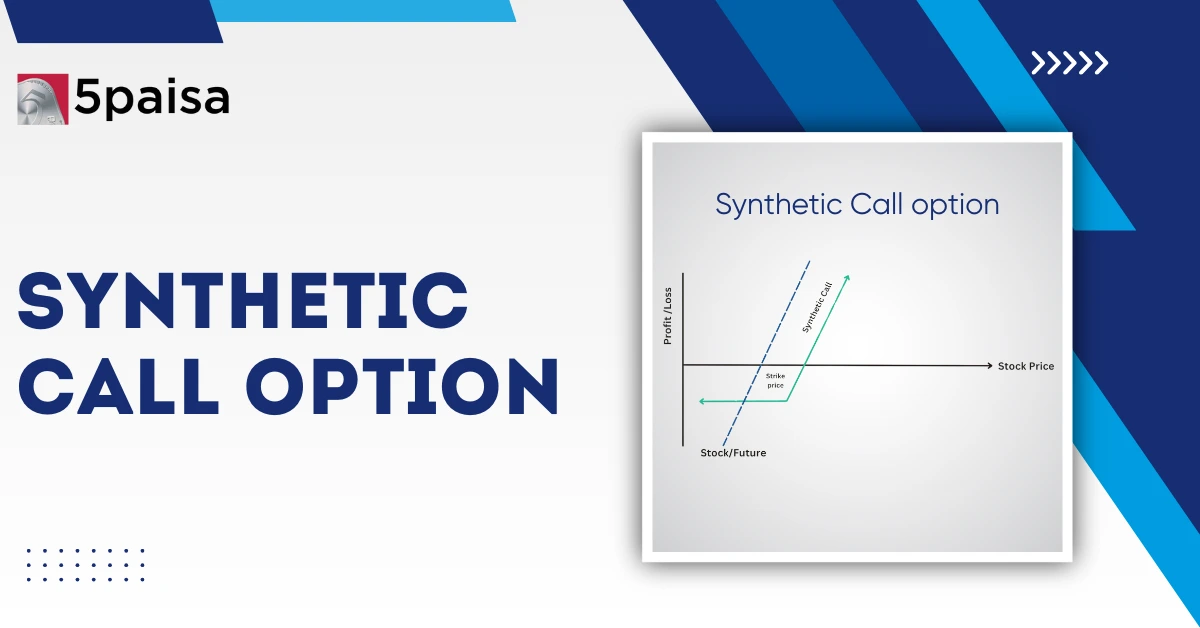
Synthetic call option strategy is a trading method that combines several financial assets, such as stocks & options, to resemble the profit and loss structure of long call options.
When a trader wants to avoid purchasing a conventional call option but anticipates an increase in the price of an asset, this method can be helpful. It offers a different strategy for making money off of price increases while preserving positional flexibility.
Investors should thoroughly weigh not only possible risks but also returns prior to using synthetic call strategy. Making smart selections and staying away from trouble requires not only knowing the state of the market but also keeping sufficient margins.