Non-Institutional Investors Explained: NII Meaning, Types, and IPO Rules

5paisa Capital Ltd

Non Institutional Investor

IPO Investing made simple!

+91
By proceeding, you agree to all T&C*
hero_form

Content

Introduction

When an initial public offering (IPO) occurs, investors pay attention because it is a good chance to participate in a solid company seeking to acquire money. Initial public offerings (IPOs) by strong, stable businesses benefit both the company and investors.

Everyone knows that investors have a wide range of options when it comes to investing in an upcoming IPO. For the IPO subscription, various slots are offered for different kinds of investors. Each category has a set quota or percentage of the total number of shares that the company wants to list.

Larger organizations, such as pension funds and endowments, are more likely than individual investors to purchase company shares. They have spaces available on different days and hours as a consequence.

Depending on the category you applied for, you'll be assigned a certain amount of shares. Let's take a look at all the various ways individuals, institutions, and others may participate in a company via the IPO.

These non-institutional investors are QIB investors, NII investors, Anchor Investors, and RII investors. Today, we’ll be having a look at all these investor categories. But first, let’s understand who exactly is an investor.

Who is an investor?

An investor is someone who puts money into a business in the hopes of seeing a return on that money. In order to make a profit and achieve key financial goals such as saving for retirement, paying for a child's education, or just growing wealth over time, investors use various financial instruments.

Stocks, bonds, commodities, mutual funds, exchange-traded funds (ETFs), futures, foreign currency, gold, silver, retirement plans, and real estate are just a few of the investment vehicles available to help you reach your objectives. To reduce risk while increasing profits, investors may look at possibilities from a variety of perspectives.

There is a big difference between an investor and a trader. An investor uses capital for long-term benefit, while a trader buys and sells assets repeatedly in order to make money in the short term. Equity or debt investments are the most common ways that investors earn profits. Capital gains and dividends may be generated through equity investments as well as stock ownership interests.

Stock ownership interests provide dividends on top of capital gains. For the scope of this article, we will now be analyzing the 3 main investor categories in the stock market.

Who are QIB Investors?

Qualified Institutional Brokers (QIBs) are non-institutional investors who are registered with SEBI. As an initial public offering nears, underwriters sell significant amounts of shares at a profit to qualified investors in order to raise the necessary cash. The SEBI mandates a 90-day lock-in period for businesses that want to allot more than 50% of their shares to QIBs.

Anchor Investors

QIB/QII investors who apply for above 10 crore shares are known as anchor investors. As the name implies, this pertains to investors who are obliged to purchase shares at a certain price in order to instil confidence in other investors and generate demand for the IPO on the market. Nevertheless, only anchor investors have access to the special fixed pricing structure.

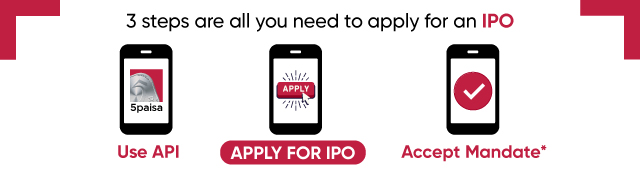
ipo-steps

Who are NII Investors?

Non-institutional Investors who do not have to register with SEBI to apply for shares are known as non-SEBI investors. HNIs are high-net-worth individuals (II) who invest more than ₹2 lakhs in a single investment. The NIIs should also be consulted if an institution wants to subscribe for more than 2 lakhs. Investors get their shares regardless of how well the IPO does.

Who are RII Investors?

Non-institutional Investors that apply for shares via the book-building procedure up to 2 Lac only are known as retail investors and may be individuals, NRIs, or HUFs. In comparison to institutional investors, their purchasing power is very low, and they wind up paying large trading commissions or fees.

However, this charge is removed if they invest online, but owing to a lack of market understanding, these investors choose that path. Retail investors, on the other hand, will be able to purchase 35% of the stock.

How to maximize the Chances of Getting an IPO?

There may be many times when the IPO you want to apply for is oversubscribed. No matter how much you apply, there is no assurance that you would get even one of the two lakhs of quota. So, what should you do in these situations?

For individual investors, the best chance of getting IPO shares is to follow these two simple tips. To begin, make sure the application is complete and accurate. Next, make sure you apply before the cutoff date.

Conclusion

This investor diversification is crucial as it allows for a level playing field and assists in a fair allotment of stocks in an event of an IPO. By reading this post, you might have a clear idea regarding which investor domain you fall into and then make informed investment decisions from thereon.

What is NII Full Form & Definition?

The full form of NII is Non-Institutional Investor. In the context of IPOs, this term refers to individual or corporate investors who apply for shares worth more than ₹2 lakh and do not fall under the Qualified Institutional Buyer (QIB) or Retail Individual Investor (RII) categories. NIIs typically include high net-worth individuals (HNIs), companies, trusts, and family offices. They bid under the Non-Institutional segment and do not enjoy the cut-off price option available to retail investors.
 

Who Falls Under the NII Category?

Any investor applying for shares worth more than ₹2 lakh in an IPO and not registered as a Qualified Institutional Buyer falls under the NII category. This includes:

  • High Net-Worth Individuals (HNIs)
  • Private limited companies
  • Hindu Undivided Families (HUFs)
  • Trusts and societies
  • Family offices and certain NRIs (if met specific conditions)

Essentially, the classification is determined more by the application size and investor profile than the investment structure.
 

Rules That Apply to Non-Institutional Investors (NIIs)

NIIs are subject to specific rules when applying for IPOs. Some key guidelines include:

  • Application Size: Bids must exceed ₹2 lakh to qualify as an NII application.
  • Price Bidding: NIIs cannot bid at the cut-off price; they must specify their bid price within the price band.
  • Reservation: IPOs typically reserve 15% of the issue size for NIIs.
  • No SEBI Registration Required: Unlike QIBs, NIIs do not need SEBI registration to participate in an IPO.
  • No Modifications: NIIs are not allowed to withdraw their bids. Prices can be modified while the issue is open. 
     

Minimum Share Allotment Requirement

As per SEBI regulations, a minimum of 15% of the total IPO issue is reserved for Non-Institutional Investors (NIIs). This allocation guarantees that higher-value investors have assured access to the offering, separate from retail and institutional segments. Within this NII quota, the structure is further divided—one-third is earmarked for Small NIIs (sNIIs), and the remaining two-thirds are set aside for Big NIIs (bNIIs).

Issuers may choose to reserve more than the mandated 15% for NIIs, but they are not allowed to allocate less. This system is designed to encourage broad-based participation and ensure that both moderate and large-scale investors have fair representation.

To qualify under the NII category, the application must be for more than ₹2 lakh. This entry threshold helps maintain a clear distinction between retail investors and those bidding at a higher scale, ensuring only serious, high-capacity participants enter this segment.

Rules for Withdrawing a Bid

Non-Institutional Investors are subject to stricter IPO bidding rules compared to retail participants. Once an NII places a bid, it cannot be withdrawn or scaled down. This means that reducing the number of shares or lowering the bid price after submission is not permitted.

However, NIIs are allowed to revise their bids upwards—either by increasing the quantity of shares applied for or by quoting a higher price. This window for upward revision remains open until the close of the IPO subscription period.

This restriction is intended to promote fairness and market discipline. It prevents erratic bidding behaviour and helps maintain a stable and predictable demand pattern throughout the issue.

For instance, if an NII initially applies for 1,000 shares at ₹100 each, they may later revise their bid to 1,200 shares or increase the price to ₹105. What they cannot do is reduce the quantity to 800 or the price to ₹95 once the bid has been submitted.
 

Constraints on Bidding at Cut-Off Price

Unlike retail investors, NIIs are not allowed to bid at the cut-off price in IPOs. They must quote a specific price within the price band. This pricing constraint requires them to make informed decisions based on demand analysis, company fundamentals, and other factors. A lower bid may result in no allotment if the final issue price is set higher, while an aggressive bid could mean paying more than necessary.
 

Allocation Procedure for bNII

In recent IPOs, the Non-Institutional Investor (NII) category has been further split into:

sNII (Small NII): Applications from ₹2 lakh to ₹10 lakh
bNII (Big NII): Applications above ₹10 lakh

The bNII segment competes among other large bidders, and allotment is made on a proportionate basis. For instance, if the bNII portion is oversubscribed by 20x, and a bidder applies for ₹40 lakh worth of shares, they may receive only 1/20th of their application amount. SEBI introduced this split to ensure fairer allotment across varying investor sizes within the NII category.

Disclaimer: Investment in securities market are subject to market risks, read all the related documents carefully before investing. For detailed disclaimer please Click here.

Verify Your Details

Apply IPO “Hassle Free” even without opening a Demat Account with 5Paisa.

Verify Your Details

Please enter valid email
Please enter valid PAN

We have sent an OTP on your mobile number .

Resend otp
Please enter valid otp

Krishca Strapping Solutions Limited

sme
  • Date Range 23 Oct- 27 Oct’23
  • Price 23
  • IPO Size 200
Open Free Demat Account

Be a part of 5paisa community - The first listed discount broker of India.

+91

By proceeding, you agree to all T&C*

footer_form