Pin Bar Candlestick Pattern Types & Advantages

5paisa Capital Ltd

Pin Bar Candlestick: Types & Trading Advantages

Want to start your Investment Journey?

+91
By proceeding, you agree to all T&C*
hero_form

Content

In the world of technical analysis, certain candlestick patterns stand out because of their reliability in signaling potential price reversals. One such pattern is the pin bar candlestick pattern, often favored by traders for its clarity and effectiveness.

While it may look simple at first glance, a pin bar can reveal a great deal about market sentiment and the tug-of-war between buyers and sellers. Understanding how to identify, interpret, and trade pin bars can add a powerful tool to your trading arsenal.
 

Identifying a Pin Bar Candlestick Pattern

Before diving into its types and advantages, it’s important to understand what is pin bar candle and how to recognize one on your chart.
 
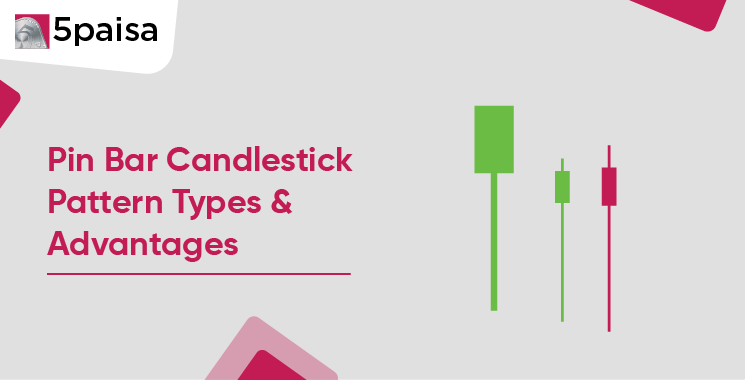
A pin bar candle has a very distinct shape. It features a long wick (or shadow) that takes up most of the candle’s length, a small body, and a short opposite wick. The long wick shows where the market tried to push the price in one direction but was quickly rejected, causing the price to close near the opposite end. This rejection is what often signals a potential reversal.
 
The pin bar candle meaning becomes clear when you think about it in terms of market psychology. That extended wick tells you there was a strong attempt to move the price, but it failed, indicating that the opposite side of the market — either buyers or sellers — has stepped in with strength.

When scanning your chart for a candlestick pin bar, look for:

  • A tail or wick that is at least two-thirds of the candle’s total length
  • A small real body at one end of the candle
  • The body positioned at or near the opposite end from the long wick

Spotting these features accurately is the first step toward using a pin bar trading strategy successfully.
 

Types of Pin Bar Patterns

Not all pin bars are created equal. Depending on where they form and which way they point, they can suggest bullish or bearish scenarios.

1. Bullish Pin Bar Candle

A bullish pin bar candle has its long wick pointing downward. This shows that sellers tried to push the price lower, but buyers stepped in and drove it back up, closing near the candle’s high. Bullish pin bars often appear at the end of a downtrend or during pullbacks in an uptrend, signaling potential upward reversals.
 

2. Bearish Pin Bar Candle

A bearish pin bar candle has its long wick pointing upward. This pattern reveals that buyers attempted to lift the price, but sellers overpowered them and pushed it down to close near the low. Bearish pin bars tend to appear at the end of an uptrend or during rallies in a downtrend, signaling potential downward reversals.

Both of these patterns fall under the broad category of pin bar candle pattern setups. What matters most is their context — where they form relative to support, resistance, and the overall market trend.
 

Pin Bar Candlestick vs Doji Candlestick

At first glance, a pin bar and a doji may seem similar, but they convey different information.
 
A pin bar candlestick pattern has a long wick and a small body at one end. This asymmetry is key to its meaning. A doji, on the other hand, has an extremely small body positioned near the center, with wicks of roughly equal length on both sides. A doji represents indecision, where neither buyers nor sellers dominate.

The difference matters because a bullish pin bar candlestick shows a clear rejection of lower prices, while a bearish pin bar candle shows a rejection of higher prices. A doji doesn’t send such a strong reversal signal on its own and usually needs to be analyzed alongside other patterns or indicators.
 

Psychology Behind the Pin Bar Candlestick Pattern

To trade successfully, you need to think beyond shapes and focus on what those shapes mean. The candlestick pin bar is essentially a story of rejection and market sentiment.
 
When you see a pin bar, you’re witnessing a failed attempt by one side of the market. If the wick is long and pointing down, sellers tried to push the market lower but were overwhelmed by buying pressure. If the wick is pointing up, buyers attempted to drive prices higher but ran into strong selling interest.

The reason this matters is that failed moves can lead to powerful moves in the opposite direction. Traders who were caught on the wrong side of the market may rush to exit their positions, fueling the reversal. This is why many use a pin bar trading strategy as part of their reversal setups.

Advantages of Using Pin Bar Candlestick Pattern

The pin bar candlestick pattern is popular for several reasons:

  • Clear visual cue: Pin bars are easy to spot once you know what to look for. Their unique structure means they stand out on the chart.
  • Strong reversal signal: Because they reflect rejection of price levels, pin bars can often signal turning points with a relatively high level of accuracy.
  • Works across markets and timeframes: Whether you’re trading forex, stocks, or commodities, and whether you’re looking at a 5-minute chart or a daily chart, a candlestick pin bar works the same way.
  • Complements other strategies: Pin bars combine well with support and resistance analysis, moving averages, or Fibonacci retracements, making them versatile in building a pin bar trading strategy.

Limitations of Using Pin Bar Candlestick Pattern

Like any tool, the pin bar candle pattern isn’t perfect.

  • False signals: Not every pin bar leads to a reversal. Sometimes the market continues in the same direction despite the appearance of a pin bar.
  • Context is crucial: A pin bar that appears in the middle of a choppy market may not carry as much weight as one that forms at a key support or resistance level.
  • Needs confirmation: Many traders prefer to wait for confirmation, such as a break above or below the pin bar’s high or low, before entering a trade.

Understanding these limitations helps you use the pattern wisely instead of relying on it blindly.

The Bottom Line

The pin bar candlestick pattern is a valuable tool for traders seeking to spot potential reversals. By recognizing the structure, understanding the psychology behind it, and applying it in the right context, you can improve your decision-making.

However, remember that no pattern works 100% of the time. Combining pin bars with broader market analysis and proper risk management is the best way to use them effectively.
 

Disclaimer: Investment in securities market are subject to market risks, read all the related documents carefully before investing. For detailed disclaimer please Click here.

Open Free Demat Account

Be a part of 5paisa community - The first listed discount broker of India.

+91

By proceeding, you agree to all T&C*

footer_form