
What Is Rights Issue of Shares
5paisa Capital Ltd


Content
- What is right issue of shares?
- How a Rights Issue Works
- Types of Rights Issues
- Features of Right Issue of Shares
- Reasons for a Right Issue of Shares
- Example of a Rights Issue?
- Calculations
- Advantages for Company & Share holders
- Disadvantages of a rights issue
- Conclusion
What is right issue of shares?
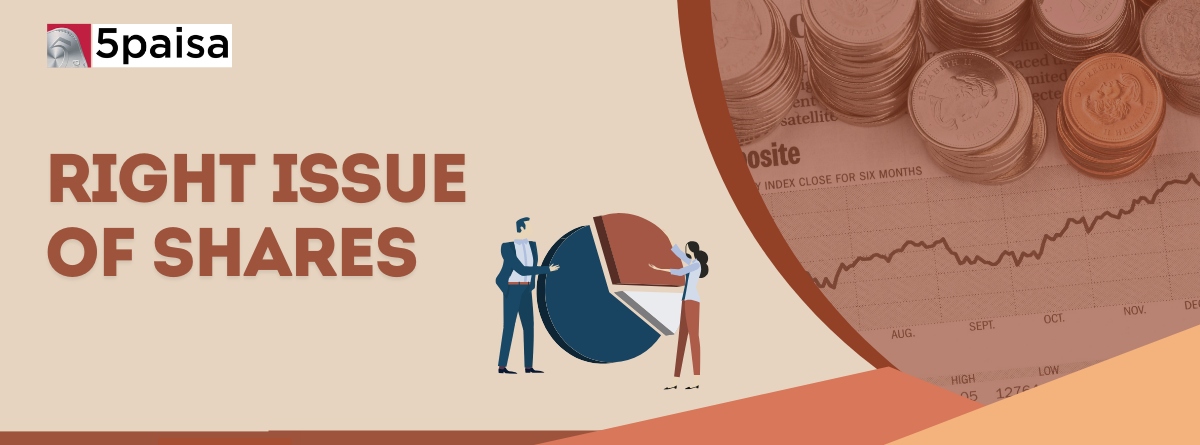
When a company needs to raise additional capital and keep the voting rights of the existing shareholders proportionately balanced, the company issues rights shares.
A rights share issue is an offering of rights given to a company's existing shareholders, allowing them to purchase additional shares directly from the company at a discounted price, rather than buying them through the secondary market. The number of additional shares that a shareholder can purchase depends on their existing holding.

More Articles to Explore
- Difference between NSDL and CDSL
- Lowest brokerage charges in India for online trading
- How to find your demat account number using PAN card
- What are bonus shares and how do they work?
- How to transfer shares from one demat account to another?
- What is BO ID?
- Open demat account without a PAN card - a complete guide
- What are DP charges?
- What is DP ID in a demat account
- How to transfer money from demat account to bank account
Disclaimer: Investment in securities market are subject to market risks, read all the related documents carefully before investing. For detailed disclaimer please Click here.
Frequently Asked Questions
Yes, shareholders can sell their rights issue in the market if they choose not to exercise it, allowing them to benefit from the value of the rights without increasing their investment.
The risks of a rights issue include potential dilution of share value, reduced share prices and the possibility that existing shareholders may not fully subscribe, leading to incomplete capital raising.
A rights issue allows existing shareholders to buy additional shares at a discount, maintaining their ownership percentage, but if they don't participate, their ownership could be diluted.
A company announces a rights issue to raise additional capital. This may be for funding expansion, paying off debt, improving financial stability, or avoiding the high costs of loans or public offerings. It offers a faster and cost-effective way to raise funds from existing shareholders.
Only existing shareholders as of the record date set by the company are eligible for a rights issue. These shareholders receive the option to buy additional shares in proportion to their current holdings, often at a discounted price.
You can choose to buy the additional shares (subscribe), sell the rights to another investor (if they are renounceable), or ignore them. However, not using the rights may lead to dilution of your ownership in the company.
Rights entitlement refers to the number of additional shares a shareholder has the right to purchase during a rights issue. It is calculated based on the number of shares already owned, following the issue ratio announced by the company.